Appliance Repair Cost by Appliance
Each appliance has its own common failures and price range. The table below shows typical repair prices, including the service call, parts, and labor, based on national cost guides. Follow the links for detailed, part-by-part pricing.
| Appliance | Typical repair cost | Most common repairs |
|---|---|---|
| Refrigerator | $150–$500 (about $300) | Fan motors, defrost parts, ice maker, sealed system |
| Washing machine | $150–$400 (about $250) | Drain pump, door lock, control board, bearings |
| Dryer | $100–$350 (about $200) | Thermal fuse, heating element or igniter, belt, rollers |
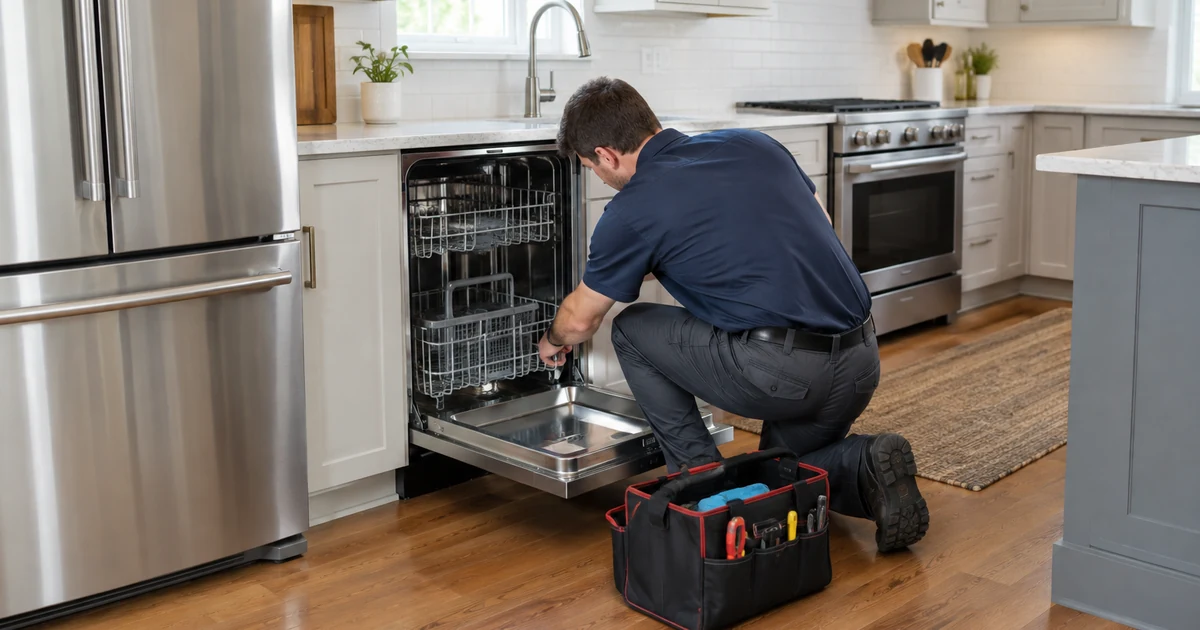
| Dishwasher | $125–$350 | Drain pump, inlet valve, door latch, control board |
| Oven or range | $125–$400 | Bake or broil element, igniter, sensor, control board |
| Microwave (over-the-range) | $100–$250 | Door switch, turntable motor, magnetron |
| Freezer (standalone) | $100–$400 | Thermostat, fan, defrost parts, refrigerant leak |
| Garbage disposal | $100–$250 | Jams, reset switch, leaks |
| Freestanding ice maker | $150–$300 | Water valve, pump, sensors |
Across all appliances, national averages for a single repair land between about $100 and $400, and a typical bill is roughly $225. Refrigerators and front-load washers tend to cost the most, while microwaves, disposals, and dryers are usually at the low end.
Garbage disposals are a special case. Many plumbers and handymen will simply swap a failed unit, because a new disposal often costs about the same as repairing an old one. See our garbage disposal installation cost guide for replacement prices, and our dishwasher installation cost guide if a dishwasher repair quote looks too close to the price of a new unit.
Gas vs. electric appliances
Gas ranges, ovens, and dryers usually cost 10% to 20% more to repair than their electric equivalents. Igniters, gas valves, and burner assemblies take more testing, and the technician must work safely around a live gas connection. Built-in appliances also cost more than freestanding ones because they take longer to pull out and reinstall.
Cost Breakdown: Service Call, Labor, and Parts
Almost every appliance repair bill is made of the same three parts. Understanding them makes quotes easier to compare.
Service call and diagnostic fees
Most companies charge a minimum service fee of about $70 to $130 to send a technician and diagnose the problem. Some smaller shops charge as little as $50, while some national services charge up to $150 or more. Many companies credit the fee toward the repair if you approve the work, but not all do, so ask when booking. If you decline the repair, expect to pay the fee anyway.
Hourly rates and flat-rate pricing
Appliance technicians typically bill $50 to $150 per hour, with most falling between $50 and $125. In practice, many companies use flat-rate pricing: they look up the repair in a price book and quote one number that covers labor and the part. Flat rates make bills predictable, but they mean a quick fix can cost the same as a slow one.
The billed rate covers far more than the technician’s wage. According to O*NET, which uses Bureau of Labor Statistics data, home appliance repairers earned a median of about $24.51 per hour in 2025. The rest of the hourly charge pays for the service vehicle, parts inventory, insurance, scheduling, training, and the company’s margin.
Parts
Parts range from a few dollars for a thermal fuse or door switch to several hundred for a control board, motor, or compressor. Original-equipment (OEM) parts from the manufacturer usually cost more than aftermarket parts but fit exactly and are often required to keep a warranty valid.
| Cost component | Typical price | Notes |
|---|---|---|
| Service call / diagnosis | $70–$130 | Often credited toward the repair |
| Labor | $50–$150 per hour | Often bundled into a flat rate |
| Minor parts (switches, fuses, belts, seals) | $10–$80 | Often on the truck |
| Mid-range parts (pumps, valves, fans, elements) | $40–$150 | Common on washers, dishwashers, fridges |
| Major parts (control boards, motors, compressors) | $120–$600+ | Usually ordered; may need a second visit |
| Emergency / after-hours call | $140–$400 minimum | Evenings, weekends, holidays |
Other Factors That Affect Appliance Repair Cost
Repair complexity
A minor fix such as a switch, sensor, or seal often costs well under $200 with the service call. Replacing a major component such as a control board, motor, or compressor can double or triple the bill. Sealed-system work on refrigerators and freezers requires an EPA-certified technician and is among the most expensive appliance repairs.
Brand and model
Mainstream brands have cheap, widely available parts and many technicians who know them. Luxury and European brands, built-in refrigerators, and smart appliances with Wi-Fi modules or touchscreen controls often need proprietary parts and specialized techs, which pushes costs up. Some independent shops don’t service certain brands at all.
Age and parts availability
Manufacturers stop producing parts for older models over time. When a part is discontinued, a repair may be impossible or require a used or salvaged component. Very new models can have the opposite problem, with parts available only through authorized service centers.
Location and travel
Rates follow the local cost of living and demand. Large metro areas typically cost more per hour, while rural homeowners may pay a trip or mileage charge on top of the service fee.
Timing
Same-day, evening, weekend, and holiday appointments carry surcharges or higher minimums. A broken refrigerator full of food may justify the premium; a noisy dryer usually doesn’t.
Multiple appliances
If two appliances need attention, ask whether the company charges one service call for both. Many will diagnose a second appliance during the same visit for a reduced fee.
Before you hire: get at least three written, itemized quotes from licensed and insured local pros. Prices for the same job often differ by 30% or more, and comparing line items is the fastest way to spot padding or missing work.
Warranties, Service Plans, and Home Warranties
Before paying for any repair, check whether someone else should be paying for it. There are four common layers of coverage.
Manufacturer warranty
New appliances typically come with a one-year warranty on parts and labor. Some brands cover specific components much longer, such as refrigerator compressors, washer motors, or drums. You need the model and serial number, and sometimes proof of purchase. Warranty work is usually done by an authorized servicer, and repairs by other technicians or DIY work may void the coverage.
Extended warranties and service plans
Retailers and manufacturers sell extended plans when you buy an appliance, often around $60 to $300 depending on the appliance and term. Standalone appliance maintenance plans commonly run about $100 to $300 per year. They can make sense for expensive, failure-prone appliances like French-door refrigerators with in-door ice makers, but read what is excluded.
Credit card purchase protection
Some credit cards extend the manufacturer’s warranty when you buy the appliance with that card. Check your card benefits before buying a separate plan.
Home warranty basics
A home warranty is a service contract that covers repair or replacement of home systems and appliances due to normal wear and tear. Standard plans that include major appliances typically cost about $420 to $720 per year ($35 to $60 per month), and premium plans run higher. Each claim usually carries a service fee of about $75 to $125.
Before buying one, read the contract closely:
- Coverage caps: most plans limit what they pay per item or per year, which can leave you paying the difference on an expensive repair.
- Exclusions: pre-existing conditions, improper installation, lack of maintenance, and cosmetic damage are commonly excluded.
- Choice of technician: the warranty company usually assigns the contractor, and you may wait longer than if you booked directly.
- Repair vs. replace decisions: the company, not you, typically decides whether to repair or replace, and replacement payouts may be capped.
A home warranty tends to pay off when a home has several older appliances and systems, and less so when most appliances are new and still under manufacturer coverage.
Repair vs. Replace an Appliance
Cost guides consistently recommend a few simple tests:
- The 50% rule: if a repair costs more than half the price of a comparable new appliance, replacement is usually the better value.
- Age vs. lifespan: if the appliance is past about half its expected life and needs a major repair, lean toward replacing. An appliance near the end of its lifespan is likely to need another repair soon.
- Part type: switches, belts, valves, pumps, seals, and heating elements are almost always worth fixing. Compressors, transmissions, motors, and control boards on older units often are not.
- Energy use: older refrigerators and washers use noticeably more energy and water than current ENERGY STAR models. That ongoing cost is part of the replacement math.
- Built-in and luxury units: the 50% rule is less strict here, because replacing a built-in may also mean cabinetry changes and a much higher purchase price.
DIY vs. hiring a pro
Plenty of appliance problems have simple fixes: a tripped breaker, a clogged filter, a dirty lint screen, kinked hoses, dusty refrigerator coils, or a door that is not fully latched. Owner’s manuals list error codes and basic troubleshooting, and many parts like filters, gaskets, and belts cost $10 to $60.
Hire a licensed pro for gas appliance burners and connections, refrigerant work, and anything that requires live electrical testing. Gas and refrigerant work are regulated, mistakes can be dangerous, and DIY repairs may void a warranty. A handyman can help with simple installation tasks, but most are not trained for appliance diagnostics.
How to Choose an Appliance Repair Company
A good technician saves money by diagnosing correctly the first time. When comparing companies, ask these questions before booking:
- Do you service my brand and model? Give the model number so they can confirm and check parts availability.
- What is the service fee, and is it credited? Get the amount and the policy in writing or by text.
- Is the technician factory-authorized? For appliances still under warranty, an authorized servicer is usually required.
- Is the technician EPA-certified? This matters for any refrigerator, freezer, or ice maker repair involving refrigerant.
- What warranty comes with the repair? Many companies guarantee parts and labor for 30 to 90 days, and some offer longer coverage on parts.
- Are you licensed and insured? Licensing rules for appliance repair vary by state, but insurance protects you if something is damaged in your home.
Be cautious with any company that will not give a price before starting work, pushes an expensive repair on an old appliance without discussing replacement, or asks for full payment up front for parts that have not been ordered.
How to Save Money on Appliance Repair
- Troubleshoot first: check power, breakers, filters, hoses, and the manual’s error code list before booking.
- Have the model and serial number ready so the company can confirm it services the brand and bring the right parts.
- Ask about the service fee: how much it is, whether it is credited, and whether a second visit is billed.
- Use every warranty you have: manufacturer, extended, credit card, and home warranty coverage.
- Bundle appliances into one visit when more than one needs attention.
- Avoid emergency rates unless food or water damage is at stake.
- Do basic maintenance: clean refrigerator coils, dryer vents, dishwasher filters, and washer gaskets to prevent the most common service calls.
- Get a second quote on any repair over about $400 or any job approaching half the cost of a new appliance.
Water-related appliances can overlap with plumbing work. If the problem turns out to be the supply line, drain, or water heater rather than the appliance itself, see our water heater replacement cost and plumber cost per hour guides.
Frequently Asked Questions
How much do appliance repair companies charge to come out?
Most charge a service call or diagnostic fee of about $70 to $130, and some charge $50 or less. The fee is often credited toward the repair if you approve the work. Emergency, weekend, and holiday visits cost more.
What is the hourly rate for an appliance repair technician?
Appliance technicians typically charge $50 to $150 per hour, though many quote a flat rate per repair instead of billing by the hour. Rates are higher in large metro areas and for gas or refrigerant work.
Which appliance is the most expensive to repair?
Refrigerators are usually the most expensive, especially when the compressor or sealed system fails, which can cost $500 to $1,500. Front-load washers with bearing or drum problems can also approach the cost of a new machine.
When should I replace an appliance instead of repairing it?
A common rule is to replace when the repair costs more than half the price of a comparable new appliance, or when the appliance is past about half its expected lifespan and needs a major repair. Simple parts like switches, valves, and belts are almost always worth fixing.
Does a home warranty cover appliance repair?
Most standard home warranty plans cover major kitchen appliances, and many cover the washer and dryer or offer them as add-ons. You pay an annual fee plus a service fee of about $75 to $125 per claim, and coverage caps and exclusions apply.
Is appliance repair covered by homeowners insurance?
Generally no. Homeowners insurance covers sudden damage from covered events such as fire or certain water damage, not normal wear and tear or mechanical breakdown. That is what manufacturer warranties, extended warranties, and home warranties are for.