Window Repair Cost by Type of Repair
What’s wrong with the window matters far more than the window’s brand or age. A stuck sash or a torn screen is a quick, inexpensive fix, while a failed insulated glass unit or a rotted wood frame costs several hundred dollars. The table shows typical professional prices per window, including labor.
| Repair | Typical cost per window | What’s involved |
|---|---|---|
| Screen repair | $25–$120 | Patching or rescreening the existing frame |
| Screen replacement | $100–$350 | New custom-sized screen and frame |
| Cracked pane (small crack, resin fill) | $70–$175 | Only for minor cracks that don’t affect the seal |
| Latch, lock or crank/operator hardware | $75–$200 | Replacing worn locks, latches, pulls or a casement crank |
| Sash cord or balance | $75–$300 | Restringing old weights or swapping spring balances |
| Foggy glass: defog and reseal | $75–$250 | Cleaning and venting the unit; not a permanent fix for every window |
| Foggy or broken double-pane unit (IGU) replacement | $200–$600 | New sealed glass unit set into the existing sash |
| Sash or track repair | $200–$500 | Rebuilding or replacing a damaged sash or track |
| Frame rot repair | $250–$800 | Cutting out rot, epoxy or wood dutchman, repainting |
| Leak, caulking and flashing | $50–$600 | Resealing the exterior; flashing repairs run $250–$600 |
Most homeowners pay about $400 for a single window repair, and the typical range is roughly $150 to $650. Simple tune-ups such as new weatherstripping, a lubricated track or a replacement latch often cost less than $200, while replacing a large double-pane glass unit or repairing rot in a wood frame can climb past $800.
Sash cords, balances and hardware
Older double-hung wood windows use cords, pulleys and hidden weights to hold the sash open. When a cord snaps, the sash drops or won’t stay up. A pro typically charges about $110 to restring a sash, and parts alone cost $10 to $60. Newer windows use spring or block-and-tackle balances instead, which run about $100 per window installed. Casement windows rely on a crank operator and hinges; a stripped crank or broken lock is usually a $75 to $200 fix because the part is swapped rather than repaired.
Frame rot
Rot shows up first on wood sills and the bottom rails of sashes, where rain and condensation collect. Minor frame damage costs about $75 to $200 to fix, while true rot repair typically runs $250 to $800 per window. If a screwdriver sinks easily into the wood across a large area, replacing the window is often more sensible than patching.
Many repair companies charge a minimum trip fee of $100 to $150, so it often makes sense to fix several windows in one visit. The calculator above multiplies the cost by the number of windows you enter.
Window Glass Replacement Cost
Replacing just the glass is the most common window repair. Nationally, window glass replacement costs about $300 to $650 per window, with an average of roughly $475; small single-pane windows can be as little as $150, and large or specialty glass can exceed $1,500. The number of panes, glass type and window size drive the price.
| Glass type or size | Installed cost per window |
|---|---|
| Single pane | $150–$400 |
| Double pane (insulated) | $300–$800 |
| Triple pane | $500–$1,200 |
| Tempered or laminated safety glass | $300–$750 |
| Low-E glass | $350–$950 |
| Argon-filled unit | $400–$900 |
| Small window (under 24″ x 24″) | $150–$350 |
| Medium window (24″ x 36″ to 30″ x 48″) | $350–$600 |
| Large window (48″ x 60″ or larger) | $600–$1,200+ |
| Picture or extra-large window | $1,200–$2,800+ |
Building codes require tempered safety glass in certain spots, such as glass in or next to doors, near bathtubs and showers, and large low panes close to the floor. If your broken pane is in one of those locations, the replacement must be tempered or laminated, which adds cost. Tempering a large pane can add $100 to $300 on its own.
Foggy windows and failed seals
Condensation or a milky haze between the panes of a double-pane window means the seal around the insulated glass unit (IGU) has failed and moist air has gotten in. The glass is still intact, but the window has lost much of its insulating gas and will keep fogging. You have three options:
- Defogging and resealing ($75–$250): a technician drills tiny holes, cleans and dries the space, then seals it. It improves the view, but it does not restore the original insulating gas, so results vary.
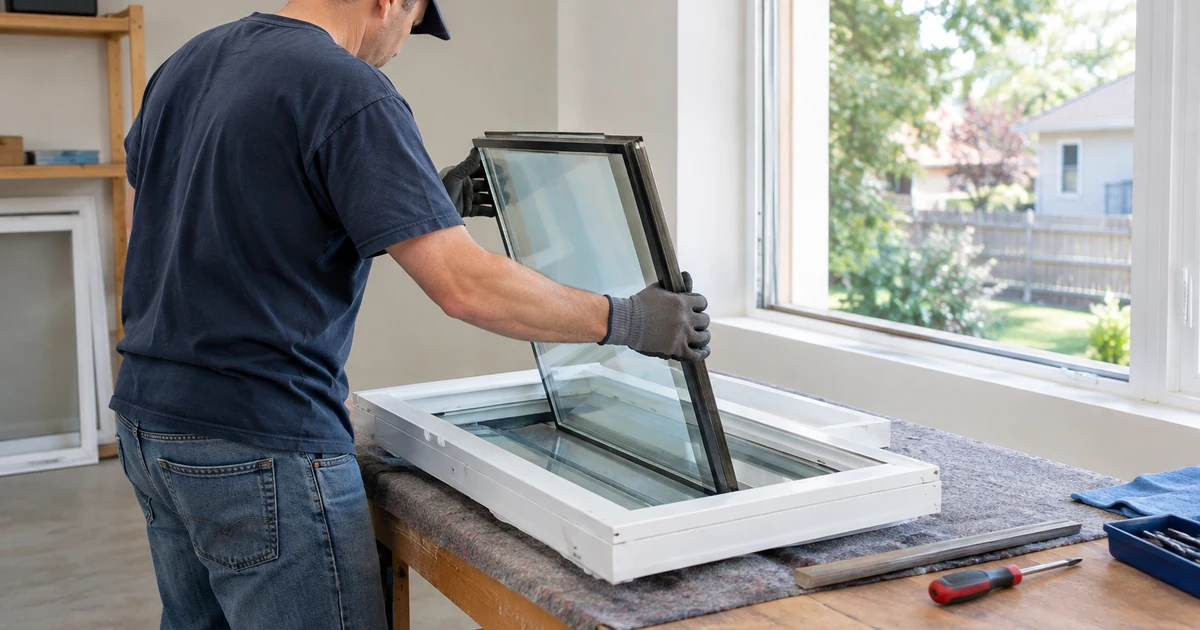
- Replacing the glass unit ($200–$600): a new sealed IGU is ordered to size and set into the existing sash. This is usually the best value when the frame is in good shape.
- Replacing the whole window: sensible when several units have failed, the frames are worn, or the windows are 15 to 20 years old or more.
Check your paperwork before paying for a fix. Many window manufacturers warranty the insulated glass seal for years, and some supply the replacement glass unit at little or no cost even when labor isn’t included.
Cost Breakdown: Materials vs. Labor
Labor is the biggest part of most window repairs. Window repair technicians and glass shops typically charge $45 to $90 per hour, and glaziers who handle large or specialty glass can bill up to about $125 per hour. Emergency or same-day service usually costs 50% to 100% more, and some companies charge double or triple their normal rate after hours.
- Replacement glass or IGU: roughly 40% to 70% of a glass replacement bill; more for low-E, triple-pane, tempered or custom shapes
- Hardware: parts are usually inexpensive, so most of a $75–$200 latch, lock or crank repair is labor
- Sash cord or spring balance parts: $10–$60 per window
- Epoxy or fiberglass filler for small rot repairs: about $10–$35
- Labor: about $100–$300 per window for glass work, 1 to 3 hours
- Disposal of old glass: $50–$100 if it’s not included in the quote
For glass replacement, labor typically makes up 30% to 60% of the total. That’s why the per-window price falls when several windows are repaired in the same trip.
Other Factors That Affect the Price
Window type
Double-hung and single-hung windows are the most common and the easiest to service. Casement windows add crank operators and hinges, sliders have tracks and rollers, and bay, bow and picture windows involve large or multiple panes that cost more to replace.
Frame material
Wood frames can be patched and are often the cheapest to repair when the damage is limited, but rot spreads. Vinyl and aluminum frames generally can’t be repaired once cracked or bent, so the sash or the whole window is usually replaced. Fiberglass and composite repairs tend to be the most expensive, often $300 to $1,000.
Access and floor level
Windows on the second or third floor need ladders or lifts. Expect $150 to $400 extra for upper-story access, especially for exterior glass work.
Older homes and lead paint
Wood windows in homes built before 1978 may have lead-based paint. Scraping, sanding or removing old sashes can release lead dust. Under the EPA’s Renovation, Repair and Painting (RRP) program, contractors paid to disturb painted surfaces in pre-1978 homes must be certified and trained in lead-safe work practices. Hire an RRP-certified firm for this work, and expect lead-safe setup and cleanup to add to the price.
Urgency
A shattered window after a storm or break-in may need to be boarded up or covered first, with the new glass installed days later once it’s cut to size. After-hours and weekend calls carry higher rates.
If the break isn’t a security risk, taping heavy plastic over the opening and booking a normal weekday appointment usually saves money. Wear gloves and eye protection when clearing broken glass, and keep children and pets away from the area until the pane is secured or removed.
Before you hire: get at least three written, itemized quotes from licensed and insured local pros. Prices for the same job often differ by 30% or more, and comparing line items is the fastest way to spot padding or missing work.
Window Repair vs. Replacement
Repair is usually the smarter choice when the problem is limited to one part: a broken pane, a failed seal, a worn balance or a loose latch. A common rule of thumb is to replace the window instead when the repair would cost more than about half the price of a new window, or when the window is over 15 to 20 years old and in poor overall condition.
| Situation | Usually best option |
|---|---|
| One cracked or foggy pane, sound frame | Repair: replace the glass unit |
| Sash won’t stay up or slides poorly | Repair: new cord or balance |
| Small soft spot in a wood sill | Repair: epoxy or wood patch |
| Rot through the frame or sash on several sides | Replace the window |
| Several fogged units in older windows | Replace the windows |
| Drafty single-pane windows throughout the house | Replace for comfort and efficiency |
A single repair averages about $400, while replacing a window typically runs about $450 to $1,500 or more per window depending on size, type and material. See our window replacement cost guide for full pricing. If water has been getting in for a while, check the wall and sill underneath; damaged drywall or framing around the window may need drywall repair and, in worse cases, professional water damage restoration.
DIY vs. Hiring a Pro
Several window fixes are reasonable DIY projects: rescreening, replacing weatherstripping, recaulking the exterior, lubricating tracks and swapping a latch or crank operator. Replacing single-pane glass in an older wood sash is also within reach for patient DIYers.
Hire a pro for double- and triple-pane glass units, tempered glass, large panes, upper-story windows and anything involving frame rot or flashing. Broken glass causes serious cuts, and large panes are heavy and awkward. In pre-1978 homes, leave paint scraping and sash removal to an EPA RRP-certified contractor unless you’re trained in lead-safe practices.
How to Save Money on Window Repair
- Check the warranty first. Seal failure and hardware are often covered for years after purchase.
- Bundle repairs. Fixing several windows in one visit spreads out the trip fee and setup time.
- Replace the glass unit, not the window, when the frame and sash are in good shape.
- Handle the easy jobs yourself: screens, weatherstripping, caulking and track cleaning.
- Avoid emergency rates. Cover a broken pane temporarily with plastic or plywood and schedule the repair during normal hours.
- Get two or three quotes from glass shops and window repair specialists, not only full-replacement companies.
- Check your homeowners insurance if the glass broke in a storm or break-in; compare the repair cost with your deductible.
Frequently Asked Questions
How much does it cost to repair a window?
Most window repairs cost $150 to $650 per window, and the typical repair runs about $400. Simple hardware, screen or weatherstripping fixes often cost under $200, while frame rot or large glass replacements can exceed $800.
How much does it cost to replace the glass in a window?
Window glass replacement averages about $475 per window, with most jobs between $300 and $650. Single-pane glass can cost as little as $150, while triple-pane, tempered or large picture windows can run $1,200 or more.
Can a foggy double-pane window be fixed?
Yes. A defogging service costs about $75 to $250 but doesn’t restore the insulating gas. Replacing the sealed glass unit costs about $200 to $600 and is the more lasting fix when the frame is in good shape.
Is it worth repairing old windows?
Repair makes sense when only one part has failed and the frame is sound. If the repair would cost more than about half the price of a new window, or the windows are over 15 to 20 years old and drafty, replacement is usually the better value.
Does homeowners insurance cover a broken window?
Many policies cover glass broken by a covered event such as a storm, falling tree or break-in, subject to your deductible. Wear and tear, like a failed seal, is generally not covered, so check your policy.
How long does a window repair take?
Simple hardware, screen or balance repairs often take under an hour. Glass replacement takes about 1 to 3 hours per window, but custom insulated glass units usually have to be ordered to size first, which adds a wait between the first visit and the repair.