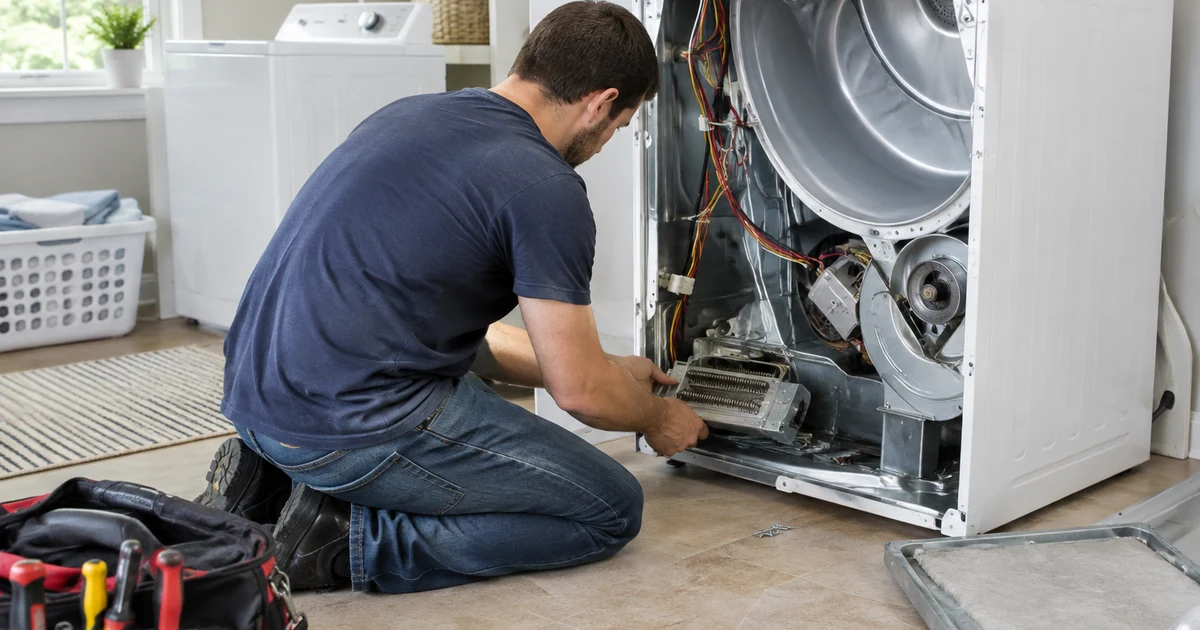
Dryer Repair Cost by Part and Problem
Dryers are mechanically simple, which keeps most repairs affordable. The bill depends mainly on which part failed and whether the dryer runs on electricity or gas. The prices below include the part, labor, and the service call, based on national cost guides.
| Repair | Common symptom | Typical cost |
|---|---|---|
| Diagnosis / simple fix | Tripped breaker, clogged lint screen or vent, door not latching | $75–$175 |
| Thermal fuse | Dryer won’t start at all or runs with no heat | $75–$175 |
| Door switch or latch | Drum won’t turn even though the dryer has power | $80–$200 |
| Drive belt | Motor hums or runs but the drum doesn’t turn | $100–$250 |
| Drum rollers, glides, or idler pulley | Thumping, squealing, or scraping during the cycle | $100–$300 |
| Cycling or high-limit thermostat | Overheating, no heat, or clothes take forever | $100–$300 |
| Heating element (electric) | Tumbles normally but blows cold air | $125–$300 |
| Igniter or flame sensor (gas) | Gas dryer tumbles but never heats | $100–$275 |
| Gas valve coils (gas) | Heats briefly, then goes cold | $150–$300 |
| Timer | Won’t advance, won’t stop, or runs only on some settings | $120–$300 |
| Drive motor | Loud hum, burning smell, won’t start | $200–$450 |
| Control board | Dead display, error codes, buttons don’t respond | $250–$500 |
| Drum, drum bearing, or felt seal | Grinding, clothes snagging, lint leaking from the drum edge | $200–$500 |
Most homeowners pay $100 to $350 for a dryer repair, and a typical job comes in around $200. A failed heating element on an electric dryer is one of the most common calls and lands right around that figure. Motors, control boards, and drum work sit at the top of the range and push older dryers toward replacement.
Gas vs. electric dryer repair costs
Electric and gas dryers share the same drum, belt, rollers, motor, and controls, so those repairs cost about the same. The difference is the heat source. Electric dryers use a heating element; gas dryers use an igniter, flame sensor, and a gas valve with solenoid coils. Cost guides generally put gas dryer repairs about 10% to 20% higher, mostly because the technician has to work around a gas connection and test the burner assembly. Fixr, for example, lists electric dryer repairs at roughly $50 to $400 and gas dryer repairs at roughly $100 to $450.
If you smell gas near a gas dryer, leave the house and call your gas utility or 911 from outside. Do not try to diagnose the burner yourself.
Dryer not heating: the most common call
A dryer that tumbles but stays cold usually has one of four problems: a blown thermal fuse, a failed heating element (electric), a bad igniter or gas valve coils (gas), or a restricted vent that keeps tripping the safety devices. A thermal fuse often blows because the vent is clogged, so replacing only the fuse without clearing the vent tends to lead to a second service call.
Common problems and what they usually cost
- Dryer won’t start: a door switch, thermal fuse, start switch, or tripped breaker on the cheap side, or a motor or control board on the expensive side, about $75 to $450.
- Drum won’t turn: a broken belt, worn idler pulley, or failed motor, about $100 to $450.
- Takes too long to dry: most often a restricted vent, but also a weak heating element, a faulty cycling thermostat, or gas valve coils, about $80 to $300.
- Squealing, thumping, or grinding: worn drum rollers, glides, idler pulley, or bearing, about $100 to $300; drum or bearing replacement can reach $500.
- Shuts off mid-cycle: overheating from a blocked vent, a bad thermostat, or a motor overheating, about $100 to $450.
- Burning smell or sparks: stop using the dryer, unplug it, and have it inspected. Lint near the heater, a shorted element, or a failing motor are common culprits.
Cost Breakdown: Parts vs. Labor
Labor is the larger share of most dryer repairs, because many parts are inexpensive. A thermal fuse or door switch may cost less than $30, but the service call and the time to open the cabinet still apply.
- Service call or diagnostic fee: typically $50 to $130, often credited toward the repair.
- Labor: about $50 to $125 per hour, though most technicians quote a flat rate per repair.
- Parts: roughly $5 to $60 for fuses, thermostats, belts, rollers, and switches; $60 to $150 for a motor; and $90 to $280 or more for a control board.
| Example repair | Parts | Labor + service call | Total |
|---|---|---|---|
| Thermal fuse | $5–$25 | $70–$150 | $75–$175 |
| Heating element (electric) | $30–$100 | $95–$200 | $125–$300 |
| Drive motor | $60–$150 | $140–$300 | $200–$450 |
| Control board | $90–$280 | $160–$220 | $250–$500 |
Dryer Vent Cleaning and Fire Safety
Many dryer repair calls trace back to a clogged vent. Lint buildup restricts airflow, the dryer runs hot, and the thermal fuse or high-limit thermostat trips. Professional dryer vent cleaning typically costs about $80 to $185, and replacing a damaged or crushed vent duct runs about $100 to $300.
Vent maintenance is also a fire safety issue. According to the U.S. Fire Administration, failure to clean was the leading factor contributing to the ignition of clothes dryer fires in homes from 2018 to 2020, accounting for 31% of them. Clean the lint screen before or after every load, and have the full vent run checked if drying times get longer or the laundry room feels hot.
Signs the vent needs attention include clothes that stay damp after a normal cycle, a dryer that is hot to the touch on the outside, a burning smell, or a vent flap outside that barely opens while the dryer runs. Long vent runs, runs with several elbows, and vents that exit through the roof clog faster and cost more to clean. Flexible plastic or foil ducts crush easily and trap lint; many technicians recommend replacing them with rigid or semi-rigid metal duct.
Other Factors That Affect Dryer Repair Cost
Brand and model
Mainstream brands share many parts, which keeps prices low and lets technicians carry common parts on the truck. High-end, steam, heat-pump, and smart dryers use more specialized parts and electronics, and repairs on them typically cost more.
Stacked units and access
A stacked washer-dryer or a dryer in a tight closet takes longer to pull out and open. Upper units in a stack sometimes need two people or extra time to remove safely, which adds labor.
Age and warranty
New dryers usually include a one-year manufacturer warranty. Check that warranty, any extended plan, and your home warranty before paying out of pocket.
Emergency and weekend service
Same-day, evening, or weekend calls carry a surcharge. A dryer is rarely an emergency, so a weekday appointment is usually the cheaper option.
House-side problems
Sometimes the dryer is fine and the problem is the home. An electric dryer that won’t heat may have lost one leg of its 240-volt circuit at the breaker, which is an electrician’s job. Gas supply issues belong to a licensed plumber or gas fitter. Our guides to electrician cost per hour and gas line installation cost cover those rates.
How long the repair takes
Most dryer repairs are completed in about an hour once the cause is known, and technicians commonly carry fuses, belts, rollers, and thermostats. Control boards, timers, and some gas parts may need to be ordered, which adds a second visit a few days later. Ask in advance whether that return trip has its own charge.
Location
Repair rates are higher in large metro areas and lower in many rural markets, where a trip charge may apply instead.
Before you hire: get at least three written, itemized quotes from licensed and insured local pros. Prices for the same job often differ by 30% or more, and comparing line items is the fastest way to spot padding or missing work.
Repair vs. Replace a Dryer
A new standard dryer generally costs about $600 to $1,500, depending on capacity, features, and fuel type. Dryers typically last about 8 to 13 years. These rules help decide:
- The 50% rule: if the repair costs more than half the price of a comparable new dryer, replacing usually makes more sense.
- Age: cost guides suggest replacement once a dryer is roughly 6 to 10 years old and needs a major repair, or keeps breaking.
- Which part failed: fuses, belts, rollers, thermostats, heating elements, and igniters are almost always worth fixing. A motor, control board, or drum on an older dryer often is not.
- Matching pair: if your washer is also near the end of its life, check our washing machine repair cost guide before deciding; replacing both at once can simplify delivery and installation.
DIY vs. hiring a pro
Some dryer fixes are reasonable DIY projects on an electric dryer: cleaning the vent run, replacing a thermal fuse, swapping a belt, or replacing drum rollers. Parts often cost $10 to $60. Unplug the dryer before opening any panel, and remember that a blown fuse is usually a symptom of a blocked vent.
Hire a pro for anything on a gas dryer’s burner, valve, or gas connection, and for control board or motor diagnosis. Gas work carries real safety risks and may void your warranty if done incorrectly.
How to Save Money on Dryer Repair
- Check the breaker and the door latch before booking. Electric dryers use a double breaker, and one tripped side can leave the drum turning with no heat.
- Clean the lint screen and vent; a clogged vent causes long dry times and blown fuses.
- Don’t overload the drum, which wears out rollers, belts, and bearings faster.
- Use your warranty coverage (manufacturer, extended, credit card, or home warranty) first.
- Ask if the diagnostic fee is credited toward the repair.
- Schedule a weekday visit instead of paying emergency rates.
- Get a second opinion on any quote above about half the cost of a new dryer.
For service-call fees and repair prices on other appliances, see our appliance repair cost overview.
Frequently Asked Questions
Is it worth repairing a dryer?
Usually, if the repair costs less than half the price of a new dryer and the unit is under about 8 to 10 years old. Fuses, belts, rollers, heating elements, and igniters are typically worth fixing; a motor or control board on an older dryer often isn’t.
How much does it cost to replace a dryer heating element?
Replacing the heating element on an electric dryer typically costs $125 to $300 including the part, labor, and service call. The part itself often costs $30 to $100.
Why does my dryer run but not heat?
Common causes are a blown thermal fuse, a failed heating element on electric models, a bad igniter or gas valve coils on gas models, a tripped breaker, or a clogged vent. A blocked vent often causes the fuse to blow, so the vent should be checked during the repair.
Are gas dryers more expensive to repair than electric dryers?
Slightly. Shared parts like belts, rollers, and motors cost about the same, but gas-specific repairs on the igniter, flame sensor, or valve coils, plus the care needed around the gas line, tend to make gas dryer repairs about 10% to 20% higher.
How much does dryer vent cleaning cost?
Professional dryer vent cleaning typically costs about $80 to $185. Long or rooftop vent runs cost more, and replacing a crushed or damaged duct runs about $100 to $300.
How long do dryers last?
Most dryers last about 8 to 13 years. Regular lint and vent cleaning and avoiding overloaded drums help them reach the longer end of that range.