Electrician Cost per Hour by License Level
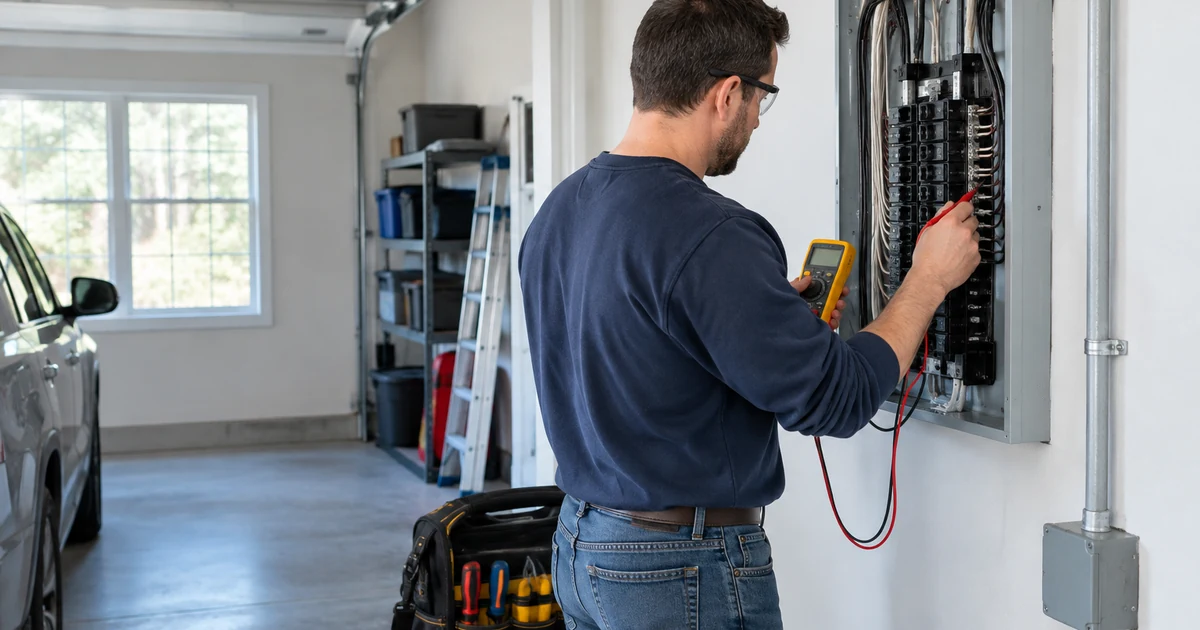
Electricians are licensed in most states, and the license held by the person doing the work sets the hourly rate more than anything else. Apprentices are in training and must work under supervision, journeymen have finished an apprenticeship and passed a licensing exam, and master electricians have additional years of experience and can typically pull permits and run a contracting business.
| Electrician level | Typical billed rate | Typical work |
|---|---|---|
| Apprentice (supervised) | $40–$70/hr | Pulling wire, mounting boxes, helping on larger jobs |
| Journeyman electrician | $50–$100/hr | Outlets, switches, fixtures, new circuits, most repairs |
| Master electrician | $90–$150/hr | Panel work, service upgrades, design, permits, complex troubleshooting |
| Emergency / after-hours | $150–$200/hr | Power loss, burning smells, sparking outlets at night or on weekends |
Most homeowners pay $50 to $100 per hour for a licensed electrician on a routine service call, and $90 to $150 per hour when a master electrician handles the job. In practice, the person who shows up for an outlet repair is usually a journeyman, while the company’s master electrician signs off on permitted work.
Some companies bill a single crew rate when an electrician brings an apprentice. That rate is higher than either person alone, but the job often finishes faster, so the total can come out similar.
Wages vs. what you pay
The U.S. Bureau of Labor Statistics puts the median electrician wage at about $30.38 per hour ($63,190 per year, May 2025). That is the worker’s paycheck, not the contractor’s billing rate. The rate you pay also covers the service van, testers and tools, wire and parts inventory, liability insurance, workers’ compensation, licensing and continuing education, payroll taxes, benefits, office staff and travel time between jobs. A billed rate two to four times the median wage is normal for an insured, licensed electrical contractor.
Service Call Fees and Minimum Charges
Expect a fee for the visit itself, separate from or bundled with the first hour of work.
| Fee | Typical cost | Notes |
|---|---|---|
| Service call (includes first hour) | $100–$200 | The most common setup for small residential jobs |
| Separate trip or call-out fee | $40–$100 | Travel only; labor billed on top |
| Minimum charge | 1–2 hours | You pay the minimum even if the fix takes 15 minutes |
| After-hours surcharge | $75–$200 extra | Nights, weekends and holidays |
| Permit (when required) | $75–$150 typical | Higher for panel work or rewiring an older home |
Because of these minimums, a single outlet replacement rarely costs less than about $100, even though the parts are only a few dollars. Saving several small tasks for one visit is the easiest way to get your money’s worth.
Common Electrical Job Prices
Many electricians quote standard tasks at a flat rate that includes labor, basic parts and the service fee. These are typical national ranges compiled from current cost guides; your local price can be higher or lower.
| Job | Typical cost | Approx. time |
|---|---|---|
| Replace a light switch or install a dimmer | $85–$200 | Under 1 hour |
| Replace an existing outlet (incl. GFCI) | $80–$200 | Under 1 hour |
| Install an outlet in a new location | $150–$350 | 1–3 hours |
| Replace a circuit breaker | $100–$300 | 1–2 hours |
| Install a ceiling fan (existing box) | $140–$350 | 1–2 hours |
| Electrical safety inspection | $150–$350 | 1–3 hours |
| Replace a breaker box / panel | $500–$2,800 | 4–10 hours |
| Whole-house generator installation | $6,000–$11,000 | 1–3 days |
| Rewire a house | $5–$17 per sq ft | Several days |
For the bigger projects, our detailed guides break down equipment and labor: electrical panel upgrade cost, ceiling fan installation cost and generator installation cost.
Cost Breakdown: Materials vs. Labor
On most small residential calls, labor is by far the biggest share of the bill. Materials only take over on projects like panel replacements, EV charger circuits or rewiring, where breakers, wire and equipment add up quickly.
- Service call or trip fee: $40–$200, depending on whether the first hour is included
- Labor: $50–$100 per hour for a journeyman, $90–$150 for a master electrician
- Basic parts (devices, wire nuts, boxes, cover plates, a breaker): roughly $30–$120 on a typical repair visit
- Permit and inspection: often $75–$150, and more for service upgrades or rewiring
- Drywall patching: usually not included; electricians cut access holes but rarely finish walls
Put together, a two-hour visit at about $85 an hour with a $70 trip fee and $75 of parts lands near $300, which matches the calculator’s default.
Other Factors That Affect Electrician Rates
Location
Electrician rates track local wages and demand. Large metros with high living costs and strong union markets sit at the top of the range, while rural areas tend to be cheaper but may add travel charges. The calculator’s region setting adjusts for this. BLS wage data shows the same pattern for electricians’ pay, which helps explain why quotes for identical work can vary noticeably from one state to the next.
Urgency and timing
Emergency calls at night, on weekends or on holidays typically run $150 to $200 per hour or add a $75 to $200 surcharge. If the problem is isolated to one circuit that you can safely leave off at the breaker, waiting for regular hours saves money.
Age and condition of the wiring
Older homes with knob-and-tube wiring, aluminum branch circuits, ungrounded outlets or overfilled panels take longer to work on safely. An electrician may also be required to bring nearby work up to current code once they open things up.
Access
Fishing wire through finished walls, working in a tight attic or crawl space, or running circuits to a detached garage adds hours. Open framing in an unfinished basement is the fastest situation.
Permits
New circuits, panel work, service upgrades and many fixture additions require a permit and inspection. The permit itself is often modest, but the electrician may bill time for scheduling and meeting the inspector.
Hourly vs. Flat-Rate Electrical Pricing
Electricians use both billing methods, and knowing which one you’re getting makes quotes easier to compare.
- Hourly (time and materials): common for troubleshooting, where nobody knows how long finding a fault will take. You pay for the time on site plus parts. It’s fair for quick fixes but open-ended on stubborn problems.
- Flat rate: common for defined tasks like swapping a fixture, adding a GFCI outlet or replacing a breaker. You see the full price before work begins, and it already includes a cushion for jobs that run long.
- Project bid: used for panel upgrades, generators, rewiring and remodels. The bid should list the scope, materials, permit, inspection and any wall patching that is or isn’t included.
For troubleshooting calls, ask for a not-to-exceed amount so the electrician checks in with you before spending more than an agreed number of hours.
What to check before you hire
Confirm the electrician’s license on your state or local licensing board’s website, ask for proof of liability insurance, and ask who will pull the permit if one is needed. A contractor who suggests skipping a required permit to save money is shifting the risk onto you, since unpermitted work can surface during a home sale inspection.
Before you hire: get at least three written, itemized quotes from licensed and insured local pros. Prices for the same job often differ by 30% or more, and comparing line items is the fastest way to spot padding or missing work.
DIY vs. Hiring an Electrician
Electrical work is one area where saving the hourly rate is rarely worth the risk. Faulty wiring can cause shocks and house fires, can complicate an insurance claim if unpermitted work is involved, and can fail inspection when you sell. Many cities and states restrict what unlicensed homeowners may do, and most permitted electrical work must be done or signed off by a licensed electrician.
Tasks that are generally safe for a homeowner include resetting a tripped breaker or GFCI, replacing light bulbs and plug-in devices, and testing smoke alarms. Anything inside the panel, new circuits, service upgrades and work on aluminum or knob-and-tube wiring belong to a licensed pro.
A handyman may be cheaper for related carpentry, like patching drywall after wiring is run, but most states do not allow handymen to perform electrical work beyond very minor tasks. Our handyman cost per hour guide explains where that line usually falls.
Signs you should call an electrician soon
- Breakers that trip repeatedly or a fuse that keeps blowing
- Warm or discolored outlets and switch plates
- Burning smells, buzzing or sparking from outlets or the panel
- Lights that dim noticeably when large appliances start
- Outlets that stop working after a GFCI reset
A burning smell or visible sparking is an emergency: turn off power at the main breaker if it is safe to do so, and call an electrician or 911 if there is smoke or fire.
How to Save Money on an Electrician
- Batch small jobs into one visit so a single service fee covers several tasks.
- Schedule during regular hours unless the problem is unsafe to leave.
- Ask whether the service fee includes the first hour and how time is billed after that.
- Buy your own fixtures (ceiling fans, light fixtures, smart switches) if the electrician allows it, but confirm they are UL-listed and that labor warranties still apply.
- Get two or three written quotes for any project over a few hundred dollars, especially panel and generator work.
- Clear the work area and make the panel easy to reach so billable time goes to the job, not moving boxes.
- Check utility rebates for EV chargers, heat pump circuits or panel upgrades. Federal 25C and 25D tax credits ended for property placed in service after December 31, 2025, so don’t count on them for 2026 work.
If your project also involves pipes, such as wiring a new water heater or sump pump, compare rates in our plumber cost per hour guide.
Frequently Asked Questions
How much does an electrician charge for a service call?
Most electricians charge $100 to $200 for a service call that includes the first hour of work. Others charge a separate $40 to $100 trip fee and bill labor on top. Ask which setup a company uses before booking.
What is the difference between a journeyman and a master electrician?
A journeyman has completed an apprenticeship (typically 4 to 5 years) and passed a licensing exam, so they can work independently. A master electrician has additional experience and another exam, and can usually pull permits, design systems and run a contracting business. Masters typically bill $90 to $150 per hour versus $50 to $100 for journeymen.
How much do electricians charge per hour for emergency work?
Emergency and after-hours rates generally run $150 to $200 per hour, or the regular rate plus a $75 to $200 surcharge. Nights, weekends and holidays cost the most.
How much does it cost to have an electrician replace an outlet?
Replacing an existing outlet usually costs $80 to $200, including the service call. Adding an outlet in a new location runs about $150 to $350 because the electrician has to run new wire.
How much does an electrician make per hour?
The BLS reports a median electrician wage of about $30.38 per hour (May 2025). Homeowners pay a higher billing rate because it also covers the contractor’s vehicle, tools, insurance, licensing, payroll taxes, benefits and unbilled travel time.
Can a handyman do electrical work?
In most states a handyman cannot legally perform electrical work beyond very minor tasks, and permitted work must be done by a licensed electrician. Rules vary, so check with your state or local licensing board.