Electrical Panel Upgrade Cost by Amperage
The amperage you’re upgrading to is the biggest price driver. Most older homes that need an upgrade are going from 60 or 100 amps to 200 amps, which is now the standard for a modern single-family home with central air, electric appliances or an EV charger.
| Panel size | Panel only | Replace like-for-like | Upgrade (installed) |
|---|---|---|---|
| 100 amps | $80 – $200 | $850 – $1,600 | $1,200 – $1,800 |
| 150 amps | $150 – $300 | $1,300 – $2,400 | $1,300 – $2,800 |
| 200 amps | $250 – $400 | $1,300 – $2,800 | $1,500 – $3,200 (up to $4,500 with service work) |
| 300 amps | $350 – $1,800 | — | $1,800 – $7,500 |
| 400 amps | $500 – $2,500 | — | $2,000 – $12,000 |
For the most common job, a 100-amp to 200-amp upgrade, most homeowners pay about $2,400. Cost guides report anywhere from $1,300 to $4,500 for this upgrade; the low end usually means a straightforward panel swap, while the high end includes a new meter base, service entrance cable or coordination with the utility.
A 400-amp service is uncommon in typical homes. It’s mostly for very large houses, all-electric homes with multiple heat pumps and EV chargers, or properties adding a large shop. Because it often requires a new service drop and meter setup from the utility, prices vary enormously.
Breaker Box Replacement Cost vs. Panel Upgrade
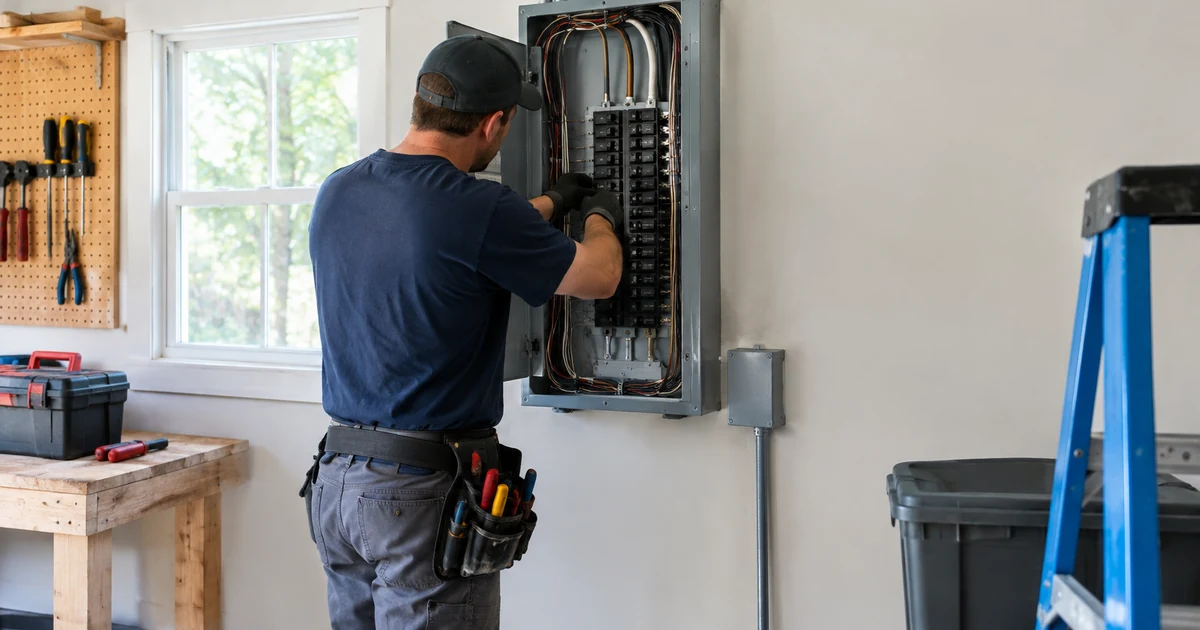
“Breaker box replacement” and “panel upgrade” are often used interchangeably, but they’re different jobs. A replacement swaps an old or unsafe panel for a new one of the same capacity. An upgrade increases the amperage your home can draw, which may also involve the meter and service wires.
- Breaker box replacement (same amperage): typically $850 to $2,000, with many homeowners paying around $1,500.
- Service upgrade to 200 amps: typically $1,500 to $3,200, and up to about $4,500 when the meter base and service entrance are replaced too.
- Single circuit breaker replacement: $150 to $250 installed, if the panel itself is fine.
- Main breaker replacement: about $200 to $300, more if there’s internal damage.
Cost Breakdown: Materials vs. Labor
Labor is the largest share of the bill. The panel itself is surprisingly affordable; you’re paying for a licensed electrician’s time, the permit and a job that has to pass inspection.
| Item | Typical cost |
|---|---|
| 200-amp panel (load center) | $250 – $400 |
| Breakers (standard, AFCI/GFCI) | $5 – $70 each |
| Wire, connectors, grounding and bonding | $100 – $400 |
| Electrician labor (4–10 hours) | $40 – $120+ per hour; often $800 – $2,000 total |
| Permit and inspection | $50 – $300 |
| Meter base replacement (if needed) | $200 – $800 |
Code updates can add breaker costs. Newer editions of the National Electrical Code require AFCI or GFCI protection on many circuits, and those breakers cost several times more than standard ones. How this applies to a panel swap depends on your local code, so ask your electrician.
Other Factors That Affect the Price
Meter and service entrance
Moving to 200 amps often means a new meter base and heavier service entrance cable. Meter box replacement typically runs $200 to $800, and the utility has to disconnect and reconnect power. Some utilities charge a fee for this; many don’t.
Panel location
Relocating a panel, for example out of a bathroom or closet where modern codes don’t allow it, typically adds $1,000 to $4,000 because circuits must be extended to the new spot.
Subpanels
Adding a subpanel for a garage, workshop or addition runs about $400 to $1,750. Sometimes a subpanel solves a “not enough slots” problem without a full service upgrade.
Old or recalled panels
Federal Pacific Electric (Stab-Lok) and Zinsco panels are widely considered fire hazards by electricians and home inspectors, and some insurers won’t cover homes that have them. These typically need full replacement, sometimes with extra work to fix damaged wiring.
Wiring condition
If the electrician finds aluminum branch wiring, ungrounded circuits or deteriorated wire, fixes can add a few hundred dollars. A whole-house rewire is a separate project costing $1,500 to $12,000 or more.
Wall repairs and access
Flush-mounted panels inside finished walls need drywall cutting and patching. Small patches are inexpensive; see our drywall repair cost guide if the damage is bigger.
Region
Electrician rates vary widely. Expect higher prices in large metros and in the Northeast and West Coast, and lower prices in many parts of the South and Midwest.
What a Good Panel Upgrade Quote Should Include
Electrical quotes can look similar on the bottom line but cover very different work. Before you compare, make sure each written quote lists:
- Panel brand, amperage and number of spaces, so you have room for future circuits.
- Breaker types, including how many AFCI or GFCI breakers local code requires.
- Service work: whether the meter base, service entrance cable and main disconnect are included.
- Grounding and bonding updates, such as ground rods and water pipe bonding.
- Permit, inspection and utility coordination, including who schedules the disconnect.
- Drywall or siding patching around the panel, or whether that’s left to you.
A detailed scope makes it easy to spot why one quote is $1,000 cheaper than another, and it protects you if something is left out.
Before you hire: get at least three written, itemized quotes from licensed and insured local pros. Prices for the same job often differ by 30% or more, and comparing line items is the fastest way to spot padding or missing work.
Signs You Need an Electrical Panel Upgrade
- Breakers trip often, especially when running the microwave, AC or space heaters together.
- You have a 60- or 100-amp service and plan to add a heat pump, EV charger, hot tub or electric range.
- Lights dim or flicker when large appliances start.
- The panel is warm, buzzing or shows scorch marks or rust. Call an electrician right away.
- You still have fuses or a Federal Pacific or Zinsco panel.
- No open breaker slots remain, and you’re relying on tandem breakers or multiple devices on one circuit.
- An insurer or home inspector has flagged the panel.
Big new loads are the most common trigger. A heat pump installation, whole-home standby generator, or a tankless electric water heater can all push an older 100-amp service past its limit.
DIY vs. Hiring a Pro
Replacing or upgrading a panel is not a DIY job. The service conductors coming into the panel stay energized even with the main breaker off, and only the utility can safely cut power at the meter. Most jurisdictions require a licensed electrician, a permit and an inspection, and your utility may need the permit before it reconnects power.
Doing it yourself can also create insurance and resale problems if the work isn’t permitted. Swapping a single standard breaker is sometimes done by experienced homeowners, but even that is safest left to a pro.
How long does a panel upgrade take?
Most panel replacements and 200-amp upgrades take 4 to 10 hours, and your power will be off for most of that time. Scheduling the utility disconnect and the inspection can add days or weeks to the overall timeline.
How to Save Money on an Electrical Panel Upgrade
- Get at least three quotes from licensed electricians, and confirm each includes the permit, meter base (if needed) and inspection.
- Bundle electrical projects. If you’re also adding an EV charger circuit, generator inlet or new outlets, doing it all in one visit saves on trip charges.
- Check utility and state programs. Some utilities and state energy offices offer help with panel upgrades tied to heat pump or EV charger installs, especially for income-qualified households.
- Don’t oversize. 200 amps is enough for most homes; 400-amp service can cost several times more.
- Consider load management instead of a full service upgrade when your load calculation is close.
- Schedule non-urgent upgrades ahead of big projects so you aren’t paying emergency rates.
- Ask about the utility’s role. Find out upfront whether your utility charges for disconnect, reconnect or a new service drop.
Frequently Asked Questions
How much does it cost to upgrade from 100 to 200 amps?
Most homeowners pay $1,500 to $3,200, about $2,400 on average. If the meter base and service entrance cable also need replacing, expect up to about $4,500.
How much does a breaker box replacement cost?
Replacing a breaker box with a new panel of the same amperage typically costs $850 to $2,000. Replacing just one circuit breaker costs about $150 to $250.
Do I need a permit to replace an electrical panel?
Almost always, yes. Most jurisdictions require a permit and inspection, and the utility often won’t reconnect power until the work passes. Permit fees typically run $50 to $300.
How long does an electrical panel last?
Panels often last several decades, but age alone isn’t the only issue. Rust, overheating, frequent trips, fuses, or a Federal Pacific or Zinsco brand are all reasons to have an electrician evaluate it.
Do I need a 200-amp panel for an EV charger or heat pump?
Not always. Many homes with 100- or 150-amp service can add one with a load calculation or load management device. Homes adding several big electric loads usually benefit from 200 amps.
Does homeowners insurance cover a panel upgrade?
Generally no, since it’s considered maintenance or an upgrade. However, some insurers require replacing certain older panels, like Federal Pacific or Zinsco, to issue or renew a policy.