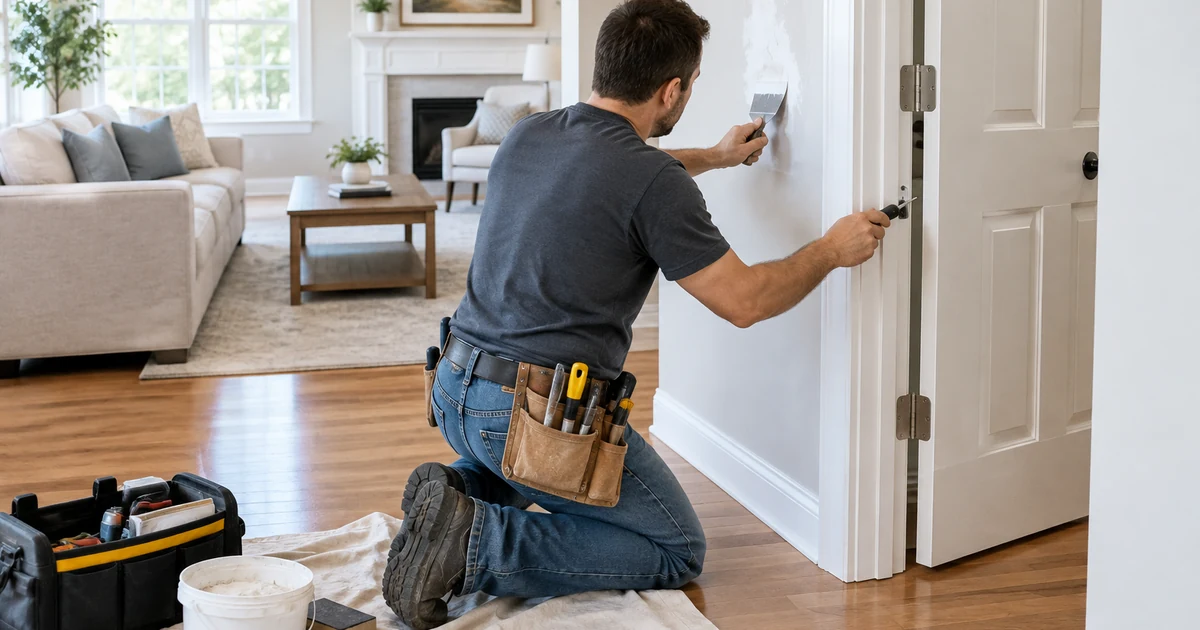
Handyman Cost per Hour by Type of Provider
Who you hire matters more than almost anything else. An independent handyman working out of their own truck has far lower overhead than a franchise with dispatchers, uniforms and advertising, and the hourly rate reflects that.
| Provider | Typical hourly rate | Good fit for |
|---|---|---|
| Independent, rural or lightly insured | $35–$65/hr | Simple tasks where price matters most |
| Independent, insured handyman | $50–$80/hr | Most small repairs and punch lists |
| Franchise or handyman company | $75–$125/hr | Scheduling reliability, guarantees, larger to-do lists |
| Specialized tasks (plumbing-adjacent, tile, carpentry) | Up to about $150/hr | Skilled finish work in high-cost areas |
Nationally, handyman labor runs about $50 to $150 per hour, and most homeowners hiring an insured independent pro pay $50 to $80 per hour. Large metros such as Los Angeles, New York and Boston sit near the top of the range, while many other cities and rural areas sit lower.
Franchise rates look high by the hour, but some include a guarantee on workmanship, background-checked technicians and easier rescheduling. For a long list of small jobs, that reliability can be worth paying for.
Why billed rates are higher than handyman wages
The U.S. Bureau of Labor Statistics reports a median wage of about $23.84 per hour for general maintenance and repair workers (May 2025), the occupation closest to handyman work. That is an employee’s pay, not a homeowner’s price. A self-employed handyman has to cover the vehicle and fuel, tools, liability insurance, self-employment taxes, advertising and phone, plus the unpaid time spent driving, buying materials and writing estimates. A company adds office staff and branding on top. That is why billed rates of $50 to $125 per hour are normal.
Hourly vs. Per-Job Pricing
Handymen bill in three common ways, and many use a mix depending on the task.
- Hourly: best for a to-do list of small, unrelated tasks. You pay for time on site, usually with a one- or two-hour minimum.
- Flat rate per job: common for defined tasks like mounting a TV, swapping a faucet or hanging a door. You know the price up front.
- Half-day or day rate: roughly $320 to $600 per day for one handyman. Good value when you have enough work to keep them busy for several hours.
Most handymen also charge a minimum of about $75 to $200 per visit, even if the job takes 20 minutes, and some add a trip charge of $30 to $80 or mileage in outlying areas. Mr. Handyman, for example, commonly charges about $75 to $100 per hour, with some locations pricing the first two hours as a package.
Handyman Prices by Job
These typical national prices include labor and, where noted, basic materials. They come from current cost guides and vary with your area and the condition of the house.
| Job | Typical cost | Approx. time |
|---|---|---|
| Hang heavy artwork or a mirror | $60–$125 | Under 1 hour |
| Adjust or repair a sticking door | $75–$220 | 1–2 hours |
| Replace a bathroom faucet | $100–$300 | 1–2 hours |
| Recaulk a shower or tub | $100–$280 | 1–3 hours |
| Ceiling fan installation (existing box) | $100–$400 | 1–3 hours |
| Patch drywall (small to medium hole) | $120–$350 | 1–3 hours plus drying |
| Hang shelves | $150–$500 | 1–4 hours |
| Mount a TV | $300–$400 | 1–3 hours |
| Paint a room | $200–$1,600 | 1–2 days |
By size, small jobs under two hours usually cost $50 to $250, medium jobs of two to five hours run $250 to $500, and larger jobs lasting a day or more land around $500 to $1,500. For bigger versions of these projects, compare our drywall repair cost, interior painting cost and interior door installation cost guides.
Cost Breakdown: Materials vs. Labor
On most handyman jobs, labor is the largest part of the bill. Materials are often modest, but how they are bought affects the total.
- Labor: $50–$80 per hour for an independent pro, $75–$125 for a company
- Minimum charge: $75–$200 per visit, often covering the first hour
- Trip charge or mileage: $30–$80, or about $0.30–$0.60 per mile outside the service area
- Materials: billed at cost plus a markup, commonly 10%–30% and sometimes 50% or more
- Shopping time: some handymen bill the time spent picking up supplies, so ask
As an example, a four-hour visit at $75 per hour, plus a $50 trip charge and about $60 of materials, comes to roughly $410. That is in line with the national average of about $400 for a handyman job.
What a Handyman Can Legally Do
This is the part many homeowners overlook. A handyman is not a licensed contractor, and states limit what they can take on. Hiring someone for work beyond those limits can leave you with failed inspections, uninsured damage and work that has to be redone.
Dollar limits on handyman jobs
Many states set a project value above which a contractor’s license is required. The threshold varies widely, from roughly $500 in some states to $10,000 in others, and it usually includes both labor and materials. In California, for example, the Contractors State License Board’s handyperson exemption rose from $500 to $1,000 per project on January 1, 2025. That amount covers labor, materials and everything else on the job; work that needs a building permit requires a license no matter how small, unlicensed workers can’t hire employees, and their ads must say they are not licensed.
Work that usually requires a licensed trade
- Electrical: new circuits, panel work and most wiring. See our electrician cost per hour guide.
- Plumbing and gas: new supply or drain lines, water heaters and any gas connection. See our plumber cost per hour guide.
- HVAC: refrigerant handling and equipment installation.
- Structural and roofing work, and anything else that needs a building permit in your area.
Rules differ by state, county and city, so check your state licensing board before hiring for anything beyond cosmetic repairs, assembly and small fixture swaps. A good handyman will tell you when a job needs a licensed pro.
Other Factors That Affect the Price
Location
Rates in large coastal metros can run $60 to $125 per hour, compared with $35 to $90 in many other cities. Use the region setting in the calculator to adjust.
Size of the to-do list
Because of minimum charges and trip fees, one task per visit is the most expensive way to hire a handyman. A full half-day list spreads those fixed costs across many jobs, so the effective cost per task drops sharply once you have four or five items ready.
Skill and specialty
Basic assembly and hanging tasks sit at the low end. Finish carpentry, tile repair and fixture work that requires more skill or specialized tools pushes rates higher.
Insurance
Insured handymen charge more than uninsured ones, but liability coverage protects you if they damage your home or someone is hurt. Ask for a certificate of insurance before work starts, and make sure the policy is current on the day of the job.
Materials and condition
Older homes with out-of-square doors, plaster walls or hidden damage take longer. Expect the price to rise if the handyman finds rot or water damage behind what looked like a simple repair.
Before you hire: get at least three written, itemized quotes from licensed and insured local pros. Prices for the same job often differ by 30% or more, and comparing line items is the fastest way to spot padding or missing work.
How to Hire a Good Handyman
A low hourly rate only saves money if the work is done right the first time. A few checks before you book reduce the risk of paying twice.
- Describe the full list in writing, with photos and measurements, so every quote covers the same work.
- Ask how they bill: hourly or flat, the minimum charge, the trip fee, and whether shopping time and material markup are included.
- Ask for proof of liability insurance. If they will work on ladders or roofs, this matters even more.
- Confirm the job is within their legal scope. If any part needs a licensed electrician, plumber or a permit, ask how they handle it.
- Get the price in writing before work starts, including what happens if they uncover hidden damage.
- Keep deposits small. For short handyman jobs, paying on completion is common. California, for example, caps an unlicensed handyperson’s down payment at 10% of the contract price.
Reviews from neighbors and local groups are useful, but they don’t replace a clear written scope and a quick insurance check.
DIY vs. Hiring a Handyman
If you own the tools and the job is simple, such as assembling furniture, hanging pictures or replacing cabinet hardware, doing it yourself avoids a $75 to $200 minimum. A handyman earns their fee on tasks where experience saves time and mistakes: patching drywall so it disappears under paint, hanging a door that actually closes, or mounting a heavy TV securely into studs.
Seasonal chores are another good fit. Many handymen also handle tasks like cleaning gutters; compare their rate with a dedicated service in our gutter cleaning cost guide.
How to Save Money on a Handyman
- Bundle tasks into one half-day or full-day visit to spread the minimum and trip fee.
- Buy materials yourself if the handyman agrees, to avoid a 10%–30% markup. Get the exact product list first.
- Compare an independent pro and a company for the same list; the hourly gap can be $25 to $50.
- Prepare the work area by clearing furniture and access so paid time goes to the work.
- Ask for a flat price on well-defined jobs to avoid open-ended hourly billing.
- Get two or three quotes for anything that will take more than a day.
- Check license limits so you don’t pay twice when unlicensed electrical or plumbing work has to be redone.
Frequently Asked Questions
Do handymen charge by the hour or by the job?
Both. Many charge hourly for mixed to-do lists, with a one- or two-hour minimum, and quote flat prices for defined tasks like TV mounting or faucet replacement. Day rates of roughly $320 to $600 are common for longer lists.
What is a handyman's minimum charge?
Most handymen charge a minimum of about $75 to $200 per visit, which usually covers the first hour. Some add a $30 to $80 trip charge on top.
Is it cheaper to hire a handyman or a contractor?
For small repairs, a handyman is usually cheaper because there is no general contractor markup, which commonly adds 10% to 20% of project cost. For larger projects that need permits or licensed trades, a licensed contractor is required in most states.
Can a handyman do electrical or plumbing work?
In most states, only very minor tasks are allowed, and the exact rules vary by state and city. New circuits, panel work, new pipes, water heaters and gas lines require a licensed electrician or plumber.
How much can a handyman charge without a license?
It depends on the state. Thresholds range from about $500 to $10,000 per project. In California, the limit is $1,000 including labor and materials since January 1, 2025, and any job that needs a building permit requires a license.
Should I tip a handyman?
Tipping is optional. Some homeowners give about $10 to $20 for small jobs and $20 to $50 for larger projects, especially for an independent handyman who did careful work.