Drywall Repair Cost by Type of Damage
The size and type of damage matter more than anything else. A few nail pops or a doorknob hole is a quick patch, while a water-stained section usually means cutting out and replacing wet board. Keep in mind that most pros have a minimum charge, so even a tiny repair rarely costs less than $75 to $150 once you add the trip.
| Damage | Typical fix | Pro cost |
|---|---|---|
| Nail pops, dents, small dings | Reset screws, spackle, touch up | $75–$200 |
| Small hole (under 4 in.) | Spackle or mesh patch | $100–$300 |
| Medium hole (4–12 in., doorknob, fist) | California patch or backer + new piece | $150–$400 |
| Large hole or damaged panel section | Cut out, add blocking, new drywall, tape and mud | $250–$600 |
| Cracks and loose seams | Re-tape and re-mud joint | $150–$500 |
| Ceiling repair | Patch or replace section overhead | $250–$1,300 |
| Water-damaged wall section | Remove wet board, dry out, replace, finish | $400–$1,500 |
National cost guides put the average drywall repair at roughly $350 to $900, with most homeowners paying around $550. The low end is a single small patch. The high end is water damage, ceilings, or several rooms at once.
When repairs get larger, contractors often switch to per-square-foot pricing. For small patches, expect about $50 to $80 per square foot of damaged area, because the labor to tape, mud, sand, and blend is the same whether the patch is 1 sq ft or 4 sq ft. Once you’re replacing whole sheets, the job looks more like new drywall installation, which is priced at a few dollars per square foot.
Cost by patch size
| Damaged area | Approx. cost |
|---|---|
| 1 sq ft | $50–$80 |
| 4 sq ft | $200–$320 |
| 10 sq ft | $500–$800 |
| 20 sq ft | $1,000–$1,600 |
These figures cover the patch itself. Painting and texture matching are often extra, and they can easily double the cost of a small repair.
Cost Breakdown: Materials vs. Labor
Drywall repair is almost all labor. Patching compound, tape, a scrap of drywall, and paint rarely add up to more than $30 to $60 for a typical job.
- Handyman labor: about $50–$80 per hour. Good for small holes, nail pops, and minor cracks.
- Drywall contractor labor: about $60–$150 per hour. Better for ceilings, large sections, and smooth-finish walls where blending matters.
- Minimum service charge: many pros bill a flat minimum or a half-day rate. Handymen often start around $75–$150, while some drywall contractors set job minimums of $350 or more, especially in high-cost markets.
- Materials: a DIY patch kit costs $10–$30, and a sheet of drywall is about $10–$25.
- Texture matching: roughly $1–$3 per sq ft, often with a flat minimum.
- Painting: about $2–$6 per sq ft of wall, or a few hundred dollars to repaint one wall so the patch disappears.
Why does a 10-minute patch cost $150 or more? Joint compound needs two or three coats, with drying time between each, plus sanding and priming. Unless you’re fine with a visible patch, a pro usually makes at least two visits or waits on site between coats.
Other Factors That Affect Drywall Repair Cost
Water damage and the underlying cause
Water-damaged drywall is the most expensive common repair, typically $400 to $1,500, because the wet board must be removed, the cavity dried, and sometimes the insulation replaced. The leak itself has to be fixed first, whether it’s a plumbing line, a failing roof, or a water heater that’s starting to leak. If you see mold on the back of the board, mold remediation is a separate and potentially large cost.
Ceilings
Overhead work is slower and messier, so ceiling patches cost more than wall patches of the same size. Popcorn or heavily textured ceilings are hard to match, and older popcorn texture should be tested for asbestos before anyone sands or scrapes it.
Texture and finish
Smooth walls are the easiest to patch invisibly with enough sanding. Knockdown, orange peel, and hand-troweled textures need to be recreated to match the surrounding area, and that skill is what separates a good repair from an obvious one.
Paint matching
Fresh paint on a patch rarely matches a wall that has faded for years. Pros usually repaint the whole wall, corner to corner, which adds cost but hides the repair. If you have leftover paint from the original job, have it ready.
Number of repairs
Because the trip and setup are the same, fixing five holes in one visit costs much less per hole than scheduling five separate repairs. Walk your house and make a list before calling.
Corner bead and seams
Dented or cracked outside corners need the damaged corner bead cut out and replaced, which typically costs a bit more than a flat patch of the same size. Peeling or bubbling tape along a seam is re-taped and feathered out, and the fix can stretch several feet along the joint.
Cracks that come back
Diagonal cracks above doors and windows, or cracks that keep reopening, can point to settling or structural movement. Patching them repeatedly is money wasted if the cause isn’t addressed; a home inspector or structural engineer can tell you whether it’s normal settling or something bigger.
Before you hire: get at least three written, itemized quotes from licensed and insured local pros. Prices for the same job often differ by 30% or more, and comparing line items is the fastest way to spot padding or missing work.
Signs You Need Drywall Repair
Some damage is obvious, like a doorknob hole. Other problems are easy to miss until they get worse. Call a pro, or at least investigate, if you notice any of these:
- Brown or yellow stains on walls or ceilings, a sign of an active or past leak.
- Soft, bulging, or crumbly spots when you press gently on the wall.
- Sagging ceiling drywall, which can come from water, loose fasteners, or heavy insulation above. Treat it as urgent.
- Musty smells or visible mold near baseboards, bathrooms, or exterior walls.
- Repeated cracks at the same spot, especially diagonal ones from door and window corners.
- Rows of nail pops, which often show up after a home’s first year or two as framing lumber dries and shifts.
DIY vs. Hiring a Pro for Drywall Repair
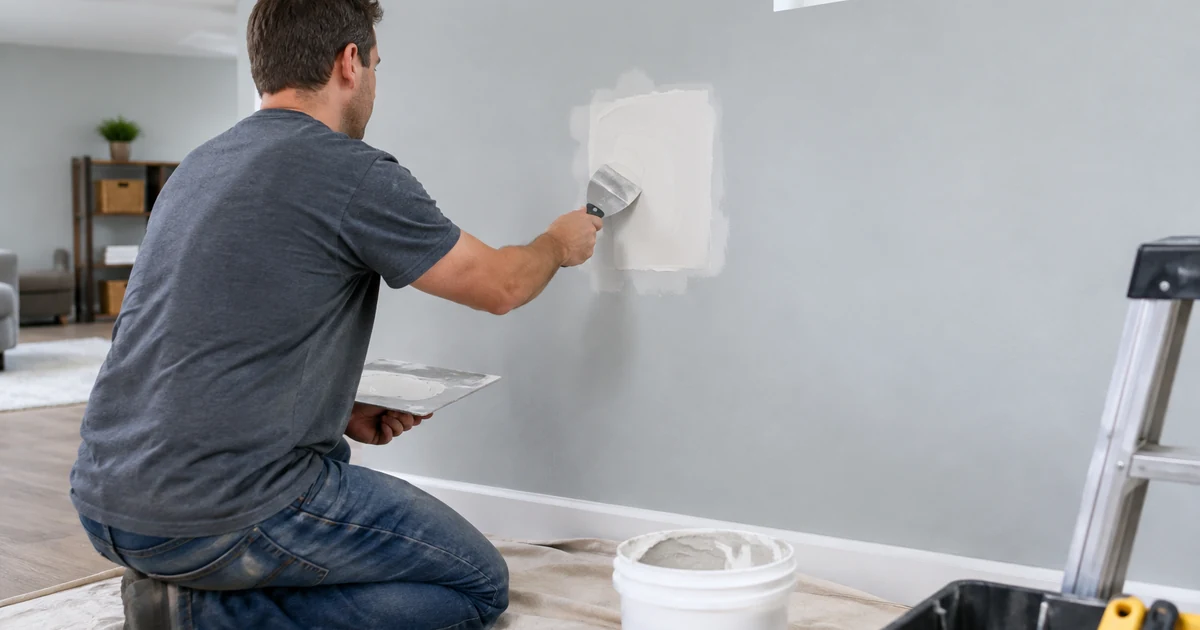
Small drywall repairs are one of the most DIY-friendly home jobs. A $10 to $30 patch kit handles most holes under 4 to 6 inches, and nail pops just need a new screw and a dab of compound.
- Good DIY projects: nail pops, dents, small holes, hairline cracks in closets or garages, and any repair you’ll texture or paint over.
- Call a pro for: water damage (you need to confirm the leak is fixed and the cavity is dry), ceilings, large sections that need blocking behind them, and smooth walls in main living areas where a visible patch would bother you.
- Safety note: before cutting into a wall, check for wires and pipes behind it. In homes built before the 1980s, drywall mud and textures may contain asbestos, so test before sanding.
Repair vs. replace
Repair makes sense when damage is limited to a few spots. Replacement is the better call when drywall has been soaked for more than a day or two, shows mold, is sagging on a ceiling, or when damage covers most of a wall. At that point, stripping and re-hanging the whole wall often costs about the same as extensive patching and gives a cleaner result.
How to Save Money on Drywall Repair
- Bundle repairs into one visit so you pay the minimum charge only once.
- Do the painting yourself. Let the pro handle the patch and texture, then prime and paint the wall on your own.
- Use a handyman for simple patches. Their hourly rates are usually lower than a drywall specialist’s.
- Fix the cause first. Repairing water damage before the leak is fixed means paying twice.
- Check your homeowners insurance for sudden water damage, such as a burst pipe. Gradual leaks and wear usually aren’t covered.
- Keep leftover paint and note the color codes so future touch-ups blend without repainting a whole wall.
- Get two or three quotes for anything over a few hundred dollars, and confirm each one covers texture, primer, and paint.
Frequently Asked Questions
How much does it cost to fix a hole in drywall?
A small hole under 4 inches typically costs $100 to $300 with a pro, largely because of minimum service charges. A doorknob- or fist-sized hole runs about $150 to $400, and larger holes that need a new piece of drywall cost $250 to $600, before painting.
How much does it cost to repair water-damaged drywall?
Expect about $400 to $1,500 for a typical water-damaged section, including cutting out wet board, drying, replacing, and finishing. Costs rise if insulation must be replaced or mold is found, and the source of the leak must be repaired separately.
Do handymen fix drywall?
Yes. Handymen commonly handle small holes, nail pops, and minor cracks for about $50 to $80 per hour. For ceilings, large sections, or smooth walls where the patch must be invisible, a drywall contractor may give a better finish.
Does homeowners insurance cover drywall repair?
It may cover drywall damaged by a sudden, accidental event such as a burst pipe, subject to your deductible. Damage from long-term leaks, neglect, or normal wear typically isn’t covered, so check your policy.
Is it better to patch or replace drywall?
Patch when damage is limited to a few spots. Replace when drywall is soaked, moldy, sagging, or damaged across most of a wall, since extensive patching can cost about as much and look worse.
How long does a drywall repair take?
The hands-on work is often an hour or two, but joint compound needs to dry between coats. Most repairs are finished in one to two days, and painting can follow once the final coat is dry and primed.