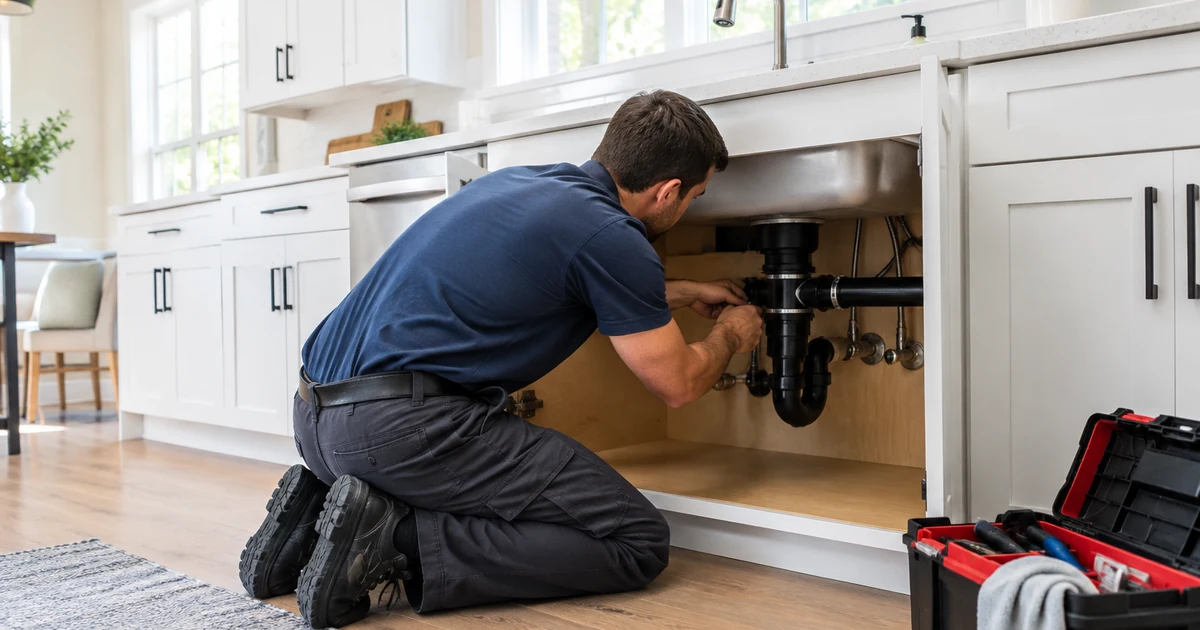
Plumber Cost per Hour by Experience Level
Plumbing is a licensed trade in most states, and the license level of the person doing the work is the biggest driver of the hourly rate. Apprentices work under supervision, journeymen can work on their own, and master plumbers can pull permits, design systems and run a business.
| Plumber level | Typical billed rate | What they usually handle |
|---|---|---|
| Apprentice (supervised) | $45–$90/hr | Helper work, simple fixture swaps, digging and cleanup on larger jobs |
| Journeyman plumber | $60–$120/hr | Most repairs, drain clearing, fixture and water heater installs |
| Master plumber | $80–$200/hr | Permitted work, gas lines, repiping, complex diagnostics, supervising crews |
| Emergency / after-hours call | $100–$500/hr | Burst pipes, sewer backups and no-water calls at night, weekends and holidays |
Across these levels, most homeowners pay $75 to $150 per hour for a licensed plumber during business hours. Rates under $75 usually mean an apprentice, a rural market or a small owner-operator with low overhead. Rates well above $150 are common in large coastal metros and for master plumbers doing gas or sewer work.
Many companies send a journeyman with an apprentice on bigger jobs. In that case you may see two hourly lines on the invoice, or a single crew rate that is higher than either person’s rate alone.
Why the hourly rate is much higher than a plumber’s wage
The U.S. Bureau of Labor Statistics reports a median wage of about $30.67 per hour for plumbers, pipefitters and steamfitters (May 2025). That is what the employee takes home before taxes, not what a homeowner pays. The billing rate also has to cover the truck and fuel, stocked parts, specialized tools such as drain cameras and jetters, liability insurance, workers’ compensation, licensing, payroll taxes, benefits, office staff and the drive time between calls that nobody pays for directly. That is why a billed rate of three to four times the wage is normal for a legitimate, insured plumbing company.
Service Call, Trip Fees and Minimum Charges
The hourly rate is only part of the bill. Nearly every plumber charges something just to show up, and the way it is structured varies from company to company.
| Fee type | Typical cost | How it works |
|---|---|---|
| Trip or dispatch fee | $50–$150 | Covers travel; labor is billed on top |
| Service call with first hour | $100–$350 | Flat charge that includes the first hour (or 30–60 minutes) of work |
| Mileage outside the service area | $1–$2 per mile | Usually starts after the first 10 miles or so |
| After-hours trip fee | $150–$300 | Added to emergency visits at night, on weekends or holidays |
| Leak-detection or diagnostic fee | Varies | Extra charge for camera inspections or hard-to-find leaks |
A one-hour minimum is standard. If the plumber fixes a running toilet in 20 minutes, expect to pay for the full hour or the full service call. Some companies credit the trip fee toward the repair if you approve the work, so ask before booking.
Flat-Rate Plumbing Job Prices
Most residential plumbing companies now quote common jobs at a flat rate rather than by the hour. The price is based on the average time the job takes plus parts, so you know the total before work starts. These are typical national ranges for parts and labor combined.
| Job | Typical flat price | Approx. labor time |
|---|---|---|
| Unclog a sink | $75–$250 | Under 1 hour |
| Clear a main drain clog | $100–$275 | 1–2 hours |
| Toilet repair (flapper, fill valve, wax ring) | $100–$300 | 1 hour |
| Faucet installation (customer-supplied faucet) | $120–$300 | 1–2 hours |
| Fix a leaking pipe | $150–$850 | 1–4 hours |
| Water heater repair | $150–$700 | 1–3 hours |
| Toilet installation | $250–$750 | 2–3 hours |
| Sewer line camera inspection | $125–$500 | 1–2 hours |
| Sump pump installation | $550–$950 | 3–5 hours |
| Water heater installation (tank) | $600–$1,800 | 2–4 hours |
Flat-rate pricing protects you if the job runs long, but it also means you pay the full price if it goes quickly. For bigger projects, see our detailed guides to water heater replacement cost, toilet installation cost and garbage disposal installation cost.
Cost Breakdown: Materials vs. Labor
On small repair calls, labor and the service fee make up most of the bill. Parts become the larger share on installations, where the fixture or appliance itself can cost more than the work.
- Service call or trip fee: $50–$350, depending on whether the first hour is included
- Labor: $75–$150 per hour for a licensed plumber in most markets
- Small parts (washers, supply lines, wax rings, fittings, shutoff valves): $10–$100 on a typical repair
- Markup on parts: plumbers commonly charge more than retail for parts carried on the truck, which covers stocking and the warranty on their work
- Permit: required for water heaters, new lines, repiping and many fixture relocations; often $50–$300 depending on the city
As an example, a two-hour repair with a $100 trip fee and a $110 hourly rate comes to about $320 before parts. That lines up with the typical $310 shown in the calculator above.
Other Factors That Affect Plumber Rates
Time of day and urgency
Emergency plumbers typically charge 1.5 to 3 times their normal rate. Evening calls cost less than weekend calls, and holidays are the most expensive. If water is shut off and the problem can wait until morning, waiting can cut the bill in half.
Location
Rates follow local wages, licensing rules and cost of living. Large metros in the Northeast and on the West Coast sit at the top of the range, while rural areas and much of the South and Midwest sit lower. Use the region selector in the calculator to adjust for your area.
Access and difficulty
Pipes in a finished wall, under a slab or in a tight crawl space take longer to reach. Opening drywall, working around old galvanized or cast-iron pipe, and dealing with seized fittings all add billable time.
Type of work
Gas line work, sewer repairs and anything that needs a permit usually requires a master plumber or a licensed company, which pushes rates toward the high end. Simple drain clearing and fixture swaps can often be handled at a lower rate.
Company size
Large companies with dispatchers, 24/7 phone lines and branded trucks generally charge more than independent plumbers, but they often offer faster scheduling, financing and longer warranties on work.
Before you hire: get at least three written, itemized quotes from licensed and insured local pros. Prices for the same job often differ by 30% or more, and comparing line items is the fastest way to spot padding or missing work.
Hourly vs. Flat-Rate Pricing: Which Is Better?
Neither model is automatically cheaper. Each has trade-offs worth understanding before you accept a quote.
- Hourly billing works in your favor on quick, simple jobs and when you can clearly describe the problem. The risk is that a stubborn repair keeps the meter running.
- Flat-rate pricing gives you a fixed number up front, which is easier to compare between companies. It usually includes a cushion for jobs that run long, so fast jobs can feel expensive.
- Not-to-exceed quotes are a middle ground: the plumber bills by the hour but agrees to a ceiling unless you approve extra work.
Whichever model you choose, ask for the price in writing before work starts and make sure it states what happens if the plumber finds a bigger problem once the wall or drain is open.
Emergency Call or Next-Day Appointment?
Because after-hours work can double or triple the bill, it helps to sort problems by real urgency before you pick up the phone.
- Call an emergency plumber now: a burst or actively leaking pipe you can’t isolate, sewage backing up into the house, no water at all, or a smell of gas near a water heater or appliance. For a gas smell, leave the home and call your gas utility or 911 first.
- Usually safe to wait for business hours: a slow drain, a dripping faucet, a running toilet, a single clogged fixture when other bathrooms work, or a leak you have stopped by closing a fixture or main shutoff valve.
- Gray area: no hot water. It’s uncomfortable, but if the tank isn’t leaking, many households can manage until morning and avoid a holiday or overnight rate.
DIY vs. Hiring a Plumber
Some tasks are reasonable for a careful homeowner: plunging a clog, replacing a toilet flapper, swapping a showerhead or tightening a loose supply line. Paying a $100+ trip fee for those small fixes rarely makes sense.
Hire a licensed plumber for anything involving gas lines, water heaters, sewer lines, moving supply or drain lines, or work that requires a permit. Mistakes here can cause gas leaks, carbon monoxide hazards, hidden water damage or failed inspections when you sell the home. For tasks that are more carpentry than plumbing, such as patching drywall after a repair, a handyman is usually cheaper; see our handyman cost per hour guide.
How to Save Money on a Plumber
- Book during business hours. Unless water is actively leaking and can’t be shut off, scheduling for a weekday avoids emergency multipliers.
- Know where your main shutoff is. Stopping a leak yourself turns an emergency call into a scheduled one.
- Bundle small jobs. Once you have paid the trip fee, adding a dripping faucet or a running toilet to the same visit costs far less than a second call.
- Get two or three quotes for any job over a few hundred dollars, and compare what each one includes.
- Describe the problem clearly with photos, model numbers and the age of the fixture, so the plumber arrives with the right parts.
- Ask about the trip-fee credit. Some companies apply it toward the repair if you approve the work the same day.
- Consider a maintenance plan only if you expect regular service; many include waived trip fees and priority scheduling.
If your project also needs wiring, such as a new circuit for an electric water heater or a sump pump, compare rates in our electrician cost per hour guide.
Frequently Asked Questions
How much does a plumber charge for a 1-hour job?
Expect roughly $125 to $350 for a one-hour job during business hours. That covers the trip or service-call fee plus one hour of labor, which many companies bundle as a single minimum charge. Parts are extra.
How much does an emergency plumber cost per hour?
Emergency plumbers usually charge 1.5 to 3 times the normal rate, or roughly $100 to $500 per hour depending on the time and your area. Holidays and overnight calls are the most expensive, and an after-hours trip fee of $150 to $300 is common.
Why do plumbers charge a service call fee?
The fee covers driving to your home, the truck, fuel and the time spent diagnosing the problem. Some companies include the first hour of labor in it, and some credit it toward the repair if you approve the work.
Do plumbers charge by the hour or by the job?
Both. Many residential companies use flat-rate pricing for common jobs like drain clearing, toilet repairs and water heater installs, and bill hourly for diagnostics, unusual repairs or remodel work. Always ask which method applies before work starts.
How much does a plumber make per hour compared to what they charge?
The BLS median wage for plumbers is about $30.67 per hour (May 2025), while homeowners typically pay $75 to $150 per hour. The difference covers the truck, tools, insurance, licensing, payroll taxes, benefits, office staff and unpaid drive time.
Is a master plumber worth the higher rate?
For gas lines, sewer work, repiping or anything that needs a permit, yes, because the work often legally requires a master or a licensed company. For simple clogs and fixture swaps, a journeyman is usually enough and costs less per hour.