Washing Machine Repair Cost by Part and Problem
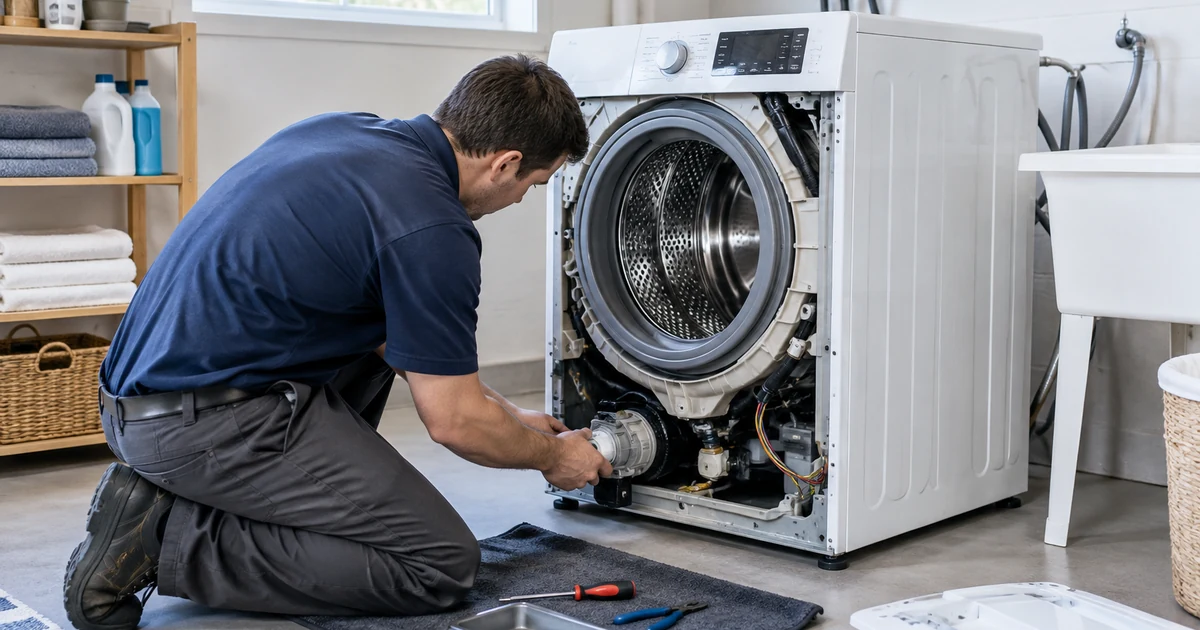
What breaks determines what you pay. Most washer repairs are a service call plus one part, and technicians usually quote a flat price after diagnosing the machine. The table below shows typical installed prices, including parts and labor, from national cost guides.
| Repair | Common symptom | Typical cost |
|---|---|---|
| Diagnosis / simple fix | Clogged filter, kinked hose, unbalanced machine | $75–$200 |
| Door lock or lid switch | Won’t start or won’t spin, door won’t unlock | $100–$250 |
| Drive belt | Drum won’t turn, burning smell, squealing | $100–$200 |
| Water inlet valve | Won’t fill, fills slowly, or overfills | $120–$275 |
| Drain pump | Water left in drum, won’t drain, humming | $150–$400 |
| Shock absorbers / suspension | Violent shaking or walking during spin | $100–$350 |
| Door boot seal (front-load) | Leaks at the door, mold on the gasket | $200–$500 |
| Control board | Dead display, error codes, random cycles | $250–$550 |
| Transmission / gearcase | Agitates but won’t spin (or vice versa), grinding | $200–$600 |
| Motor | Hums but won’t turn, no movement at all | $300–$700 |
| Tub bearings / drum / spider arm | Loud roaring or grinding during spin, leaks | $350–$900 |
Across all repairs, national averages land around $150 to $400, and most homeowners pay about $250. The cheap end covers switches, belts, and clogs. Control boards, motors, and bearing jobs are where repair bills start to approach the price of a new washer.
Top-load vs. front-load repair costs
Front-load washers usually cost more to fix. They have door boot seals that wear out and tend to grow mold, their bearings sit in a sealed rear tub that may need major disassembly, and many use more complex electronics. Cost guides put typical top-load repairs at roughly $50 to $300 and front-load repairs at roughly $100 to $400. High-efficiency, steam, and smart washers sit at the upper end because of pricier boards and sensors.
Common problems and what they usually cost
- Washer won’t drain: often a clogged pump filter or failed drain pump, about $150–$300.
- Washer won’t spin: lid switch, door lock, belt, or motor coupling on the cheap side; transmission or motor on the expensive side, about $150–$500.
- Washer won’t start: door lock, control board, or power issue, about $100–$400.
- Washer is leaking: loose hose, inlet valve, pump, or door seal, typically $75–$500 depending on the source.
- Loud banging or shaking: leveling legs, shock absorbers, or suspension rods, about $100–$350; roaring noises usually mean bearings.
Cost Breakdown: Parts vs. Labor
A washer repair bill usually has three pieces:
- Service call / diagnostic fee: typically $50–$100. Many companies credit it toward the repair if you go ahead.
- Labor: most appliance technicians charge about $50–$150 per hour, and many use flat-rate pricing per repair instead of billing by the hour.
- Parts: from $20–$50 for a lid switch, belt, or inlet valve up to $150–$400+ for a control board, motor, or complete tub assembly.
| Example repair | Parts | Labor + service call | Total |
|---|---|---|---|
| Lid switch (top-load) | $20–$60 | $80–$190 | $100–$250 |
| Drain pump | $40–$150 | $110–$250 | $150–$400 |
| Control board | $120–$350 | $130–$200 | $250–$550 |
Minimum service fees of $70 to $130 are common, so even a two-minute fix like clearing a pump filter will cost around $100 if a technician does it.
Other Factors That Affect Washing Machine Repair Cost
Brand and parts availability
Mainstream brands have cheap, widely available parts. European and premium brands, as well as newer smart models, may need proprietary parts that cost more and take longer to arrive. Some independent repair shops also decline to work on certain brands, which limits your choice of technicians and can push up the price. Before booking, give the company your washer’s brand and model number (usually on a sticker inside the lid or door frame) so they can confirm they service it and give a more accurate estimate.
Age and warranty
Check your manufacturer’s warranty, extended warranty, or home warranty before calling anyone. New washers come with a manufacturer’s warranty, and some brands cover specific parts such as motors or drums for longer than the base term. A covered repair may cost you nothing, or only a service fee.
Emergency and weekend service
Same-day, evening, or weekend calls usually carry a surcharge. Unless water is actively leaking, turning off the supply valves and waiting for a regular appointment is the cheaper choice.
Location and access
Rates are higher in big metro areas. Washers in tight closets, upstairs laundry rooms, or stacked units with a dryer on top can take extra time to pull out and access.
Plumbing and electrical problems
Sometimes the washer is fine and the problem is the house: a clogged standpipe, a bad outlet, or low water pressure. A clogged drain line is a plumber’s job, and plumbers typically charge a service call plus hourly rates.
Service plans and home warranties
Appliance maintenance plans typically run about $100 to $200 per year, and many home warranty plans include washers. They can make sense for an older machine you plan to keep, but read the fine print: most charge a fee per visit, cap how much they pay per repair, and exclude things like rust or cosmetic damage.
How long the repair takes
Many repairs are finished in a single visit of one to two hours when the technician carries the part on the truck. If the part must be ordered, expect a second visit a few days to a week later, and ask whether you’ll pay a second trip charge.
Before you hire: get at least three written, itemized quotes from licensed and insured local pros. Prices for the same job often differ by 30% or more, and comparing line items is the fastest way to spot padding or missing work.
Repair vs. Replace a Washing Machine
Most new full-size washers cost about $600 to $1,300, with high-end front-loaders and smart models costing more. Use a few simple rules to decide:
- The 50% rule: if the repair costs more than half the price of a comparable new washer, replacing usually makes more sense.
- Age: cost guides suggest replacement is often the better buy once a washer is around 7 to 10 years old and needs a major repair, or keeps breaking.
- Which part failed: switches, belts, valves, and pumps are almost always worth fixing. Bearings, transmissions, and motors on an older machine often are not.
- Efficiency: according to ENERGY STAR, certified clothes washers use about 20% less energy and about 30% less water than regular washers. If your machine is old and inefficient, a replacement pays back some of its cost over time.
DIY vs. hiring a pro
Some washer fixes are easy DIY: cleaning the drain pump filter on a front-loader, replacing inlet hoses, leveling the machine, or swapping a lid switch. Replacement parts for these jobs often cost $20 to $60. Always unplug the machine and shut off the water valves first, and be ready for water to spill when you open the pump filter.
Leave control boards, motors, transmissions, and bearing replacements to a pro. These jobs involve heavy components, live electrical testing, or full disassembly of the tub. DIY work can also void a warranty that is still active.
How to Save Money on Washing Machine Repair
- Check the simple stuff first: power, the circuit breaker, a kinked drain hose, the pump filter, and whether the lid or door is fully latched.
- Look up the error code in your owner’s manual. Many codes point to clogs or unbalanced loads you can fix yourself.
- Use your warranty coverage (manufacturer, extended, credit card, or home warranty) before paying out of pocket.
- Ask if the diagnostic fee is credited toward the repair when you book.
- Avoid emergency rates by shutting off the water and scheduling a regular weekday visit.
- Get a second opinion on repairs over about $400, especially on an older machine.
- Prevent repeat problems: don’t overload the drum, use HE detergent in HE machines, leave front-load doors open to dry, and replace rubber fill hoses with braided ones.
If you’re replacing other appliances or plumbing at the same time, compare our guides to water heater replacement cost and garbage disposal installation cost, since some plumbers and appliance pros will bundle trips.
Frequently Asked Questions
Is it worth repairing a washing machine?
Usually, if the repair costs less than half the price of a new washer and the machine is under about 7 to 10 years old. Switches, belts, valves, and pumps are typically worth fixing, while major repairs on an older washer often aren’t.
How much does it cost to have someone look at a washing machine?
Most appliance repair companies charge a diagnostic or service-call fee of about $50 to $100. Many credit that fee toward the repair if you hire them to do the work.
How much does it cost to fix a washer that won't drain?
A washer that won’t drain often has a clogged pump filter or hose, which may cost around $100 for a service visit, or nothing if you clear it yourself. Replacing a failed drain pump typically costs $150 to $400.
Why does my washer shake so much during the spin cycle?
Common causes are an unbalanced load, a machine that isn’t level, or worn shock absorbers or suspension rods. Leveling is free; replacing shocks or suspension typically costs $100 to $350 with a technician.
Are front-load washers more expensive to repair?
Generally, yes. Front-loaders have door seals that wear out, bearings that are harder to reach, and more complex electronics, so repairs often cost more than similar top-load repairs.
Does a home warranty cover washing machine repair?
Many home warranty plans cover washers, either in a base plan or as an add-on, but you’ll pay a service fee per claim and coverage limits apply. Read the contract for exclusions such as rust, cosmetic damage, or improper installation.