Entry Door Replacement Cost by Material
The material of the door slab is the biggest single driver of what you pay. Steel is the budget choice, fiberglass covers the broad middle of the market, and solid wood and wrought iron sit at the top. The figures below are for a standard 36-inch single prehung door; the installed column includes typical labor for a straight swap into an existing opening.
| Door material | Prehung door only | Installed (single door) | Best for |
|---|---|---|---|
| Steel | $200–$1,000 | $500–$1,500 | Security, tight budgets, low maintenance |
| Fiberglass | $300–$2,000 | $650–$2,500 | Most homes; wood look without warping |
| Solid wood | $500–$2,500 | $900–$3,200 | Traditional and historic homes, covered porches |
| Wrought iron | $1,700–$3,000+ | $2,500–$7,000 | High-end custom entries |
Steel doors are usually the most affordable and resist forced entry well, but they dent and can rust if the finish is scratched in a coastal climate. Fiberglass costs more than steel and less than wood. It doesn’t rot or warp, it can be stained to mimic oak or mahogany, and it handles sun and humidity better than most wood doors, which is why it’s the most common pick for replacement front doors.
Solid wood offers the richest look and the most customization, but it needs refinishing every few years and does best under a porch roof or overhang. Wrought iron doors are usually custom-sized and glass-heavy, so freight, special framing and longer install times push them well above the other materials.
Prehung door vs. slab only
A prehung door arrives already hung in its own frame with hinges, a threshold and weatherstripping. It’s the standard choice for a front door replacement because it fixes worn jambs and drafty sills at the same time. Installed prices for a prehung exterior door typically run about $440 to $1,800 for basic to mid-range models, with labor around $220 to $400 and 2 to 4 hours of work.
A slab door is just the door panel. It costs less to buy, but the installer has to plane it to fit, mortise the hinges and bore the lock holes, so labor runs closer to $300 to $800 and the job can take 3 to 8 hours. A slab only makes sense when the existing frame is square, solid and free of rot. In practice the total for a slab swap often lands within a few hundred dollars of a prehung replacement.
Sidelights, transoms and double doors
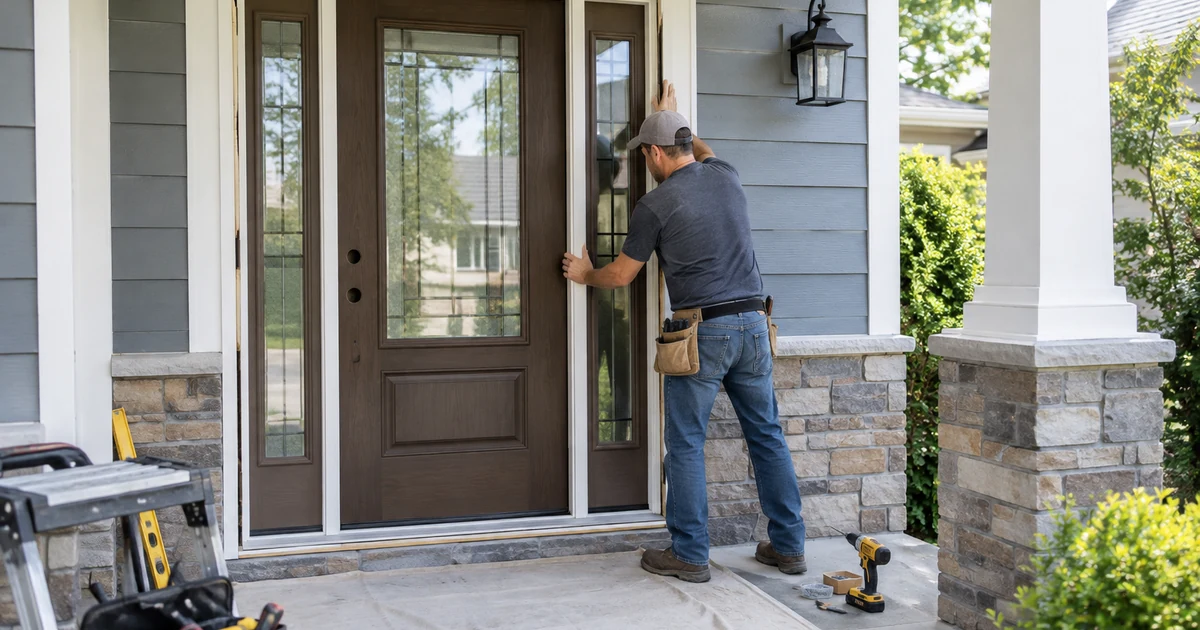
Glass panels around the door add light and curb appeal but raise the price quickly, because the whole unit gets wider and heavier and the opening may need to be reframed.
| Configuration | Typical installed cost | Notes |
|---|---|---|
| Single door, no glass panels | $500–$2,500 | Most common replacement |
| Single door + one or two sidelights | $1,800–$4,500 | Each sidelight adds roughly $500–$1,500 |
| Transom window above the door | +$200–$1,000 (materials) | More if the header must be raised |
| Double entry doors | $1,500–$6,500 | Fiberglass and wood pairs run highest |
| Decorative glass insert in the door | +$100–$1,000 | Privacy, leaded or triple-pane glass costs more |
Replacing an existing sidelight unit with a new one of the same size is far cheaper than adding sidelights to a single-door opening. Widening the opening means cutting the wall, installing a longer header and patching siding and drywall, which can add $1,000 or more before the door itself.
Cost Breakdown: Materials vs. Labor
On a standard single-door job, the door unit usually accounts for half to two-thirds of the bill. The rest is labor, hardware and small items that are easy to overlook when comparing quotes.
- Prehung door unit: $200–$2,500 depending on material, glass and finish
- Installation labor: about $300–$500 for a basic single door with no framing issues; up to $1,500 or more for double doors, sidelights or custom units
- Lockset and deadbolt: $50–$300 for a handle set, $15–$100 for a deadbolt, or $100–$500 for a smart lock
- Hinges, threshold and weatherstripping (slab installs): $40–$140 combined
- Interior and exterior trim: about $0.60–$1.20 per linear foot in materials, plus labor
- Removal and disposal of the old door: $70–$200, often bundled into the quote
- Painting or staining: $125–$225 for the door, $150–$400 including trim
Door installation contractors generally charge $40 to $90 per hour, while a handyperson may charge $30 to $80 per hour. Most installers quote a flat price for the whole job, so ask what the price includes rather than comparing hourly rates. If you’re also replacing a back or side door, our patio door replacement cost guide covers sliding and French door pricing.
What a standard replacement quote should include
A complete quote for a prehung front door replacement follows roughly the same steps. Knowing them makes it easier to compare bids line by line:
- Measuring the rough opening and confirming the door size, swing direction and glass option before ordering.
- Removing the old door, frame, interior casing and exterior brick molding, and hauling them away.
- Inspecting the subfloor, sill and framing for rot and repairing what’s found.
- Flashing the sill and sides of the opening so water drains out rather than into the wall.
- Setting, shimming and fastening the new unit so it’s plumb, level and square.
- Insulating the gap around the frame with low-expansion foam and installing new trim.
- Installing the lockset and deadbolt, adjusting the threshold and checking that the door seals evenly.
A bid well below the others often leaves out trim, flashing, hardware or disposal. Those items tend to reappear later as change orders.
Other Factors That Affect the Price
Frame and jamb repair
Rot at the bottom of the jambs and under the threshold is common on older entries, especially where water splashes off a stoop. Small frame repairs typically cost $75 to $200, while rebuilding parts of the opening runs about $7 to $20 per linear foot. Replacing the full jamb and casing often adds $200 to $650. Your installer won’t know the full extent until the old door is out, so ask how hidden rot will be priced.
Door size and custom openings
Standard 36-by-80-inch doors are stocked in many styles and cost the least. Taller 8-foot doors, extra-wide openings and arched tops usually mean a special order and a longer wait. Nonstandard sizes also add labor because the installer may need to shim or build out the rough opening.
Glass and energy performance
Doors with decorative or insulated glass cost more than solid panels. Look for a door with a polyurethane foam core, tight weatherstripping and an adjustable threshold; these matter more for comfort than the door’s face material. A well-sealed new door can noticeably cut drafts compared with a warped original. If your windows are just as drafty, our window replacement cost guide shows what a matching upgrade costs.
Wall type and new openings
Swapping a door in an existing opening is the cheapest scenario. Cutting a brand-new doorway in an exterior wall is a different project: plan on $1,400 to $3,500 or more, including the opening, framing, permits and structural plans. Brick or stone walls and rerouting wiring or plumbing can add up to $1,200.
Permits
A like-for-like front door replacement usually doesn’t require a permit in most towns, but rules vary. Changing the size of the opening, altering a load-bearing wall or adding a new doorway almost always does. Historic districts and some HOAs also require approval of the door style and color.
Security and smart features
Upgrades such as multipoint locks, reinforced strike plates, impact-rated glass in hurricane zones, or a smart lock add to the hardware line. A smart lock alone runs about $100 to $500 before installation. Adding a protective storm door is a separate job; see our storm door installation cost guide for those prices.
Region and timing
Labor rates in large metro areas can be well above national averages. Custom and special-order doors often take several weeks to arrive, so plan ahead rather than waiting until the old door fails.
Before you hire: get at least three written, itemized quotes from licensed and insured local pros. Prices for the same job often differ by 30% or more, and comparing line items is the fastest way to spot padding or missing work.
Signs You Need a New Entry Door
Many front door problems can be fixed with new weatherstripping, a threshold adjustment or a hinge tweak. A full replacement is usually the better value when you see these signs:
- Soft, rotted wood in the door bottom, jambs or sill that goes beyond a small patch.
- Visible daylight or drafts around the door even after new weatherstripping.
- A warped or sagging door that sticks, won’t latch or has to be slammed to close.
- Rust-through or deep dents on a steel door, or cracked and delaminating skins on fiberglass.
- Fogged or cracked glass inserts that can’t be replaced separately.
- A door that’s 15 years old or more and no longer locks securely.
If the door slab is sound and only the hardware or seals are worn, a repair is often a fraction of the cost of a new unit. For interior openings, our guide to interior door installation cost covers lighter, less expensive doors.
DIY vs. Hiring a Pro
A handy homeowner can install a prehung door in an existing, square opening with basic carpentry tools, saving a few hundred dollars in labor. The tricky part is getting the frame plumb, level and properly flashed so water doesn’t get behind the sill. Small mistakes show up as a door that rubs, a lock that won’t line up or rot a few years later.
Hire a pro for slab-only installs, double doors, sidelight units, heavy wood or iron doors, and anything that involves changing the rough opening or a load-bearing wall. Professional installation also matters for warranty coverage: many manufacturers require it, or at least require that their installation instructions be followed.
How to Save Money on Entry Door Replacement
- Choose a standard size. Stock 36-by-80-inch doors cost far less than custom sizes and arrive faster.
- Consider steel or a mid-range fiberglass door. Both offer good insulation and security at a lower price than solid wood.
- Keep the existing opening. Avoid widening for sidelights unless the added light is a priority.
- Get at least three quotes that spell out the door model, hardware, trim, haul-away and how hidden rot will be priced.
- Reuse good hardware. A quality lockset in good condition can often move to the new door.
- Do the painting yourself. Primed doors are cheaper, and finishing them saves $125 to $400.
- Bundle projects. Installers sometimes discount when you replace a front door, a back door and a storm door in one visit.
Note that the federal 25C energy efficiency tax credit, which once covered some ENERGY STAR exterior doors, ended for property placed in service after December 31, 2025, so don’t count on it for a 2026 door. Check your state and utility for any remaining local incentives.
Frequently Asked Questions
How much does it cost to replace a front door?
Replacing a single front door typically costs $500 to $2,500 installed, and most homeowners pay around $1,450 for a mid-range fiberglass prehung door with new hardware. Steel doors land at the low end, while solid wood, wrought iron and doors with sidelights cost more.
How much does labor cost to install an entry door?
Labor for a basic single prehung door with no framing problems usually runs $300 to $500. Slab-only installs, double doors, sidelight units and jobs with rotted frames can push labor to $1,500 or more.
Is a fiberglass or steel front door better?
Steel doors cost less and are very secure but can dent and rust. Fiberglass costs more, resists dents, rot and warping, and can be stained to look like wood, which makes it the most popular replacement choice.
Is it cheaper to buy a prehung door or a slab?
A slab costs less to buy, but it needs more labor to fit, hinge and bore, so the installed price often ends up close to a prehung door. Prehung units are usually the better value when the old frame is worn, drafty or rotted.
How long does it take to replace an entry door?
A pro typically installs a prehung single door in about 2 to 4 hours. Slab installs can take 3 to 8 hours, and double doors, sidelights or frame repairs can stretch the job to a full day.
Do I need a permit to replace my front door?
A same-size replacement often doesn’t need a permit, but rules vary by city. Changing the opening size, cutting a new doorway or working on a load-bearing wall usually requires one, and historic districts or HOAs may need to approve the style.