Storm Door Installation Cost by Style
Storm doors are priced mainly by how much glass they have and how the screen works. The prices below are installed, for an aluminum-frame door in a standard opening, including removal of an old storm door.
| Style | Installed cost | How it works |
|---|---|---|
| Mid-view or high-view | $350–$750 | Solid lower panel, glass or screen above |
| Full-view | $425–$900 | Single full-height glass panel swapped for a screen in summer |
| Ventilating / self-storing | $425–$850 | Glass slides down over a built-in screen |
| Retractable screen | $500–$1,050 | Screen rolls out of a hidden cassette when needed |
| Security storm door | $525–$1,250 | Heavy steel frame, reinforced lock, often a grille |
| Double storm doors | $850–$1,900 | Pair for French or double entry doors |
For a standard full-view aluminum storm door, most homeowners pay $425 to $900 installed, with about $640 being typical. Across styles, most jobs fall between $350 and $1,000. The main guides line up closely: HomeGuide reports $350 to $950 for a new installation, Homewyse estimates $632 to $964 per door with favorable site conditions, and Angi’s 2026 national average is about $434, which leans toward basic mid-view doors.
Which style makes sense?
- Full-view doors show off a decorative front door and let in the most light. You swap the glass panel for a screen when the weather warms up.
- Ventilating or self-storing doors let you open a screen section in seconds without storing loose panels, which makes them the most convenient everyday choice.
- Retractable screen doors keep a clean full-glass look and hide the screen when you don’t need it.
- Mid-view and high-view doors have a solid lower panel that stands up better to kids, pets, and packages.
- Security storm doors add a heavier frame and stronger locking hardware for homes where break-ins are a concern.
Storm Door Cost by Frame Material
| Material | Full-view installed | Pros and cons |
|---|---|---|
| Aluminum | $425–$900 | Most common, light, rust-resistant, wide color range |
| Vinyl | $405–$855 | Budget option, low maintenance, less rigid in wide or tall sizes |
| Wood or composite | $575–$1,215 | Traditional look, can be painted or stained; wood needs upkeep |
Angi lists door-only prices of roughly $150 to $500 for aluminum, $100 to $500 for vinyl, and $275 to $1,500 for wood, before installation. Thicker aluminum frames with a full-length hinge and a solid core in the frame edges resist sagging and denting better than the thinnest budget models.
Cost Breakdown: Materials vs. Labor
Storm doors are one of the cheaper door projects, and labor is a large share of the total.
- Storm door unit: $175 to $600 for most residential doors, according to HomeGuide, with premium and security models costing more.
- Installation labor: about $175 to $350. Home Depot, for instance, lists storm door installation at $178 per door.
- Old storm door removal: $50 to $100.
- Low-E glass upgrade: about $25 to $50 more than standard glass.
- Beveled or tempered decorative glass: roughly $50 to $80 more.
Handymen and carpenters typically charge $40 to $90 per hour, and a pro installs most storm doors in 2 to 4 hours.
Other Factors That Affect Storm Door Cost
Door size and fit
Most storm doors are sold for standard 32 and 36-inch by 80 or 81-inch openings, with a built-in expander at the bottom to take up small gaps. Taller, wider, or out-of-square openings may need a custom-size door, which costs more and takes longer to arrive.
Condition of the brick molding
A storm door mounts to the exterior trim around the entry door. If that trim is rotted, cracked, or uneven, it has to be repaired or replaced first, and that carpentry adds time and cost.
Hardware and closers
Basic doors come with a simple push-button handle and one pneumatic closer. Keyed deadbolts, upgraded handle sets, dual closers, and wind chains cost more but help the door last, especially on windy sites.
Glass options
Low-E glass reflects heat and is worth the small upgrade on sun-facing entries. Decorative, beveled, and privacy glass mostly affect appearance and cost more.
Region
Labor rates run higher in large metro areas. Use the region selector in the calculator to adjust the estimate for your area.
Before you hire: get at least three written, itemized quotes from licensed and insured local pros. Prices for the same job often differ by 30% or more, and comparing line items is the fastest way to spot padding or missing work.
Are Storm Doors Worth It?
A storm door does three jobs: it protects the main entry door from rain, snow, and sun; it adds a screened opening for ventilation; and it adds a layer of glass and air in front of the door. The energy benefit is modest compared with insulating an attic or sealing air leaks, but it is most noticeable when the entry door is an older wood or single-pane glass door.
There’s one real caution. A storm door with full glass in front of a dark-colored entry door that gets direct afternoon sun can trap heat and damage the door’s finish or warp vinyl components. Many entry door makers warn about this, so check the entry door’s warranty and consider a ventilating storm door or a lighter-colored main door on hot, sunny exposures.
Storm Door or a New Entry Door?
If your front door is drafty or weathered, a storm door is the cheaper fix, but it isn’t always the right one. Compare the two before you buy:
- Storm door: about $350 to $1,000 installed. It shields the existing door from weather, adds a screen for ventilation, and can extend the life of a wood entry door. It won’t fix a warped slab, a rotted frame, or a bad threshold.
- New entry door: a much larger investment. Home Depot lists labor alone at about $398 to $998 for a single entry door, and the 2025 Cost vs. Value report put a mid-range steel entry door replacement at about $2,435 nationally.
A practical rule: if the entry door still closes and seals properly, a storm door is money well spent. If you can see daylight around it, the lock doesn’t line up, or the bottom of the frame is soft, fix or replace the entry door first. Installing a storm door over a failing frame just hides the problem.
DIY vs. Hiring a Pro
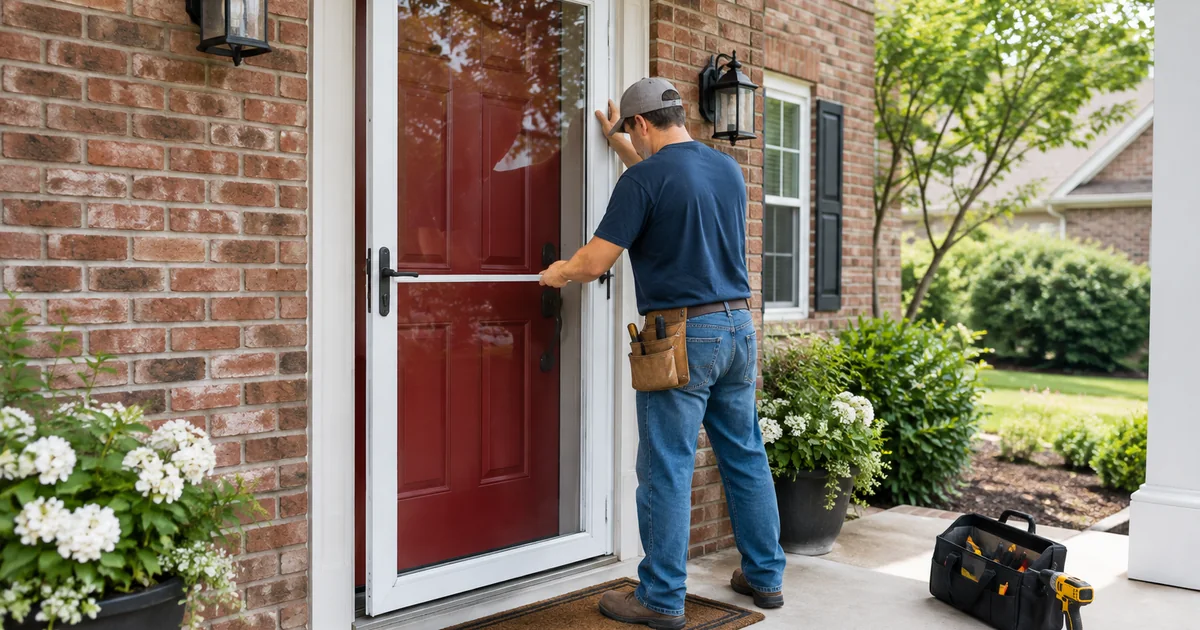
Storm doors are sold as DIY kits, and many homeowners install their own. The job involves measuring the opening accurately, cutting the hinge-side Z-bar to length, mounting it plumb, attaching the drip cap and expander, and setting the closer and latch. Expect half a day for a first-timer with a drill, level, and hacksaw.
The most common problems are doors that bind or don’t latch because the hinge rail wasn’t plumb, or gaps that let in drafts and bugs. Since pro labor is usually only $175 to $350, hiring an installer makes sense if your opening is out of square, the trim needs repair, or you’d rather have the job done in a couple of hours with a labor warranty.
How to Save Money on a Storm Door
- Buy a standard size. Stock 32 and 36-inch doors cost far less than custom orders.
- Pick a ventilating or full-view aluminum door rather than wood or a premium security model if you don’t need the extra features.
- Look for retailer install bundles. Home improvement stores often offer flat-rate installation when you buy the door from them.
- Handle removal yourself. Taking down an old storm door is usually a few screws and saves the removal fee.
- Combine with other door work. If you’re also replacing a patio or interior door, one visit from the same installer can reduce trip charges.
- Shop late in the season. Retailers often clear out storm door inventory once the spring and fall rush is over.
Planning other door upgrades? See our patio door replacement cost, interior door installation cost, and window replacement cost guides.
Frequently Asked Questions
How much does Home Depot charge to install a storm door?
Home Depot lists storm door installation labor at about $178 per door, with the door priced separately. Adding a typical $200 to $500 door puts the total around $380 to $680 before any removal or extra repairs.
How long does it take to install a storm door?
A professional usually installs a standard storm door in 2 to 4 hours. A first-time DIYer should plan on half a day, and openings that need trim repair or shimming take longer.
Do storm doors save energy?
They help a little by adding a layer of glass and air in front of the entry door and blocking drafts. The benefit is biggest with older wood or single-pane glass entry doors and small with modern insulated doors.
Can a storm door damage my front door?
It can if a full-glass storm door traps heat against a dark entry door in direct sun. Check your entry door’s warranty and consider a ventilating storm door or a lighter door color on hot, sunny exposures.
How long do storm doors last?
Lifespan depends mostly on frame quality, sun and wind exposure, and upkeep. Aluminum and composite frames hold up well for many years, while closers, sweeps, and latches wear out sooner and are inexpensive to replace, so keeping those parts in good shape extends the door’s life.
Is it worth paying for a retractable screen storm door?
If you want a full-glass look most of the year and fresh air on nice days without swapping panels, yes. Retractable models typically cost $75 to $150 more installed than a comparable full-view door.