Bathroom Vanity Installation Cost by Size and Type
Width and configuration are the first things that move the price. A 30-inch single vanity for a powder room and a 72-inch double vanity for a primary bath are very different jobs: the larger unit costs more, needs a bigger top, and a double adds a second sink, faucet and drain.
| Vanity size | Unit with top (prefab) | Typical installed cost | Common use |
|---|---|---|---|
| 24–30 in. single | $100–$500 | $300–$900 | Powder room, small hall bath |
| 36–48 in. single | $400–$1,000 | $800–$1,900 | Standard full bath |
| 60 in. single | $500–$1,800 | $900–$2,500 | Larger hall or guest bath |
| 60 in. double | $600–$2,200 | $1,100–$3,000 | Shared or primary bath |
| 72 in.+ double | $1,000–$2,600 | $1,500–$3,500 | Primary bath |
| Custom-built (any size) | $500–$3,000 | $1,000–$4,000+ | Odd sizes, built-ins, high-end finishes |
Most homeowners pay $700 to $2,500 to have a bathroom vanity installed, and a typical job, replacing a 36- to 48-inch single vanity with a prefab unit and top, runs about $1,500 including removal of the old vanity and a new faucet. Very small prefab vanities can come in under $400 installed, while custom and large double vanities can pass $4,000.
Installed prices in the table assume a like-for-like swap: the new sink drain and water supplies line up with the existing ones. Moving them is the single biggest cost jump, covered below.
Vanity styles
Freestanding vanities sit on the floor like furniture and are the easiest and cheapest to install. Wall-mounted (floating) vanities must be anchored into studs or added blocking and may need the drain and supplies at a specific height, which can add carpentry and plumbing time. Corner vanities save space in tight bathrooms but come in fewer sizes. Vessel-sink vanities need a taller or wall-mounted faucet, which changes the faucet budget.
Cost Breakdown: Materials vs. Labor
On a standard replacement, the vanity itself is usually the largest line, and labor is a few hundred dollars. Typical components:
| Item | Typical cost | Notes |
|---|---|---|
| Prefab vanity cabinet (with or without top) | $300–$1,500 | Higher for doubles and wood construction |
| Custom vanity cabinet | $500–$3,000 | Built to fit; longer lead time |
| Separate vanity top | $250–$3,000 | About $50–$200 per sq ft for stone or quartz |
| Sink (if not integrated) | $40–$300 | Undermount, drop-in or vessel |
| Faucet | $70–$900 | One per sink |
| Installation labor, prefab | $200–$500 | About 3–6 hours |
| Installation labor, custom | $500–$1,000 | More fitting, scribing and leveling |
| Removal and disposal of old vanity | $115–$500 | Often bundled into the quote |
Handymen often handle like-for-like swaps for a flat fee, while plumbers typically bill $45 to $200 per hour for the hookups. For hourly rates in your area, see our plumber cost per hour guide.
Top included or bought separately?
Many stock vanities ship as a combo with a cultured marble, ceramic or engineered stone top and an integrated sink already attached. That’s the cheapest route and the fastest install. Buying the cabinet and top separately gives you more choice, but adds the cost of the top, the sink, and sometimes a fabricator visit to measure and cut a stone or quartz piece.
| Vanity top material | Approx. cost per sq ft | What to know |
|---|---|---|
| Laminate | $10–$55 | Budget option; needs a drop-in sink |
| Solid surface | $20–$75 | Can include a seamless molded sink |
| Cultured marble | $40–$180 | Very common on combo vanities; usually integrated bowl |
| Granite | $5–$100 | Prefab tops are inexpensive; custom slabs cost more |
| Quartz | $50–$200 | Durable, no sealing; often cut from remnants |
| Concrete | $65–$135 | Custom look; must be sealed |
A typical single-vanity top is only 6 to 10 square feet, so even a quartz top usually costs a few hundred dollars to about $2,000 rather than the thousands a kitchen needs. Our countertop installation cost guide goes deeper on materials, edges and cutouts.
What a standard vanity installation includes
A complete quote for a like-for-like swap should cover each of these steps. If a low bid is missing several, expect add-on charges later.
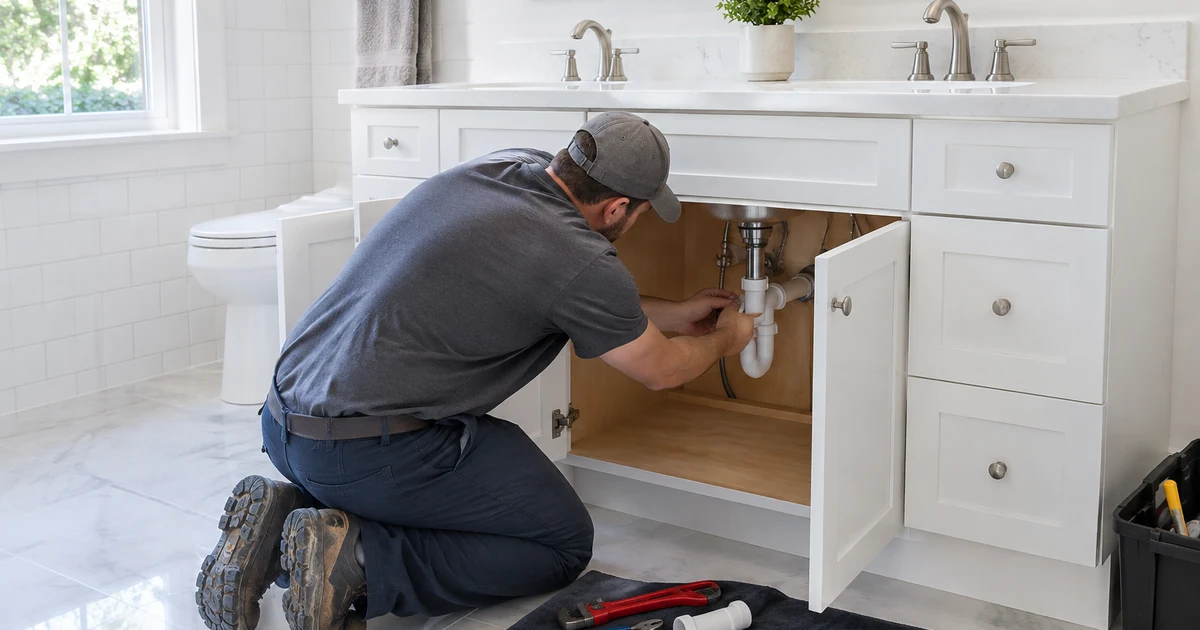
- Shutting off the water and disconnecting the supply lines, P-trap and drain.
- Removing the old top and cabinet, cutting caulk and any backsplash, and hauling them away.
- Checking the wall and floor for leak damage, then patching small drywall holes left behind.
- Setting and leveling the new cabinet and securing it to studs; floating units go onto blocking or a mounting rail.
- Installing the top, sink and faucet, usually with a new pop-up drain and flexible supply lines.
- Reconnecting the trap and supplies, running water to test for leaks, and caulking the top to the wall.
Replacing only part of a vanity
Not every update needs a new cabinet. A new vanity top alone typically costs $250 to $3,000 depending on size and material, and a new sink and faucet together run about $600 to $2,000 installed with mid-range fixtures. A faucet by itself ranges from about $70 to $900 for the fixture. If the cabinet is sound, these partial updates can cost less than a full replacement and still change the look of the room.
Other Factors That Affect the Price
Plumbing changes
If the new vanity’s drain or supply lines don’t line up with the old ones, a plumber has to open the wall or floor to move them. Expect roughly $400 to $1,800 per fixture, plus wall repair. Upgrading old shutoff valves and supply lines during the swap is cheap insurance, often under $100 in parts.
Converting a single to a double vanity
Going from one sink to two means a second drain, a second set of supplies and often a wider wall run. Conversions typically add $800 to $3,000 on top of the vanity itself. Check that your bathroom has room: double vanities start at about 48 inches wide, and 60 inches or more gives each sink comfortable elbow room.
Floor and wall repairs
Older vanities often sat on top of unfinished floor or left a gap in the tile. A new unit with a smaller footprint or a floating design can expose that gap, and patching flooring or trim can cost $500 to $2,000. Paint touch-ups and drywall patches behind the old cabinet are common too.
Backsplash, mirror and lighting
A wider or taller vanity may not fit the old mirror, sconce or backsplash. A new tile backsplash runs roughly $500 to $1,700 for a vanity wall; for tile pricing see our tile installation cost guide. Moving a light fixture or adding an outlet requires an electrician.
Access and location
Second-floor bathrooms with tight stairways, small doorways and heavy stone tops take longer to carry in. Labor rates are also higher in large metro areas than in rural markets.
Permits
A like-for-like vanity swap usually doesn’t need a permit in most areas. Moving plumbing, adding a second sink or changing electrical often does, so ask your contractor or local building department before work begins.
Before you hire: get at least three written, itemized quotes from licensed and insured local pros. Prices for the same job often differ by 30% or more, and comparing line items is the fastest way to spot padding or missing work.
Signs It’s Time to Replace Your Vanity
- Swollen or delaminating particleboard under the sink, usually from a slow leak.
- Cracked, chipped or stained top or an integrated bowl with crazing that won’t clean up.
- Drawers and doors that won’t close because hinges and slides have pulled out of soft material.
- Not enough storage or counter space for the people using the bathroom.
- A dated look that’s holding back an otherwise updated bathroom.
If the cabinet is solid and you only dislike the top or faucet, replacing just those can cost far less than a full vanity. If you’re also thinking about the tub, shower and floors, price it as part of a full bathroom remodel cost so you only open the walls once.
DIY vs. Hiring a Pro
Swapping a freestanding vanity of the same size, with plumbing that lines up, is one of the more approachable bathroom DIY jobs. You’ll need to shut off the water, disconnect the supplies and P-trap, remove the old unit, level and secure the new one to the wall, then reconnect and check for leaks. Done yourself, it saves roughly $200 to $500 in labor.
Hire a pro if the job involves moving drain or supply lines, adding a second sink, mounting a heavy floating vanity, or setting a large stone top, which is heavy and easy to crack. Any electrical work for lighting or outlets should go to a licensed electrician, and plumbing changes in walls may require a permit and a licensed plumber in your area. A slow leak under a new vanity can quietly ruin a subfloor, so if you’re not confident with the connections, paying for the hookup is money well spent.
How to Save Money on Bathroom Vanity Installation
- Buy a combo vanity with the top and sink attached. It’s usually the lowest total cost and the quickest install.
- Keep the same width and sink position so the existing drain and supplies line up and no wall work is needed.
- Look for stone remnants if you want a custom granite or quartz top; vanity tops are small enough to cut from leftover pieces.
- Do the removal and painting yourself and hire out only the plumbing hookup.
- Bundle small jobs. If a plumber or handyman is already coming for the vanity, add the faucet, shutoff valves or a toilet installation to the same visit to avoid a second trip charge.
- Get two or three quotes that separate the vanity, top, faucet, labor and removal, so you can see what each one includes.
- Choose a standard size. 24, 30, 36, 48, 60 and 72-inch vanities are widely stocked and cost less than odd widths or custom builds.
Frequently Asked Questions
How much does a plumber charge to install a bathroom vanity?
Labor for a like-for-like vanity swap usually costs $200 to $500 for a prefab unit and up to $1,000 for a custom vanity. Plumbers generally bill $45 to $200 per hour, and moving drain or supply lines adds roughly $400 to $1,800 per fixture.
How much does it cost to install a double vanity?
A prefab 60- to 72-inch double vanity typically costs $1,100 to $3,500 installed when plumbing for two sinks already exists. Converting from a single to a double vanity adds about $800 to $3,000 for the second drain and supply lines.
Does a bathroom vanity come with a countertop?
Many stock vanities are sold as combos with a cultured marble, ceramic or engineered stone top and an integrated sink. Others are sold as cabinet only, and a separate top typically adds $250 to $3,000 depending on size and material.
How long does it take to install a bathroom vanity?
A straightforward replacement takes about 3 to 6 hours. Jobs that involve moving plumbing, a stone top that must be fabricated, or floor and wall repairs can stretch over several days.
Can I install a bathroom vanity myself?
Yes, a same-size freestanding vanity with plumbing that lines up is a manageable DIY project for a handy homeowner. Hire a plumber if lines need to move or you’re adding a sink, and an electrician for any lighting or outlet changes.
Do I need a permit to replace a bathroom vanity?
A simple like-for-like vanity swap usually doesn’t need a permit. Relocating plumbing, adding a second sink or doing electrical work often does, so check with your local building department.