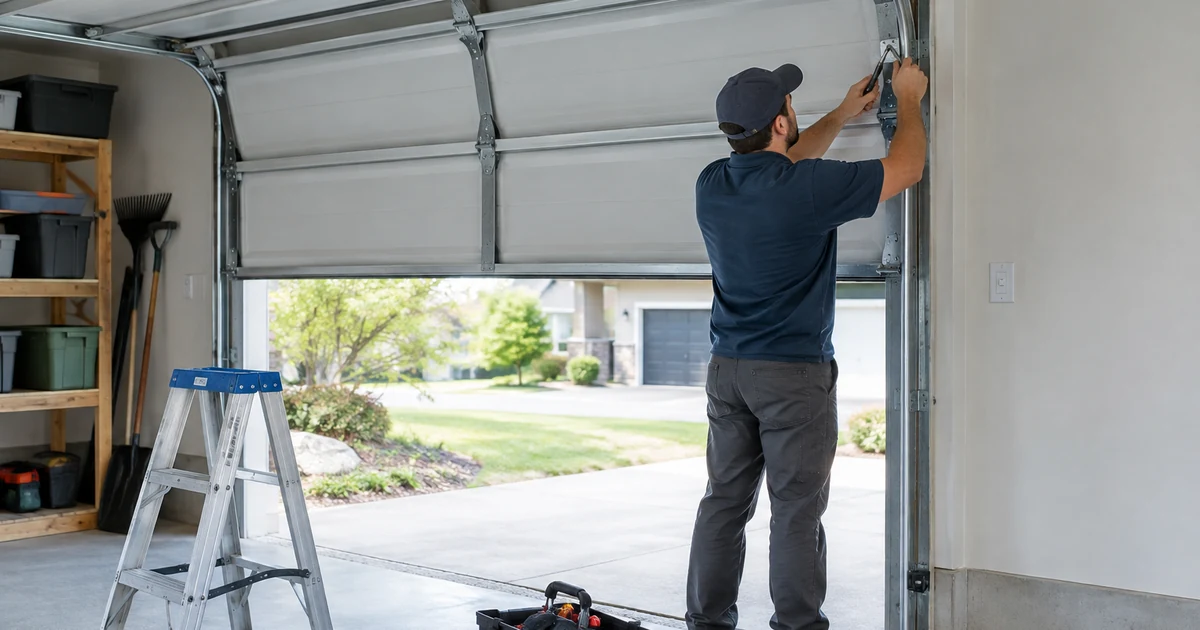
Garage Door Repair Cost by Type of Repair
What broke is the biggest factor in the price. Small fixes like realigning sensors cost little more than the service call, while replacing a damaged panel can approach the cost of a budget new door. Here are typical professional prices for common repairs.
| Repair | Typical cost (installed) | How common |
|---|---|---|
| Tune-up / adjustment / lubrication | $100–$250 | Routine maintenance |
| Safety sensor realignment or replacement | $100–$250 | Very common |
| Roller replacement (full set) | $110–$250 | Common on doors 10+ years old |
| Spring replacement (pair) | $150–$400 | The most common major repair |
| Cable replacement | $150–$350 | Often done with springs |
| Off-track door reset | $150–$350 | After an impact or cable failure |
| Track repair or replacement | $125–$400 | Bent or misaligned tracks |
| Opener repair | $100–$350 | Gears, circuit boards, remotes |
| Dent repair (minor) | $100–$300 | Cosmetic |
| Panel replacement (per panel) | $300–$900 | When a section is badly damaged |
Nationally, most garage door repairs cost $150 to $400, and the average bill is about $265. Spring replacement is the most frequent large repair, which is why it sits close to the national average.
Prices assume a standard residential steel sectional door. Wood, custom carriage-style, and oversized doors use heavier or specialty parts, so repairs on them usually cost more.
Cost Breakdown: Materials vs. Labor
Garage door parts are generally cheap. Labor and the trip to your home make up most of the bill, especially on small repairs.
| Cost item | Typical price |
|---|---|
| Service call / trip fee | $50–$75 (often applied to the repair) |
| Labor rate | $75–$150 per hour |
| Small parts (brackets, hinges, rollers) | $5–$160 |
| Springs (pair, parts only) | $30–$120 |
| Replacement panel (part) | Varies by door model; can be hard to match on older doors |
Many companies charge a flat rate per repair instead of hourly. A flat rate is fine, but confirm whether the service call fee is included or charged on top.
Other Factors That Affect the Price
Door type and material
Standard steel sectional doors are the cheapest to repair because parts are widely available. Wood doors, custom roll-up doors, and one-piece tilt-up doors can cost more because parts are heavier, harder to source, or need custom fabrication.
Single vs. double door
A 16-foot double door is heavier and wider, so springs, cables, and panels cost more. Expect repairs on a double door to run somewhat higher than the same repair on a single-car door.
Emergency and after-hours service
If the door is stuck open overnight or your car is trapped inside, you may need same-day or weekend service. Evening, weekend, and holiday calls commonly add $75–$150 or more to the bill.
Age and parts availability
On older doors, matching a replacement panel can be difficult or impossible. When the exact panel is discontinued, a technician may recommend replacing the whole door instead.
Multiple problems at once
One failure often causes another. A snapped spring can fray cables, and a door that comes off its track can bend rollers and hinges. A single visit that fixes several issues costs more than one repair but less than several separate service calls.
Your location
Labor rates vary widely by region. Large coastal metros tend to cost more than smaller cities and rural areas in the South and Midwest.
Repair Cost by Door Type and Material
The style and material of your door also shift the price. Standard sectional steel doors are the cheapest to fix, while one-piece and custom doors cost more because parts are heavier and harder to find.
| Door type | Typical repair cost | Notes |
|---|---|---|
| Sectional (steel) | $150–$400 | Most common, parts widely available |
| Roll-up | $300–$800 | Often custom parts |
| Tilt-up / one-piece | $150–$1,200 | Heavy doors, specialty hardware |
| Carriage-style (custom) | $1,000+ | Custom wood or composite work |
Material matters most for cosmetic and panel repairs. Fiberglass and steel panels can often be patched or replaced as sections, while damaged wood may need to be rebuilt, sanded, and refinished. Wood doors also need regular painting or sealing to prevent rot, which adds to long-term upkeep.
Common Garage Door Problems and Likely Causes
- Door will not open, motor hums: usually a broken spring or a stripped opener gear.
- Door starts to close, then reverses: misaligned or dirty safety sensors, or an object in the door’s path.
- Door is crooked or hangs lower on one side: a broken or slipped cable, or one worn extension spring.
- Loud grinding or squeaking: worn rollers, dry hinges, or bent tracks.
- Door comes off its track: a vehicle impact, a failed cable, or rollers that have worn out.
- Remote works only up close: a weak remote battery or an antenna problem on the opener.
- Door closes too fast or slams: weak springs that no longer counterbalance the door. Stop using it and call a technician.
Knowing the likely cause before you call helps you understand the quote and spot unnecessary upsells.
Garage Door Tune-Up Cost
A professional tune-up typically costs $100–$250 and is the cheapest way to avoid emergency repairs. A standard visit usually includes:
- Inspecting springs, cables, pulleys, and bottom brackets for wear
- Tightening hinges, brackets, and track bolts
- Lubricating rollers, hinges, bearings, and springs
- Checking door balance and adjusting spring tension if needed
- Testing the opener’s force settings, auto-reverse, and safety sensors
Once a year is enough for most households. If the door opens many times a day or you live near the coast, where salt air speeds up rust, consider a check-up more often.
Before you hire: get at least three written, itemized quotes from licensed and insured local pros. Prices for the same job often differ by 30% or more, and comparing line items is the fastest way to spot padding or missing work.
Repair vs. Replace Your Garage Door
Most garage door problems are worth repairing. Springs, cables, rollers, sensors, and tracks are wear parts, and fixing them costs a fraction of a new door. Replacement starts to make sense when repairs pile up or the door itself is damaged.
Consider replacing the door when:
- Several panels are dented, rotted, or cracked, and panel repair would cost close to half the price of a new door.
- Replacement panels for your model are no longer made.
- The door is 20+ years old and needs another major repair.
- You want better insulation for an attached garage or a room above it.
- The door looks dated and you want a boost in curb appeal before selling.
A new single-car garage door typically costs about $700–$2,700 installed, with insulated, double, and custom doors costing more. If the opener is the problem instead of the door, see our garage door opener installation cost guide.
DIY vs. Hiring a Pro
Some garage door fixes are safe for a handy homeowner:
- Cleaning and realigning the safety sensors
- Lubricating rollers, hinges, and springs with a garage door lubricant
- Tightening loose hinge and bracket bolts (except bottom brackets attached to the cables)
- Replacing weatherstripping and the bottom seal
- Replacing remote batteries and reprogramming remotes
Leave springs, cables, bottom brackets, and off-track doors to a professional. These parts hold the door under high tension. Loosening the wrong bolt can release that tension suddenly and cause serious injury. Our garage door spring replacement cost guide explains why spring work is best left to trained technicians.
How to Save Money on Garage Door Repair
- Schedule annual maintenance. A yearly tune-up catches worn rollers and cables before they fail and cause bigger damage.
- Troubleshoot the easy stuff. Check sensor alignment, remote batteries, and the breaker before calling for service.
- Get two or three quotes. Ask for an all-in price that includes the service call fee.
- Avoid emergency rates. If the door is closed and secure, wait for a regular weekday appointment.
- Fix related parts in one visit. Replacing both springs and worn cables together avoids paying for a second trip.
- Check warranties. Newer doors, openers, and springs often carry manufacturer or installer warranties that cover parts.
- Be wary of upsells. Ask the technician to show you the damaged part before agreeing to replace the whole door or opener.
Frequently Asked Questions
What is the most common garage door repair?
Broken springs are the most common major repair, typically costing $150–$400 for a pair. Sensor problems, worn rollers, and frayed cables are also frequent.
Is it worth repairing an old garage door?
Usually yes, if the panels are in good shape. Springs, cables, rollers, and sensors are inexpensive wear parts. If multiple panels are damaged or parts are discontinued, replacing the door can be the better value.
How much does a garage door service call cost?
Service call or trip fees usually run $50–$75. Many companies apply that fee toward the repair if you hire them to do the work.
Why does my garage door open but not close?
The most common cause is misaligned or dirty safety sensors near the floor. Clean the lenses and make sure both sensor lights are solid. If that does not help, the issue may be the opener’s limit settings or a track problem.
Does homeowners insurance cover garage door repair?
Insurance may cover damage from a sudden covered event, such as a storm or a vehicle impact, subject to your deductible. It generally does not cover normal wear like broken springs or worn rollers. Check your policy.
How often should a garage door be serviced?
Most manufacturers and technicians recommend a professional inspection and tune-up about once a year, plus lubricating moving parts every few months at home.