House Painting Cost by Home Size
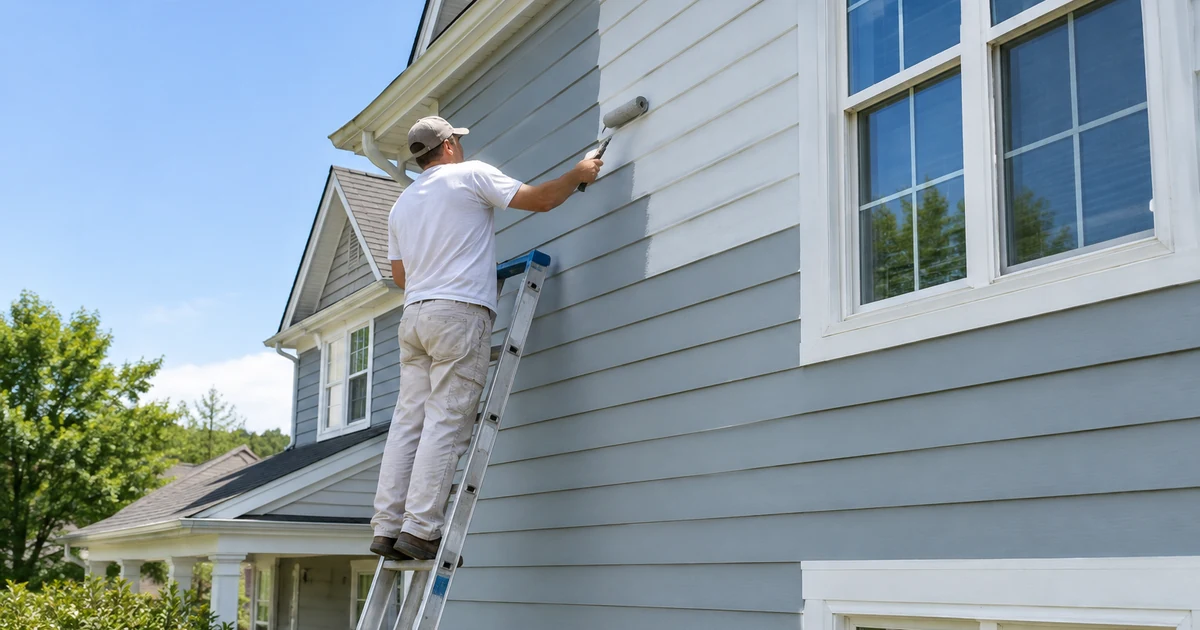
Exterior painting contractors price by the square foot of paintable wall, which is usually 80% to 85% of a home’s living area once you subtract windows, doors, and roof overhangs. Across national cost guides, the going rate for a full exterior repaint lands between about $1.50 and $4.50 per square foot of living area, with most quotes clustering near the middle of that band.
| Home size (living area) | Approx. paintable wall area | Typical cost range | Most homeowners pay |
|---|---|---|---|
| 1,000 sq ft | 800 sq ft | $1,500 – $4,300 | about $2,750 |
| 1,500 sq ft | 1,200 sq ft | $2,250 – $6,450 | about $4,150 |
| 2,000 sq ft | 1,700 sq ft | $3,000 – $8,600 | about $5,500 |
| 2,500 sq ft | 2,100 sq ft | $3,750 – $10,750 | about $6,900 |
| 3,000 sq ft | 2,500 sq ft | $4,500 – $12,900 | about $8,300 |
| 4,000 sq ft | 3,350 sq ft | $6,000 – $17,200 | about $11,000 |
The spread inside each row is wide because size is only the starting point. A 2,000 sq ft ranch with sound vinyl siding might come in near $3,500, while the same square footage spread over two stories of weathered cedar with lots of trim can pass $8,000.
Exterior painting cost by number of stories
Height adds time. Crews working above the first floor need extension ladders, ladder stabilizers, or scaffolding, and they move more slowly for safety. A second story can add up to 50% to the price, and three-story homes often need lifts or staging.
| Stories | Typical paintable area | Typical cost |
|---|---|---|
| One story | 1,000 – 1,500 sq ft | $1,500 – $4,500 |
| Two stories | 1,500 – 2,500 sq ft | $3,000 – $8,500 |
| Three stories | 2,500 – 3,000+ sq ft | $4,500 – $12,000+ |
Cost by siding type
Siding material changes how much prep the surface needs, how much paint it absorbs, and which products the painter can use.
| Siding | Cost per sq ft | What drives the price |
|---|---|---|
| Vinyl | $1.50 – $4.00 | Needs a vinyl-safe color (too dark a shade can warp panels in the sun) |
| Aluminum / metal | $1.75 – $4.30 | Chalky oxidation must be washed off; sometimes needs a bonding primer |
| Wood (clapboard, shingles) | $1.75 – $5.00 | Scraping, sanding, spot-priming, and caulking take the most labor |
| Fiber cement | $1.75 – $4.75 | Takes paint well; most cost is in caulking joints and trim |
| Stucco | $2.00 – $5.00 | Rough texture soaks up paint; cracks need elastomeric patching |
| Brick | $2.00 – $5.00 | Porous; needs masonry primer and back-rolling into mortar joints |
Once brick is painted, it has to be repainted every several years, so think twice before painting bare masonry. If your siding is failing rather than just faded, compare the repaint against new siding installation or vinyl siding, which never needs paint.
Cost Breakdown: Materials vs. Labor
Labor is the bulk of an exterior paint job, typically 70% to 85% of the bill. Painters bill either by the job or by the hour, and hourly rates generally run $25 to $75 per painter depending on the market and the crew’s experience.
| Item | Typical cost | Share of a $5,500 job |
|---|---|---|
| Labor (prep, painting, cleanup) | $1.00 – $3.50 per sq ft | $3,900 – $4,600 |
| Exterior paint (10 – 15 gallons for two coats) | $25 – $80 per gallon | $300 – $1,000 |
| Primer (spot or full coat) | $15 – $50 per gallon | $60 – $300 |
| Caulk, patching compound, tape, plastic | Varies | $100 – $250 |
| Ladders, lifts, or scaffolding (tall homes) | Often built into the bid | $0 – $500 |
A gallon of exterior acrylic covers roughly 250 to 400 sq ft per coat, less on rough stucco or bare wood. Premium lines cost more per gallon, but they usually hold color and resist chalking longer, which stretches the time before the next repaint.
Other Factors That Affect the Price
Surface condition and prep
Prep is where quotes diverge the most. Siding that only needs washing and a light scuff is quick; peeling wood that must be scraped, sanded, primed, and caulked board by board can add 30% to 60% to the labor. Rotted boards or trim are usually replaced before painting, billed separately.
Trim, doors, and extras
Most whole-house quotes include fascia, window casings, and doors in one accent color. Extras are priced separately: trim is often $1 to $4 per linear foot, soffits and fascia $2.50 to $6 per linear foot, and a detached garage can add $1,500 to $3,000.
Number of colors
A one-color body with white trim is the most efficient job. Each extra color means more cutting-in, more masking, and more cleanup between coats, so a three- or four-color scheme on a Victorian with shutters and decorative trim costs noticeably more.
Lead paint in older homes
If your home was built before 1978, federal EPA rules require contractors to follow lead-safe work practices when disturbing painted surfaces. Containment, plastic sheeting, and special cleanup add time. Full lead paint removal is a separate, much pricier job, commonly $6 to $17 per sq ft.
Pressure washing
Paint won’t bond to dirt, mildew, or chalky residue. Many painters include a wash in their price; others charge $240 to $400 for it. See our guide to pressure washing cost if you’d rather schedule it yourself a few days ahead.
Location and season
Labor rates in high-cost metros run well above rural areas. Exterior work also depends on weather: most paints need temperatures above roughly 35 to 50°F and dry conditions, so spring and early fall are the busiest (and least negotiable) months.
Permits and HOA approval
A repaint rarely needs a building permit, but some cities and historic districts require approval for color changes, and many HOAs require you to submit color samples first.
Before you hire: get at least three written, itemized quotes from licensed and insured local pros. Prices for the same job often differ by 30% or more, and comparing line items is the fastest way to spot padding or missing work.
Signs It’s Time to Repaint Your House
- Peeling, flaking, or bubbling paint, especially on the south and west sides, which take the most sun.
- Chalky residue that rubs off on your hand when you wipe the siding.
- Visible fading or a blotchy look where some walls have weathered faster than others.
- Cracked or missing caulk around windows, doors, and trim joints, which lets water behind the siding.
- Bare wood showing on sills, fascia, or corner boards. Left unpainted, wood soaks up water and starts to rot within a few seasons.
As a rough guide, painted wood siding often needs a new coat every 3 to 7 years, while stucco, fiber cement, and painted brick can go longer.
DIY vs. Hiring a Pro
Painting your own house can cut the bill to roughly $500 to $1,500 in paint and supplies, plus a paint sprayer or ladder rental if you don’t own one. On a single-story home with sound siding, that’s a realistic weekend-or-two project for a careful DIYer.
Two-story and taller homes are a different story. Ladder falls are among the most common serious DIY injuries, and balancing a sprayer or roller two stories up is exactly where they happen. Pros also carry liability insurance, know how to handle lead-safe work on older homes, and usually warranty their labor for a few years. If you hire, get a written scope that lists prep steps, number of coats, paint brand and product line, and which surfaces are included.
How to Save Money on House Painting
- Get at least three itemized quotes so you can compare prep, coats, and paint product line by line.
- Book outside peak season. Late fall (where the weather allows) or early spring bookings can be easier to negotiate than June through September.
- Do the easy prep yourself. Trimming shrubs away from the walls, removing shutters and décor, and clearing the perimeter saves crew hours.
- Stick close to the current color. A big color change, especially light over dark, can require an extra coat.
- Handle small repairs early. Fixing a leaking gutter before painting prevents staining and peeling later; our gutter cleaning cost guide covers the routine maintenance side.
- Bundle projects. If you’re also planning interior painting, some contractors discount a combined booking.
- Buy better paint, not more coats. A quality exterior acrylic that lasts 8 to 10 years usually costs less per year than a cheap paint you redo in 4.
Frequently Asked Questions
How much does it cost to paint the exterior of a 2,000 sq ft house?
Most 2,000 sq ft homes cost $3,000 to $8,600 to paint on the outside, with a typical price around $5,500. A single-story home with vinyl siding in good shape lands near the low end; a two-story wood-sided home with peeling paint lands near the top.
How much do painters charge per square foot for exterior painting?
Expect roughly $1.50 to $4.50 per square foot of living area, which works out to about $2 to $5 per square foot of actual paintable wall. Stucco and brick sit at the higher end because they absorb more paint and take longer to cover.
How long does exterior paint last?
A quality two-coat job generally lasts 5 to 10 years. Painted wood siding usually needs attention sooner, around every 3 to 7 years, while fiber cement and stucco often go longer. Sun exposure, climate, and prep quality matter as much as the paint itself.
Is it cheaper to paint a house or replace the siding?
Painting is far cheaper up front: a few thousand dollars vs. roughly $10,000 or more for new siding on an average home. Replacement makes more sense when boards are rotting, warped, or cracked, or when you want to stop repainting altogether.
How long does it take to paint the outside of a house?
A professional crew usually finishes an average single-family home in 3 to 7 working days, including washing, prep, and two coats. Rain delays, heavy scraping, and multi-color trim schemes stretch the schedule.
What is the best time of year to paint a house exterior?
Late spring and early fall are ideal in most of the country: mild temperatures, lower humidity, and fewer storms. Most exterior paints need air and surface temperatures above roughly 35 to 50°F, depending on the product, and dry weather for several hours after application.