Chimney Repair Cost by Type of Repair
The specific problem sets the price. Sealing a cracked crown is a half-day job for one mason; relining a flue or rebuilding the stack above the roof is a multi-day project with scaffolding and specialty materials. These are typical installed prices for a single masonry chimney:
| Repair | Typical cost | What’s involved |
|---|---|---|
| Chimney cap or chase cover replacement | $200 – $700 | New metal cap with spark screen, or a new top cover on a framed chase |
| Crown crack repair and sealing | $200 – $700 | Patching and coating hairline to moderate cracks in the concrete top |
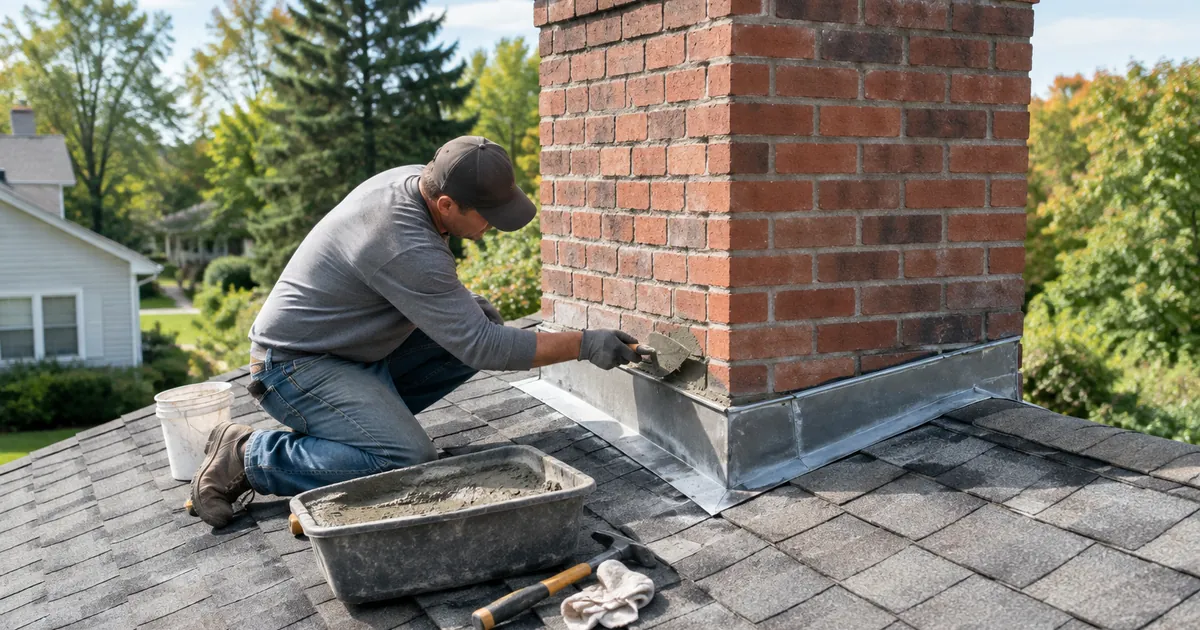
| Flashing repair or replacement | $300 – $1,300 | Resealing or replacing the metal where chimney meets roof; the most common leak fix |
| Waterproofing sealant | $150 – $500 | Breathable water repellent applied to brick and mortar |
| Tuckpointing / repointing | $500 – $2,500 | Grinding out and replacing deteriorated mortar joints |
| Crown replacement | $1,000 – $3,000 | Removing and re-forming a new concrete crown with proper overhang |
| Spalling brick replacement | $1,000 – $3,500 | Cutting out flaking bricks and setting new ones |
| Smoke chamber parging | $1,000 – $2,000 | Smoothing the chamber above the firebox with refractory mortar |
| Flue liner replacement | $1,500 – $5,500 | Stainless steel or cast-in-place liner; clay tile costs more |
| Partial rebuild (above roofline) | $1,500 – $5,000 | Taking the stack down to sound brick and relaying it |
| Full chimney rebuild | $4,000 – $15,000 | Demolition and new masonry from the foundation or firebox up |
Most homeowners spend $300 to $1,500 on a chimney repair, and a flashing or crown fix around $750 is the most common bill. Costs climb quickly once water has been getting in for a few seasons, because freeze-thaw cycles turn small cracks into loose bricks and failed mortar.
Cost by chimney type
| Chimney type | Typical repair range | Common problems |
|---|---|---|
| Brick or stone masonry | $300 – $1,500 (up to $15,000 for rebuilds) | Crown cracks, failed mortar, spalling, leaky flashing |
| Metal / prefabricated (factory-built) | $250 – $1,200 | Rusted chase cover, damaged pipe sections, cap |
| Stucco-covered | $900 – $4,000 | Cracked stucco letting water into the framing or block behind |
Chimney Inspection Cost by Level
The National Fire Protection Association’s NFPA 211 standard defines three inspection levels, and most chimney professionals follow them. A good repair quote starts with the right level of inspection.
| Inspection | Typical cost | When you need it |
|---|---|---|
| Level 1 | $100 – $250 | Annual check of a chimney in regular use with no changes; visual review of accessible parts |
| Level 2 | $250 – $600 | Buying or selling a home, after a chimney fire, storm, or earthquake, or when changing fuel type or appliance; includes a video scan of the flue |
| Level 3 | $900 – $5,000 | When a Level 2 finds a hidden hazard; may require removing brick, drywall, or siding to reach concealed areas |
A standard chimney sweep, often combined with a Level 1 inspection, usually costs $130 to $380. If you’re buying a home with a fireplace, ask whether the general home inspection includes the chimney. Most general inspectors only look at the visible exterior and firebox, which is why a separate Level 2 is common before closing.
Cost Breakdown: Materials vs. Labor
Chimney work is labor-heavy and often done on a steep roof, so labor is usually well over half the bill. Chimney pros and masons commonly charge $50 to $200 per hour, and emergency calls can reach $300 per hour.
| Item | Typical cost |
|---|---|
| Mason or chimney tech labor | $50 – $200 per hour |
| Minimum service fee | $50 – $100 |
| Scaffolding or roof staging | $50 – $200 for simple setups, more for tall chimneys |
| Minor cap repair (reattach, replace screen) | $100 – $250 |
| Replacement brick, mortar, crown mix | $100 – $1,000 depending on quantity |
| Building permit (rebuilds, liners) | $50 – $200 in many areas |
Other Factors That Affect the Price
Roof height and pitch
A chimney on a single-story, low-slope roof can be worked from a ladder and roof brackets. Two-story homes, steep roofs, and tall stacks need roof anchors, harnesses, or scaffolding, which add setup time and cost.
Extent of water damage
Water is behind most chimney repairs. A small crown crack caught early costs a few hundred dollars; the same crack left alone can lead to rotted roof sheathing, stained ceilings, and loose brick. If the leak has damaged the roof around the chimney, you may also need roof repair.
Chimney size and number of flues
Wide chimneys with two or three flues have more brick, bigger crowns, and more liners to replace. Relining a flue that serves a furnace or water heater in addition to a fireplace may need a separate liner sized for each appliance.
Liner material
Stainless steel liners are the most common retrofit because they drop into an existing flue. Cast-in-place liners cost more but can add structural support to an old chimney. Replacing clay tiles is the most labor-intensive option.
Matching old brick
Older homes can have brick sizes and colors that are no longer made. Salvaged brick or custom-matched mortar adds cost but keeps a repair from looking like a patch.
Permits and codes
Minor repairs rarely need a permit. Rebuilds, new liners, and structural work often do, and a rebuilt chimney must meet current code for height above the roof and clearance to combustible materials.
Before you hire: get at least three written, itemized quotes from licensed and insured local pros. Prices for the same job often differ by 30% or more, and comparing line items is the fastest way to spot padding or missing work.
Signs Your Chimney Needs Repair
- Water stains on the ceiling or walls next to the chimney, or dripping in the firebox after rain.
- White staining (efflorescence) on the brick, which shows water is moving through the masonry.
- Flaking or crumbling brick and bits of masonry on the roof or in the gutters.
- Gaps or recessed mortar joints you can push a key into.
- Rusted damper or firebox, a sign moisture is coming down the flue.
- Pieces of clay tile in the fireplace, which can point to a cracked liner.
- A leaning stack, which needs a professional look right away.
Repair vs. rebuild
Spot repairs make sense when damage is limited to the crown, flashing, cap, or a few courses of brick. When bricks are loose across much of the stack, the chimney leans, or repeated repairs keep failing, a partial rebuild above the roofline is often the better long-term value. If you’re planning a roof replacement, do chimney masonry and new flashing at the same time so the roofer can tie in the new flashing properly.
DIY vs. Hiring a Pro
Handy homeowners can safely handle a few small jobs: applying a crown sealer to hairline cracks or fastening down a loose cap on a low, walkable roof. Hardware store crown sealant and a basic cap cost well under $200.
Almost everything else belongs with a certified chimney professional. Roof work carries a real fall risk, flashing mistakes cause leaks, and a damaged liner can let carbon monoxide or heat reach the house framing. Look for a technician certified by the Chimney Safety Institute of America (CSIA) or a mason with chimney experience, and get a written report with photos before approving major work.
How to Save Money on Chimney Repair
- Schedule a yearly inspection. A $100 to $250 Level 1 visit catches small crown and flashing problems before water damage multiplies the cost.
- Install a cap if you don’t have one. A few hundred dollars keeps rain, animals, and debris out of the flue.
- Book in spring or summer. Chimney companies are busiest in fall, right before heating season.
- Get at least three quotes for any repair over $1,000, and ask each company to specify materials and warranty.
- Bundle with roof work. Combining flashing replacement with a roof project avoids paying twice for roof access.
- Check your homeowners policy. Sudden damage from a storm, fallen tree, or lightning strike may be covered; gradual wear usually isn’t.
- Keep gutters clear. Overflowing gutters near the chimney add water to masonry; see our gutter installation cost guide if yours are failing.
Frequently Asked Questions
How much does it cost to fix a leaking chimney?
Most chimney leaks are fixed for $300 to $1,300 by repairing or replacing the flashing, sealing the crown, or adding a cap. If water has been getting in for a long time and damaged the brick or roof framing, the repair can run into the thousands.
How much does it cost to replace chimney flashing?
Flashing repair or replacement usually costs $300 to $1,300, depending on chimney size, roof pitch, and whether the flashing needs to be cut into the mortar joints (counter-flashing). It’s often cheapest when done during a roof replacement.
What does a chimney crown repair cost?
Sealing cracks in an existing crown typically costs $200 to $700. A crown that is badly cracked or was built without a proper overhang usually needs to be replaced, which runs $1,000 to $3,000.
Does homeowners insurance cover chimney repair?
Policies often cover sudden damage, such as a chimney struck by lightning, hit by a falling tree, or damaged in a storm or chimney fire. Deterioration from age, weather, or lack of maintenance is generally excluded. Check your policy and call your insurer before starting work.
How often should a chimney be inspected?
The NFPA 211 standard calls for chimneys, fireplaces, and vents to be inspected once a year. A Level 1 inspection is enough for a chimney in regular use with no changes; buying a home or switching appliances calls for a Level 2.
Can I use my fireplace with a cracked chimney liner?
It isn’t recommended. A cracked liner can let heat reach nearby wood framing and allow smoke or carbon monoxide into the house. Stop using the fireplace or connected appliance until a professional has inspected and repaired the flue.