Laminate Flooring Installation Cost by Grade
Laminate is priced mostly by plank thickness and wear rating. Thin 6–7 mm boards with an AC2 or AC3 rating are fine for bedrooms, while 10–12 mm boards rated AC4 or higher feel more solid underfoot, sound less hollow, and hold up in kitchens and hallways. Labor changes very little between grades, so the plank you pick moves the total more than anything else.
| Grade | Typical specs | Installed (per sq ft) | 400 sq ft installed |
|---|---|---|---|
| Budget | 6–7 mm, AC2–AC3, basic wood look | $2.45–$5.60 | $980–$2,240 |
| Mid-grade | 8–10 mm, AC3–AC4, embossed texture | $3.50–$8.00 | $1,400–$3,200 |
| Premium | 12 mm, AC4–AC5, water-resistant core or tile/stone look | $4.90–$11.20 | $1,960–$4,480 |
These figures include planks, standard underlayment, and installation labor for a floating click-lock floor, but not tear-out of the old floor. Most national cost guides put a typical laminate job between $1,500 and $4,500. A 400 sq ft project with mid-grade planks and removal of old carpet lands close to $2,600.
Material prices by thickness are fairly consistent across retailers: roughly $0.70–$1.00 per sq ft for 6 mm, $1.00–$1.80 for 8 mm, $2.00–$4.00 for 10 mm, and $2.30–$6.00 for 12 mm boards. The AC rating (abrasion class, 1 to 5) matters more than thickness for durability: AC3 suits most living spaces, and AC4 is the safer pick for entryways or homes with large dogs.
Water-resistant laminate, sold under names like hydro-seal or waterproof laminate, uses a denser core and sealed edges that tolerate spills for a set number of hours. It usually sits in the premium tier. It is a reasonable choice for kitchens, but read the warranty closely: coverage for standing water, steam mops, and full bathrooms varies widely between brands.
Cost by room size
Using mid-grade laminate at $3.50 to $8.00 per sq ft installed, before removal of the existing floor:
| Space | Approx. area | Installed cost |
|---|---|---|
| 10×12 bedroom | 120 sq ft | $420–$960 |
| 12×14 bedroom | 168 sq ft | $590–$1,340 |
| 15×20 living room | 300 sq ft | $1,050–$2,400 |
| Main floor, open plan | 1,000 sq ft | $3,500–$8,000 |
Small rooms often cost more per square foot than these numbers suggest, because many installers charge a job minimum or a trip fee regardless of size. Bundling several rooms into one visit usually lowers the per-foot price.
Cost Breakdown: Materials vs. Labor
For a floating floor, labor is often 40% to 50% of the bill on budget laminate and a smaller share on premium boards. Here is how a 400 sq ft mid-grade job typically splits:
| Item | Unit cost | 400 sq ft project |
|---|---|---|
| Laminate planks (440 sq ft incl. 10% waste) | $1.25–$3.25 per sq ft | $550–$1,430 |
| Underlayment (if not pre-attached) | $0.25–$0.55 per sq ft | $110–$240 |
| Transitions, shoe molding, fasteners | Varies by layout | $50–$200 |
| Installation labor (click-lock, floating) | $1.75–$3.30 per sq ft | $700–$1,320 |
| Remove and dispose of old carpet | $0.50–$1.50 per sq ft | $200–$600 |
| Total | $1,610–$3,790 |
Glue-down and nail-down laminate is less common but costs more to install, often $5 to $8 per sq ft for labor alone, because the crew has to spread adhesive or fasten every board. Ask which method a quote assumes before comparing prices.
Other Factors That Affect the Price
Removing the old floor
Carpet and pad are the cheapest to pull up, usually $0.50 to $1.50 per sq ft with disposal. Glued-down vinyl, old laminate over adhesive, and especially ceramic tile take far longer; tile removal runs about $2 to $7 per sq ft. Some installers allow laminate to float over sound, flat vinyl, which skips the tear-out entirely.
Subfloor condition and leveling
Laminate needs a flat base. Many manufacturers specify no more than 3/16 inch of variation over 10 feet, and dips beyond that lead to bouncy spots and separating joints. Self-leveling compound or sanding high spots adds cost, and replacing damaged plywood subfloor typically runs $2.20 to $4.75 per sq ft.
Concrete slabs and moisture
Basements and slab-on-grade homes need a 6-mil poly vapor barrier or a combination underlayment, which adds roughly $35 per roll or a few tenths of a dollar per square foot. If the slab tests wet, a dedicated moisture mitigation step will cost more, and some installers will steer you to vinyl plank instead.
Room layout, stairs, and cuts
A big open rectangle installs fastest. Closets, hallways, angled walls, door jambs that need undercutting, and floor registers all add labor. Stairs are priced per step and cost far more per square foot than flat floor, because each tread needs a matching stair nose and precise cuts.
Baseboards and trim
Installers either leave baseboards in place and cover the expansion gap with shoe molding, or pull and reinstall the baseboards for a cleaner look. New baseboard installed usually costs about $6 to $9 per linear foot, which adds up quickly in a whole-floor project.
Furniture moving and appliances
Expect about $20 to $50 per room if the crew moves furniture. In kitchens, pulling the range and refrigerator, and reconnecting water lines to an ice maker, can be an extra charge.
Your region
Installer rates in large coastal metros can run well above the national figures, while rural areas and much of the South and Midwest come in lower. Use the region selector in the calculator above for a rough adjustment.
Before you hire: get at least three written, itemized quotes from licensed and insured local pros. Prices for the same job often differ by 30% or more, and comparing line items is the fastest way to spot padding or missing work.
DIY vs. Hiring a Pro
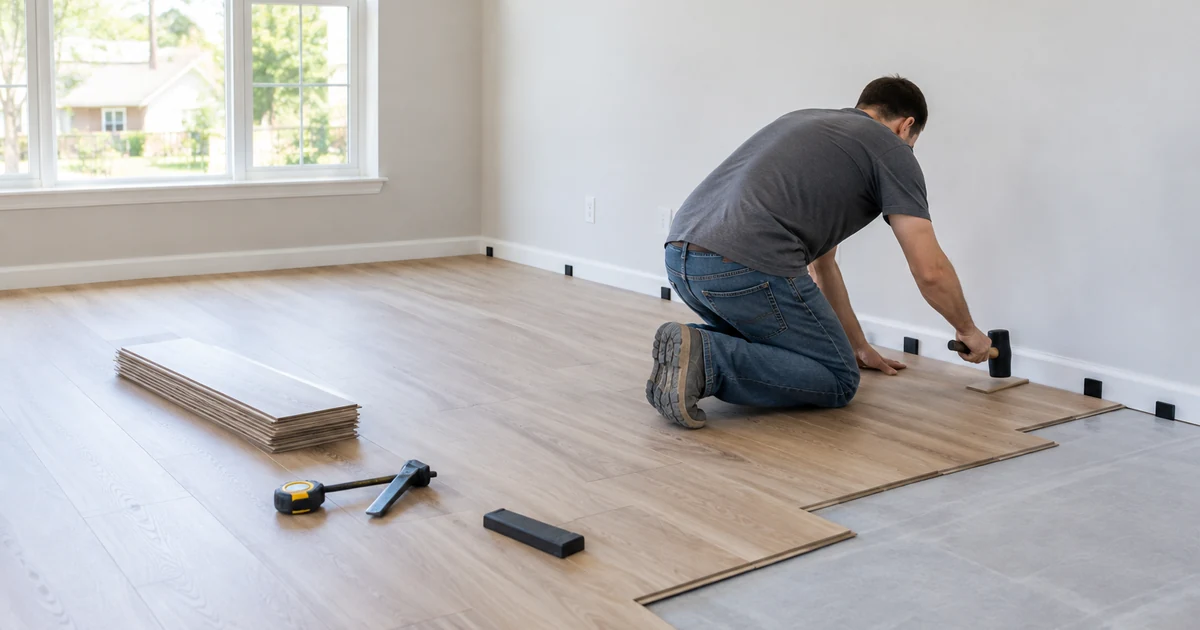
Floating click-lock laminate is one of the most DIY-friendly floors. With a miter saw or laminate cutter, a tapping block, a pull bar, and spacers, a handy homeowner can do a bedroom in a weekend and save the $700 to $1,300 of labor on a 400 sq ft job.
The DIY savings shrink when the subfloor needs leveling, the room has many doorways, or the job includes stairs. Common mistakes include skipping the 48-hour acclimation most manufacturers call for, forgetting the expansion gap at walls, and installing over a surface that isn’t flat enough, any of which can void the warranty.
Hire a pro if you are covering more than one level, working over a slab with moisture concerns, or want a warranty on labor. Flooring installation does not usually require a building permit, though condos and HOAs often have rules on sound-rated underlayment.
Laminate vs. Other Flooring Costs
Laminate sits near the bottom of the price ladder for hard-surface floors. Typical installed prices for a mid-range product:
| Floor type | Installed (per sq ft) | Water resistance | Best for |
|---|---|---|---|
| Carpet with pad | $3–$6 | Poor | Bedrooms, family rooms |
| Laminate | $3.50–$8 | Resists spills; some lines water-resistant | Living areas, bedrooms, hallways |
| Luxury vinyl plank | $4–$9 | Waterproof core | Kitchens, baths, basements |
| Engineered or solid hardwood | $6.50–$12 | Poor to fair | Main living areas, resale appeal |
| Ceramic or porcelain tile | $9–$20 | Waterproof | Bathrooms, entries, mudrooms |
The key trade-off with laminate is water: standing water at the seams can swell the fiberboard core of standard planks, so bathrooms and basements are usually better served by vinyl or tile even if the upfront price is a bit higher.
If you are still choosing a floor, compare with vinyl plank flooring installation cost, which is similar in price and fully waterproof, and hardwood floor installation cost, which costs more but can be refinished. For bedrooms, carpet installation is often the cheapest option.
How to Save Money on Laminate Flooring Installation
- Buy planks yourself and hire labor only. Some installers accept customer-supplied material and charge only their per-square-foot rate; retailers’ clearance and closeout lots can cut material cost sharply.
- Do the tear-out. Pulling carpet and pad and hauling it away yourself can save $200 to $600 on a 400 sq ft room.
- Pick planks with attached underlayment. You skip a separate material and a labor step.
- Stay at AC3 in low-traffic rooms. Bedrooms and home offices rarely need AC4 or 12 mm boards.
- Keep the baseboards. Shoe molding over existing baseboard costs far less than new base throughout.
- Combine rooms into one job. Job minimums and trip fees hit small projects hardest.
- Get three itemized quotes. Make sure each one lists removal, underlayment, transitions, and furniture moving so the totals are comparable.
Frequently Asked Questions
How much does it cost to install laminate in a 12×12 room?
A 12×12 room is 144 sq ft. At $3.50 to $8 per sq ft installed for mid-grade laminate, expect about $500 to $1,150, plus removal of the old floor and any job minimum the installer charges.
What is the labor cost to install laminate flooring per square foot?
Labor for a floating click-lock laminate floor usually runs about $1.75 to $3.30 per sq ft, and some guides quote up to $4 or more in high-cost areas. Glue-down or nail-down installation, stairs, and complex layouts cost more.
Is laminate cheaper than luxury vinyl plank?
Usually slightly. Laminate material often starts a bit lower than comparable vinyl plank, and labor is similar. Vinyl plank is fully waterproof, so it is often worth the small premium for bathrooms, basements, and laundry rooms.
Can laminate be installed over existing flooring?
Floating laminate can often go over sound, flat sheet vinyl or tile, which saves tear-out costs. It should not go over carpet, and the added height may require trimming doors and adjusting transitions.
How long does it take to install laminate flooring?
A pro crew can typically install 400 to 800 sq ft of floating laminate in a day once the old floor is removed. Planks usually need about 48 hours to acclimate in the room first, per most manufacturer instructions.
Does laminate flooring increase home value?
Laminate looks much better to buyers than worn carpet and is a common choice in rentals and flips, but it is not seen as equal to hardwood. It tends to help a home show well rather than add a large premium.