Carpet Installation Cost per Square Foot by Grade
The carpet you choose is the biggest variable in the price. Installation labor and a standard pad add a fairly steady $1 to $2.50 per sq ft, but the carpet itself ranges from under $1 for builder-grade polyester to $20 per sq ft for designer wool. The figures below are installed prices including standard padding and labor, before removal of old flooring.
| Carpet grade | What you get | Installed with pad (per sq ft) | 400 sq ft project |
|---|---|---|---|
| Builder / budget | Thin polyester or olefin, shorter warranty | $2.25–$4.50 | $900–$1,800 |
| Mid-grade | Nylon or better polyester, denser pile | $3–$6 | $1,200–$2,400 |
| Premium | Heavy nylon, triexta, high-end textures | $4.20–$8.40 | $1,700–$3,400 |
| Wool / luxury | Natural wool, custom patterns | $6.60–$13+ | $2,650–$5,300+ |
For most homes, mid-grade carpet is the sweet spot, and that’s what most homeowners install in bedrooms and family rooms. National cost guides report a typical carpet job at roughly $1,000 to $3,000, with about $2,000 being common for around 400 sq ft including tear-out of the old carpet.
Carpet is sold by the square yard (9 sq ft) as well as by the square foot, so a price of $36 per square yard is the same as $4 per square foot. Always compare quotes in the same unit.
Cost by carpet material
Fiber type drives both price and durability. These are material-only prices per square foot, before pad and labor:
| Fiber | Material cost per sq ft | Best for |
|---|---|---|
| Polyester (PET) | $1–$3 | Bedrooms, low-traffic rooms; soft and stain-resistant |
| Olefin (polypropylene) | $1–$3 | Basements, Berber loops, budget rentals |
| Nylon | $2–$5 | Hallways, stairs, family rooms; most resilient |
| Triexta | $3–$8 | Homes with kids and pets; strong stain resistance |
| Wool | $4–$20 | Formal living areas; natural, long-lasting, pricey |
Cost by room
Using mid-grade carpet with standard pad at $3 to $6 per sq ft installed, and before removal:
| Space | Approx. size | Installed cost |
|---|---|---|
| 10×12 bedroom | 120 sq ft | $360–$720 |
| 12×14 bedroom | 168 sq ft | $500–$1,000 |
| 20×20 living room | 400 sq ft | $1,200–$2,400 |
| Staircase (13 steps) | Per step | $150–$400 |
| Whole house (1,000 sq ft carpeted) | 1,000 sq ft | $3,000–$6,000 |
Small rooms often cost more per foot than these tables suggest, because many installers have a job minimum and you pay for the full roll width you use, including offcuts.
How Much Carpet Do I Need? (Carpet Calculator Guide)
You can estimate how much carpet you need in a few minutes with a tape measure. The calculator above works in square feet; here’s how to get that number and turn it into what you’ll actually order.
- Measure each room at its longest and widest points, including closets and into doorways to the middle of the threshold. Round each measurement up to the next half foot.
- Multiply length by width for the square footage. For L-shaped rooms, split them into rectangles and add them together.
- Add about 10% for waste on simple rooms, more for odd shapes, patterned carpet, or rooms that need seams. Pattern matching can push waste to 15% or more.
- Check the roll width. Most broadloom carpet comes 12 feet wide (some styles in 13’6″ or 15′). An 11×13 bedroom is 143 sq ft, but on a 12-foot roll you’d buy a 12×13 piece: 156 sq ft.
- Convert to square yards if the store prices that way: divide square feet by 9. That 156 sq ft piece is about 17.3 sq yd.
- Count stairs separately. Installers usually price stairs per step, so note how many steps you have and whether they are open-sided or have a landing.
Cost Breakdown: Materials vs. Labor
Unlike many home projects, carpet is mostly a materials cost. Installation is fast: a crew can often do several rooms in a day.
- Carpet: $1–$5 per sq ft for most residential carpet; $6 and up for premium and wool.
- Padding: about $0.25–$1.00 per sq ft for standard pads, and up to about $2 for premium memory foam or high-density rebond.
- Installation labor: roughly $0.50–$1.50 per sq ft for stretch-in installation in open rooms. Stairs are priced per step, often $10–$30 or more.
- Old carpet removal and disposal: about $0.50–$1.60 per sq ft, depending on the installer. Some retailers include it with purchase.
- Extras: transitions and thresholds ($25–$100 each), furniture moving (often $25–$75 per room or a flat fee), and subfloor repairs.
Example: 400 sq ft of mid-grade nylon at $2.75/sq ft ($1,100), standard pad at $0.50 ($200), labor at $1.00 ($400), and removal at $0.75 ($300) comes to about $2,000.
Other Factors That Affect Carpet Installation Cost
Removal of old flooring
Pulling up old carpet and pad is quick. Removing glued-down carpet, sheet vinyl, or tile before carpeting takes longer and costs more. Some big-box stores bundle basic removal into promotional pricing, so read the fine print.
Subfloor condition
Once the old carpet is up, installers may find squeaky, stained, or water-damaged subfloor. Repairs typically cost a few dollars per square foot, and pet urine damage may need sealing to stop odors from coming back through the new carpet.
Stairs
Stairs are labor-intensive, with each tread and riser cut and fitted by hand. Open-sided stairs, curved stairs, and waterfall versus cap-and-band styles all change the per-step price.
Room shape and seams
Rooms wider than 12 feet need seams. Irregular shapes, bay windows, and closets add cuts and waste. Patterned carpet requires matching, which uses more material.
Furniture and prep
Many installers charge to move furniture and won’t touch pianos, electronics, or fragile items. Clearing rooms yourself saves money and time.
Location and timing
Labor rates are higher in large metro areas. Retailers frequently run installation promotions, which can cut the labor cost substantially if your project qualifies.
Before you hire: get at least three written, itemized quotes from licensed and insured local pros. Prices for the same job often differ by 30% or more, and comparing line items is the fastest way to spot padding or missing work.
Signs It’s Time to Replace Your Carpet
Carpet doesn’t fail all at once, so it’s easy to live with it longer than you should. These are the common signs that cleaning won’t fix the problem:
- Matted, crushed traffic lanes in hallways and in front of sofas that don’t recover after vacuuming or steam cleaning.
- Ripples and wrinkles that come back after re-stretching, often a sign the pad has broken down.
- Persistent odors or stains, especially pet accidents that have soaked into the pad and subfloor.
- Frayed seams and worn stair noses, which can also become a tripping hazard.
- Water damage from a leak or flood. Wet pad that isn’t dried quickly can grow mold, and it usually needs replacing.
DIY vs. Hiring a Pro
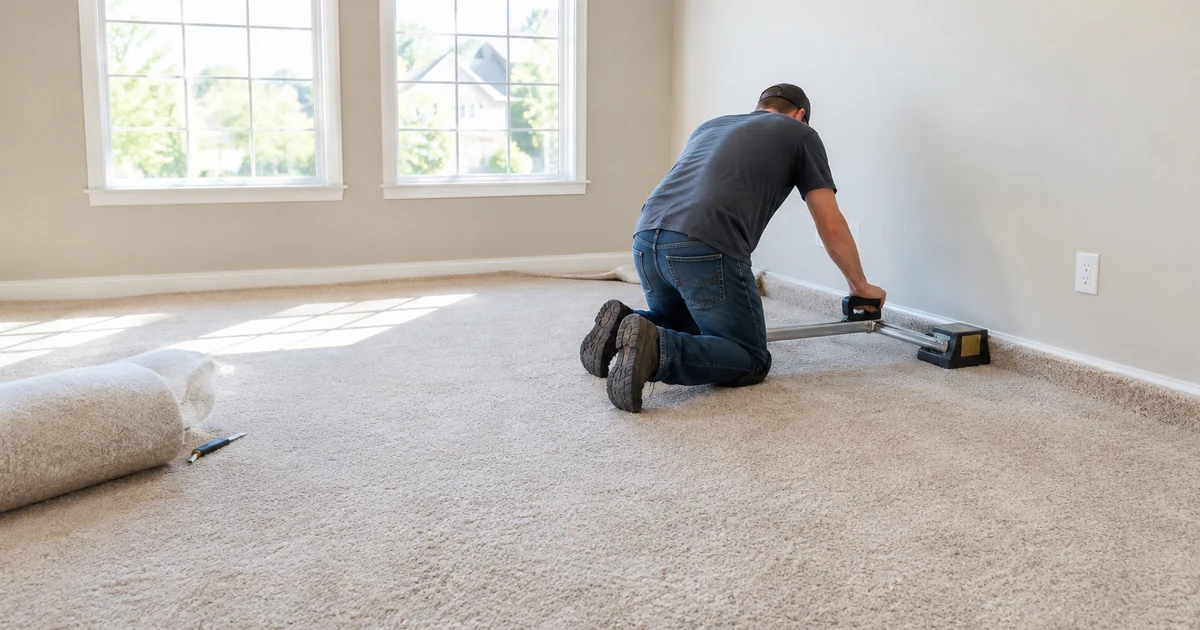
Wall-to-wall carpet is harder to DIY than it looks. Proper installation requires a power stretcher to pull the carpet tight, a knee kicker, seaming iron and tape, and tack strips. Loose carpet ripples, wears unevenly, and may void the manufacturer’s warranty, which often requires professional installation or specific methods.
- Reasonable DIY: carpet tiles, small rooms without seams, and removing old carpet and pad yourself.
- Hire a pro: stairs, rooms that need seams, large open areas, and any carpet with a warranty you want to keep.
- Tool rental: power stretchers and seaming tools can be rented, but the learning curve is steep for a one-time job.
If you’re weighing carpet against other options for a bathroom or basement, carpet is a poor fit for areas that get wet. Planning a larger renovation? See our guide to bathroom remodel costs for moisture-friendly flooring options, and our drywall installation cost guide if you’re finishing a basement before carpeting it.
How to Save Money on Carpet Installation
- Watch for installation promotions from big-box stores and flooring retailers, which can reduce or bundle labor costs.
- Do the prep yourself: move furniture, remove old carpet and pad, and pull staples if the installer allows it.
- Put money into the pad, not just the carpet. A good pad makes mid-grade carpet feel better and last longer, often for less than upgrading the carpet.
- Buy remnants for small bedrooms, closets, and offices. Remnant pieces are often discounted.
- Measure yourself first so you can spot an inflated waste estimate on a quote.
- Carpet several rooms at once to avoid job minimums and use offcuts efficiently.
- Get at least three written quotes that list carpet, pad, labor, removal, and transitions separately.
Frequently Asked Questions
How much does it cost to carpet a 12×12 room?
A 12×12 room is 144 sq ft. With mid-grade carpet and pad at $3 to $6 per sq ft installed, expect roughly $430 to $860, plus removal of old carpet and any job minimum your installer charges.
How do I calculate how much carpet I need?
Multiply each room’s length by width, add them together, and add about 10% for waste and seams. Because carpet usually comes in 12-foot-wide rolls, round room dimensions to fit the roll width, and divide square feet by 9 to get square yards.
Does carpet installation include padding?
Often, but not always. Many retailers quote carpet, pad, and labor as a package, while others price pad separately at roughly $0.25 to $1.00 per sq ft for standard pads. Ask for an itemized quote.
How much does it cost to carpet stairs?
Stair installation is typically priced per step, usually about $12 to $30 per step for labor and material, so a standard 13-step staircase often runs about $150 to $400 depending on the carpet and stair style.
Is it cheaper to install carpet or hardwood?
Carpet is usually one of the least expensive flooring options to install, while hardwood typically costs several times more per square foot. Carpet wears out sooner, though, and generally needs replacing more often.
How long does carpet installation take?
Most crews carpet a few rooms in a single day. Whole-house jobs, stairs, and projects that need subfloor repairs can take two days or more.