Foundation Repair Cost by Problem and Method
Two houses with the same square footage can get quotes that differ by $20,000, because contractors price the fix, not the house. A crack that only leaks needs a few hours of injection work. A corner that has dropped an inch needs steel driven to stable soil. The table below pairs the most common problems with the method used to fix them.
| Repair method | Used for | Typical cost |
|---|---|---|
| Crack injection (epoxy or polyurethane) | Leaking or non-structural cracks in poured walls | $250–$800 per crack |
| Slab jacking / mudjacking | Sunken slab sections, garage floors, stoops | $550–$2,500 per area |
| Carbon fiber straps | Basement walls with minor bowing | $4,000–$12,000 per wall |
| Wall anchors or steel I-beam braces | Walls with more severe bowing or inward movement | $5,000–$15,000 |
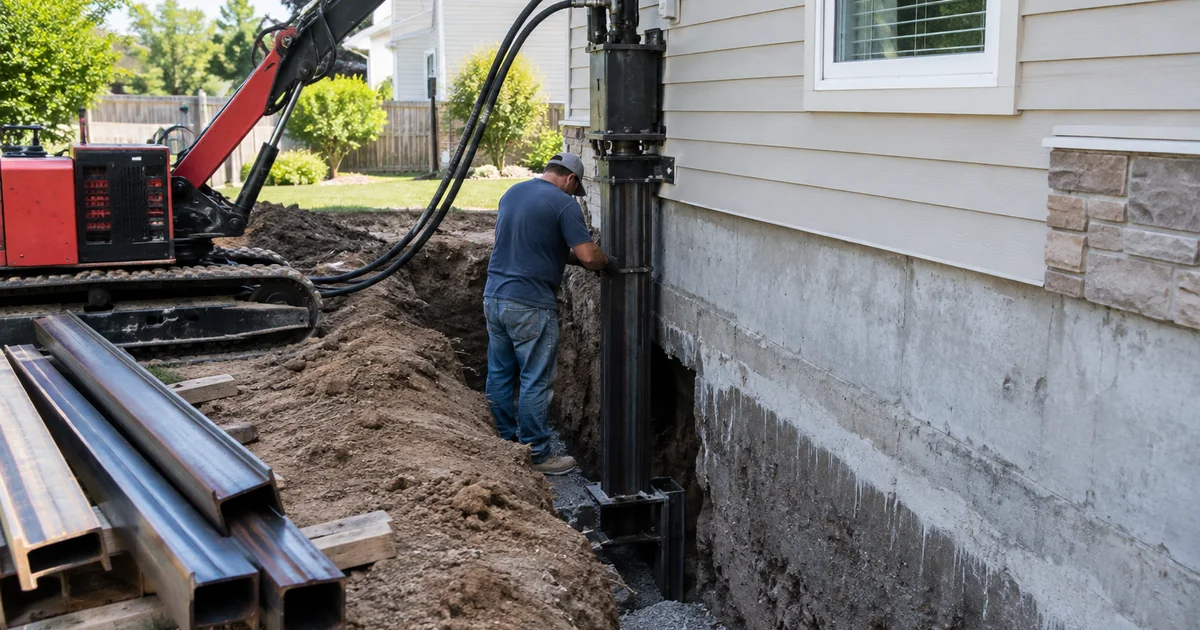
| Steel push piers or helical piers | Settling or sinking corners and walls | $1,000–$3,000 per pier |
| Full underpinning / house lifting | Widespread settlement | $10,000–$30,000+ |
Piers are priced one at a time, and a contractor rarely installs just one. A settling corner usually needs two to four piers spaced along the footing, which puts a localized pier job at roughly $3,000 to $8,000. Stabilizing an entire side of the house, or lifting it back toward level, often lands between $10,000 and $25,000, and the largest jobs in national cost data exceed $50,000.
Wall repairs follow a similar pattern. Carbon fiber straps are bonded to the wall every few feet and work best when a wall has moved less than about 2 inches. Once a wall has shifted further, contractors move to wall anchors buried in the yard or steel beams bolted from floor to joist, which cost more and may require excavation.
Foundation Repair Cost by Foundation Type
The type of foundation under your house changes how crews reach the problem and which methods they can use. Ranges are wide because each type covers everything from a single crack to a full lift.
| Foundation type | Typical cost range | Common repairs |
|---|---|---|
| Basement | $2,300–$7,600 | Crack injection, wall straps or anchors, waterproofing |
| Concrete slab | $350–$20,000 | Slab jacking, crack repair, piers under the perimeter beam |
| Block or brick | $350–$25,000 | Stair-step crack repair, wall bracing, partial rebuild |
| Pier and beam | $750–$25,000 | Shimming, replacing rotted posts or beams, adding piers |
| Crawl space | $2,500–$8,000 | Support jacks, sill and joist repair, moisture control |
Basements tend to have the narrowest range because the walls are exposed from inside, so crews can install straps and anchors without major excavation. Slabs are cheaper when the fix is a sunken section of concrete and much pricier when the perimeter needs piers. Pier-and-beam and crawl space homes often need wood repairs along with leveling, since moisture under the house can rot sills and joists over time. Damp crawl spaces are also a common place for mold to take hold, so ask whether a mold removal or moisture-control step belongs in the same project.
Cost Breakdown: Materials vs. Labor
Foundation work is labor-heavy. Crews typically bill around $200 an hour, and most of a pier or wall-anchor job is excavation, setup and hydraulic work rather than the steel itself. Here’s how the separate line items on a quote usually break out.
| Line item | Typical cost | Notes |
|---|---|---|
| Structural engineer report | $300–$1,000 | Diagnoses the cause and specifies the repair |
| Soil (geotechnical) report | $500–$3,000 | Needed for expansive clay or major underpinning |
| Hydraulic or helical piers | $1,000–$3,000 each | Installed, including excavation at each location |
| Carbon fiber reinforcement | $85–$250 per linear foot | Straps plus epoxy bonding |
| Steel support beams | $6–$20 per linear foot | Material only; installation adds labor |
| Crew labor | About $200 per hour | Often built into a per-pier or per-strap price |
| Permit | $75–$150 | Required for structural work in most areas |
Many contractors quote a single installed price per pier or per strap instead of itemizing labor. That makes bids easier to compare, as long as each one covers the same number of piers and the same depth or load rating.
Other Factors That Affect the Price
How far the damage has progressed
A wall that has bowed half an inch can often be held with straps. The same wall at 3 inches may need anchors or beams and some rebuilding. Settlement works the same way: catching it early keeps the pier count down.
Access and site conditions
Crews need room to dig beside the footing. Decks, patios, driveways, mature landscaping and tight property lines add hours of labor and restoration. Interior piers installed through a slab floor cost more because the concrete has to be cut and patched.
Soil and water
Expansive clay, poor compaction and water pooling against the house are the usual root causes. If drainage isn’t corrected, repairs can fail again. Adding gutters, regrading, or a French drain often belongs in the same budget.
Engineering, permits and inspections
Structural repairs usually need a permit and sometimes a stamped engineer’s plan. Budget $75 to $150 for the permit and $300 to $1,000 for an engineer’s report, more if a soil study is required.
Where you live
Labor rates and soil conditions vary widely. Regions with expansive clay soils see more pier work and plenty of competing contractors, while areas with few specialists may have higher prices and longer waits.
Before you hire: get at least three written, itemized quotes from licensed and insured local pros. Prices for the same job often differ by 30% or more, and comparing line items is the fastest way to spot padding or missing work.
Signs You Need Foundation Repair
Not every crack means trouble. Thin vertical hairline cracks in poured concrete are common as concrete cures and shrinks. The warning signs below point to movement that deserves a professional look:
- Horizontal cracks in a basement wall, or a wall visibly bowing inward.
- Stair-step cracks in block or brick, especially if they’re widening.
- Cracks wider than about 1/4 inch, or cracks where one side sits higher than the other.
- Doors and windows that start sticking or won’t latch, with gaps at the top corners.
- Sloping or bouncy floors and cracks in drywall above door frames.
- Gaps between the siding, chimney or trim and the rest of the house.
Water in the basement is a related but separate problem. A dry fix such as crack injection or a sump pump may solve leaks without any structural work, so find out which problem you have before paying for piers.
DIY vs. Hiring a Pro
DIY is realistic for exactly one job: sealing a non-structural crack. Crack injection kits sold at home centers run from about $35 to a few hundred dollars and work on dry, stable cracks in poured concrete walls. They won’t fix a crack that keeps moving.
Everything else belongs with a licensed foundation contractor. Piers require hydraulic equipment and load calculations, wall anchors involve excavation near the footing, and a mistake can crack walls or damage plumbing. Structural work also typically needs a permit, and a documented professional repair with a transferable warranty matters when you sell. If you’re buying a house with foundation concerns, a home inspection followed by an engineer’s evaluation is the right order.
How to Save Money on Foundation Repair
- Get the engineer’s report first. It keeps the scope honest and gives you a spec to hand every bidder.
- Collect at least three quotes. Compare the number of piers, their spacing and depth, and exactly what the warranty covers.
- Fix drainage now. Extending downspouts and regrading soil away from the house cost little and can slow the damage while you plan the repair.
- Don’t wait. A wall that fits a strap repair today may need anchors or rebuilding in a few years.
- Ask for a transferable lifetime warranty. Many pier and wall systems come with one, and it adds value at resale.
- Read your insurance policy. Standard homeowners policies generally exclude settling and earth movement, but damage from a sudden covered event, such as a burst pipe, may be treated differently.
- Bundle related work. If you also need waterproofing or a drain system, a single contractor handling both can save a second mobilization fee.
Frequently Asked Questions
How much does it cost to fix a foundation crack?
Sealing a single crack with epoxy or polyurethane injection typically costs $250 to $800. That price covers leaking or cosmetic cracks in poured walls. If the crack is horizontal, widening or offset, it usually signals movement that needs bracing or piers, which costs thousands.
How much does a foundation pier cost?
Steel push piers and helical piers usually cost $1,000 to $3,000 each installed. Most settling corners need two to four piers, so a localized pier job commonly runs $3,000 to $8,000, while a full side or perimeter can reach $10,000 to $25,000 or more.
Is foundation repair covered by homeowners insurance?
Usually not. Standard policies generally exclude settling, soil movement and wear. Damage caused by a sudden covered event, such as a burst pipe, may be an exception, so review your policy and ask your insurer before work begins.
Is foundation repair worth it?
In most cases, yes. Foundation problems tend to get worse and more expensive over time, and unrepaired structural issues can make a house hard to sell or finance. A documented repair with a transferable warranty helps protect resale value.
How long does foundation repair take?
Crack injection takes a few hours. Pier installations and wall bracing usually take one to three days for a typical job, while full underpinning or house lifting can take a week or more, plus time for permits and engineering.
Should I call a structural engineer or a foundation contractor first?
An independent structural engineer is the better first call if you see signs of movement. The report typically costs $300 to $1,000 and identifies the cause and required repair, which lets you compare contractor bids on the same scope.