French Drain Cost per Linear Foot by Type
Contractors price French drains by the linear foot, and the type of drain is the biggest driver. A shallow yard drain in open lawn is simple trenching work. A drain along the foundation footing or inside a basement involves deep excavation or breaking concrete, which multiplies the labor.
| French drain type | Cost per linear foot | Typical total | Typical use |
|---|---|---|---|
| Shallow yard / surface drain | $10 – $30 | $500 – $5,300 | Soggy lawn areas, downspout runoff |
| Curtain drain (intercepts water upslope) | $10 – $35 | $1,000 – $8,800 | Diverting groundwater before it reaches the house |
| Crawl space drain | $20 – $40 | $2,000 – $8,000 | Wet or damp crawl spaces |
| Exterior foundation perimeter drain (at footing) | $30 – $90 | $3,000 – $10,000+ | Basement wall seepage, new foundation waterproofing |
| Interior basement drain (under slab) | $40 – $100 | $4,000 – $18,000 | Water entering at the wall-floor joint |
Most homeowners installing an exterior yard or curtain drain pay about $3,500 for a 100-foot run, or roughly $15 to $55 per linear foot once gravel, pipe, fabric, and outlet work are included. Interior basement systems are a different project entirely: crews jackhammer a channel around the slab edge, lay perforated pipe in gravel, tie it into a sump pit, and pour new concrete, which is why they typically cost $5,000 to $15,000 or more.
French drain cost by location
Where the drain runs matters almost as much as how deep it goes. Cutting through hardscape or working near structures raises the per-foot price.
| Drain location | Typical cost per linear foot |
|---|---|
| Open yard | $20 – $30 |
| Crawl space | $25 – $35 |
| Next to a patio | $25 – $40 |
| Along a retaining wall | $25 – $50 |
| Along a sidewalk | $30 – $50 |
| Along a driveway | $45 – $55 |
| Around the house foundation | $50 – $80 |
| Inside the basement | $60 – $70 and up |
Cost Breakdown: Materials vs. Labor
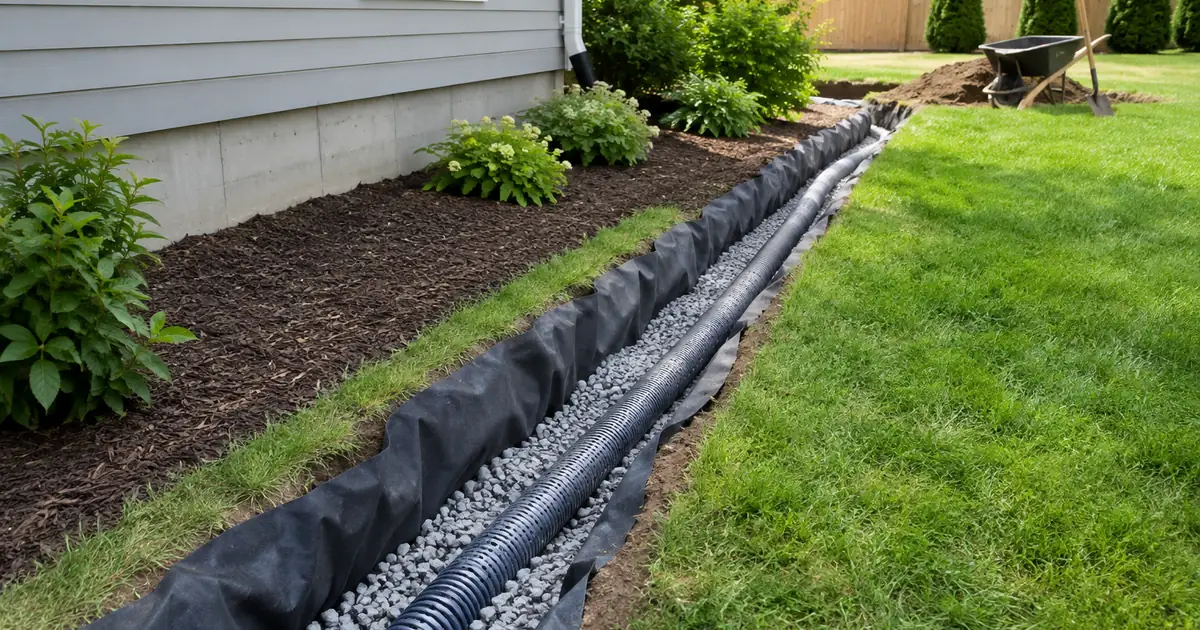
A French drain is a trench lined with landscape fabric, filled with washed gravel, with a perforated pipe that carries water to a safe outlet. Materials are modest; digging is where the money goes.
- Materials: about $5 to $10 per linear foot for perforated pipe, drainage gravel, and filter fabric. Pipe alone is roughly $1 to $5 per foot, and gravel for a typical job runs $100 to $600.
- Labor: $50 to $100 per hour, and usually the largest share of the bill.
- Excavation and trenching: $500 to $2,400 for a typical project, or $200 to $400 per day if a mini-excavator or backhoe is rented.
- Outlet options: a pop-up emitter or daylight outlet is inexpensive; a dry well costs roughly $300 to $2,100 installed.
- Sump pump (if water cannot drain by gravity): about $600 to $2,500 installed. See our sump pump installation cost guide.
- Permits: often not required for yard drains; when they are, expect roughly $50 to $375.
- Landscape restoration: reseeding or sodding the trench line is sometimes extra, often $100 to $200 for small areas.
Other Factors That Affect French Drain Installation Cost
Length and depth
Cost scales roughly with length. Depth matters too: a typical yard drain is 18 to 24 inches deep, while a drain at the foundation footing may be 4 to 8 feet down, requiring much more excavation, shoring, and backfill.
Soil and site conditions
Heavy clay, rocks, and tree roots slow digging. Sloped or tight sites that a mini-excavator cannot reach must be dug by hand, which increases labor hours.
Hardscape and obstacles
Cutting and replacing sections of a driveway, walkway, or patio adds cost, as does working around fences, decks, and landscaping. Underground utilities and irrigation lines also have to be located and avoided.
Where the water goes
A French drain needs a place to discharge: a lower part of the yard, a storm drain where allowed, a dry well, or a sump pit. If the lot is flat, you may need a dry well or a pump, which adds to the budget.
Gutter and grading issues
Many soggy yards and wet basements are caused by downspouts dumping water next to the foundation or by soil sloping toward the house. Regrading typically costs $500 to $5,000, and new or extended gutters are often the cheapest fix. See our gutter installation cost guide before committing to a full drain system.
Region
Labor rates vary widely. Expect higher prices in high-cost metro areas and lower prices in rural markets.
Before you hire: get at least three written, itemized quotes from licensed and insured local pros. Prices for the same job often differ by 30% or more, and comparing line items is the fastest way to spot padding or missing work.
French Drain vs. Other Drainage Fixes
A French drain is not always the cheapest or best answer. Compare it with other common fixes before you sign a contract:
| Solution | Typical cost | When it makes sense |
|---|---|---|
| Downspout extensions / gutter repair | $200 – $600 | Water pools near downspouts or overflows gutters |
| Yard regrading | $500 – $5,000 | Soil slopes toward the house |
| Exterior French drain (100 ft) | $1,500 – $5,500 | Groundwater or runoff saturates a yard area |
| Dry well | $300 – $2,100 | Water needs somewhere to go on a flat lot |
| Sump pump | $600 – $2,500 | Basement or crawl space below the water table |
| Interior basement drain + sump | $5,000 – $18,000 | Persistent seepage at the basement wall-floor joint |
Often the right plan combines two or three of these. Start with the cheapest fixes that address the source of the water, then add a drain if the problem persists.
What a good French drain quote includes
- Total length, trench depth and width
- Pipe type (rigid PVC or corrugated) and whether it is perforated with a sock
- Gravel type and depth, plus filter fabric wrapping
- Outlet method: daylight, pop-up emitter, dry well, or sump pit
- Utility locating, spoil removal, and lawn or hardscape restoration
- Warranty terms and any cleanout ports for future maintenance
Signs You Need a French Drain
- Standing water or soggy patches in the yard days after rain
- Water seeping into the basement at the base of the walls
- A damp crawl space or musty odors under the house
- Erosion or washed-out mulch along a slope
- Water pooling against the foundation or a retaining wall
If water is getting into a finished basement or cracks are widening, have the foundation evaluated before choosing a fix. A drain handles water; it does not repair structural movement. A home inspection or a foundation specialist can help you figure out which problem you have.
DIY vs. Hiring a Pro
A short, shallow yard drain in open soil is a realistic DIY project for a physically fit homeowner. Your costs would be pipe, gravel, fabric, and perhaps a day’s rental of a trencher. The key details are keeping a consistent downward slope toward the outlet along the whole run, wrapping the gravel in filter fabric so soil does not clog it, and giving the water a real outlet.
Hire a pro for drains along the foundation, anything deeper than a couple of feet, interior basement systems, and projects that tie into a sump pump. Deep trenches can collapse, breaking a basement slab is heavy work, and a poorly designed foundation drain can make water problems worse. Professional basement waterproofing companies also typically offer transferable warranties.
How to Save Money on a French Drain
- Fix gutters and grading first. Extending downspouts and regrading soil away from the house can solve the problem for a fraction of the cost.
- Use a daylight outlet if possible. Letting the drain exit at a lower point of the yard avoids the cost of a dry well or sump pump.
- Choose exterior over interior when feasible. A yard or curtain drain that intercepts water before it reaches the house costs far less per foot than an under-slab system.
- Get three itemized quotes. Compare trench depth, pipe type (rigid vs. corrugated), gravel depth, fabric, outlet, and restoration.
- Handle restoration yourself. Reseeding the trench line or replanting beds after installation can trim the bill.
- Schedule in dry weather. Contractors are busiest after big storms; booking in a dry season can bring better scheduling and pricing.
Frequently Asked Questions
How much does a 100-foot French drain cost?
A 100-foot exterior French drain in open soil usually costs about $1,500 to $5,500, with most homeowners paying around $3,500. The same length installed inside a basement typically costs $4,000 to $10,000 because the slab must be cut and replaced.
Is an interior or exterior French drain better?
Exterior drains stop water before it reaches the house and are cheaper per foot, but digging down to the footing around an existing home is expensive and disruptive. Interior drains manage water that already gets in and are often the practical choice for finished neighborhoods or tight lots. A waterproofing contractor can recommend the right approach for your house.
How long does a French drain last?
A properly built French drain with filter fabric and clean gravel can last for decades. Drains without fabric tend to clog with silt sooner. Cleaning a clogged drain typically costs $80 to $500.
Can I install a French drain myself?
A short, shallow yard drain is a manageable DIY job if you call 811 first, keep a steady slope, wrap the gravel in filter fabric, and provide a proper outlet. Foundation-depth and interior basement drains are best left to professionals.
Does a French drain need a sump pump?
Only if the water cannot flow by gravity to a lower outlet. Yard drains usually daylight to a low spot or a dry well. Interior basement drains almost always feed a sump pump, which typically costs $600 to $2,500 installed.
Does homeowners insurance pay for a French drain?
Generally no. A French drain is considered maintenance or an improvement. Insurance may cover sudden water damage inside the home, but not the cost of installing drainage to prevent it.