Mold Removal Cost by Size of the Affected Area
Remediation companies measure the moldy surface and price the job per square foot, usually $10 to $25. That rate covers setting up containment, running HEPA air filtration, removing or cleaning contaminated material, and bagging it for disposal. The table shows how quickly the total climbs with area.
| Affected area | Typical cost | Example |
|---|---|---|
| 50 sq ft | $500–$1,250 | Section of bathroom ceiling or behind a vanity |
| 100 sq ft | $1,000–$2,500 | One basement wall |
| 150 sq ft | $1,500–$3,750 | Corner of a basement after a leak |
| 200 sq ft | $2,000–$5,000 | Part of an attic’s roof sheathing |
| 500 sq ft | $5,000–$12,500 | Full crawl space or finished basement room |
| 1,000 sq ft | $10,000–$25,000 | Widespread damage after flooding |
Most jobs fall in the 100 to 200 square foot range, which is why the national average sits around $2,500. Very small jobs often hit a minimum charge of about $500 because the crew still has to set up containment and equipment.
Mold Removal Cost by Location
Where the mold is growing matters almost as much as how much there is. Hard-to-reach spaces take longer to contain and clean, and mold inside walls means cutting out drywall before remediation can even start.
| Location | Typical cost | Why it varies |
|---|---|---|
| Bathroom | $500–$1,500 | Usually small areas; more if the subfloor or wall cavity is affected |
| Crawl space | $500–$2,000 | Tight access; often paired with moisture control |
| Basement | $500–$4,000 | Depends on finished vs. unfinished walls and flooring |
| Attic | $1,000–$9,000 | Sheathing treatment, insulation removal, ventilation fixes |
| Inside walls | $1,000–$12,000+ | Drywall and insulation removal, framing treatment |
| HVAC system and ducts | $3,000–$10,000 | Specialized cleaning; some components may need replacing |
| Whole house | $10,000–$30,000 | Major flooding or long-term leaks |
What a Professional Mold Remediation Job Includes
Knowing the steps helps you read a quote and spot what’s missing. A thorough job for a mid-sized area generally follows this order:
- Assessment. The contractor finds the extent of the growth and the moisture source, often with a moisture meter and by opening suspect areas.
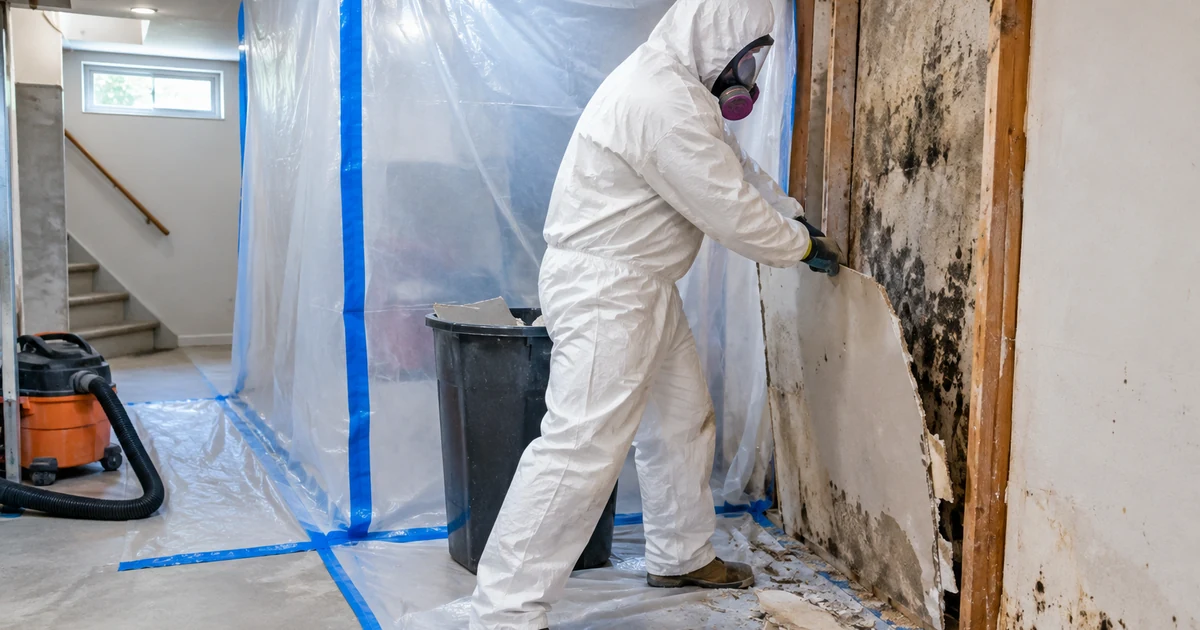
- Containment. Plastic sheeting and sealed doorways isolate the work area, and HVAC vents in the zone are covered so spores don’t travel through the house.
- Air filtration. Negative air machines and HEPA air scrubbers run during the work to capture airborne particles.
- Removal. Moldy porous materials such as drywall, insulation and carpet are cut out, bagged and removed.
- Cleaning. Framing, concrete and other hard surfaces are HEPA-vacuumed and scrubbed. Some contractors also apply a sealant or coating to treated wood.
- Drying. Dehumidifiers and fans bring materials back to normal moisture levels before anything is closed up.
- Verification. A visual check, and sometimes clearance testing, confirms the area is clean before rebuilding starts.
If a quote skips containment or doesn’t mention the moisture source, ask why. A lower price that leaves the cause unfixed often means the mold comes back.
Cost Breakdown: Materials vs. Labor
Labor is the biggest share of a remediation bill, roughly 60% of the total, with materials, equipment and disposal making up the rest. A typical quote includes some or all of these items:
- Inspection and testing: $250–$350 for a basic inspection, $450–$800 for a comprehensive one with lab samples.
- Containment and air filtration: plastic barriers, negative air machines and HEPA scrubbers, built into the per-square-foot rate.
- Removal and cleaning: cutting out porous materials, HEPA vacuuming and scrubbing hard surfaces.
- Disposal: bagging and hauling contaminated drywall, insulation and carpet.
- Clearance testing: an optional post-cleanup check, often priced like an inspection.
- Rebuild: usually separate. Replacing drywall runs about $1,000–$2,900 and carpet $775–$2,600 for a typical room.
Ask whether the quote includes putting the room back together. Many remediation firms stop at bare studs, leaving you to hire a separate crew for new drywall, paint and flooring.
Other Factors That Affect the Price
Porous vs. hard surfaces
Mold on concrete, tile or metal can usually be cleaned in place. Drywall, ceiling tiles, insulation and carpet absorb moisture and generally have to be removed and replaced, which adds labor, disposal and rebuild costs.
Hidden growth
A small visible spot can hide a larger colony behind a wall or under flooring. Contractors may quote a range and adjust once walls are opened, so leave room in your budget.
The moisture source
Remediation won’t last if the water keeps coming. A plumbing leak, roof leak, poor attic ventilation or a damp basement needs its own repair, and that cost is rarely in the mold quote. Basement moisture may call for grading fixes, a sump pump or a French drain.
Access
Low crawl spaces, attics with little headroom and finished basements take longer to contain and work in, which shows up in the per-square-foot rate.
Contaminated water
Damage from sewage backups or floodwater requires stricter cleanup and protective equipment, so expect higher rates than for a clean-water leak.
Clearance testing and documentation
If you’re selling the house, filing an insurance claim or have someone at home with health concerns, you may want post-remediation testing and a written report. That adds an inspection-level fee, typically a few hundred dollars, but gives you a record that the work was completed and verified.
Region
Labor rates and demand vary. Prices tend to be higher in large metro areas and in humid climates right after storm seasons, when remediation crews are busiest.
Before you hire: get at least three written, itemized quotes from licensed and insured local pros. Prices for the same job often differ by 30% or more, and comparing line items is the fastest way to spot padding or missing work.
Do You Need Mold Testing?
Often, no. The U.S. Environmental Protection Agency says that in most cases, if mold growth is visible, sampling is unnecessary. There are also no federal limits for mold or mold spores, so a lab result can’t tell you whether a home “passes.”
Testing does make sense in a few situations: when you smell mold but can’t find it, when you want proof after cleanup that the area is clean (clearance testing), or for real estate and insurance documentation. The EPA recommends that sampling be done by professionals with specific experience in designing sampling protocols and interpreting results.
DIY vs. Hiring a Pro
The EPA’s guidance draws a practical line: if the moldy area is less than about 10 square feet, roughly a 3-by-3-foot patch, you can usually handle it yourself. That means fixing the water problem, scrubbing hard surfaces with detergent and water, drying everything completely, and throwing out porous materials that stay moldy. Wear gloves, goggles and an N-95 respirator while you work.
Call a professional when:
- Mold covers more than about 10 square feet or there was significant water damage.
- The water involved was sewage or other contaminated water.
- You suspect hidden mold inside walls, ceilings or ductwork.
- Mold is in the HVAC system. The EPA advises not running a system you know or suspect is contaminated.
- Anyone in the home has health concerns. The EPA recommends consulting a health professional before starting cleanup.
When hiring, look for a contractor with mold-specific experience who follows EPA remediation guidance or industry standards, and check references.
How to Save Money on Mold Removal
- Act quickly. Drying wet materials within 24 to 48 hours can keep mold from taking hold, and small jobs cost far less than large ones.
- Fix the moisture first. Paying for remediation before the leak is repaired often means paying twice.
- Handle small areas yourself. Under about 10 square feet on hard surfaces is usually a DIY job.
- Skip unnecessary testing. If you can see the mold, testing rarely changes the plan.
- Check your insurance. Policies often cover mold that results from a sudden covered event, like a burst pipe, but not from long-term leaks or humidity. Many cap mold coverage.
- Get three written quotes that list square footage, containment method, what gets removed, and whether clearance testing and rebuild are included.
- Control humidity afterward. Run bathroom fans, vent dryers outside and keep indoor humidity in check to avoid a repeat bill.
Frequently Asked Questions
How much does mold removal cost per square foot?
Professional mold remediation typically costs $10 to $25 per square foot, with some estimates reaching $30 for difficult access or heavy contamination. A 100-square-foot area usually runs $1,000 to $2,500.
How much does mold testing cost?
A basic mold inspection with testing costs about $250 to $350, and a comprehensive inspection with multiple lab samples runs $450 to $800. The EPA notes that when mold is visible, sampling is usually unnecessary.
Does homeowners insurance cover mold removal?
Sometimes. Coverage usually applies only when mold results from a sudden, covered event such as a burst pipe, and many policies cap mold payouts. Mold from ongoing leaks, flooding without flood coverage, or high humidity is typically excluded.
Can I remove mold myself?
For small areas, yes. The EPA says that if the moldy area is less than about 10 square feet, you can usually handle it yourself by fixing the moisture, scrubbing hard surfaces with detergent and water, and discarding porous materials. Larger areas, hidden mold and sewage-related damage call for a professional.
How much does it cost to remove mold from an attic?
Attic mold remediation typically costs $1,000 to $4,000 for common jobs and can reach $9,000 when sheathing and insulation across the whole attic are affected. Fixing ventilation or roof leaks is usually a separate cost.
How long does mold remediation take?
Small jobs are often finished in one to two days. Larger jobs involving several rooms, drywall removal or HVAC cleaning can take up to a week, not counting rebuild work.