Sprinkler System Installation Cost per Zone
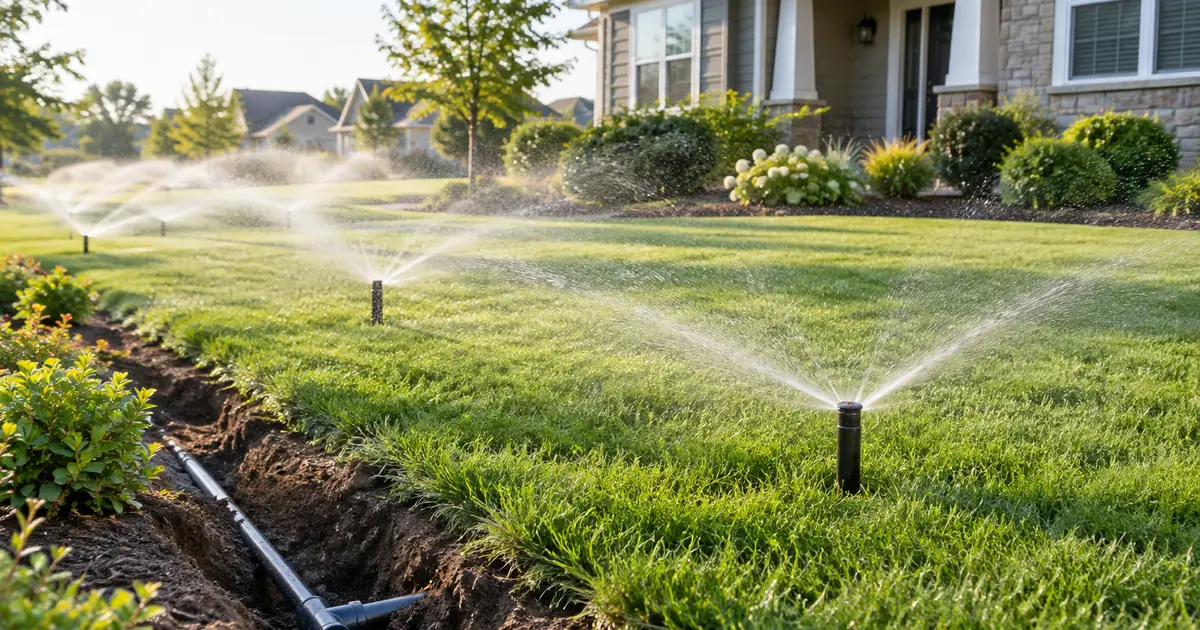
Irrigation contractors design a system around zones: groups of sprinkler heads that run together off one valve, sized to what your water pressure and flow can supply. Zone count is the best single predictor of price, because every zone adds a valve, more pipe, more heads, and more trenching. All-in, most installers land around $500 to $1,300 per zone.
| Number of zones | Typical installed cost | Usually covers |
|---|---|---|
| 3 zones | $1,850 – $4,100 | Small lot or front yard only |
| 4 zones | $2,250 – $4,900 | 1/8-acre lot, lawn plus a bed or two |
| 5 zones | $2,650 – $5,700 | Typical quarter-acre suburban lot |
| 6 zones | $3,050 – $6,500 | Larger quarter-acre lot with separate bed zones |
| 8 zones | $3,850 – $8,100 | Half-acre lot or complex landscaping |
These totals include the controller, connection to the water supply, and a backflow preventer, which is where the “fixed” part of every system comes from. A five-zone in-ground system for a quarter-acre lot at around $4,000 is a realistic middle-of-the-road figure. Published national averages range from about $2,500 to $5,500 depending on the lot size each source assumes, so treat any single number as a starting point.
Cost by lot size and per acre
| Lot size | Typical zones | Typical installed cost |
|---|---|---|
| 1/8 acre (5,445 sq ft) | 3 – 4 | $1,900 – $4,900 |
| 1/4 acre (10,890 sq ft) | 4 – 6 | $2,500 – $6,500 |
| 1/2 acre (21,780 sq ft) | 7 – 10 | $4,000 – $10,000 |
| 1 acre (43,560 sq ft) | 12+ | $7,000 – $20,000 |
Per-acre pricing only works as a rough guide, because the house, driveway, and patio take up part of every lot. Contractors estimate from the actual irrigated area, which on average costs about $0.50 to $2.00 per square foot for an in-ground system.
Cost by system type
- In-ground spray and rotor systems: the standard for lawns, roughly $1 to $2.50 per square foot of irrigated area.
- Drip irrigation: for flower beds, shrubs, and vegetable gardens; about $225 to $1,200 per zone. Drip puts water at the roots and wastes less to wind and evaporation.
- Above-ground systems: hose-fed sprinklers on timers cost far less, around $0.50 to $1.50 per square foot, but need to be moved and stored.
Cost Breakdown: Materials vs. Labor
On a typical five-zone job at about $4,000, the budget splits roughly like this:
| Component | Typical cost | Notes |
|---|---|---|
| Sprinkler heads | $3 – $40 each | Pop-up sprays $3 – $15, rotors $5 – $20, gear-driven $10 – $40; head count depends on spacing and water pressure |
| Pipe, fittings, and valves | Scales with zone count | PVC or poly pipe, one valve per zone, valve boxes; usually bundled into the per-zone price |
| Controller (timer) | $50 – $500 | Wi-Fi smart controllers at the upper end |
| Backflow preventer | $450 – $1,200 | Installed; often required by local code |
| Rain or soil moisture sensor | $17 – $75 | Shuts the system off after rainfall |
| Trenching | $4 – $12 per linear foot | Pulling or trenching pipe 6 to 12 inches deep |
| Labor | $45 – $100 per hour | An in-ground system usually takes one to two days for a crew |
| Permit | $35 – $200 | Where required, plus possible plumbing inspection |
Other Factors That Affect Sprinkler System Prices
Water pressure and supply
Low pressure or flow means fewer heads per zone and therefore more zones, which raises the price. Homes on a well may need a pump upgrade or booster to run a system properly; if the pump is aging, compare with our well pump replacement cost guide before you commit.
Soil and hardscape
Rocky or hardpan soil slows trenching and can add to the per-foot cost. Running pipe under a driveway, sidewalk, or patio requires boring, which is slower and pricier than open-lawn trenching.
Backflow prevention and codes
Most jurisdictions require a backflow preventer so irrigation water cannot siphon back into drinking water. Some areas also require annual backflow testing by a certified tester, a recurring cost to budget for.
Lawn repair after installation
Vibratory plows that pull pipe underground leave narrow slits that heal quickly, while open trenching disturbs more turf. If the install coincides with a new lawn, lay the pipes first and then put down sod, which costs about $1 to $2 per square foot, to avoid tearing up new grass.
Smart features
Wi-Fi controllers that adjust watering based on local weather typically add $50 to $300 over a basic timer, and sensors cost $17 to $75 each. They often pay for themselves in water savings and qualify for rebates in many areas.
Region and season
Labor rates, frost depth, and the length of the watering season all vary by region. In cold climates, systems must be blown out each fall, and spring is peak installation season.
Before you hire: get at least three written, itemized quotes from licensed and insured local pros. Prices for the same job often differ by 30% or more, and comparing line items is the fastest way to spot padding or missing work.
Repair vs. Replace an Existing System
If you bought a home with an older system, it may be worth fixing rather than replacing. Most individual problems are inexpensive: a broken head, a leaking fitting, or a stuck valve typically costs $100 to $400 to repair. Replacement or a major redesign makes more sense when:
- Coverage is poor across the whole yard, with dry patches next to soggy ones, because the original layout was never right.
- Pipes keep cracking or leaking, often a sign of old, brittle pipe or repeated freeze damage.
- The landscape has changed, such as a new patio, beds, or grass type, and the zones no longer match what is planted.
- Repairs are coming every season, and their combined cost is creeping toward a meaningful share of a new system.
A middle path is a retrofit: keep the main line and valves, then swap older spray heads for high-efficiency nozzles, add a smart controller, and split badly designed zones. An irrigation contractor can run a system audit and tell you which parts are worth keeping.
DIY vs. Hiring a Pro
A homeowner can buy sprinkler parts for a fraction of the installed price and rent a trencher, potentially saving $100 to $1,600 or more in labor. The hard parts are design and the water connection: calculating flow per zone, spacing heads for full coverage, and tying into the main supply with a code-compliant backflow preventer. Many areas require a licensed plumber or irrigation contractor for the backflow connection and a permit for the tap.
Before digging, call 811 to have gas, electric, and communication lines marked. A reasonable compromise is paying a pro to design the system and install the backflow and valve manifold, then doing the trenching and head installation yourself.
Ongoing costs after installation
- Winterization (cold climates): about $50 to $150 per year for a compressed-air blowout.
- Repairs: typically $100 to $400 for broken heads, leaks, or valve problems.
- Lifespan: a well-maintained in-ground system can last 20 years or more, with heads and controllers replaced along the way.
How to Save Money on a Sprinkler System
- Look for WaterSense rebates. Many water utilities offer rebates for EPA WaterSense-labeled smart irrigation controllers or sensors. Check your utility’s website before buying.
- Use drip in beds. Drip zones cost less per zone than spray and waste less water on shrubs and gardens.
- Shrink the lawn. Fewer square feet of turf means fewer zones. Some homeowners convert hard-to-water strips to mulch, gravel, or artificial turf.
- Install before landscaping. Putting pipe in before sod, pavers, or plantings avoids boring and restoration charges.
- Get three itemized bids. Compare zone count, head brand and type, controller, and whether permits and backflow are included.
- Schedule off-peak. Late summer and fall installs are often easier to book than spring, when every contractor is busy with startups and repairs.
- Maintain it. Annual inspections and winterization in cold climates prevent cracked pipes and expensive spring repairs.
Frequently Asked Questions
How much does a sprinkler system cost per zone?
Most installers work out to about $500 to $1,300 per zone once the controller, backflow preventer, and labor are spread across the system. Drip zones for beds tend to be cheaper, around $225 to $1,200 per zone.
How many sprinkler zones do I need?
It depends on your water pressure, flow rate, and landscape. A quarter-acre suburban lot usually needs 4 to 6 zones, with lawn areas, shaded areas, and planting beds on separate zones since they need different amounts of water.
How much does it cost to irrigate an acre?
Expect roughly $7,000 to $20,000 per irrigated acre for an in-ground system, depending on head type, zone count, soil, and whether part of the area is drip. Large rural properties with long pipe runs can cost more.
Is a backflow preventer required for a sprinkler system?
In most jurisdictions, yes. Plumbing codes require a backflow preventer so irrigation water cannot flow back into the drinking water supply. Installed cost is typically $450 to $1,200, and some areas require annual testing.
Does a sprinkler system increase home value?
It can make a home more attractive to buyers in dry or hot climates, especially with a healthy lawn to show for it. The return varies widely by region, so install one mainly for convenience and water efficiency rather than resale.
How long does sprinkler installation take?
A professional crew typically installs an in-ground system for an average lot in one to two days. Large properties of an acre or more can take two to three days, plus time for permits and inspection where required.