Toilet Installation Cost by Type
Most of the variation in a toilet replacement comes from the fixture itself. Swapping a standard two-piece toilet on existing plumbing is a routine one- to two-hour job, while wall-hung, smart, and upflush toilets need extra parts, extra labor, and sometimes an electrician or open wall.
| Toilet type | Toilet only | Installed total* | Notes |
|---|---|---|---|
| Two-piece (standard) | $120–$400 | $320–$950 | Separate tank and bowl; most common and cheapest |
| One-piece | $300–$900 | $500–$1,450 | Tank and bowl molded as one piece; easier to clean, heavier to carry |
| Wall-hung | $300–$1,500+ | $500–$2,050+ | Plus an in-wall carrier and wall repair when converting from a floor model |
| Smart or bidet toilet | $600–$2,000+ | $800–$2,550+ | Needs a nearby GFCI outlet; add an electrician if there isn’t one |
| Upflush / macerating | $750–$1,500 | $950–$2,050+ | For basements and rooms below the sewer line |
*Installed totals assume an existing toilet location, $150 to $350 in labor, and $50 to $200 for removal and disposal of the old toilet.
Cost guides put the national average for a toilet replacement around $450 to $600, and most homeowners pay between $350 and $800 for a new standard toilet installed by a plumber. A mid-priced two-piece model with haul-away of the old unit typically lands close to $600.
Cost by flush type
The flushing mechanism also affects price and performance:
| Flush type | Typical installed cost | How it works |
|---|---|---|
| Gravity flush | $200–$950 | Water drops from the tank by gravity; quiet and simple to repair |
| Dual flush | $250–$1,200 | Two buttons for a light or full flush; saves water |
| Pressure-assisted | $500–$2,000 | Pressurized tank pushes a powerful, louder flush; fewer clogs |
| Upflush | $600–$1,300+ | Grinds and pumps waste up to the drain line |
For most bathrooms, a well-rated gravity toilet with a large flush valve performs well and is the cheapest to maintain, since replacement flappers and fill valves are sold everywhere.
Cost Breakdown: Materials vs. Labor
Plumbers typically charge $75 to $150 per hour, and many quote a flat rate for a standard toilet swap. For a two-piece toilet replacing an existing one:
| Item | Typical cost |
|---|---|
| New two-piece toilet (bowl, tank, seat sold separately on some models) | $120–$400 |
| Labor: remove old toilet, set new one, connect supply, test (wax ring and bolts usually included) | $150–$350 |
| Haul-away and disposal of the old toilet | $50–$200 |
| Total | $320–$950 |
If you buy the fittings yourself, a wax ring or wax-free seal, closet bolts, and a braided supply line generally run $30 to $80. Labor quotes above $450 usually signal extra work, such as a flange repair, a new shutoff valve, or a difficult location.
Other Factors That Affect the Price
Height and comfort features
Comfort-height (chair-height) bowls sit a couple of inches taller than standard models and are easier for tall people and anyone with limited mobility. They typically add $50 to $100 to the fixture price, and a soft-close seat adds another $30 to $75. Elongated bowls also cost a little more than round ones and need more clearance in front.
Flange and drain condition
The flange anchors the toilet to the floor and the drain. A cracked, corroded, or sunken flange must be repaired or replaced before the new toilet goes on, which typically adds $145 to $300. Repairs to the drain line itself cost more.
Floor damage around the base
A toilet that has leaked for months can rot the subfloor or loosen tile. Floor repairs from water damage commonly run $200 to $500 for small areas, and more if tile has to be matched or the subfloor replaced. A plumber can usually tell once the old toilet is lifted.
Moving the toilet or adding a new one
Replacing a toilet in the same spot is inexpensive. Relocating it, or installing one where there was no toilet before, requires new drain and vent piping and often opening the floor. First-time installations typically cost $1,000 to $3,500, and a new bathroom without existing plumbing can reach $3,000 to $5,000 before finishes.
Permits
A like-for-like swap usually does not need a permit, but moving a toilet or adding a new one generally does. Plumbing permits typically cost $50 to $300, depending on your city.
Location in the house
Installers may charge a little more for upper-floor bathrooms, tight half baths, or basements where the old toilet is hard to carry out. This Old House lists roughly $350 to $500 for a ground-floor replacement on existing plumbing, versus $400 to $550 for an upstairs bathroom and $375 to $525 in a basement.
Emergency and after-hours calls
Calling a plumber at night or on a weekend for an overflowing or broken toilet can add $100 to $300 in fees, and some companies bill two to three times their normal hourly rate outside business hours.
Region
Plumbing labor rates vary widely by metro area. Use the region selector in the calculator above for a rough adjustment.
Before you hire: get at least three written, itemized quotes from licensed and insured local pros. Prices for the same job often differ by 30% or more, and comparing line items is the fastest way to spot padding or missing work.
Signs You Need a New Toilet
Many toilet problems can be fixed with inexpensive parts, but some mean it is time to replace:
- Cracks in the tank or bowl. Porcelain cracks cannot be repaired reliably and can fail suddenly, flooding the bathroom.
- Frequent clogs with normal use, especially with early low-flow models from the 1990s, which often flush weakly compared with current designs.
- Constant running or repairs that return after replacing the flapper and fill valve.
- A rocking base or water on the floor that persists after resetting the toilet, which may point to a failed flange.
- An old, high-volume toilet. According to the EPA, older toilets can use as much as 6 gallons per flush, while WaterSense-labeled models use 1.28 gallons or less.
The EPA estimates that replacing old, inefficient toilets with WaterSense-labeled models can save a family about 13,000 gallons of water and roughly $170 in water costs per year, so an old toilet can partly pay for its own replacement.
DIY vs. Hiring a Pro
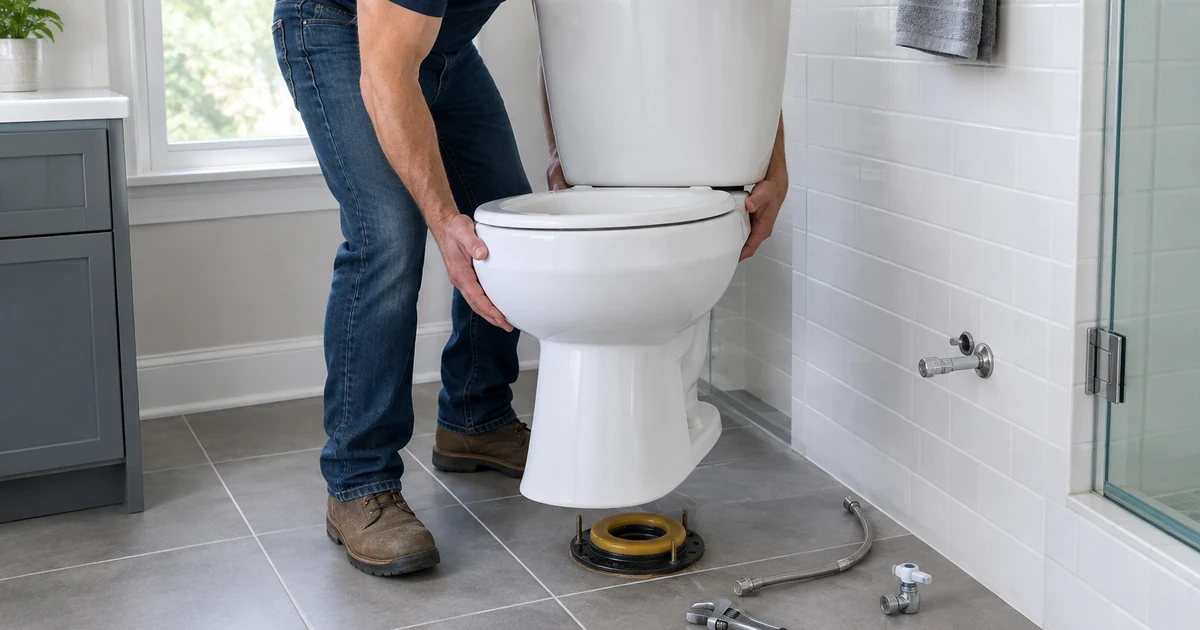
Replacing a toilet in the same spot is one of the more approachable plumbing jobs. You shut off the water, drain and disconnect the old toilet, scrape off the old wax, set a new seal, bolt down the bowl, attach the tank, and reconnect the supply line. Doing it yourself saves $150 to $350 in labor.
The risks are real, though. Toilets are heavy and awkward, porcelain cracks if bolts are overtightened, and a poorly seated wax ring can leak slowly into the subfloor for months before anyone notices. Call a plumber if the shutoff valve is stuck or leaking, the flange is broken, the floor is soft, or you are installing a wall-hung, upflush, or smart toilet that needs electrical or in-wall work.
A toilet swap is often part of a bigger project. See bathroom remodel cost for a full renovation budget, and tile installation cost if the floor around the toilet needs new tile. If you are also replacing other plumbing, water heater replacement cost covers another common upgrade.
How to Save Money on Toilet Installation
- Look for utility rebates. Many water utilities offer rebates, often $50 to $100, for replacing an old toilet with a WaterSense-labeled model. Check your water provider’s website before you buy.
- Buy the toilet yourself. Some plumbers mark up fixtures; ask for a labor-only price if you supply a toilet that fits your rough-in.
- Bundle plumbing jobs. Having the plumber replace a faucet, a shutoff valve, or a second toilet on the same visit spreads out the trip charge.
- Haul the old toilet away yourself. Many cities accept toilets in bulk pickup or at a transfer station, which saves the $50 to $200 disposal fee.
- Avoid emergency rates. If the old toilet still works, schedule the replacement during normal business hours.
- Check display or open-box models. Showrooms and home centers sometimes mark down floor models by 10% to 30%.
- Get two or three quotes. Ask whether flange replacement, supply line, and haul-away are included.
Frequently Asked Questions
How much does a plumber charge to install a toilet?
Labor alone typically runs $150 to $350 for a standard swap in the same location, and can reach $450 or more for difficult access, flange repairs, or specialty toilets. Plumbers usually bill $75 to $150 per hour or quote a flat rate.
Does Home Depot or Lowe's install toilets?
Both large home centers offer toilet installation in many areas through local independent contractors, typically as a service added to a toilet purchase. Check what is included, such as haul-away, a new supply line, or flange repair, before comparing with a local plumber.
How long does it take to replace a toilet?
A plumber can usually remove an old toilet and install a new one in one to three hours. Flange repairs, a stuck shutoff valve, or damaged flooring can add time.
Is it worth replacing an old toilet?
Often, yes. The EPA says older toilets can use up to 6 gallons per flush, while WaterSense-labeled models use 1.28 gallons or less, and it estimates a family can save about $170 a year on water by upgrading.
Can I install a toilet myself?
Replacing a toilet in the same spot is a manageable DIY job if you are comfortable lifting it and working with the flange and supply line. Hire a plumber for a new location, a damaged flange or soft floor, or wall-hung and upflush toilets.
What does it cost to move a toilet?
Relocating a toilet requires new drain and vent lines and often opening the floor. Expect roughly $1,000 to $3,500 or more, plus flooring repairs and a permit.