How to Use the Deck Cost Calculator
Enter the deck’s footprint in square feet: length times width (a 12×20-foot deck is 240 sq ft). For an L-shaped deck, split it into rectangles and add them together. Then choose the decking material and how high the deck sits above the ground, and tick the stairs box if the deck needs steps down to the yard.
The per-square-foot rate already includes footings, framing, decking, and a standard railing where one is required. The region selector adjusts for local labor costs. Roofs, pergolas, built-in benches, lighting, and multi-level designs are not included, so budget for those separately using the figures below.
Cost to Build a Deck by Material
Decking material is the biggest single choice you’ll make. The framing underneath is almost always pressure-treated lumber regardless of what goes on top, so the price gap comes mostly from the deck boards and railing.
| Material | Installed cost per sq ft | 12×20 deck (240 sq ft) | Upkeep |
|---|---|---|---|
| Pressure-treated pine | $22–$40 | $5,300–$9,600 | Seal every 1–3 years |
| Cedar | $25–$46 | $6,100–$11,000 | Seal every 1–3 years |
| Redwood | $28–$50 | $6,600–$12,000 | Seal every 1–3 years |
| Composite | $34–$62 | $8,200–$14,900 | Wash; no staining |
| PVC (capped cellular) | $40–$72 | $9,500–$17,300 | Wash; no staining |
| Tropical hardwood (ipe) | $40–$72+ | $9,500–$17,300+ | Oil to keep color |
These ranges are a consensus of current national data and exclude stairs. HomeGuide reports $25 to $50 per square foot for a typical deck and $40 to $80 for composite. Ergeon puts pressure-treated at $25 to $40 and mid-grade composite at $35 to $55. Angi lists a national average deck project of about $8,300, with most homeowners spending $4,300 to $12,700.
Composite costs more upfront but skips the annual staining and sealing that wood needs, which HomeAdvisor prices at roughly $550 to $1,200 per job when you hire it out. Over 10 to 15 years, that maintenance narrows the gap considerably.
Deck cost by size
| Deck size | Square feet | Pressure-treated | Composite |
|---|---|---|---|
| 10×10 | 100 | $2,200–$4,000 | $3,400–$6,200 |
| 12×12 | 144 | $3,200–$5,800 | $4,900–$8,900 |
| 12×20 | 240 | $5,300–$9,600 | $8,200–$14,900 |
| 16×20 | 320 | $7,000–$12,800 | $10,900–$19,800 |
| 20×20 | 400 | $8,800–$16,000 | $13,600–$24,800 |
Figures are for a raised deck with railing, before stairs. Larger decks cost slightly less per square foot because setup, permits, and the ledger connection are spread over more area.
Cost Breakdown: Materials vs. Labor
Labor typically makes up 40% to 60% of a deck bill. HomeGuide estimates materials at $14 to $28 per square foot and labor at $11 to $25; Angi’s labor range is a bit higher at $15 to $35.
| Cost item | Typical price |
|---|---|
| Decking boards only | $2–$5/sq ft (pressure-treated), $3–$7 (cedar), $12–$22 (composite) |
| Framing, footings, hardware | Included in installed rates; roughly $9–$12/sq ft of labor for framing |
| Railing | $20–$60 per linear foot installed |
| Stairs | $1,000–$2,600 for a typical set |
| Building permit | About $50–$500 in most areas; some cities charge more |
| Deck lighting | $80–$300 per fixture |
| Roof or cover over the deck | $3,000–$10,000+ |
| Staining or sealing (wood) | $550–$1,200 per application |
Other Factors That Affect Deck Building Cost
Height and structure
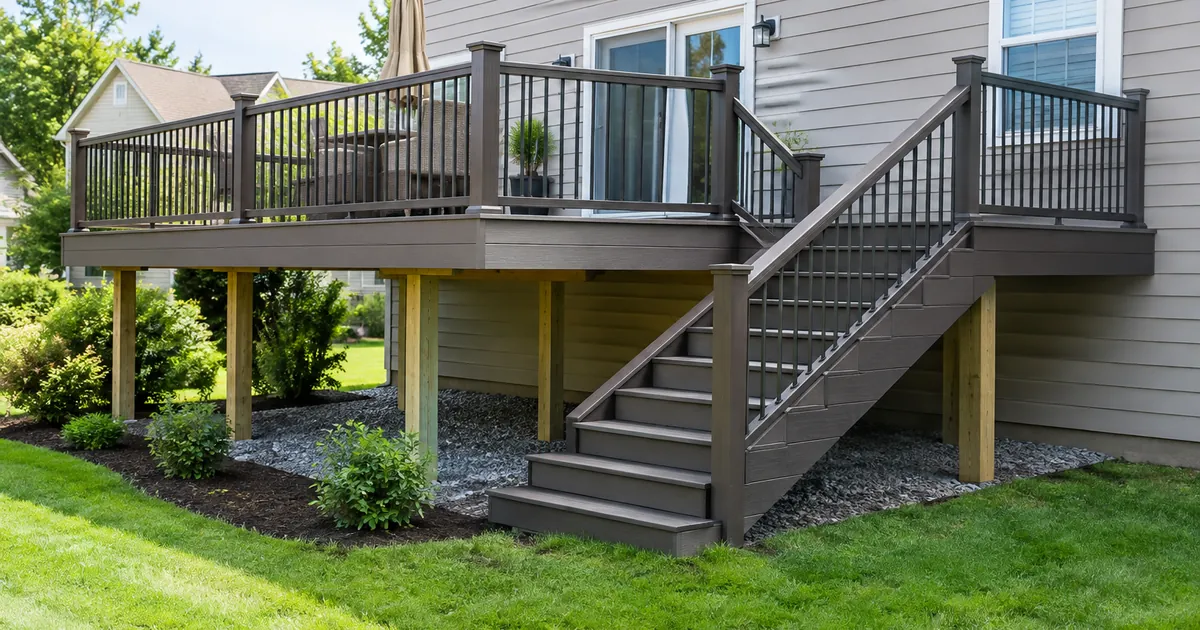
A low platform deck needs short posts and often no railing, so it’s the cheapest per square foot. Once a deck sits more than about 30 inches above grade, most codes require guardrails, and taller decks need bigger posts, bracing, and deeper footings. HomeGuide puts second-story decks at $50 to $60 per square foot and multi-level decks at $60 to $100.
Deck cost by type
| Deck type | Installed cost per sq ft | What drives it |
|---|---|---|
| Ground-level / platform | $20–$36 | Short posts, often no railing |
| Raised (3–8 ft) | $22–$40 | Guardrails, taller posts, stairs |
| Second-story | $33–$60 | Heavy beams, bracing, deep footings, scaffolding |
| Multi-level | $60–$100 | Extra framing, stairs between levels |
Prices shown are for pressure-treated wood; multiply by about 1.5 for composite. Angi notes that a second-story deck can add several thousand dollars over a first-story deck of the same size, mostly from the added structure and labor.
Attachment to the house
Attached decks hang on a ledger board bolted to the house’s rim joist, which must be flashed carefully to keep water out of the wall. A freestanding deck avoids that but needs an extra row of footings. Either way, the connection details are a common focus of permit inspections.
Railing style
Railings can add thousands on a larger deck. Wood balusters are cheapest; composite, aluminum, cable, and glass systems cost progressively more per foot.
Shape and design
Angled corners, curves, picture-frame borders, built-in benches, and multiple levels all add cutting time and material waste. A simple rectangle is the best value.
Site conditions and old deck removal
Sloped yards need taller posts on the low side. Tearing out an existing deck, hauling debris, and dealing with poor soil or buried utilities add to the total, so ask whether demolition is included in each quote.
Permits and inspections
Nearly every attached or raised deck needs a permit, with footing, framing, and final inspections. Fees vary widely: HomeGuide lists $50 to $150, Angi $230 to $500, and some cities charge considerably more for larger projects.
Covers, pergolas, and extras
A solid roof over a deck, tied into the house, runs about $3,000 to $10,000 according to HomeAdvisor, and more if it needs electrical work for fans or lights. Screened enclosures and retractable awnings are lighter-weight alternatives. Built-in benches, planters, and privacy walls are priced per item, so ask for them as separate line items in your quote.
Long-term upkeep
Budget for maintenance when comparing materials. HomeAdvisor lists deck staining at about $550 to $1,000 and sealing at $550 to $1,200 per job, plus $150 to $375 to power wash a 500 sq ft deck. Wood decks need that every few years; composite and PVC mostly need an occasional wash.
Before you hire: get at least three written, itemized quotes from licensed and insured local pros. Prices for the same job often differ by 30% or more, and comparing line items is the fastest way to spot padding or missing work.
Repair vs. Replace an Existing Deck
If you already have a deck, a repair may be enough. HomeAdvisor puts typical deck repairs at about $700 to $2,600. Replacing a few boards, tightening railings, or refinishing a weathered surface is far cheaper than a new build.
Replacement is usually the better call when the framing is the problem: soft or rotted joists and posts, a ledger board pulling away from the house, corroded joist hangers, or footings that have shifted. A common middle path is re-decking, where a sound pressure-treated frame gets new composite boards and railings. Have a contractor or inspector check the structure first, since new boards on a failing frame are money wasted.
DIY vs. Hiring a Deck Builder
A ground-level, freestanding pressure-treated deck is a realistic DIY project for an experienced homeowner, and doing the work yourself can cut the total roughly in half. You’ll still need a permit in most places, plus tools like a miter saw, impact driver, and a way to dig or pour footings.
Raised and attached decks are a different story. The ledger connection, joist hangers, beam sizing, footing depth, and guardrail strength are all structural, and failures can cause serious injuries. Hire a licensed contractor for any deck more than a few feet off the ground, anything attached to the house, and any second-story deck.
How to Save Money on a New Deck
- Keep it rectangular and single-level. Simple shapes use standard lumber lengths with less waste.
- Size lumber-friendly dimensions (12, 16, or 20 feet) so boards don’t need splicing.
- Mix materials. Composite decking on a pressure-treated frame is standard; wood railings with composite boards can cut costs further.
- Build lower when possible. A deck under 30 inches may not need guardrails.
- Book in late fall or winter, when deck builders have more openings.
- Do the finishing yourself, such as staining a wood deck once it has dried.
- Get three itemized quotes that separate decking, railing, stairs, and permits.
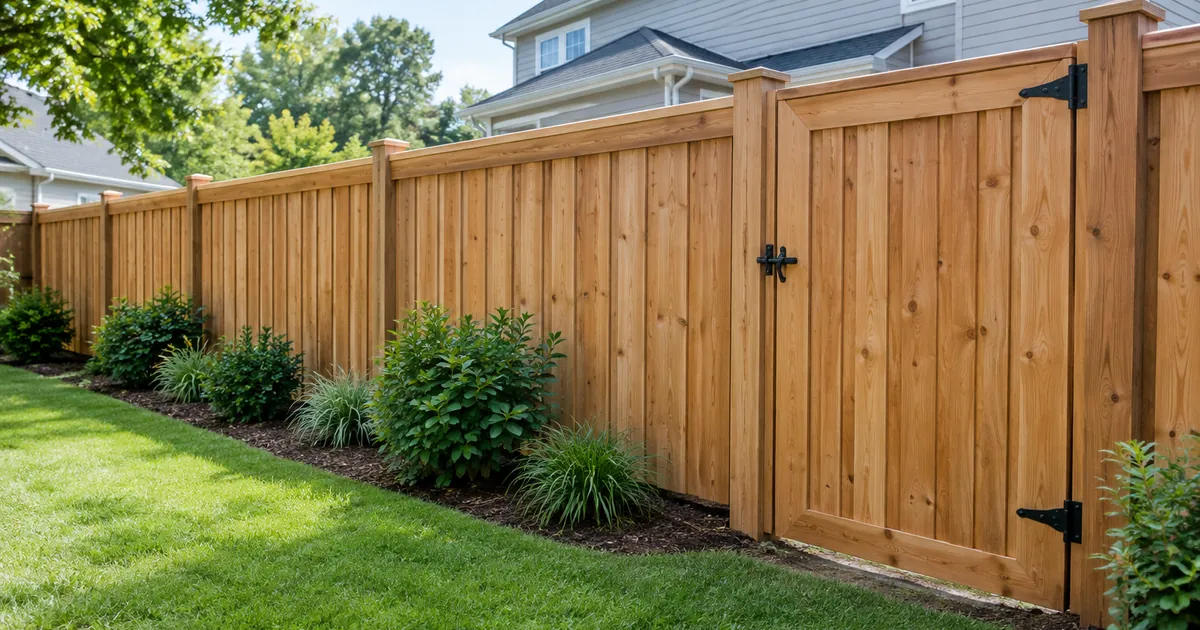
Weighing a deck against a ground-level patio? Compare with our paver patio cost and concrete patio cost guides. If you plan to enclose the yard too, see wood fence cost.
Frequently Asked Questions
How much does a 12×12 deck cost?
A 12×12 (144 sq ft) deck typically costs about $3,200 to $5,800 in pressure-treated wood and $4,900 to $8,900 in composite, before stairs. Height, railings and your region can shift those numbers.
How much does a 16×20 deck cost?
A 16×20 (320 sq ft) deck usually runs $7,000 to $12,800 in pressure-treated wood and roughly $10,900 to $19,800 in composite. Add $1,000 to $2,600 for a typical set of stairs.
Is it cheaper to build a deck or a patio?
A ground-level patio is usually cheaper per square foot than a raised deck, because it doesn’t need framing, footings, or railings. On a sloped lot or a house with a raised back door, a deck is often the practical choice.
Is composite decking worth the extra cost?
Composite costs about 50% more upfront than pressure-treated wood but doesn’t need staining or sealing. If you plan to stay 10+ years, lower maintenance often makes up much of the difference.
Do I need a permit to build a deck?
Most towns require a permit for attached decks and for decks more than about 30 inches above grade. Fees range from roughly $50 to $500 or more, and inspections check footings, framing and railings.
How long does it take to build a deck?
A simple ground-level deck can be built in a few days. A typical raised deck with stairs takes one to two weeks, plus time for permit approval and inspections.