Paver Patio Cost by Paver Type
Pavers themselves are usually a modest part of the bill. Unilock, one of the largest paver manufacturers, estimates the pavers at roughly 20% of a typical patio budget, with the rest going to excavation, base materials, and labor. Still, the paver you choose sets the per-foot starting point.
| Paver type | Installed cost per sq ft | 280 sq ft patio | Notes |
|---|---|---|---|
| Concrete pavers | $12–$30 | $3,400–$8,400 | Most common; wide color and shape choice |
| Brick / clay pavers | $14–$35 | $3,900–$9,700 | Color won’t fade; classic look |
| Permeable pavers | $16–$39 | $4,400–$10,900 | Water drains through; deeper open-graded base |
| Travertine or porcelain | $18–$45 | $5,000–$12,600 | Stays cooler (travertine); slip-resistant finishes |
| Natural stone (flagstone, bluestone, slate) | $19–$48+ | $5,400–$13,400+ | Premium look; irregular stone takes longer to set |
Published figures vary more for pavers than for most outdoor projects. Angi reports $8 to $15 per square foot for concrete pavers and $15 to $50 for natural stone, with an average of about $3,800 for a 280 sq ft patio. Homewyse, which prices a 6-inch gravel base, edge restraint, and polymeric sand, lands at about $23 to $30 per square foot before contractor markup, and Unilock cites $30 to $40 per square foot for a 400 sq ft patio. The range in the table reflects that spread; your own quotes will depend heavily on local labor rates and how much digging the site needs.
Paver patio cost by size
| Patio size | Square feet | Concrete pavers | Natural stone |
|---|---|---|---|
| 10×10 | 100 | $1,200–$3,000 | $1,900–$4,800 |
| 12×12 | 144 | $1,700–$4,300 | $2,800–$6,900 |
| 16×16 | 256 | $3,100–$7,700 | $4,900–$12,300 |
| 14×20 | 280 | $3,400–$8,400 | $5,400–$13,400 |
| 20×20 | 400 | $4,800–$12,000 | $7,700–$19,200 |
Small patios cost more per square foot because the crew, equipment delivery, and cutting time are spread over less area.
Cost Breakdown: Materials vs. Labor
Labor and base preparation are the bulk of a paver patio. A crew has to dig out 7 to 10 inches of soil, haul it away, then lay and compact gravel in layers before a single paver goes down. HomeGuide estimates materials at about $3.40 to $6.20 per square foot and labor at $6.25 to $10.90 on a basic job; Angi and Lawn Love put labor at roughly $4 to $15 per square foot, or $50 to $80 per hour.
| Cost item | Typical price |
|---|---|
| Pavers (concrete) | About $3–$6 per sq ft for standard styles; premium lines cost more |
| Pallet of pavers | $300–$700 |
| Excavation | $1–$5 per sq ft |
| Grading or leveling | $0.40–$2 per sq ft; $770–$3,000 for a larger regrade |
| Gravel base, bedding sand, edge restraint, joint sand | Included in installed rates |
| Drainage materials | $0.10–$1 per sq ft |
| Installation labor | $4–$15 per sq ft |
| Professional sealing | $1.50–$3.25 per sq ft |
| Landscape design (optional) | About $1,900–$7,200 |
Other Factors That Affect Paver Patio Cost
Base preparation and soil
The base is what keeps pavers flat for decades. Clay soil drains poorly and needs a thicker gravel base than sandy soil, according to Unilock, and wet areas may need drainage pipe or a permeable design. A contractor who quotes much lower than others may be skimping on base depth or compaction, which leads to sinking and heaving.
Pattern and design
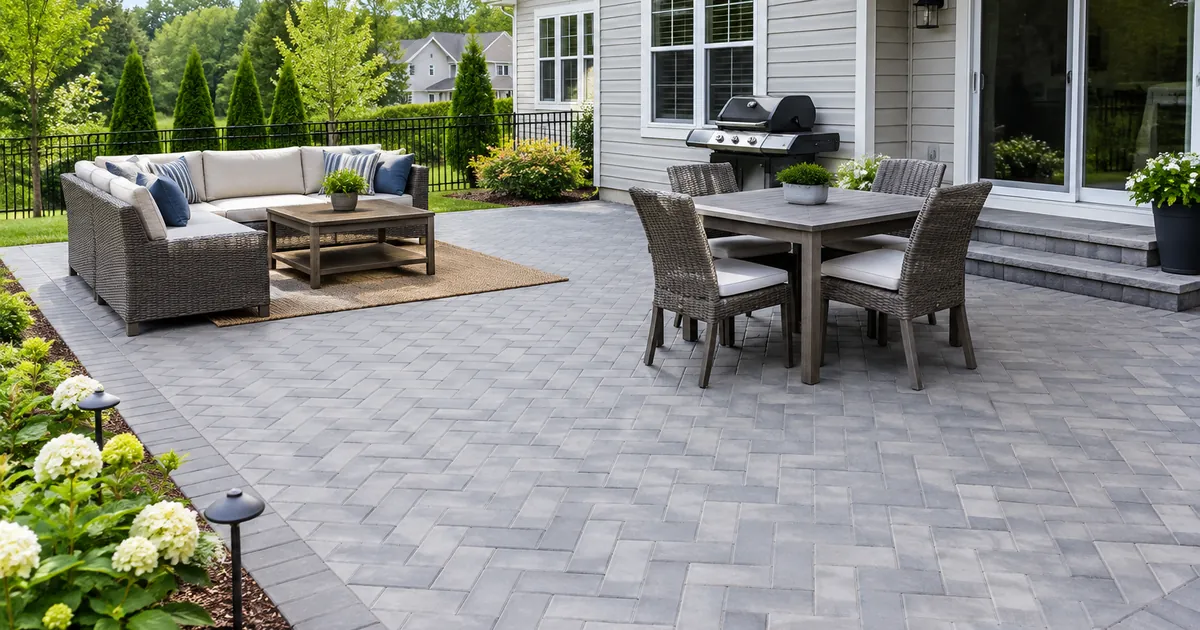
Running bond and basket-weave patterns go down quickly. Herringbone, mixed-size modular patterns, borders, curves, and circular inlays require many more cuts, which adds labor hours and material waste.
Slope and access
A sloped yard may need a retaining wall or extra fill to create a level surface. If equipment can’t reach the backyard, the crew moves soil and gravel by wheelbarrow, which adds labor hours.
Removal of an old patio
Breaking up and hauling away an existing concrete slab or old patio adds to the job. Ask each contractor to price demolition as a separate line.
Add-ons
Seat walls, steps, fire pits, low-voltage lighting, and outdoor kitchen pads are common upgrades that can double the cost of a basic patio. Pricing them together with the patio usually saves on mobilization.
Permits
Most at-grade patios don’t need a building permit, but some towns limit impervious surface area, and HOAs may approve materials. Permeable pavers can help if you are near a lot-coverage limit. Call 811 before any digging.
Paver patios for driveways and pools
If you’re considering pavers beyond the patio, keep in mind that driveways need a thicker base and thicker pavers to carry vehicles. Lawn Love puts paver driveways at about $10 to $40 per square foot and pool-deck pavers at $10 to $25. A paver walkway connecting the patio to a driveway or side gate commonly costs $1,430 to $3,530.
Maintenance over time
Paver patios need little upkeep: sweep regularly, pull the occasional weed, and top up joint sand every few years. Sealing is optional but, if you choose it, must be repeated. Angi notes a DIY sealing product for up to 1,000 sq ft costs about $200. The big advantage over a poured slab is repair: a stained or cracked paver can be lifted out and swapped instead of patching or replacing an entire section.
Before you hire: get at least three written, itemized quotes from licensed and insured local pros. Prices for the same job often differ by 30% or more, and comparing line items is the fastest way to spot padding or missing work.
DIY vs. Hiring a Pro
DIY can save the labor portion, but a paver patio is heavy, physical work. For a 280 sq ft patio, you’ll excavate and haul several tons of soil, then place and compact a similar weight of gravel. You’ll need to rent a plate compactor and a wet saw or block splitter, and handle soil disposal. Lawn Love’s DIY estimate for a 280 sq ft patio, counting materials, tools, and equipment rental, comes to roughly $5,400 to $5,650, so the savings can be smaller than many people expect.
A small, simple patio or walkway on well-drained, level ground is a reasonable weekend project. For larger patios, slopes, clay soil, or complex patterns, a pro crew with the right equipment will usually finish in two to four days, and reputable installers warranty their work against settling.
If you do tackle it yourself, don’t cut corners on the base. Compact the gravel in thin lifts of a few inches at a time, build in a gentle slope away from the house so water drains off, and install a proper edge restraint so the outer pavers don’t creep over time. Finish by sweeping polymeric sand into the joints and misting it lightly so it hardens without hazing the paver surface.
Signs a Paver Patio Needs Repair or Replacement
Existing paver patios often need less than a full redo. Common problems and what they usually mean:
- Weeds and washed-out joints: clean and refill with polymeric sand, a low-cost fix.
- A few sunken or rocking pavers: lift the area, add and compact base, and relay the same pavers.
- Widespread dips, heaving, or standing water: the base has failed; plan on pulling up the pavers and rebuilding the base, often reusing the pavers if they are in good shape.
- Cracked or badly faded pavers throughout: replacement with new pavers may be the better value.
How to Save Money on a Paver Patio
- Choose standard concrete pavers in stock colors and sizes rather than premium or tumbled lines.
- Keep the shape simple. A rectangle in a running bond pattern minimizes cutting.
- Size the patio to the paver. Ask the installer to adjust dimensions to reduce cut pieces.
- Remove sod and plants yourself before the crew arrives.
- Skip optional sealing at first; many concrete pavers don’t need it, and you can seal later.
- Book in the off-season, typically late fall, when hardscape crews are less busy.
- Compare three itemized quotes and confirm each includes the same base depth.
If budget is tight, a poured slab is usually cheaper; see our concrete patio cost guide. On a sloped lot, a raised deck may make more sense, so compare with our cost to build a deck. For keeping pavers clean, see pressure washing cost.
Frequently Asked Questions
How much does a 12×12 paver patio cost?
A 12×12 (144 sq ft) patio with concrete pavers typically costs about $1,700 to $4,300 installed. Natural stone runs roughly $2,800 to $6,900 for the same size.
How much does a 20×20 paver patio cost?
A 20×20 (400 sq ft) concrete paver patio usually costs $4,800 to $12,000 installed. Premium pavers, a slope, or complex patterns can push it higher.
Are pavers cheaper than concrete?
Usually not. A plain poured concrete patio typically costs less per square foot than pavers. Pavers cost more upfront, but damaged sections can be lifted and replaced instead of breaking out a whole slab.
What is the cheapest paver for a patio?
Standard concrete pavers in stock colors are the least expensive option for most patios. Brick costs a little more, and natural stone, travertine, and porcelain cost the most.
Do paver patios need to be sealed?
Sealing is optional. It deepens color, resists stains, and helps lock joint sand in place, and professional sealing costs about $1.50 to $3.25 per sq ft. It needs to be redone every few years.
How long does a paver patio last?
A well-installed concrete paver patio can last decades. Longevity depends mainly on a properly compacted gravel base and good drainage.