Artificial Turf Installation Cost per Square Foot by Turf Type
Installers quote artificial turf by the square foot, and that price bundles two very different things: the turf itself and the base work underneath it. The fiber material sets the price of the roll, while excavation, compacted base rock, seaming, and infill make up the rest.
| Turf fiber | Turf only (per sq ft) | Installed (per sq ft) | Best for |
|---|---|---|---|
| Polypropylene | $2 – $5 | $6 – $12 | Low-traffic side yards, decorative strips, putting-green style surfaces |
| Polyethylene | $2 – $7 | $8 – $16 | Most front and back lawns; soft, natural look |
| Nylon | $5 – $8 | $12 – $20 | Heavy foot traffic, large dogs, play areas, hot climates |
Polyethylene is the default choice for residential lawns because it looks and feels closest to real grass at a middle price. Polypropylene is the budget option and wears out faster under foot traffic. Nylon is the toughest fiber and holds its shape under heat and heavy use, but it is stiffer and costs the most.
Across national cost guides, fully installed turf lands between roughly $6 and $20 per square foot, and most residential jobs fall between $7 and $18. A mid-grade polyethylene lawn around $12 per square foot is a realistic planning number.
Artificial turf cost by yard size
| Area | Budget ($7/sq ft) | Typical ($12/sq ft) | Premium ($18/sq ft) |
|---|---|---|---|
| 200 sq ft (dog run, side yard) | $1,400 | $2,400 | $3,600 |
| 500 sq ft (small backyard) | $3,500 | $6,000 | $9,000 |
| 1,000 sq ft | $7,000 | $12,000 | $18,000 |
| 1,500 sq ft | $10,500 | $18,000 | $27,000 |
| 2,000 sq ft | $14,000 | $24,000 | $36,000 |
Very small areas usually cost more per square foot because crews still need to haul in base material, bring a plate compactor, and cover travel. Large, open lawns sometimes come in under the per-foot quote because the setup cost is spread over more area.
Cost Breakdown: Materials vs. Labor
Labor typically accounts for 50% to 60% of an artificial turf project. On a 500-square-foot backyard at about $6,000, the split usually looks like this:
| Item | Typical cost | Notes |
|---|---|---|
| Turf rolls | $1,000 – $3,500 | $2 – $7 per sq ft plus 5–10% waste for cuts and seams |
| Base rock (crushed aggregate / decomposed granite) | $600 – $1,100 | About $1.20 – $2.25 per sq ft, 3–4 inches compacted |
| Weed barrier | $200 – $400 | $0.40 – $0.80 per sq ft |
| Infill (silica sand, coated sand, or antimicrobial infill) | $150 – $900 | Roughly 1 lb per sq ft at $0.30 – $1.75 per lb |
| Seam tape, adhesive, nails, edging | $100 – $400 | Edging adds $1 – $5 per linear ft for bender board or steel |
| Labor: removal, grading, compaction, install | $2,000 – $4,500 | Roughly $4 – $9 per sq ft |
If you see a quote well under $6 per square foot installed, ask how deep the base is and whether sod removal is included. Skimping on base depth or compaction is the most common reason a turf lawn develops dips, ripples, and puddles within a few years.
Other Factors That Affect Artificial Turf Prices
Removing the existing lawn
Stripping out live grass, roots, and a few inches of soil runs about $1 to $2.75 per square foot when priced separately, plus disposal of the spoils. Many installers bundle this into their per-foot price, so compare quotes line by line.
Slope and shape
Curves, planting beds, trees, and pathways mean more cutting, more seams, and more waste. Expect curved layouts to add around 15% to 20%. Sloped yards need extra base work and anchoring, and can push the price up by half or more.
Drainage
Turf is perforated or fully permeable, but water still has to leave through the base. Yards with clay soil or low spots, and pet areas that need to be rinsed often, may need a drainage layer or a perforated pipe system. Budget roughly $1,000 to $4,000 or more for dedicated drainage; bigger fixes can overlap with a French drain installation.
Pet and play features
Pet turf uses a fully permeable backing and antimicrobial infill so urine drains and odors stay down. Playground areas may need a foam shock pad under the turf. Both upgrades push the job toward the premium end of the price range.
Access and hauling
Crews move tons of base rock and soil. A backyard reachable only through a narrow gate means wheelbarrow work instead of a skid steer, which adds labor hours. Dump fees for old sod and soil also vary by area.
Face weight and pile height
Two turfs made from the same fiber can differ a lot in price. Face weight, measured in ounces of fiber per square yard, tells you how dense the blades are; heavier turf feels fuller and wears longer but costs more per roll. Taller pile looks lusher, yet it can mat down in high-traffic spots unless it is dense and well infilled. Comparing face weight across quotes is more useful than comparing brand names.
Irrigation changes
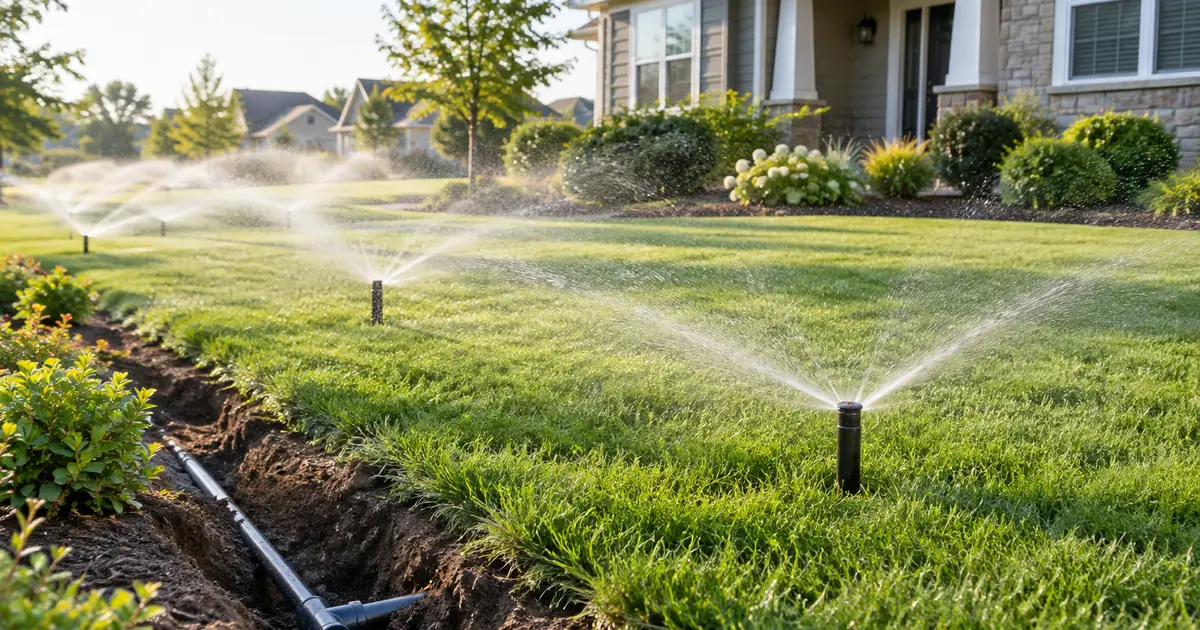
Existing sprinkler heads in the turf area have to be capped or converted to drip for surrounding beds. This is usually a small line item, but it adds up if several zones need rework.
Where you live
Labor rates drive most of the regional difference. Published local examples show installed prices around $12 to $15 per square foot in parts of Arizona versus $17 to $23 in the New York area. The region setting in the calculator above adjusts for this.
Before you hire: get at least three written, itemized quotes from licensed and insured local pros. Prices for the same job often differ by 30% or more, and comparing line items is the fastest way to spot padding or missing work.
Artificial Turf vs. Sod: Which Costs Less Over Time?
Turf costs several times more upfront. Laying new sod runs about $1 to $2 per square foot, so a 500-square-foot lawn might cost $500 to $1,000 in sod versus about $6,000 in turf. The case for turf rests on what you stop paying for:
- Water: no irrigation beyond an occasional rinse, which matters in drought-restricted areas.
- Mowing and fertilizing: gone entirely.
- Upkeep: brushing, debris removal, and topping up infill, roughly $250 to $350 a year for a typical yard if you hire it out.
- Lifespan: about 10 to 25 years depending on fiber quality, UV exposure, and traffic.
Turf has drawbacks. It gets noticeably hot in direct summer sun, it does not cool the surrounding air the way living grass does, and some cities and HOAs restrict it in front yards. Check local rules before signing a contract.
DIY vs. Hiring a Pro
Installing turf yourself can save roughly $3.50 to $10 per square foot in labor. Cost guides put DIY materials and tool rentals for a 500-square-foot yard at around $1,800 to $5,400.
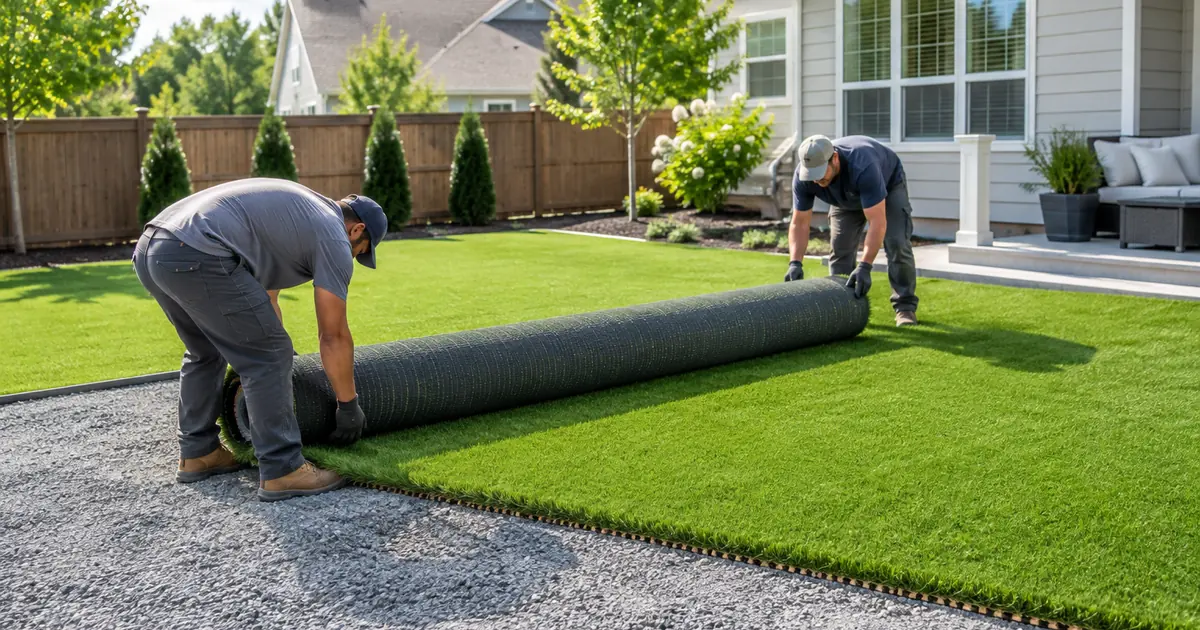
The savings are real, but the work is heavy: digging out 3 to 4 inches of soil, hauling several tons of base rock, running a plate compactor, and cutting seams so they disappear. Poorly matched seams and uneven base are hard to fix once infill is down. DIY makes sense for small, flat, rectangular areas like a dog run. For a full lawn, most homeowners are better off hiring an installer who offers a workmanship warranty on top of the manufacturer’s turf warranty.
How to Save Money on Artificial Turf Installation
- Turf only where it earns its keep. Use turf in shaded or high-traffic spots where grass struggles, and use mulch, gravel, or pavers elsewhere. A paver patio can shrink the area you need to cover.
- Pick the right fiber. Polyethylene handles most family yards. Pay for nylon only in heavy-traffic or large-dog zones.
- Keep shapes simple. Straight edges and fewer cutouts reduce seams, waste, and labor.
- Do the demolition yourself. Removing old sod and hauling it away can shave $1 to $2.75 per square foot, if the installer agrees.
- Check water-district programs. Some drought-prone areas offer lawn replacement rebates, but many now exclude artificial turf and pay only for living, water-wise landscaping. Confirm eligibility before you buy.
- Get at least three quotes. Compare base depth, infill type, and warranty, not just the per-foot price.
- Schedule in the off-season. Late fall and winter are slower for landscapers in many regions, which can mean faster scheduling and more room to negotiate.
Frequently Asked Questions
How much does 1,000 square feet of artificial turf cost?
Expect about $7,000 to $18,000 installed for 1,000 square feet, with a mid-grade polyethylene lawn landing near $12,000. Slopes, curves, and drainage work push it higher.
Is artificial turf cheaper than sod?
Not upfront. Sod typically costs $1 to $2 per square foot installed, versus $6 to $20 for turf. Turf can close part of the gap over 10 to 25 years by eliminating watering, mowing, and fertilizing, but that depends heavily on local water prices.
How long does artificial turf last?
Most residential turf lasts about 10 to 25 years. UV exposure, foot and pet traffic, and whether the infill is kept topped up determine where in that range a lawn ends up.
What is included in the per-square-foot installation price?
A full-service quote usually covers removing the existing grass, excavating a few inches of soil, laying and compacting a crushed-rock base, weed barrier, the turf, seaming, edging, and infill. Always confirm whether removal and disposal are included, since some installers price them separately.
Is artificial turf good for dogs?
It can be, if you choose pet-specific turf with a fully permeable backing and an antimicrobial infill, and make sure the base drains well. Plan on rinsing pet areas regularly to control odor.
Can I install artificial turf myself?
Yes, for small, flat areas. DIY saves roughly $3.50 to $10 per square foot in labor, but it means excavating, hauling several tons of base rock, compacting it evenly, and hiding seams. Mistakes in the base show up as dips and puddles later.