Epoxy Garage Floor Cost by Garage Size
Pros price epoxy by the square foot, so garage size sets the baseline. Most professional installs land between about $3.50 and $8.25 per sq ft for a standard flake system, with bare-bones single coats below that range and metallic or heavy-duty systems above it.
| Garage | Typical floor area | Typical cost | Wider range reported |
|---|---|---|---|
| 1-car | 240–400 sq ft | $850–$3,300 | $720–$3,900 |
| 2-car | 400–576 sq ft | $1,400–$4,750 | $1,100–$6,000 |
| 3-car | 576–864 sq ft | $2,000–$7,100 | $1,700–$9,500 |
Recent national averages cluster around $2,400 to $2,550 per project, which lines up with a standard two-car garage of about 450 sq ft. That’s why most homeowners pay about $2,500 for a professionally installed flake floor.
Published per-square-foot figures vary a lot, from as low as $2 to $3 for a single-coat job to $12 or more for premium systems. Homewyse’s September 2026 estimate for basic mid-range epoxy coating is about $8 to $13 per sq ft, while HomeGuide cites $4 to $10. The spread comes mostly from how much prep and how many coats are included.
Cost by Coating Type and Finish
| System | Typical installed cost per sq ft | What you get |
|---|---|---|
| Water-based epoxy, one or two coats | $2–$4 | Thin film; cheapest; HomeGuide puts its life at 3–5 years |
| Solid-color 100% solids epoxy | $3–$7 | Thick, durable base with a clear topcoat |
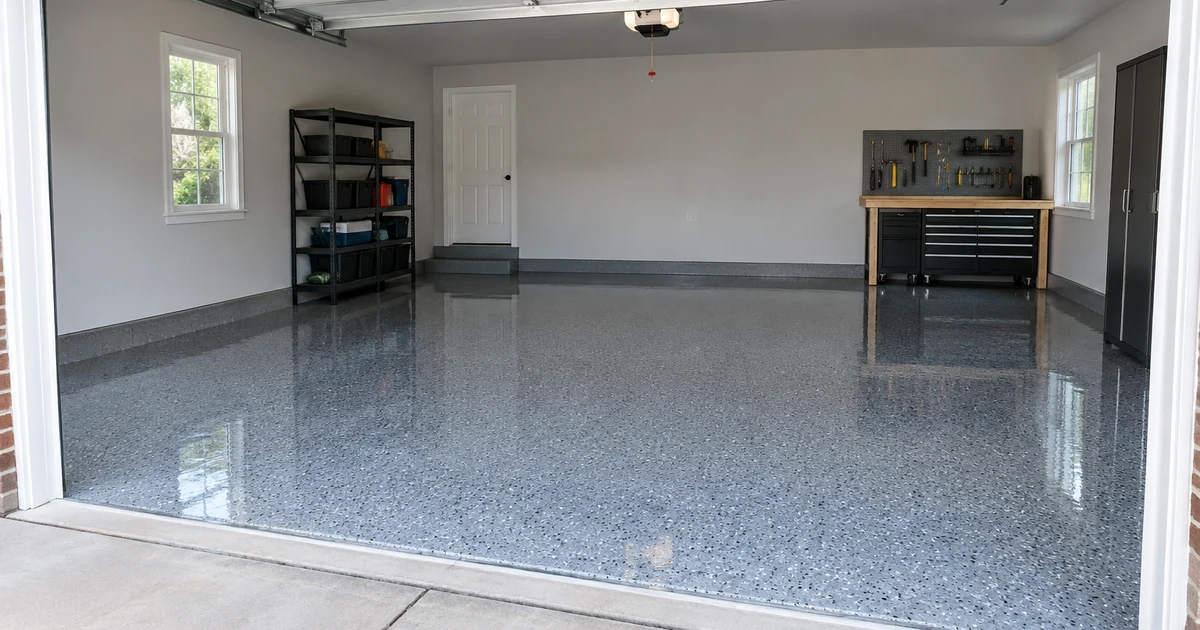
| Full-broadcast flake system | $3.50–$8.25 | Base coat, vinyl flakes to refusal, clear topcoat; hides dirt and imperfections |
| Metallic epoxy | $5–$12 | Swirled, marbled look; shows scratches more; skilled labor |
Solid epoxy costs more per gallon than water-based or solvent-based products, but it builds a much thicker layer. HomeGuide lists solid epoxy lifespans of 10 to 20 years. Decorative flakes add surprisingly little material cost; the price difference is mostly labor and topcoat.
Epoxy vs. polyaspartic and polyurea topcoats
Many installers now sell hybrid systems: an epoxy or polyurea base with a polyaspartic topcoat. These cure faster, often allowing a one-day install, and polyaspartic topcoats resist yellowing in sunlight better than epoxy. Expect them to cost more than a standard epoxy flake floor. Ask any installer exactly which product goes on each layer and how thick it is.
Cost Breakdown: Materials vs. Labor
Labor typically makes up 33% to 65% of an epoxy floor, and most of that labor is surface prep.
- Coating materials: $1–$5 per sq ft depending on product and number of coats
- Labor: about $3–$7 per sq ft, or $50–$150 per hour
- Diamond grinding or shot blasting: usually included by pro installers; sandblasting is quoted at $1–$5 per sq ft when billed separately
- Crack and spall patching: $25–$250 for minor repairs
- Concrete resurfacing: $3–$5 per sq ft, or $1,000–$5,000 for a badly worn slab
- Clear sealer or topcoat upgrade: $1.50–$5 per sq ft
Other Factors That Affect the Price
Surface preparation
Epoxy fails when it can’t bond to the concrete. Grinding the slab opens the pores and removes contamination; acid etching is a cheaper DIY method but less reliable. Oil stains need degreasing, and sealers from previous products must be removed.
Existing coatings
If the floor already has paint or a failing epoxy, it has to be ground off completely. This can add several hundred dollars or more to a two-car garage.
Slab condition and moisture
Cracks, pitting and spalling need filling before coating. Slabs with moisture coming up from below may need a moisture-mitigating primer, or the coating can blister. Ask the installer whether they test for moisture.
Stem walls and cove base
Coating the short concrete walls around the garage perimeter or adding a cove base gives a cleaner finish and makes cleanup easier, but it’s quoted as extra.
How you use the garage
A garage used as a workshop or gym, or one that sees heavy vehicles, may call for a thicker system or an extra topcoat. In cold climates, salty meltwater dripping off cars is hard on thin coatings, so installers often recommend 100% solids or hybrid systems rather than water-based products.
Sun exposure
Standard epoxy can yellow when sunlight falls on it for hours each day, such as a garage that sits open or has west-facing windows. A UV-stable topcoat adds cost but keeps the color from shifting.
Region
Local labor rates move the total. Bob Vila’s city examples range from about $1,240–$2,685 in Miami to $1,705–$3,720 in New York City for comparable garages.
Epoxy vs. Other Garage Floor Options
Epoxy isn’t the only way to upgrade a garage floor. Here’s how it compares with common alternatives on installed cost:
| Option | Typical cost per sq ft | Trade-offs |
|---|---|---|
| Concrete paint | $1.50–$3 | Cheapest refresh; peels under hot tires and wears quickly |
| Clear concrete sealer | $1.50–$5 | Protects against stains and salt; keeps the plain concrete look |
| Epoxy flake system | $3.50–$8.25 | Durable, easy to clean, decorative; needs thorough prep |
| Metallic epoxy | $5–$12 | Showroom look; shows scratches and dust more |
| Concrete resurfacing | $3–$5 | Fixes worn or pitted slabs; often done before coating |
Paint and sealer make sense for a quick cosmetic upgrade or a garage used mainly for storage. For a garage you park in every day, especially in snowy regions where road salt and meltwater sit on the floor, a professionally installed epoxy or hybrid system holds up far better.
What to Expect on Installation Day
A typical professional install for a two-car garage follows the same sequence. The crew moves in equipment, grinds the entire slab with a diamond grinder connected to a dust vacuum, and fills cracks and pits. Next comes the base coat, then flakes broadcast by hand across the wet surface. After the base cures, excess flakes are scraped and vacuumed, and one or more clear topcoats go on.
Depending on the products, this takes one to three days. You’ll need to keep the garage empty until the coating reaches foot-traffic and then vehicle-traffic cure, so plan where cars and stored items will go. Ask the installer for written cure times for the specific system they’re using.
Before you hire: get at least three written, itemized quotes from licensed and insured local pros. Prices for the same job often differ by 30% or more, and comparing line items is the fastest way to spot padding or missing work.
DIY vs. Hiring a Pro
DIY epoxy kits cost roughly $50 to $700, depending on size and whether they include flakes and a topcoat. That’s a big saving over a $2,500 pro install, and many homeowners get decent results with careful prep.
The trade-offs are real, though:
- Prep equipment: most kits rely on acid etching. Renting a floor grinder does a better job but is heavy, dusty work.
- Product quality: many retail kits are water-based and much thinner than the 100% solids products pros use, so they wear faster, especially under hot tires.
- Working time: epoxy has a limited pot life, and mistakes are hard to fix once it starts curing.
- Safety: solvent-based products need strong ventilation and a respirator; follow the label.
If you only need to spruce up a floor you’ll rarely park on, a DIY kit is reasonable. For a daily-use garage, a professionally ground and coated floor lasts much longer.
How to Save Money on an Epoxy Garage Floor
- Choose flakes over metallic. A full-broadcast flake floor costs less and hides dust, tire marks and small slab flaws better.
- Clear the garage yourself. Installers may charge to move stored items, shelving or appliances.
- Skip the stem walls if budget is tight; they can be done later.
- Get three written quotes listing the prep method, each product layer, total film thickness and the warranty.
- Book in spring or fall. Moderate temperatures help coatings cure properly, and some installers offer off-peak pricing.
- Fix the slab first when needed. A coating won’t save cracked, heaving concrete; see our concrete calculator if a new slab section is part of the plan.
- Bundle garage upgrades. If you’re also planning a garage door replacement or new opener, finish the door work before the floor is coated to avoid scuffs.
Frequently Asked Questions
How much does it cost to epoxy a 2-car garage?
Most homeowners pay about $2,500 for a professionally installed flake epoxy floor in a 2-car garage of roughly 450 sq ft. Depending on size, prep and system, the range is roughly $1,400 to $4,750.
How long does an epoxy garage floor last?
A properly prepped, solid epoxy system can last 10 to 20 years, according to HomeGuide, while thin water-based coatings may last only 3 to 5 years. Hot-tire pickup, heavy chemicals and poor prep shorten lifespan.
Is a DIY epoxy kit worth it?
It can be for light-use garages. Kits cost about $50 to $700, but most are thinner than professional products and depend on acid etching rather than grinding, so they tend to wear or peel sooner.
Can epoxy be applied over a cracked garage floor?
Small cracks and pits can be filled before coating, which is normal prep. Large or moving cracks, heaving or crumbling concrete should be repaired first, or the coating will crack along with the slab.
How long before you can drive on a new epoxy floor?
It depends on the products used and the temperature. Traditional epoxy systems often need several days before vehicle traffic, while polyaspartic topcoats cure faster. Follow the installer’s instructions for your specific system.
Is epoxy flooring slippery?
Smooth, glossy epoxy can be slick when wet. Flake systems and anti-slip additives in the topcoat add texture and improve traction.