Radon Mitigation Cost by Foundation Type
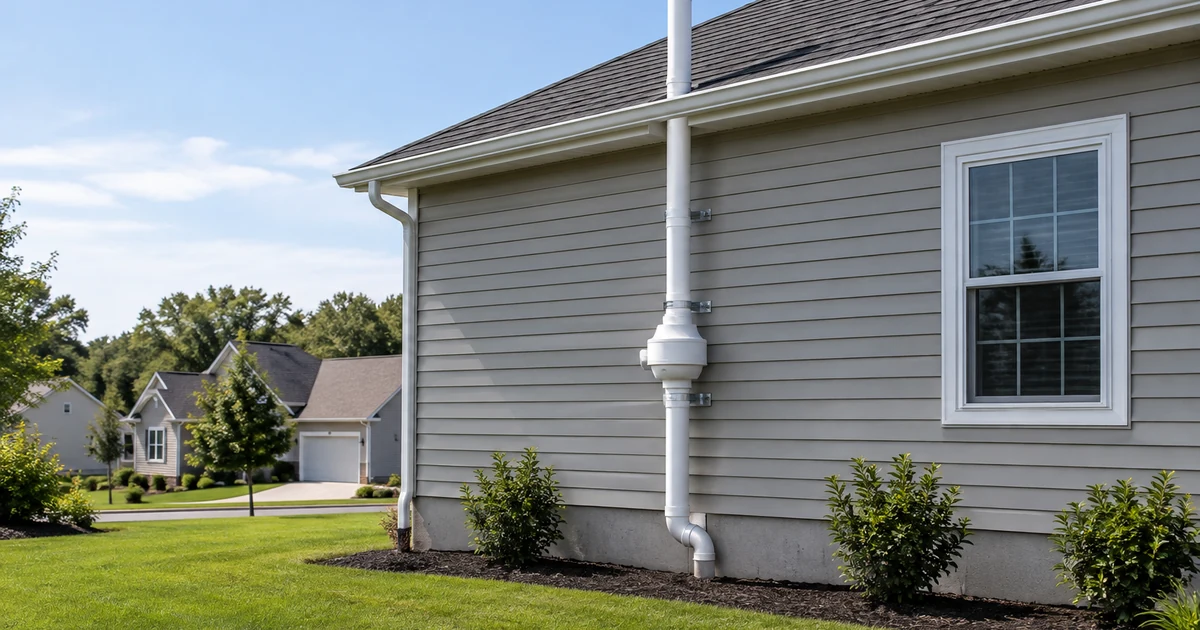
Your foundation determines which system a contractor installs and how much work it takes. Most homes get some form of active soil depressurization: a pipe draws soil gas from under the house and a fan exhausts it above the roofline, before it can seep inside.
| Foundation / system | Typical installed cost | How it works |
|---|---|---|
| Basement or slab: sub-slab depressurization | $1,000–$2,500 | Suction pipe through the slab, inline fan, vent above the roof |
| Existing drain tile or sump pit suction | $900–$2,500 | Uses the drain tile loop or a sealed sump lid as the suction point |
| Crawl space: sub-membrane depressurization | $1,500–$4,000 | Plastic membrane sealed over the dirt floor, with suction beneath it |
| Hollow block walls: block-wall depressurization | $1,800–$3,000 | Draws gas from inside the block cores |
| Full crawl space encapsulation | $3,000–$15,000 | Heavy liner on floor and walls; often combined with suction |
HomeGuide puts the national average at about $1,600, and Angi’s project data comes in lower, near $1,050, while Wisconsin’s state radon program cites $1,000 to $2,000 for a contractor-installed system. Most homeowners pay about $1,500 for a single-suction-point system in a basement or slab home.
The EPA identifies active sub-slab suction as the most common and usually the most reliable radon reduction method. It notes that most homes can be fixed for about the same cost as other common home repairs.
Other system types
- Heat or energy recovery ventilator (HRV/ERV): $1,300–$2,500. Dilutes radon with outside air; used when soil suction isn’t practical or for modest reductions.
- Radon in well water: $1,200–$1,800 for granular activated carbon; $4,000–$5,000 for aeration. EPA notes that radon entering through soil is usually a much larger risk than radon from water.
- Passive systems: Pipes without a fan, often built into new homes. They can be upgraded to active by adding a fan if testing shows high levels.
Cost Breakdown: Materials vs. Labor
A standard system uses modest materials. Most of the price is skilled labor, diagnostics and the contractor’s certification and warranty.
- Materials (fan, PVC pipe, fittings, sealant, manometer, labels): typically a few hundred dollars of the total
- Labor and diagnostics: the bulk of a $1,000–$2,500 job; usually a one-day install
- Electrical connection: $50–$100 per hour if an electrician must add a circuit or outdoor outlet
- Permits: $25–$150 where required
- Post-mitigation test: $10–$60 for a DIY kit, or $125–$400 for a professional test
Other Factors That Affect the Price
Soil and sub-slab material
Gravel under a slab lets one suction point reach the whole footprint. Dense clay or no gravel layer may require several suction points, which adds pipe, drilling and labor.
Pipe routing
Running the vent up the outside of the house is the fastest route. Routing it through a closet, garage or attic to hide the pipe looks better but takes more time. Some homeowners pay extra to put the fan in the attic or garage for a quieter setup.
Multiple foundation types
A house with a basement plus a crawl space addition, or a slab plus a crawl space, often needs separate suction for each section. Expect $2,000 to $4,000 or more.
Finished basements
Finished walls and floors limit where a contractor can drill and run pipe. Unfinished basements are usually easier, but sealing a large, open sump or many floor cracks can add to the bill.
Region and demand
Prices track local labor rates. Angi’s city data ranges from around $700 in Kansas City to about $2,000 in Los Angeles. States with widespread high radon tend to have more certified installers and more competitive pricing.
Before you hire: get at least three written, itemized quotes from licensed and insured local pros. Prices for the same job often differ by 30% or more, and comparing line items is the fastest way to spot padding or missing work.
When Do You Need Radon Mitigation?
The only way to know your radon level is to test. Radon is colorless and odorless, and neighboring homes can have very different results.
- 4 pCi/L or higher: the EPA recommends fixing your home at this level, its action level.
- 2 to 4 pCi/L: the EPA recommends that you consider fixing your home.
- For context: EPA puts the average indoor level in U.S. homes at about 1.3 pCi/L and outdoor air at about 0.4 pCi/L.
Short-term test kits cost $10 to $30 at hardware stores; long-term tests give a better picture of year-round exposure. If you’re buying or selling, home inspectors often offer radon testing as an add-on.
After installation, the EPA recommends a post-mitigation test within 30 days and retesting at least every two years. It says some systems can reduce radon levels by up to 99 percent.
Real estate deals are a common reason for mitigation. If you’re buying, a pre-closing test gives you time to negotiate; if you’re selling, having a certified system installed and a passing post-mitigation test on file avoids surprises during the inspection period.
DIY vs. Hiring a Pro
DIY radon fan kits exist, and handy homeowners do install them. The catch is diagnostics: a pro runs pressure tests to decide where to drill and whether one suction point is enough. A poorly placed system can underperform, and an exhaust that terminates in the wrong spot can send radon back inside.
The EPA recommends using a certified or qualified radon mitigation contractor. Look for certification from the National Radon Proficiency Program (NRPP) or the National Radon Safety Board (NRSB), which the EPA recognizes. Some states license radon contractors separately.
One thing to skip: sealing cracks by itself. The EPA does not recommend sealing alone because it hasn’t been shown to lower radon significantly or consistently. Sealing is useful as part of a suction system, not a replacement for one.
Radon Costs Over Time
The installation price isn’t the whole picture. Plan for these recurring or occasional expenses over the life of the system:
| Item | Typical cost | How often |
|---|---|---|
| Fan electricity and conditioned air loss | $70–$300 per year | Ongoing |
| Retest (DIY kit) | $10–$60 | At least every two years, per EPA |
| Professional test or digital monitor | $125–$400 test; $150–$300 monitor | As needed |
| Fan replacement | A fraction of the original install | About every 5–10 years |
| Extended warranty | $200–$500 | Optional, at install |
A continuous digital radon monitor is a one-time purchase that shows whether levels creep up between formal tests, which is useful if you finish a basement or change how the lowest level is used.
Radon-resistant new construction
If you’re building, ask your builder about radon-resistant construction: a gravel layer, a plastic sheet under the slab, sealed openings and a vent pipe roughed in from below the slab through the roof. The EPA publishes guidance for buyers of new homes on these features. Adding them during construction is typically far easier than retrofitting, and a passive pipe can be converted to an active system by adding a fan if a test after move-in comes back high.
How to Save Money on Radon Mitigation
- Test before you buy anything. A $15 kit tells you whether you need mitigation at all; confirm a high short-term result with a second test.
- Ask about state programs. Some state radon programs offer free or discounted test kits, and a few offer assistance for mitigation. Your state radon office can tell you what’s available.
- Negotiate during a sale. When a home inspection shows high radon, buyers commonly ask the seller to install a system or credit the cost.
- Use existing drain tile or a sump. If your basement already has an interior drain system, the contractor may be able to tap into it instead of drilling new suction points.
- Accept an exterior pipe route. An outside vent is usually the least expensive option; interior routing adds labor.
- Get two or three quotes from certified installers and compare fan model, suction points, warranty, and whether the post-mitigation test is included.
- Combine projects. Adding a sub-slab suction pipe during basement waterproofing or a sump pump install can reduce duplicate concrete work.
Operating costs are modest but ongoing: HomeGuide estimates about $70 to $80 a year for the fan, while Angi’s range is $100 to $300 when heating and cooling losses are included.
Frequently Asked Questions
At what radon level should I install a mitigation system?
The EPA recommends fixing your home if radon is 4 pCi/L or higher, and says to consider fixing it for levels between 2 and 4 pCi/L. Confirm a high short-term result with a second test before hiring a contractor.
How much does it cost to run a radon fan?
Cost guides estimate roughly $70 to $300 a year, depending on the fan, your electric rate, and how much conditioned air the system draws out of the house. The EPA notes that fan-based systems slightly increase your electric bill.
Can I install a radon mitigation system myself?
It’s possible with a DIY kit, but the EPA recommends a certified or qualified radon mitigation contractor. Pros run diagnostics to place suction points correctly and follow venting standards so exhaust doesn’t re-enter the home.
How long does radon mitigation take to install?
A standard sub-slab system in a basement or slab home is usually installed in one day. Crawl spaces with membranes or homes needing several suction points can take longer.
Does sealing basement cracks reduce radon?
Not reliably on its own. The EPA does not recommend sealing alone because it hasn’t been shown to lower radon significantly or consistently. Sealing works best as part of an active suction system.
How often should I retest after installing a radon system?
The EPA recommends a post-mitigation test within 30 days of installation and retesting at least every two years. Retest after major renovations to the lowest level of the home too.