Wood Fence Cost by Wood Type
The species you choose affects both the upfront price and how long the fence lasts. Pressure-treated pine is the default in most of the country; cedar is the most popular upgrade; redwood is a premium choice mostly seen in the West. Prices below are for a 6-foot privacy fence, installed.
| Wood type | Installed cost per linear foot | Cost for 150 ft | Notes |
|---|---|---|---|
| Spruce / whitewood | $19–$38 | $2,850–$5,700 | Cheapest, shortest life unless well sealed |
| Pressure-treated pine | $20–$40 | $3,000–$6,000 | Rot- and insect-resistant, the standard choice |
| Cypress | $23–$46 | $3,450–$6,900 | Common in the Southeast, naturally resistant |
| Cedar | $25–$50 | $3,750–$7,500 | Straight, stable, weathers to silver-gray |
| Redwood | $32–$64+ | $4,800–$9,600+ | Premium grades run $70–$120 per foot |
Current cost guides land in the same neighborhood but not on identical numbers. HomeGuide reports $20 to $50 per foot for wood fences overall and $35 to $40 per foot for cedar privacy fences. Homewyse, which prices a 6-foot contractor-grade privacy fence with pressure-treated posts, shows about $32 to $52 per foot before permits and contractor markup. Angi puts the average wood fence project at around $3,300. Expect local quotes anywhere in that span.
No matter which boards you pick, the posts should be pressure-treated lumber rated for ground contact, or steel. Cedar and redwood boards on pine posts is a common and sensible combination, since the posts do the rotting in most failed fences.
Wood Fence Cost by Style and Height
Style changes how much lumber goes into each foot and how long it takes to build. The most common options, priced in pressure-treated pine:
| Style | Typical height | Installed cost per linear foot |
|---|---|---|
| Split rail | 3–4 ft | $14–$28 |
| Picket | 3–4 ft | $17–$34 |
| Privacy (boards side by side) | 6 ft | $20–$40 |
| Board-on-board / shadowbox | 6 ft | $24–$48 |
| Horizontal slat | 6 ft | $26–$52 |
| Privacy | 8 ft | $50–$75 (HomeGuide) |
Board-on-board and shadowbox
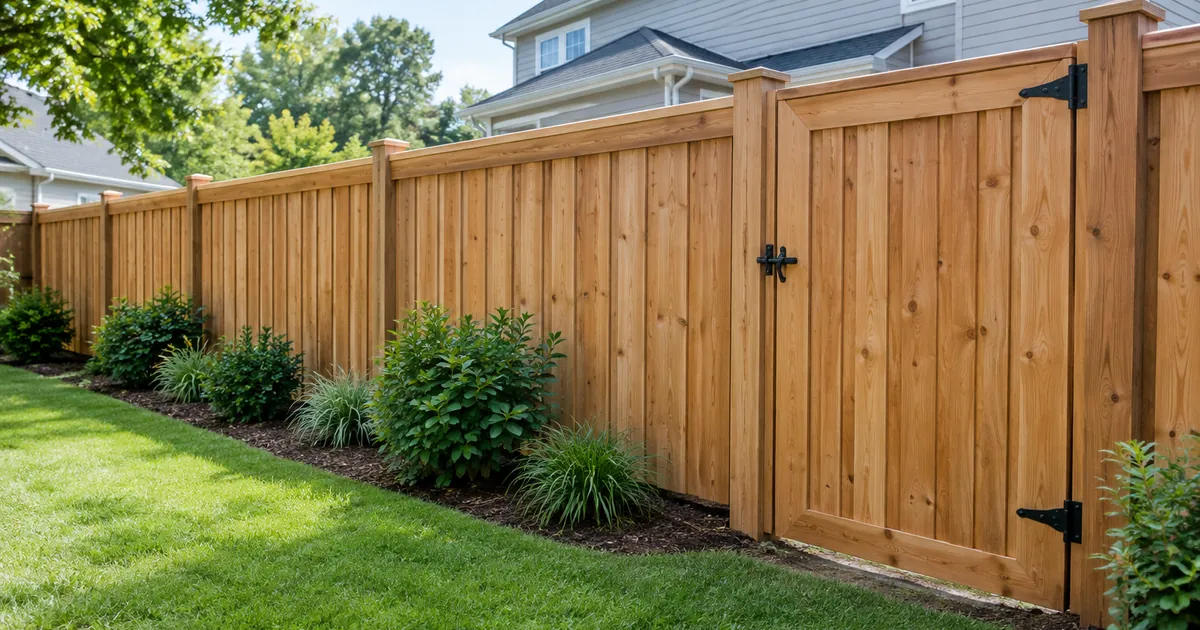
Board-on-board overlaps pickets on alternating sides of the rails, so you see no gaps even after the wood shrinks. Shadowbox spaces the alternating boards slightly apart, allowing airflow while looking finished from both sides. Both use roughly a third to half more pickets than a standard privacy fence, which is why they cost about 20% more.
Picket and split rail
Picket fences define a front yard or garden without blocking the view, and use far less lumber. Split rail is the cheapest wood option for large properties and pastures, though it won’t keep small dogs in unless you add wire mesh.
Wood fence cost by length
Here is what a 6-foot privacy fence costs at common lengths, before gates and removal:
| Fence length | Pressure-treated pine | Cedar | Board-on-board (pine) |
|---|---|---|---|
| 50 ft | $1,000–$2,000 | $1,250–$2,500 | $1,200–$2,400 |
| 100 ft | $2,000–$4,000 | $2,500–$5,000 | $2,400–$4,800 |
| 150 ft | $3,000–$6,000 | $3,750–$7,500 | $3,600–$7,200 |
| 200 ft | $4,000–$8,000 | $5,000–$10,000 | $4,800–$9,600 |
Ergeon, a fence installer that publishes its own pricing data, reports a higher national average of about $54 per foot for wood fences, with West Coast jobs near $67 and Southern markets closer to $44. If you live in a high-cost metro, expect quotes at or above the top of the ranges here.
Cost Breakdown: Materials vs. Labor
On a 6-foot pine privacy fence, materials and labor are close to an even split. HomeGuide estimates materials at $10 to $30 per foot and labor at $5 to $20 per foot.
| Cost item | Typical price |
|---|---|
| Pickets (6-ft pine or cedar) | About $2–$4 each |
| Posts, rails, concrete, fasteners | Included in $10–$30 per foot materials |
| Installation labor | $5–$20 per foot (about $50 per hour) |
| Walk gate | $250–$600 installed |
| Double driveway gate | About $480–$1,000 installed |
| Kickboard (rot board at the base) | $3–$13 per foot |
| Old fence removal | $3–$10 per foot |
| Stain or sealer | $1–$4 per foot DIY materials; $2–$14 per foot professionally applied |
| Permit | $40–$150 in most areas |
Other Factors That Affect Wood Fence Cost
Lumber prices
Wood fence quotes move with lumber markets more than any other fence type. A quote that is a few months old may not hold, so ask how long the price is good for before you sign.
Terrain and post holes
On slopes, the fence is either stepped (level panels that drop in steps) or racked (following the grade), and both take longer to build. Rocky soil and tree roots slow down post hole digging and can add a few hundred dollars or more.
Upgrades
Lattice toppers ($2 to $12 per foot), decorative post caps, cap-and-trim boards, and steel posts all add cost but make the fence look more finished or last longer.
Finishing and maintenance
Pressure-treated lumber should dry for a few weeks to a few months before staining. Plan on resealing every two to three years; skipping that step is the main reason wood fences turn gray, crack, and warp early. That recurring cost is the trade-off against vinyl, which needs no finishing.
Which side faces out
On a standard privacy fence, the posts and rails show on one side. Many HOAs and some towns require the finished side to face the neighbors or the street. If you want a finished look on both sides, board-on-board or shadowbox styles solve that, at a higher price per foot.
Repair vs. replacement
Leaning sections, a few broken pickets, or one rotted post can usually be repaired for a few hundred dollars; Angi puts the average fence repair around $600. Once many posts are rotting at ground level or most boards are split and warped, replacement is usually the better investment, since new pickets on failing posts won’t last.
Permits and HOA rules
Many towns limit backyard fences to 6 feet and require a permit, and HOAs often specify style, height, and which side the “good side” faces. Call 811 before digging so utility lines are marked for free.
Before you hire: get at least three written, itemized quotes from licensed and insured local pros. Prices for the same job often differ by 30% or more, and comparing line items is the fastest way to spot padding or missing work.
DIY vs. Hiring a Pro
A wood fence is one of the more approachable DIY outdoor projects, and doing it yourself saves the labor portion, roughly $5 to $20 per foot. You’ll need a power auger or post-hole digger, a string line, a level, and a helper. Pre-built panels go up faster than stick-built fences but are harder to fit on slopes.
The critical steps are setting posts deep enough (about one-third of the post’s above-ground height, and below the frost line in cold climates), keeping them plumb, and spacing them evenly. A pro crew will typically put up 150 feet in two to three days and handle permits and inspection. For 8-foot fences, steep lots, or long runs, hiring out is usually the better call.
Wood vs. Other Fence Materials
Wood sits in the middle of the fence price range. Chain link costs roughly half as much but offers no privacy without slats. Vinyl typically costs 20% to 40% more upfront than pressure-treated wood but never needs stain, and it won’t rot or attract termites. Aluminum and composite cost more still. Wood’s advantages are its natural look, easy repairs (you can swap one picket or post), and the freedom to paint or stain it any color. The calculator above covers wood species and styles; for a side-by-side with vinyl, aluminum, and iron at your exact length, use the calculator in our general fence guide linked below.
How to Save Money on a Wood Fence
- Use pressure-treated pine for posts and rails even if you upgrade the pickets to cedar.
- Choose a standard 6-foot dog-ear privacy style; it uses stock lumber and goes up fastest.
- Stain it yourself once the wood has dried rather than paying for professional finishing.
- Split the cost with a neighbor on a shared property line.
- Remove the old fence yourself if you can handle debris disposal.
- Book in the off-season (late fall or winter, where the ground allows digging).
- Compare three quotes per linear foot, with gates and removal listed separately.
Comparing materials? See our overall fence installation cost guide or the cheaper chain link fence cost breakdown. Building a matching outdoor space? Our deck cost guide covers pressure-treated and cedar decks.
Frequently Asked Questions
How much does a 6-foot wood privacy fence cost?
A 6-foot pressure-treated pine privacy fence typically costs $20 to $40 per linear foot installed. For 150 feet with one gate, most homeowners pay about $4,800; cedar adds roughly 25%.
Is cedar or pressure-treated pine better for a fence?
Pressure-treated pine is cheaper and resists rot well, but it can warp and shrink as it dries. Cedar costs more but stays straighter, looks better, and resists insects naturally. Many builders use treated pine posts with cedar boards.
How much does a 100-foot wood fence cost?
A 100-foot, 6-foot pine privacy fence usually costs $2,000 to $4,000 installed, plus $250 to $600 per gate. Board-on-board, cedar, or 8-foot fences cost more.
How long does a wood fence last?
Wood fences typically last 15 to 20 years, and well-maintained cedar or redwood can last longer. Regular staining and good post installation make the biggest difference.
Is a wood fence cheaper than vinyl?
Yes, a wood fence usually costs less upfront than vinyl. Vinyl needs no staining, though, so the gap narrows over the fence’s life.
How much does it cost to stain a wood fence?
Professional staining or sealing generally runs $2 to $14 per linear foot depending on height, both sides vs. one, and prep. DIY materials cost much less.