Garage Door Spring Replacement Cost by Spring Type
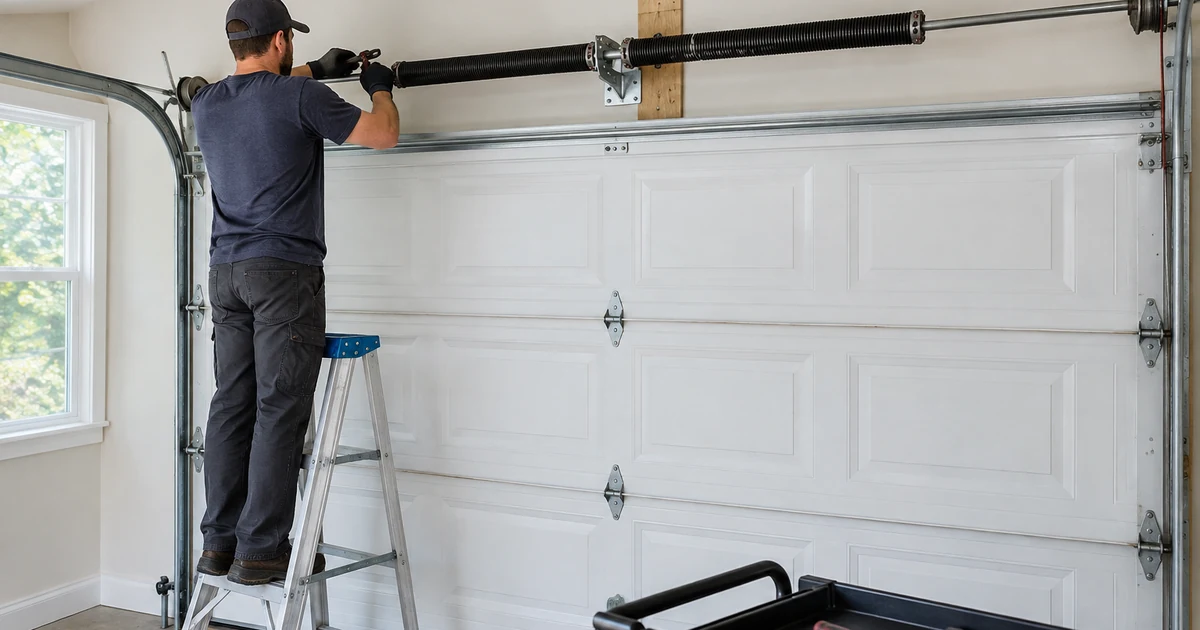
The type of spring your door uses is the biggest factor in the price. Most modern sectional doors use torsion springs mounted on a bar above the door opening. Older and lighter doors often use extension springs that run along the horizontal tracks on each side.
| Spring type / job | Parts only | Installed cost (pro) | Typical lifespan |
|---|---|---|---|
| Extension springs (pair) | $20–$60 | $150–$300 | 5,000–15,000 cycles |
| Single torsion spring | $40–$100 | $150–$300 | 10,000–20,000 cycles |
| Torsion springs (pair) | $80–$120 | $180–$400 | 10,000–20,000 cycles |
| Extension-to-torsion conversion | $220+ (kit) | $400–$800 | 10,000–20,000 cycles |
Most homeowners pay about $275 to have a pro replace both torsion springs on a standard single-car door. Extension springs are cheaper as parts, but the labor is similar, so installed prices overlap heavily.
If your door has two springs and only one broke, most technicians recommend replacing both. The springs were installed at the same time and have seen the same number of cycles, so the second one usually fails soon after. Replacing the pair in one visit saves you a second service call fee.
Cost Breakdown: Materials vs. Labor
Springs themselves are inexpensive. What you are mostly paying for is the service call, the technician’s time, and the skill to handle a component under dangerous tension.
| Cost item | Typical price | Notes |
|---|---|---|
| Springs (pair) | $30–$120 | Extension springs are at the low end, torsion at the high end |
| Labor | $75–$150 | Usually 1–2 hours for a standard residential door |
| Service call / trip fee | $50–$75 | Often waived or rolled into the repair price |
| Lift cables (if frayed) | $100–$200 | Commonly replaced at the same visit |
| Tune-up (rollers, lubrication, balance) | $100–$250 | Optional, cheaper when done at the same visit |
Many garage door companies quote a flat price for the whole job rather than itemizing. That is normal, but ask what the flat price includes, especially whether it covers both springs, new cables, and a door balance test.
Other Factors That Affect the Price
Door size and weight
A 16-foot double door or a heavy insulated or wood door needs larger, stronger springs, and sometimes four springs instead of two. Expect to pay $15–$30 more per spring for a double door, and noticeably more for heavy custom or carriage-style doors.
Cycle rating
Standard springs are rated for about 10,000 cycles, which is roughly 7–10 years for a door opened a few times a day. High-cycle springs rated for 25,000 cycles or more cost more upfront but can last two to three times longer, which makes sense if your garage is your main entry.
Number of doors
If you have two or three doors of the same age, their springs will wear out on a similar schedule. Doing all of them in one visit typically costs $275–$425 for two doors and $350–$700 for three, less per door than separate calls.
Emergency and after-hours service
A broken spring often traps a car in the garage, so many calls are urgent. Evening, weekend, and holiday service usually adds $75–$150 or more to the bill. If you can wait until a normal weekday, you will usually pay less.
Related damage
When a spring snaps, the sudden shock can fray lift cables, bend a track, or strain the opener if someone tried to run it. Those extra repairs raise the total. See our garage door repair cost guide for prices on cables, tracks, and rollers.
Your region
Labor rates are higher in large metro areas and the Northeast and West Coast than in rural parts of the South and Midwest. The same spring job can vary by $100 or more depending on where you live.
What a Typical Spring Replacement Includes
A standard service visit for a broken spring usually covers more than swapping the spring itself. When comparing quotes, check that these steps are included:
- Inspecting the door, cables, drums, bearings, and tracks for damage caused by the broken spring.
- Measuring the old spring (wire size, inside diameter, length, and wind direction) or weighing the door to size the new springs correctly.
- Unwinding and removing the old springs safely with winding bars.
- Installing and winding the new springs to the correct number of turns for your door height.
- Adjusting cable tension so the door lifts evenly on both sides.
- Balance-testing the door so it stays in place when lifted halfway by hand.
- Lubricating springs, hinges, and rollers and testing the opener’s force and auto-reverse settings.
A good technician will also tell you if rollers, cables, or bearings are near the end of their life. Replacing them at the same visit is optional, but it usually costs less than a separate call later.
How Long Garage Door Springs Last
Springs are rated in cycles, where one cycle is one opening and one closing. Standard torsion springs are rated for about 10,000 to 20,000 cycles. Extension springs are often rated lower, around 5,000 to 15,000 cycles.
To estimate your spring life, multiply how many times you open the door each day by 365. A household that opens the door four times a day uses about 1,460 cycles a year, so a 10,000-cycle spring lasts roughly seven years. If the garage is your main entrance and the door opens eight or more times a day, standard springs may wear out in four or five years, which is when high-cycle springs start to pay off.
Cold weather, rust, and a door that is out of balance can shorten spring life. Lubricating the springs a few times a year and keeping the door balanced helps them reach their rated cycles.
Before you hire: get at least three written, itemized quotes from licensed and insured local pros. Prices for the same job often differ by 30% or more, and comparing line items is the fastest way to spot padding or missing work.
Signs Your Garage Door Spring Needs Replacing
- A visible gap in the torsion spring. A broken torsion spring usually shows a 2-inch gap where the coil separated.
- A loud bang from the garage. Springs often break with a sound like a gunshot, frequently when the door is closed and not in use.
- The door feels very heavy. A balanced door should stay put when lifted halfway by hand. If it slams down or will not stay up, the springs have lost tension.
- The opener strains or stops. Openers are not designed to lift the full weight of the door. If the motor hums but the door barely moves, check the springs before blaming the opener.
- The door rises crooked. On extension-spring doors, one weak spring makes the door lift unevenly.
- Stretched or gapped extension springs. Extension springs that stay visibly stretched with the door closed are worn out.
DIY vs. Hiring a Pro
You can buy a pair of springs at a home improvement store for about $30–$90, so DIY looks tempting. The savings are real, roughly $150–$250, but so is the risk. Torsion springs store enough energy to lift a 150–300 pound door, and a slipped winding bar can cause serious hand, arm, or head injuries.
Torsion spring replacement requires proper winding bars, correct spring sizing (wire gauge, inside diameter, length, and wind direction), and the right number of turns for your door height. Many manufacturers and industry groups recommend leaving torsion springs to trained technicians.
Extension springs are less dangerous to replace, but only if they have safety cables running through them. If yours do not, add safety cables during the job. They keep a snapping spring from whipping across the garage.
If your opener is also old or noisy, it can be worth pricing a replacement at the same visit. Our garage door opener installation cost guide covers what a new unit and install typically run.
How to Save Money on Garage Door Spring Replacement
- Replace both springs at once. You avoid a second service call fee when the other spring fails a few months later.
- Get two or three quotes. Ask each company for a total, all-in price for your door size and spring type before they arrive.
- Watch for bait pricing. Be cautious of very low advertised prices that grow once the tech is on site. Ask what the quote includes in writing.
- Avoid after-hours rates when you can. If the door is closed and the car is not needed, a weekday appointment can save $75–$150.
- Consider high-cycle springs. They cost more upfront but can save you a future replacement if you use the door many times a day.
- Bundle a tune-up. Having rollers lubricated and the door balanced during the same visit is cheaper than booking it separately.
- Ask about warranties. Many companies offer multi-year or lifetime warranties on springs, which is worth comparing across quotes.
Frequently Asked Questions
Should I replace both garage door springs at the same time?
Yes, in most cases. Both springs were installed together and have the same wear, so the second one usually breaks soon after the first. Replacing the pair avoids paying a second service call fee.
How long do garage door springs last?
Standard torsion springs are rated for about 10,000–20,000 cycles, which works out to roughly 7–14 years for most households. Extension springs tend to wear out sooner. High-cycle springs rated for 25,000+ cycles can last much longer.
Can I open my garage door with a broken spring?
It is not recommended. The springs carry most of the door’s weight, so the door becomes very heavy and can fall. Running the opener can also damage its gears or pull the door off track. Call a technician instead.
Is it cheaper to replace garage door springs yourself?
Parts cost only about $30–$90 for a pair, so DIY can save $150–$250. But torsion springs are under high tension and can cause serious injuries. Most experts recommend hiring a trained technician, especially for torsion springs.
How long does garage door spring replacement take?
A pro typically replaces a pair of springs on a standard residential door in about 1 to 2 hours, including balancing and testing the door.
What is the difference between torsion and extension springs?
Torsion springs mount on a bar above the door and twist to lift it. They are safer, more durable, and common on newer doors. Extension springs run along the side tracks and stretch to lift the door. They are cheaper but wear out faster.