Water Heater Replacement Cost by Type
The type of water heater you choose is the single biggest driver of the final bill. A like-for-like swap of a standard 40- or 50-gallon tank is the cheapest job; moving to a tankless, hybrid heat pump or solar system adds both equipment cost and extra installation work.
| Water heater type | Unit only | Installed cost | Typical lifespan |
|---|---|---|---|
| Electric tank (40–50 gal) | $400–$1,800 | $700–$2,500 | 8–12 years |
| Gas tank (40–50 gal) | $500–$2,100 | $900–$2,700 | 8–12 years |
| Hybrid heat pump | $1,500–$3,000 | $1,500–$4,600 | 10–15 years |
| Tankless (electric) | $600–$1,000 | $1,400–$3,000 | 15–20 years |
| Tankless (natural gas) | $1,500–$2,600 | $2,100–$5,600 | 15–20 years |
| Solar | $1,000–$6,000 | $3,000–$9,000 | 15–20 years |
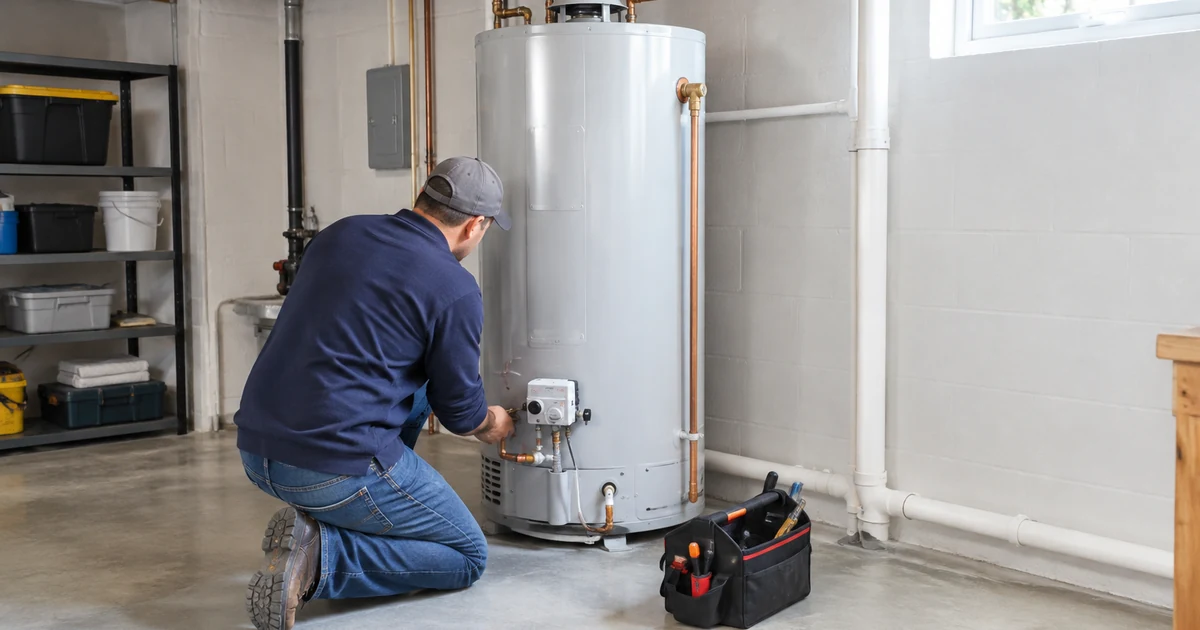
Most replacements are simple tank-for-tank swaps, which is why the typical cost to replace a water heater lands around $1,700. Gas tanks usually cost a little more to install than electric ones because the plumber also reconnects the gas supply, checks the flue and tests for leaks.
If you’re weighing an upgrade, our full guide to tankless water heater installation cost covers the extra venting, gas and electrical work a conversion usually needs.
Cost by tank size
Capacity matters too. A 30-gallon unit suits one or two people, 40–50 gallons covers most families, and 65–80 gallons is for large households or homes with big soaking tubs.
| Tank size | Unit price | Best for |
|---|---|---|
| 30 gallons | $300–$900 | 1–2 people |
| 40 gallons | $400–$2,000 | 2–3 people |
| 50 gallons | $500–$2,100 | 3–4 people |
| 65–75 gallons | $700–$2,600 | 4–5 people |
| 80 gallons | $1,000–$3,000 | 5+ people |
Cost Breakdown: Materials vs. Labor
On a standard replacement, the heater itself is usually the largest line item. Labor for a straightforward tank swap typically runs a few hundred dollars, while small parts and fees add up quickly.
- Water heater unit: $400–$2,100 for a standard 40–50 gallon tank
- Installation labor: $150–$1,000 for a tank swap (roughly 2–4 hours); $600–$2,500 for a tank-to-tankless upgrade
- Fittings, connectors, valves and supplies: $50–$200
- Removal and disposal of the old unit: $75–$500 (often bundled in the quote)
- Permit and inspection: $25–$300 depending on your city
Plumbers generally bill $45 to $200 per hour depending on region and experience, but most quote water heater replacements as a flat price that includes haul-away.
What a standard replacement quote should include
A complete quote for a tank swap usually covers the same sequence of work. Knowing it helps you compare bids line by line:
- Shutting off power or gas and the cold water supply, then draining the old tank.
- Disconnecting and removing the old heater, and hauling it away for disposal or recycling.
- Setting the new unit, adding a drain pan or stand if required, and strapping it where code calls for it.
- Connecting water lines with new flexible connectors and a shutoff valve if the old one is worn.
- Reconnecting the gas line and flue (gas models) or the 240-volt wiring (electric models).
- Installing a new temperature and pressure relief valve discharge line and, where required, an expansion tank.
- Filling the tank, testing for leaks, lighting or powering up, and setting the temperature.
If a quote is far below the others, check which of these steps it leaves out. Missing haul-away, permit or expansion tank lines are the usual reasons a low bid grows later.
Other Factors That Affect the Price
Fuel type and conversions
Staying with the same fuel keeps costs down. Switching from electric to gas typically adds $400 to $2,000 or more for a new gas line and venting, while switching from gas to electric can require a new 240-volt dedicated circuit at $250 to $900. If your panel has no room for that circuit, see our guide to electrical panel upgrade cost.
Venting
Gas water heaters need a proper flue. Reusing a sound existing vent costs little, but replacing or modifying one runs about $100 to $600, and a power-vent model adds roughly $300 to $600 compared with an atmospheric unit.
Code upgrades
Many jurisdictions now require items older installs never had: a thermal expansion tank ($90 to $400), a drain pan, seismic straps in earthquake zones, or an updated temperature and pressure relief line. Budget $75 to $500 for code compliance on an older home.
Location and access
A heater in an open basement or garage is quick to swap. Units in tight closets, attics or crawl spaces take longer and may need two technicians. Relocating the heater to a new spot is a separate project that can cost $150 to $3,400 because of new water, gas and vent runs.
Permits
Most cities require a plumbing permit to replace a water heater, typically $25 to $300. A licensed plumber usually pulls it for you, and the inspection helps confirm the gas connection and relief valve are safe.
Brand and warranty
Mainstream brands sit in broadly similar price bands, with entry-level models at the low end and premium lines with longer warranties, better anode rods and smart controls at the top. Installed prices for popular brands such as Rheem, A.O. Smith and Bradford White commonly span several hundred to a few thousand dollars depending on capacity and features. Paying more for a longer tank warranty is often worthwhile if you plan to stay in the home.
Emergency service
If your tank fails on a weekend or holiday, expect after-hours rates. Replacing a heater before it leaks gives you time to compare prices instead of accepting the first available crew.
Before you hire: get at least three written, itemized quotes from licensed and insured local pros. Prices for the same job often differ by 30% or more, and comparing line items is the fastest way to spot padding or missing work.
Signs You Need to Replace Your Water Heater
Tank water heaters generally last 8 to 12 years. Once yours is in that window, a few warning signs mean replacement is usually smarter than another repair:
- Water pooling around the base or a visibly rusty, weeping tank. A leaking tank body can’t be repaired.
- Rusty or discolored hot water, which can point to internal corrosion.
- Rumbling or popping noises caused by heavy sediment buildup that flushing no longer fixes.
- Not enough hot water for your household, or water that runs lukewarm quickly.
- Repeated repairs on a unit near the end of its expected life.
Replacing a single failed part, such as a heating element, thermostat or thermocouple, is often worth it on a younger unit. A good rule of thumb: if the repair costs more than about half the price of a new installed heater and the tank is over eight years old, replace it.
DIY vs. Hiring a Pro
An experienced DIYer can replace an electric tank with the same size and style and save a few hundred dollars in labor. Gas units are a different story: a bad gas connection or blocked flue can cause a leak or carbon monoxide buildup, so hire a licensed plumber for any gas model.
Even for electric units, most areas require a permit, and some manufacturers void the warranty if the heater isn’t professionally installed. Tanks are also heavy and awkward; a 50-gallon unit is difficult to move safely without help.
How to Save Money on Water Heater Replacement
- Replace before it fails. Planning ahead avoids emergency rates and lets you gather quotes.
- Get at least three quotes and make sure each includes haul-away, permit, fittings and any code upgrades.
- Stick with the same type, fuel and location unless the upgrade clearly pays off for your household.
- Size it correctly. An oversized tank costs more to buy and more to keep hot.
- Check utility rebates. Many utilities and state programs offer rebates on heat pump water heaters. Note that the federal 25C energy efficiency tax credit ended for equipment installed after December 31, 2025, so don’t count on it for a 2026 installation.
- Ask about the warranty. A 9- or 12-year tank warranty costs more upfront but can lower cost per year of service.
- Flush the new tank yearly to reduce sediment and help it reach the long end of its lifespan.
If you’re planning other mechanical upgrades, bundling can help: some contractors discount a water heater when it’s installed alongside a new furnace. See our furnace replacement cost guide for those numbers.
Frequently Asked Questions
How much does it cost to replace a 50-gallon water heater?
A 50-gallon tank typically costs $500–$2,100 for the unit alone, and most homeowners pay roughly $1,000 to $2,700 installed, including haul-away and a permit. Gas models land toward the upper half of that range.
How long does it take to replace a water heater?
A like-for-like tank replacement usually takes a plumber about 2 to 4 hours. Tank-to-tankless conversions or relocations can take a full day or more because of new venting, gas or electrical work.
Is it cheaper to repair or replace a water heater?
Replacing a heating element, thermostat or thermocouple is usually cheaper on a unit under about 8 years old. A leaking tank can’t be repaired, and if a repair costs more than half the price of a new installed heater on an older unit, replacement is the better value.
Do I need a permit to replace a water heater?
Most US cities and counties require a plumbing permit, typically $25 to $300. Licensed plumbers usually pull the permit and schedule the inspection as part of the job.
Does homeowners insurance cover water heater replacement?
Insurance generally doesn’t pay to replace a heater that simply wore out. It may cover sudden water damage caused by a failure, depending on your policy, so check your coverage and deductible.
Is there a tax credit for a new water heater in 2026?
The federal 25C energy efficient home improvement credit applied to qualifying heat pump and gas water heaters through 2025 but ended for equipment placed in service after December 31, 2025. Many utilities and states still offer rebates, especially for heat pump water heaters.