Baseboard Installation Cost by Material
The cost to install baseboard is quoted per linear foot, and most of that price is labor. National cost guides put new baseboard at roughly $5.70 to $9 per linear foot installed for standard MDF or pine, with premium hardwoods pushing well past that. The material you pick changes the board price, but cutting, coping and nailing take about the same time whatever the board is made of.
| Baseboard material | Material only (per LF) | Installed (per LF) | Best for |
|---|---|---|---|
| PVC / vinyl | $0.90–$1.40 | $5.50–$8.50 | Bathrooms, basements, laundry rooms |
| MDF (primed) | $1.00–$1.40 | $5.70–$9.00 | Dry rooms you plan to paint |
| Finger-jointed pine (primed) | $1.20–$1.80 | $6.00–$9.50 | Painted trim in busy rooms |
| Solid pine | $1.40–$1.85 | $6.25–$10.00 | Painted or stained trim |
| Poplar | $1.90–$2.50 | $6.75–$10.50 | Smooth paint-grade hardwood |
| Oak or maple | $2.50–$5.00 | $8.00–$13.00 | Stain-grade trim matched to floors |
| Cherry, walnut or mahogany | $4.50–$10.00 | $11.00–$18.00 | High-end, clear-finished rooms |
MDF is the budget favorite because it comes pre-primed, cuts cleanly and has no knots. Its weak point is water: it swells if it gets wet and dents easily, so it is a poor choice next to tubs, in mudrooms or in basements prone to dampness. Finger-jointed pine is short pieces of clear pine glued into long lengths; it costs a bit more than MDF but holds nails better and shrugs off vacuum bumps. Solid hardwoods such as oak make sense when you want a stained finish that matches new hardwood flooring.
PVC and vinyl baseboard cost about the same as MDF but will not rot or swell, which makes them the practical pick for bathrooms, basements and anywhere a mop or a leak is likely. Flexible vinyl cove base, the rubbery strip you see in commercial spaces, is cheaper still but rarely used in living areas.
Cost by height and profile
Taller and more detailed boards cost more. Material prices rise roughly $0.25 to $0.50 per linear foot for each extra quarter inch of height, so a 3¼-inch colonial base might run $1 to $2.50 per foot while a 5½-inch board runs $3.25 to $7. Flat, modern profiles are usually cheaper to buy, while sculpted profiles can climb past $10 per foot before labor. A common rule of thumb is to size baseboard at around 7% of the ceiling height, which works out to about 6 to 7 inches for 8-foot ceilings.
Cost to Install Baseboard by Room and Whole House
To estimate footage, measure the perimeter of each room and subtract door openings. The figures below use the $5.70 to $9 per foot installed range for MDF or pine, with no removal or painting included.
| Project | Approx. linear feet | Installed cost |
|---|---|---|
| Small bathroom | 20–30 LF | $200–$350* |
| 12 x 12 bedroom | 40–45 LF | $230–$400 |
| 15 x 20 living room | 60–65 LF | $340–$590 |
| Typical project (several rooms) | 150 LF | $855–$1,350 |
| One floor of a mid-size home | 300–400 LF | $1,710–$3,600 |
| Whole house | 500–1,000 LF | $2,850–$9,000 |
*Very small jobs often hit a trip minimum, so a single bathroom can cost more per foot than a whole floor. Contractors frequently knock about $0.50 per foot off larger jobs because setup, travel and material runs are spread over more footage. Angi’s national data puts the average baseboard project at about $1,100, with most homeowners paying between $800 and $2,250.
Cost Breakdown: Materials vs. Labor
On a typical 150-linear-foot job with MDF or pine, labor makes up roughly 75% to 85% of the bill. Here is how a quote usually breaks down:
- Baseboard material: $1.00–$1.85 per LF for MDF or pine, about $150–$280 for 150 LF
- Installation labor: $5.00–$7.75 per LF, or $30–$100 per hour for a carpenter or handyman
- Nails, adhesive, caulk and wood filler: $25–$100 per project
- Removal of old baseboard: about $1.50 per LF, or $50–$100 per hour
- Debris disposal: about $20 if it is not already included
- Caulking and painting: $1–$4 per LF for standard trim, up to $6 for tall or detailed boards
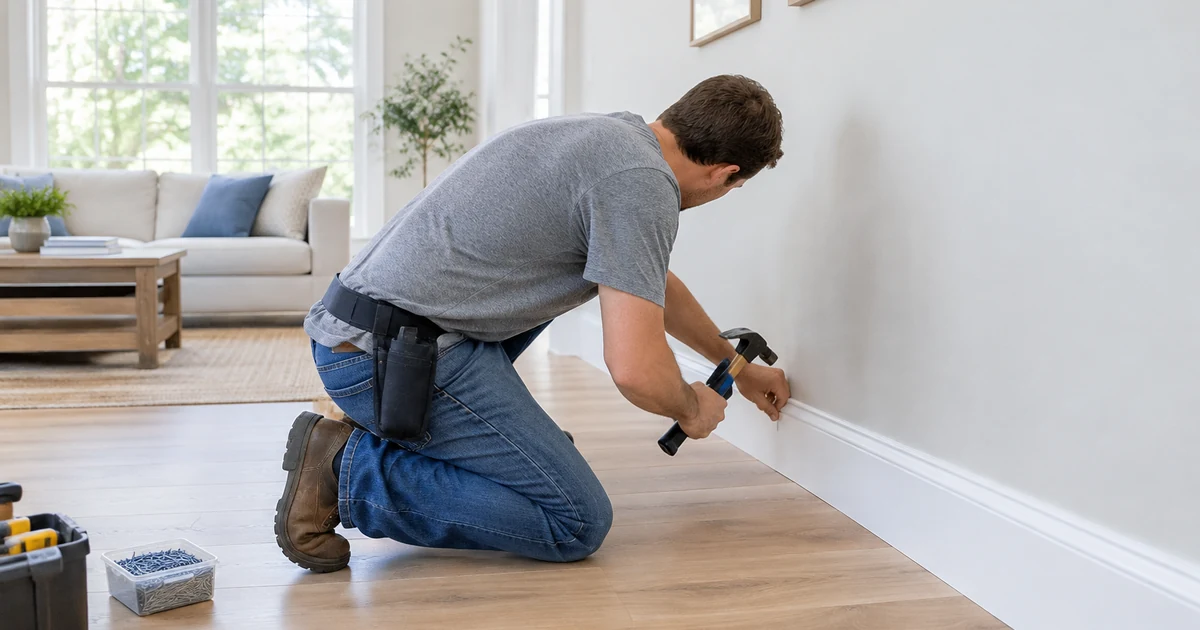
An experienced trim carpenter installs roughly 20 linear feet per hour, so a 150-foot project usually takes one long day. Outside corners need miters, inside corners are best coped, and every joint along a straight wall needs a scarf cut. That fitting work is why labor dominates the price.
What a complete baseboard quote should include
- Removing old trim carefully and pulling leftover nails, if this is a replacement.
- Marking studs, measuring each wall and cutting miters, copes and scarf joints.
- Nailing boards to studs and bottom plates, gluing outside corners.
- Filling nail holes, caulking the top edge and inside corners.
- Painting or staining, if included, and cleaning up offcuts.
When two quotes differ widely, it is usually because one includes removal, caulking or painting and the other does not.
Other Factors That Affect the Price
Removing the old trim
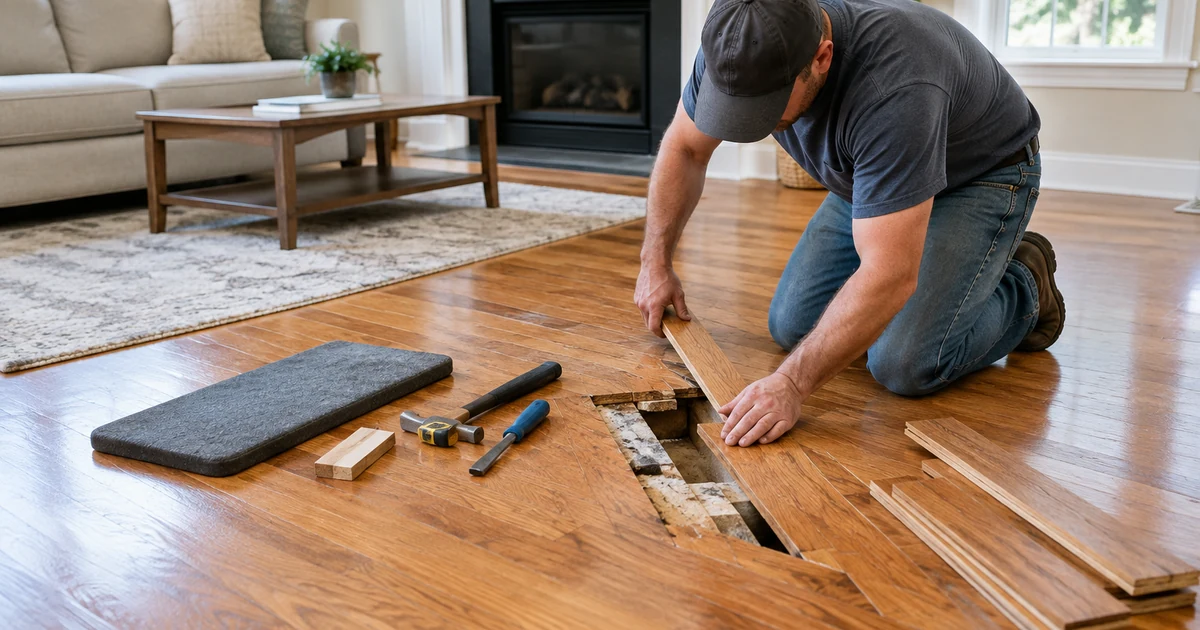
Tearing out existing baseboard adds roughly $1.50 per linear foot, or $50 to $100 per hour. Old boards nailed with long finish nails can pull chunks of drywall paper with them; small patches are often handled by the carpenter, but larger damage may call for a drywall repair before new trim goes on.
Caulk and paint
Most baseboard arrives primed but unpainted. Having the installer fill holes, caulk the top edge and apply two finish coats typically adds $1 to $4 per linear foot. If you are already repainting the room, folding the trim into an interior painting job is usually cheaper than paying a carpenter to paint.
Quarter round and shoe molding
Quarter round and shoe molding are thin strips that cover the expansion gap between baseboard and floor. Installed on their own, they cost about $5.50 to $9 per linear foot according to HomeAdvisor data, though the per-foot price drops when they go in alongside new baseboard. They are almost always needed after new floating floors such as vinyl plank or laminate are installed against existing baseboard.
Wall and floor condition
Wavy walls, out-of-level floors and plaster in older homes slow installation. Carpenters may need to scribe boards to the floor, add shims or caulk larger gaps, which can add 10% to 20% to labor.
Board height and profile
Tall baseboard (5½ inches and up), built-up two-piece base with a cap, or stain-grade hardwood needs more careful joinery and more expensive material. Stain-grade jobs cost more because every joint is visible and caulk cannot hide gaps.
Location and access
Labor rates track local wages. Expect higher per-foot pricing in major metros and lower pricing in rural areas. Crowded rooms that need furniture moved, stairs with skirt boards and many short wall segments also raise the price.
Older homes and lead paint
In homes built before 1978, painted trim may contain lead-based paint. Pulling, cutting or sanding it can release lead dust. The EPA recommends hiring a contractor certified under its Renovation, Repair and Painting (RRP) program, which can add containment and cleanup costs to the job.
Before you hire: get at least three written, itemized quotes from licensed and insured local pros. Prices for the same job often differ by 30% or more, and comparing line items is the fastest way to spot padding or missing work.
Baseboard vs. Crown Molding Cost
Crown molding is the most common upgrade homeowners price alongside baseboard. It typically costs about $7 to $16 per linear foot installed, roughly double baseboard on a per-foot basis. The higher price comes from compound angle cuts, working on ladders and the difficulty of hiding gaps against uneven ceilings. A room needs about the same footage of crown as it does baseboard (plus the door openings), so expect crown to add more than the base itself. Other trim for comparison: door casing runs about $5 to $10 per foot, and chair rail about $3 to $5 per foot.
Repair, Repaint or Replace Your Baseboards?
Not every tired baseboard needs to come off the wall. Sorting the problem first can keep the project to a fraction of the cost of new trim.
- Scuffs, chipped paint and dated colors: fill, sand lightly and repaint. At $1 to $4 per linear foot, repainting is far cheaper than replacement.
- Open joints and gaps at the top edge: recaulk and touch up. Gaps often appear as a house settles or humidity changes and rarely mean the boards have failed.
- Isolated dents or a damaged section: a carpenter can cut out and replace one length, typically priced at the same $5.70 to $9 per foot plus a minimum trip charge.
- Swollen, crumbling or moldy boards: replace them, and find the moisture source first. Swelling along the bottom edge usually points to wet mopping, a plumbing leak or a damp slab.
- New flooring going in: this is the most common reason to replace baseboard. New floors can change the floor height, and removing the trim gives the installer a cleaner edge.
- Style update: swapping short builder-grade base for taller trim is one of the cheaper ways to make rooms look more finished.
If water caused the damage, deal with the leak and dry the wall cavity before new trim goes on. Fresh baseboard nailed over damp drywall will swell or stain again.
DIY vs. Hiring a Pro
Baseboard is one of the more approachable trim projects for a handy homeowner. DIY material costs run about $0.80 to $1.20 per linear foot for MDF or pine, and the main tools are a miter saw, a coping saw, a stud finder and a nail gun. On a 150-foot project that can save $750 or more in labor.
The tradeoff is finish quality. Tight inside corners, invisible scarf joints and clean miters take practice, and mistakes show once the trim is painted. A pro is worth it for stain-grade hardwood, tall built-up profiles, crooked walls or whole-house jobs where speed matters. Hire a lead-safe certified contractor if the old trim in a pre-1978 home is painted and needs to come out.
How to Save Money on Baseboard Installation
- Choose MDF or finger-jointed pine for any trim you plan to paint. Both look the same as solid wood once painted.
- Use PVC only where moisture is a real risk, such as bathrooms and basements, and standard MDF elsewhere.
- Remove the old trim yourself and haul it away, which can save around $1.50 per foot.
- Prime and paint boards before installation, then let the installer only caulk and touch up.
- Bundle rooms into one job to get the lower per-foot rate on larger orders.
- Paint existing baseboard instead of replacing it if the boards are sound and you only dislike the color.
- Get at least three written quotes that spell out removal, caulking, painting and shoe molding so you compare like for like.
Frequently Asked Questions
How much does it cost to install baseboard per linear foot?
Most contractors charge about $5.70 to $9 per linear foot for MDF or pine baseboard, materials and labor included. Oak and other hardwoods run roughly $8 to $13 per foot, and caulking and painting add $1 to $4 per foot.
How much does it cost to replace baseboards in a room?
A 12 x 12 bedroom needs about 40 to 45 linear feet of baseboard, which typically costs $230 to $400 installed. Removing the old trim adds about $1.50 per foot, and small jobs may carry a minimum charge.
How much does it cost to install baseboard in a whole house?
A whole house often needs 500 to 1,000 linear feet, or more in large homes, which works out to about $2,850 to $9,000 for MDF or pine at $5.70 to $9 per foot. Hardwood, painting and removal raise the total.
Is MDF or pine baseboard better?
MDF is cheaper, smooth and easy to paint, but it swells if it gets wet and dents easily. Pine, including finger-jointed pine, costs a little more and holds up better to bumps and humidity. Use PVC in bathrooms and basements.
How long does it take to install baseboard?
A trim carpenter installs roughly 20 linear feet per hour, so a 100- to 150-foot project usually takes about 5 to 7.5 hours of installation. Removal, caulking and painting add time.
Do I need quarter round with new baseboard?
Not always. Quarter round or shoe molding is mainly used to cover the expansion gap at the edge of floating floors such as laminate and vinyl plank, or to hide an uneven floor line. Installed alone it costs about $5.50 to $9 per linear foot.