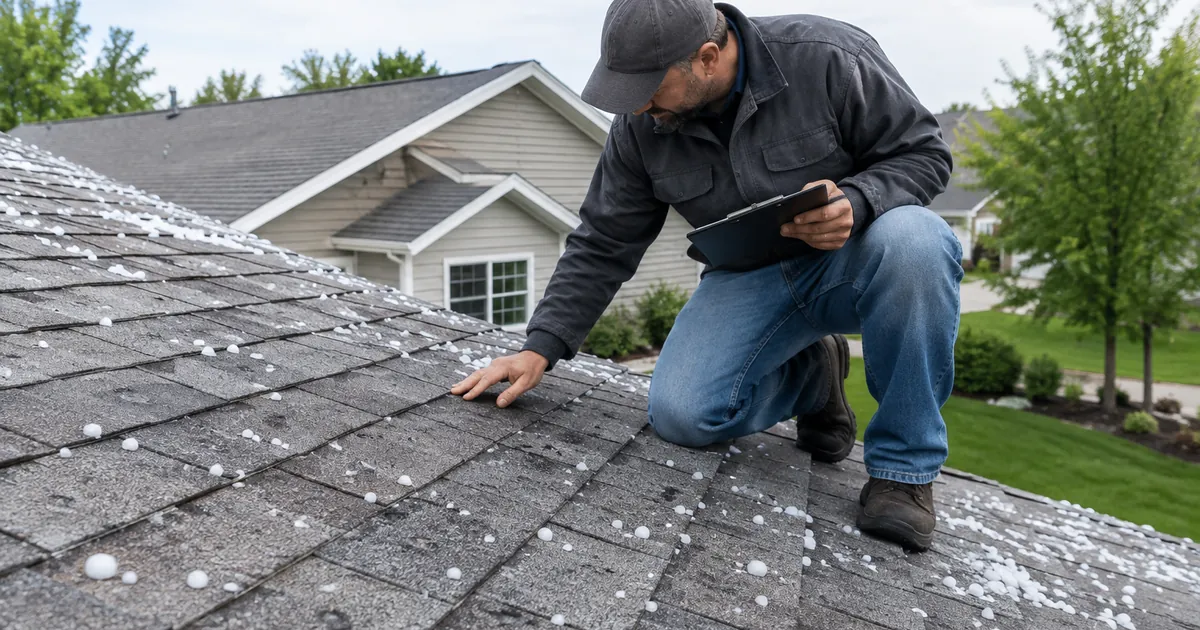
Hail Damage Roof Repair Cost by Extent of Damage
How much of the roof the hail damaged is the biggest factor in the price. A handful of cracked shingles is a quick repair, while bruised shingles across every slope usually means a new roof. Published averages vary widely for that reason: This Old House cites an average hail repair of about $940, while Angi lists an average near $4,250, and full replacements commonly run $8,000 to $20,000 or more.
| Extent of damage | What it involves | Typical cost (asphalt, average roof) |
|---|---|---|
| Minor / spot repair | Replace a few shingles, a vent cap or pipe boot, reseal flashing | $300–$1,200 |
| Moderate repair | Replace shingles in several areas on one or two slopes | $1,200–$3,800 |
| Partial reroof | Tear off and reshingle one or more full slopes | $3,000–$8,000 |
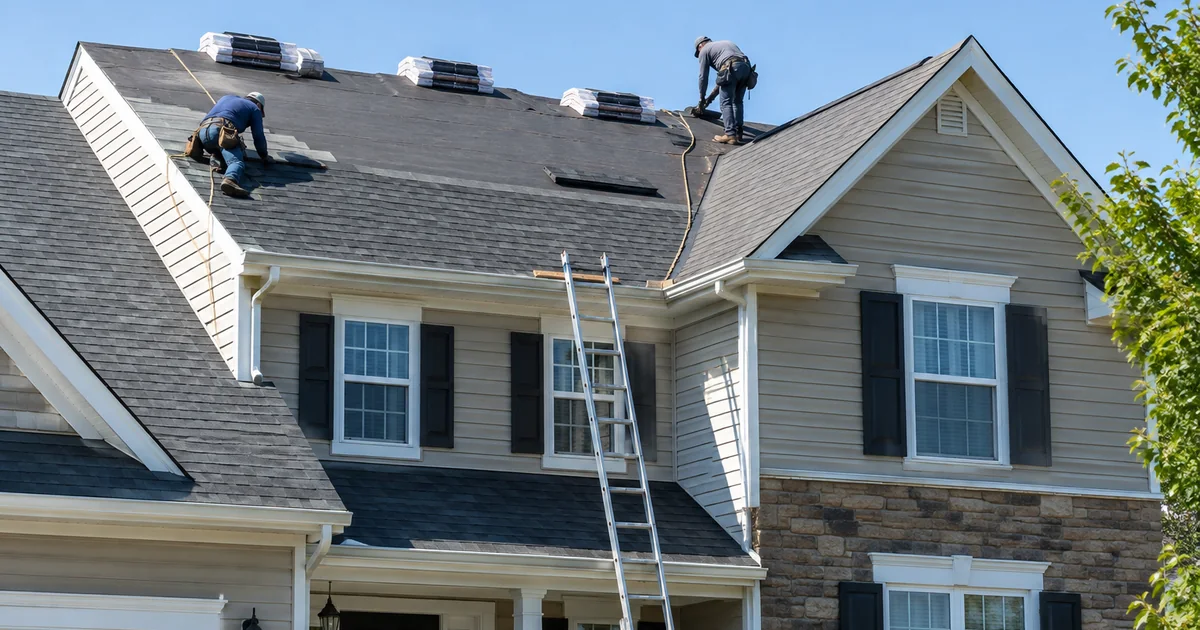
| Full replacement | Tear off and replace the entire roof | $8,000–$18,000+ |
For a moderate repair on an average-size asphalt roof, including an inspection, most homeowners pay about $2,500. Hail that leaves widespread bruising or granule loss tends to push the job toward a partial or full replacement, especially on an older roof.
Spot repairs work best on newer roofs where matching shingles are still available. On a roof that’s 15 or more years old, new shingles may not match the weathered color, and the brittle surrounding shingles can crack as the roofer works around them. That’s one reason adjusters and roofers sometimes recommend replacing a whole slope instead of patching it.
Cost by roofing material
Hail affects every roofing type differently, and repair rates follow the material’s cost and labor demands.
| Material | Typical hail damage | Repair cost vs. asphalt |
|---|---|---|
| Asphalt shingles | Bruising, cracks, granule loss, exposed mat | Baseline |
| Metal | Cosmetic dents; punctures or seam damage from large hail | About 1.2–1.4x |
| Wood shake | Splits and broken shakes | About 1.4–1.6x |
| Clay or concrete tile | Cracked or broken tiles | About 1.5–1.7x |
If the damage is beyond repair, see our roof replacement cost guide for full pricing by material, or the asphalt shingle roof cost guide for prices per square and by shingle grade.
Cost Breakdown: Materials vs. Labor
Hail repairs are labor-heavy because roofers must carefully remove damaged shingles without harming the ones around them. A typical repair bill includes:
- Inspection: often free from roofers during storm season; independent inspections commonly run about $150–$300
- Labor: roughly $45–$75 per hour per worker, and many roofers charge a minimum trip fee for small jobs
- Shingles and underlayment: a modest share on small repairs; asphalt materials cost about $1–$2 per sq ft
- Flashing, vents and pipe boots: $150–$1,000 depending on how many need replacing
- Tear-off and disposal: $1–$3 per sq ft on partial or full replacements
- Emergency tarping: a common extra when hail punctures the roof and rain follows
Other Factors That Affect the Price
Roof age and condition
An older roof with brittle shingles is harder to repair cleanly and more likely to need replacement. Age also affects how your insurer values the claim, as explained below.
Roof size, pitch and access
Steep and multi-story roofs require more safety equipment and slower work. Bigger roofs simply have more surface to repair or replace.
Collateral damage
Hail rarely hits only the roof. Dented gutters and downspouts, cracked vinyl siding, broken window screens and damaged skylights often show up in the same storm. If gutters need replacing, see our gutter installation cost guide; for cracked or punctured cladding, check siding installation cost.
Interior water damage
If hail punctured the roof and water got in, drywall, insulation and ceiling repairs add to the bill. Drying out wet materials quickly helps limit mold.
Demand after a storm
After a major hailstorm, local roofers can be booked for weeks or months, and prices can rise. Scheduling an inspection quickly and getting on a reputable roofer’s list matters more than chasing the fastest offer.
Code upgrades
When a roof is replaced, current code may require items the old roof lacked, such as ice barrier at the eaves or new drip edge. Some policies include ordinance-or-law coverage for these costs; others don’t.
Before you hire: get at least three written, itemized quotes from licensed and insured local pros. Prices for the same job often differ by 30% or more, and comparing line items is the fastest way to spot padding or missing work.
How Hail Damage Insurance Claims Generally Work
This section is general information only, not legal or insurance advice. Every policy is different, so read your own policy and talk with your insurer or agent before making decisions.
Many homeowners policies cover hail damage, though some exclude wind and hail, which is more common in coastal areas, according to the National Association of Insurance Commissioners (NAIC). A typical claim moves through a few steps:
- Document the damage. Photograph the roof from the ground, dented gutters, vents, siding and any interior leaks, and note the storm date.
- Prevent further damage. Reasonable temporary measures, such as a tarp over a hole, are usually expected; keep receipts.
- Contact your insurer. Policies set deadlines for reporting a claim, which vary widely, so don’t wait.
- Adjuster inspection. The insurer sends an adjuster to assess the roof’s damage, age and condition. You can have your own roofer present.
- Settlement. The insurer issues an estimate and payment based on your coverage and deductible.
Deductibles, including percentage wind/hail deductibles
Your deductible is the part of the claim you pay out of pocket. Many policies use a flat-dollar deductible, but in hail-prone states it’s common to see a separate wind/hail deductible set as a percentage of your home’s insured dwelling value. The Insurance Information Institute says wind/hail deductibles are most commonly 1% to 5%. On a home insured for $300,000, a 2% deductible means the first $6,000 of a covered loss is yours. That’s why a $2,500 repair may cost you the full amount even with coverage.
Actual cash value (ACV) vs. replacement cost value (RCV)
The NAIC explains the difference this way: an RCV policy pays the cost to repair or replace damaged property without deducting depreciation, while an ACV policy subtracts depreciation. In the NAIC’s example, a $15,000 roof loss with a $1,000 deductible pays $14,000 under RCV but only $4,000 under ACV when depreciation is $10,000. Some policies also apply special deductibles or settlement terms to the roof alone, so check your declarations page and any roof endorsements.
Storm-Chaser Scams: Red Flags to Watch For
After a hailstorm, out-of-town crews often go door to door offering free inspections and fast repairs. Many are legitimate, but consumer protection agencies warn about contractors who take deposits and vanish or do substandard work. The Federal Trade Commission (FTC) and state attorneys general recommend these precautions:
- Hire only licensed and insured contractors. Verify the license with your state or county and ask for proof of insurance.
- Get a written contract with the scope, materials, price and timeline, and don’t sign under pressure.
- Never pay in cash, and don’t pay in full until the work is done to your satisfaction. Paying by credit card can give you extra protection.
- Be wary of offers to waive or cover your deductible. In Texas, for example, state law makes it illegal for a contractor to offer to waive a deductible or promise a rebate of it.
- Use extra caution with out-of-town companies, ask for local references, and check complaint records with the Better Business Bureau and your state attorney general.
- Don’t sign anything that assigns your insurance benefits or lets a contractor negotiate with your insurer until you fully understand it.
Repair or Replace a Hail-Damaged Roof?
Small, isolated damage on a younger roof is usually repairable; our roof repair cost guide covers those prices. Replacement is often the better call when:
- Bruised or cracked shingles appear across multiple slopes
- The roof is already near the end of its expected life
- Replacement shingles won’t match the existing ones
- Granule loss has exposed the shingle mat in many spots
- Leaks have reached the attic or ceilings
What hail damage looks like
Hail about one inch in diameter or larger can damage most roofs, according to Angi, and smaller hail can still harm older or worn roofing. Wind direction matters too: the slopes facing the storm usually take the most hits. Typical signs a roofer or adjuster looks for include:
- Asphalt shingles: dark spots where granules were knocked loose, soft “bruises” that feel spongy, cracks, and exposed fiberglass mat
- Metal roofs: round dents in panels, ridge caps and trim; punctures or loosened seams after very large hail
- Wood shakes: fresh splits with sharp edges and light-colored wood showing
- Tile roofs: cracked, chipped or broken tiles, often concentrated near the eaves
- Soft metals: dented vent caps, flashing, gutters and downspouts, which are often the easiest evidence to photograph
Some hail damage is cosmetic and some is functional, meaning it shortens the roof’s life or lets water in. Policies may treat the two differently, especially for metal roofs, so ask your insurer how cosmetic damage is handled under your coverage.
What a hail repair estimate should include
A clear written estimate lists the number of squares or shingles being replaced, the shingle product, underlayment, flashing and vent work, tear-off and disposal, and any decking allowance. Ask the roofer to note which items they found damaged and include photos. Matching that list against the adjuster’s estimate makes it easier to discuss differences with your insurer.
Roofers and adjusters often use a test square, a 10-by-10-foot area on each slope, to count hail hits. Angi notes that roughly 7 to 10 impacts in a test area is a common threshold for replacement, though insurers set their own criteria.
DIY vs. Hiring a Pro
Don’t climb onto a storm-damaged roof. OSHA identifies falls as the leading cause of death in construction and among roofers, and wet, damaged shingles are especially slippery. Check for damage safely from the ground: look for dented gutters, downspouts and vents, granules collecting at downspout outlets, and debris in the yard. Leave the rooftop inspection and repairs to a licensed, insured roofer.
How to Save Money on Hail Damage Repairs
- Know your deductible first. If the repair costs less than your deductible, a claim won’t pay out.
- Get at least two or three written estimates from established local roofers.
- Act quickly to stop leaks and avoid interior damage that costs more than the roof repair.
- Ask about impact-resistant shingles if you replace; some insurers offer premium discounts for Class 4 roofs.
- Bundle repairs to the roof, gutters and siding with one contractor where it makes sense.
- Keep records of photos, invoices and inspection reports for your claim and future home sale.
Frequently Asked Questions
How much does it cost to repair hail damage on a roof?
A moderate hail repair on an average asphalt roof typically costs $1,200 to $3,800, or about $2,500. Minor spot repairs run $300 to $1,200, and full replacement after severe hail commonly costs $8,000 to $18,000 or more.
Does homeowners insurance cover hail damage to a roof?
Many homeowners policies cover hail damage, but some exclude wind and hail, and many use a separate percentage deductible. Whether you’re paid replacement cost or actual cash value also matters. Check your own policy and ask your insurer.
What is a percentage wind/hail deductible?
It’s a deductible set as a percentage of your home’s insured dwelling value instead of a flat dollar amount, most commonly 1% to 5%. On a home insured for $300,000, a 2% deductible means you pay the first $6,000 of a covered loss.
What's the difference between ACV and RCV for a roof claim?
Replacement cost value (RCV) pays to repair or replace damage without subtracting depreciation, minus your deductible. Actual cash value (ACV) subtracts depreciation, so an older roof may receive much less. Your policy documents state which applies.
How do I know if hail damaged my roof?
From the ground, look for dented gutters, downspouts and vents, granules piling up at downspout outlets, and cracked or missing shingles. Have a licensed roofer or an insurance adjuster inspect the roof itself rather than climbing up yourself.
Should I let a contractor waive my deductible?
No. Offers to waive or cover a deductible are a common storm-chaser red flag, and some states, such as Texas, make it illegal for contractors to offer it. Paying your deductible is part of your policy terms.
How long do I have to file a hail damage claim?
Deadlines vary by policy and state, often ranging from several months to a couple of years after the storm. Check your policy and report damage promptly so the insurer can inspect it.
- This Old House — Hail damage roof repair cost
- Angi — How much hail damage to replace a roof
- NAIC — Replacement cost vs. actual cash value for your roof
- Insurance Information Institute — Understanding your insurance deductibles
- FTC — Four ways to avoid scams after a weather-related disaster
- Texas Department of Insurance — State law cracks down on roof scams