Attic Insulation Cost by Type
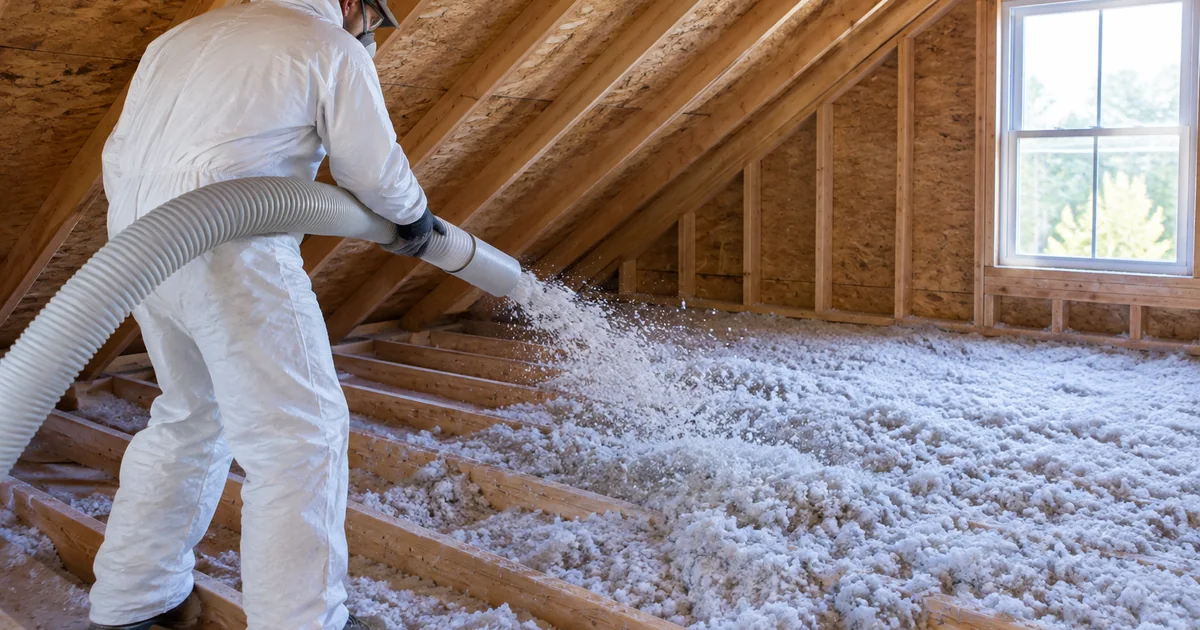
The type of insulation you choose sets the price per square foot. Blown-in (loose-fill) fiberglass or cellulose is the most common choice for attic floors because it fills gaps around joists and wiring quickly. Batts are common in new construction or open, easy-to-reach attics. Spray foam is the premium option and is usually applied to the underside of the roof deck to create a sealed, conditioned attic.
| Insulation type | Installed cost per sq ft | 1,000 sq ft attic | Best for |
|---|---|---|---|
| Blown-in fiberglass or cellulose | $1.00 – $3.00 | $1,000 – $3,000 | Topping up or insulating most existing attic floors |
| Fiberglass or mineral wool batts | $1.00 – $4.00 | $1,000 – $4,000 | Open attics with standard joist spacing, new builds |
| Open-cell spray foam (roofline) | $2.00 – $5.00 | $2,000 – $5,000+ | Sealing the roof deck; attics with HVAC ducts |
| Closed-cell spray foam (roofline) | $3.00 – $7.00 | $3,000 – $7,000+ | Maximum R-value per inch, moisture resistance |
| Radiant barrier | $0.50 – $2.00 | $500 – $2,000 | Hot climates, added to existing insulation |
Spray foam is priced by the board foot (1 sq ft, 1 inch thick). Open-cell typically runs about $0.60 to $1.60 per board foot installed and closed-cell about $1.30 to $3.10, so the price per square foot depends on how thick the contractor sprays it. Also note that spray foam at the roofline covers the roof deck, which has more surface area than the attic floor.
Most homeowners who add insulation to an existing attic choose blown-in, which is why the national average sits near $1,800. Spray foam projects commonly land between $1,500 and $4,500, and whole-attic foam jobs on large homes can reach $9,000.
Attic insulation cost by attic size
These totals assume blown-in insulation at $1 to $3 per sq ft, installed over the attic floor.
| Attic floor area | Blown-in cost range | Typical cost |
|---|---|---|
| 500 sq ft | $500 – $1,500 | $900 |
| 800 sq ft | $800 – $2,400 | $1,450 |
| 1,000 sq ft | $1,000 – $3,000 | $1,800 |
| 1,500 sq ft | $1,500 – $4,500 | $2,700 |
| 2,000 sq ft | $2,000 – $6,000 | $3,600 |
Insulation cost for other parts of the house
If you are pricing insulation beyond the attic, these national ranges give a starting point:
- Existing walls (blown-in through small holes): about $1.75 to $3.50 per sq ft of wall.
- New-construction walls: about $2 to $4 per sq ft.
- Crawl space spray foam: about $1,200 to $6,900.
- Basement spray foam: about $1,500 to $6,200.
- Whole-home spray foam: about $4,000 to $29,000, depending on size and foam type.
Cost Breakdown: Materials vs. Labor
Attic insulation is one of the few home projects where materials are relatively cheap and a crew can finish in a day. For a typical 1,000 sq ft blown-in job:
| Item | Typical cost |
|---|---|
| Fiberglass loose-fill material | $0.30 – $1.30 per sq ft |
| Cellulose material | $0.60 – $2.50 per sq ft |
| Installation labor | $0.50 – $3.00 per sq ft |
| Removal of old insulation | $1.00 – $2.00 per sq ft |
| Air sealing (top plates, penetrations, attic hatch) | $250 – $1,500 |
| Energy audit or insulation inspection | $100 – $300 |
Most attics take a crew of two about six to eight hours. Labor is sometimes quoted hourly at around $70 per hour, but most insulation companies price the job per square foot.
Other Factors That Affect Attic Insulation Prices
Target R-value and existing insulation
ENERGY STAR recommends R-60 for uninsulated attics in most of the country (climate zones 4 through 8), R-49 in zones 2 and 3, and R-30 in zone 1 (South Florida, Hawaii). If you already have 3 to 4 inches of insulation, the recommended top-up is R-49 in zones 4 to 8, R-38 in zones 2 and 3, and R-25 in zone 1. Loose-fill insulation delivers roughly R-2.5 to R-3.7 per inch, so reaching R-60 from scratch takes about 16 to 24 inches, so a bare attic costs more than a top-up.
Removing old insulation
Wet, moldy, rodent-contaminated, or compressed insulation should be removed before new material goes in. At $1 to $2 per sq ft, removal can nearly double the project cost. Vermiculite insulation (gray-brown, pebble-like) may contain asbestos; do not disturb it and have it tested by a professional.
Air sealing
Insulation slows heat flow, but it does not stop air leaks. Sealing gaps around wiring, plumbing stacks, recessed lights, and the attic hatch before insulating is usually the best-value energy upgrade in the attic and typically adds a few hundred to about $1,500.
Access and attic layout
Low-slope roofs, tight crawl spaces at the eaves, and attics accessible only through a small closet hatch slow installers down. Knob-and-tube wiring must be replaced or evaluated by an electrician before insulating around it.
Ventilation and baffles
Soffit baffles (rafter vents) keep insulation from blocking airflow at the eaves. They are inexpensive but add labor. If your attic has ventilation or roof problems, fix them first; see our roof repair cost guide.
Location
Labor rates vary by region, and demand spikes before winter and summer. Colder climates also call for higher R-values, which means more material.
Before you hire: get at least three written, itemized quotes from licensed and insured local pros. Prices for the same job often differ by 30% or more, and comparing line items is the fastest way to spot padding or missing work.
Is Attic Insulation Worth the Cost?
For most homes with thin or patchy attic insulation, yes. Heat rises, so an under-insulated attic is often the single largest source of heat loss in winter, and in summer a hot attic radiates heat into the rooms below. Because blown-in insulation is relatively inexpensive and fast to install, it is one of the most commonly recommended energy upgrades.
The payoff depends on your climate, current insulation level, energy prices, and how airtight the attic floor is. Homes with no insulation or only a few inches see the largest improvement; an attic that already meets the recommended R-value gains little from more. Better insulation also reduces the load on your heating and cooling system, which can matter if you are sizing a new system such as a heat pump or planning a furnace replacement.
Signs You Need More Attic Insulation
- You can see the tops of the ceiling joists; insulation should cover them completely.
- Upstairs rooms are noticeably hotter in summer or colder in winter.
- Ice dams or icicles form along the roof edge in winter.
- Heating and cooling bills are high compared to similar homes.
- Existing insulation is flattened, patchy, water-stained, or has signs of pests.
DIY vs. Hiring a Pro
Blown-in insulation is one of the more DIY-friendly energy upgrades. Many home centers lend the blowing machine free or at low cost with a minimum bag purchase, so you pay only for material, which eliminates the labor portion of the bill. You will need a helper, a respirator, eye protection, and walking boards across the joists so you do not step through the ceiling.
Hire a pro for spray foam, which requires specialized equipment, protective gear, and correct mixing to cure properly. Also call a pro if you have old vermiculite, mold, knob-and-tube wiring, or signs of roof leaks. If the insulation work is part of a larger renovation that involves new drywall, insulating walls and ceilings before the drywall goes up is far cheaper than retrofitting later.
How to Save Money on Attic Insulation
- Check utility rebates. Many electric and gas utilities offer rebates or free energy audits for attic insulation and air sealing.
- Know the tax credit status. The federal 25C Energy Efficient Home Improvement Credit does not apply to insulation placed in service after December 31, 2025, so do not count on it for 2026 projects. Check your state energy office for any state-run rebate programs instead.
- Top up instead of replacing. If existing insulation is dry and clean, adding blown-in on top avoids $1 to $2 per sq ft in removal costs.
- Choose blown-in over spray foam unless you specifically need a sealed attic; it delivers the recommended R-value for far less.
- Bundle air sealing with insulation. Doing both in one visit is cheaper than two separate jobs and improves results.
- Schedule in spring or fall. Insulation contractors are busiest right before winter and during summer heat waves.
- Get at least three quotes that each list the material, target R-value, installed depth, and whether baffles and air sealing are included.
Frequently Asked Questions
How much does it cost to insulate a 1,000 sq ft attic?
Blown-in insulation for a 1,000 sq ft attic typically costs $1,000 to $3,000, with most homeowners paying around $1,800. Batts cost about the same to somewhat more, while spray foam usually runs $2,000 to $7,000 depending on foam type and thickness.
Is blown-in or batt insulation cheaper for an attic?
Blown-in is usually equal to or cheaper than batts for existing attics because it installs faster and fills around joists, wires, and obstructions without cutting. Batts can be competitive in open, easy-to-reach attics with standard joist spacing.
What R-value do I need in my attic?
ENERGY STAR recommends R-60 for uninsulated attics in climate zones 4 through 8, R-49 in zones 2 and 3, and R-30 in zone 1. If you already have 3 to 4 inches, add enough to reach about R-49 in most of the country.
Is there a tax credit for attic insulation in 2026?
No federal credit is available for 2026 installs. The 25C Energy Efficient Home Improvement Credit was ended for property placed in service after December 31, 2025. Utility rebates and state programs may still help, so check with your utility and state energy office.
How much does it cost to remove old attic insulation?
Removal typically costs $1 to $2 per square foot, or about $1,000 to $2,000 for a 1,000 sq ft attic. Contaminated insulation or suspected vermiculite (which may contain asbestos) needs special handling and costs more.
Can I blow in attic insulation myself?
Yes, it is one of the more DIY-friendly projects. Many home centers lend a blowing machine with a minimum material purchase. Wear a respirator, use boards across the joists, keep insulation away from recessed lights not rated for contact, and install baffles at the eaves.