Heat Pump Installation Cost by Type
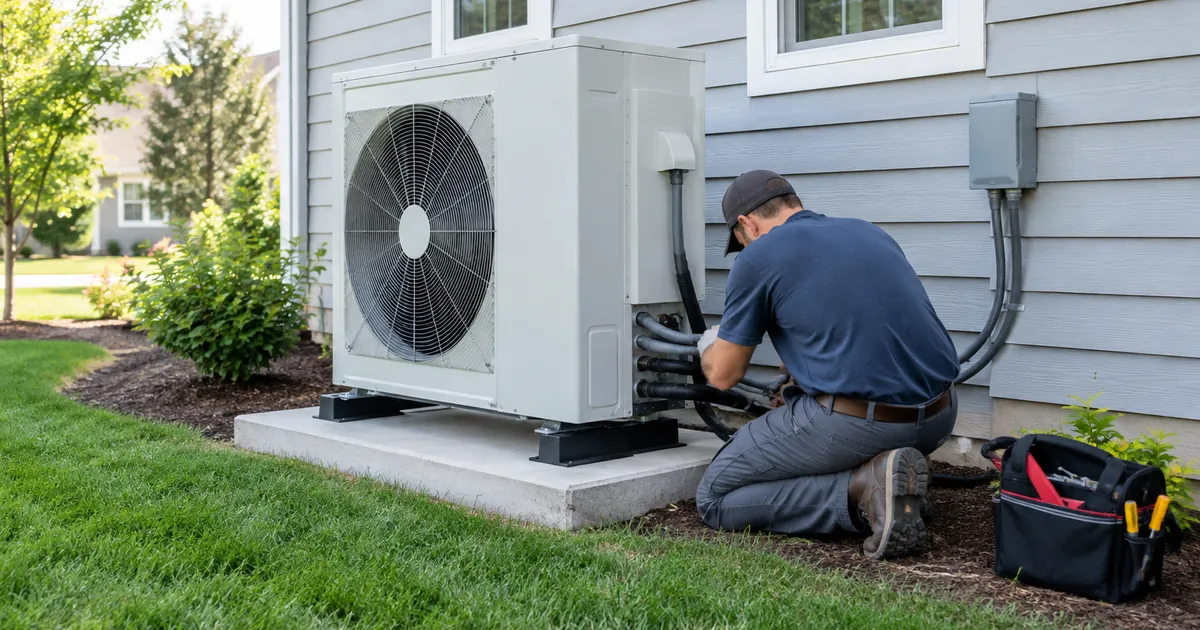
The type of system you choose moves the price more than anything else. Ducted air-source heat pumps are the most common choice for homes that already have ductwork from a furnace or central AC. Ductless mini-splits suit homes without ducts, additions and single rooms. Geothermal costs the most up front but has the lowest operating costs.
| Heat pump type | Typical installed cost | Best for |
|---|---|---|
| Ductless mini-split, single zone | $3,000 – $6,500 | One room, addition, garage conversion |
| Ductless mini-split, multi-zone (3–4 heads) | $9,000 – $20,000+ | Whole homes without ductwork |
| Ducted air-source, standard efficiency | $7,500 – $15,000 | Replacing central AC and/or a furnace |
| Ducted air-source, high efficiency / variable speed | $11,000 – $20,000 | Comfort-focused, larger homes |
| Cold-climate air-source | $12,000 – $22,000 | Northern states with sub-zero winters |
| Dual-fuel (heat pump + existing gas furnace) | $6,000 – $12,000 | Keeping a working furnace as backup |
| Geothermal (ground-source) | $20,000 – $45,000+ | Long-term owners, large lots |
Published averages vary a lot. Some cost guides put the national average near $6,000 to $8,500, while others that track full-system replacements put ducted installs closer to $14,000 to $15,000. The gap comes down to scope: a condenser-only swap onto an existing air handler is far cheaper than replacing the outdoor unit, indoor air handler, line set and thermostat together. For a full 3-ton ducted system, most homeowners pay about $11,500.
A dual-fuel setup pairs an outdoor heat pump with your existing gas furnace, which takes over in the coldest weather. If your furnace is young, this can be the cheapest way to electrify most of your heating. If it’s old, compare this against a full furnace replacement plus AC.
Cost by Size (Tonnage)
Heat pumps are sized in tons, where one ton equals 12,000 BTU per hour. A rough guideline is about one ton per 500 to 600 square feet, but climate, insulation and windows matter, so insist on a Manual J load calculation.
| Home size | Typical capacity | Ducted air-source, installed |
|---|---|---|
| 1,000 – 1,300 sq ft | 2 tons | $6,000 – $12,500 |
| 1,500 – 2,000 sq ft | 2.5 – 3 tons | $7,500 – $16,000 |
| 2,000 – 2,500 sq ft | 3.5 – 4 tons | $9,000 – $20,000 |
| 2,500 – 3,500 sq ft | 4 – 5 tons | $12,000 – $25,000 |
Efficiency ratings push prices up too. Moving from an entry-level SEER2 rating in the mid-teens to a 20+ SEER2 variable-speed unit can add several thousand dollars, but it also lowers monthly bills and usually improves comfort and humidity control.
Cost Breakdown: Materials vs. Labor
Here’s how a typical full replacement with a 3-ton ducted air-source heat pump breaks down:
| Item | Typical cost |
|---|---|
| Outdoor heat pump unit | $3,000 – $7,000 |
| Indoor air handler (if replaced) | $1,500 – $3,400 |
| Refrigerant line set | $15 – $25 per foot |
| Pad, disconnect, wiring, condensate drain | $300 – $900 |
| Installation labor (1–3 days, 2-person crew) | $2,000 – $5,000 |
| Old equipment removal and refrigerant recovery | $200 – $500 |
| Permit and inspection | $50 – $400 |
HVAC labor generally runs $75 to $200 per hour depending on the market. Most contractors quote a flat installed price, so compare total bids rather than hourly rates.
Other Factors That Affect the Price
Ductwork
If your existing ducts are leaky, undersized or damaged, repairs or partial replacement can add $1,500 to $5,000. Homes with no ducts at all are usually better candidates for ductless mini-splits than for a brand-new duct system, which can cost $2,000 to $7,500 or more.
Electrical upgrades
A heat pump needs a dedicated 240-volt circuit, and backup electric heat strips draw even more. Older 100-amp services sometimes can’t handle the load. A new circuit is a modest cost, but a full electrical panel upgrade typically adds $1,500 to $3,000.
Climate and backup heat
Cold-climate models keep producing heat well below freezing and add roughly $2,000 to $5,000 over a standard unit. In mild climates, a standard heat pump with electric heat strips is usually enough.
Brand and efficiency tier
Premium brands and top-tier variable-speed models can add $1,500 to $4,000 compared with builder-grade equipment. Installation quality matters more than the logo, so weigh the contractor as much as the brand.
Location
Regional labor rates and local codes cause big swings. Installs in high-cost metros in the Northeast and on the West Coast often run well above the national average, while parts of the South and Southwest come in lower.
Home efficiency
Better insulation and air sealing can shrink the size of the heat pump you need. Adding attic insulation before sizing a new system is often money well spent.
Installation scope
The single most important question on any quote is what’s being replaced. Swapping only the outdoor unit onto a matched, newer air handler is the cheapest job. Replacing the outdoor unit, indoor air handler or coil, line set, thermostat and electrical disconnect together is a full system replacement and is what most mid-range and high-end estimates assume.
What a Good Heat Pump Quote Should Include
Quotes for the “same” job can differ by several thousand dollars. Before you compare prices, make sure each bid lists:
- Model numbers for the outdoor unit and indoor air handler or coil, plus the matched SEER2 and HSPF2 ratings.
- Capacity and load calculation: the tonnage and how it was determined.
- Line set: whether the old refrigerant lines are reused or replaced.
- Backup heat: heat strip size, or how an existing furnace will be integrated.
- Electrical work: new circuit, disconnect and any panel changes.
- Permit, removal and warranty: who pulls the permit, disposal of old equipment and the labor warranty length.
Before you hire: get at least three written, itemized quotes from licensed and insured local pros. Prices for the same job often differ by 30% or more, and comparing line items is the fastest way to spot padding or missing work.
DIY vs. Hiring a Pro
Heat pump installation is not a DIY project for most homeowners. Handling refrigerant legally requires EPA Section 608 certification, the system must be evacuated and charged correctly, and the high-voltage wiring and permit usually require a licensed contractor. Manufacturers also commonly limit warranty coverage on units that weren’t professionally installed.
Some ductless mini-splits are sold as “DIY” kits with pre-charged line sets. Handy homeowners do install them, but you still need a dedicated circuit (often an electrician’s job), a permit in many areas, and you should confirm the warranty terms before buying.
Signs it’s time to switch to a heat pump
- Your central AC is 12 to 15+ years old and needs a major repair.
- You heat with electric baseboard, electric furnace, propane or oil and want lower operating costs.
- You’re adding a room or finishing a space that has no ductwork.
- You want one system to handle both heating and cooling.
How to Save Money on Heat Pump Installation
- Know the federal tax credit status. The 25C energy efficient home improvement credit (up to $2,000 for heat pumps) does not apply to property placed in service after December 31, 2025, under 2025 federal legislation. It’s not available for a 2026 installation.
- Look for utility and state rebates. Many utilities still offer heat pump rebates, and some states run income-qualified home energy rebate programs. Check your utility’s site and your state energy office.
- Get at least three quotes with the same scope, equipment tier and capacity so you’re comparing like for like.
- Keep good ductwork. If your ducts are in decent shape, reusing them saves thousands versus going ductless throughout.
- Consider dual-fuel if your gas furnace is still young; you only buy the outdoor unit and coil.
- Schedule in spring or fall. Shoulder seasons are slower for HVAC contractors, which can mean better pricing and faster scheduling.
- Don’t oversize. A correctly sized unit costs less and runs more efficiently than one picked by rule of thumb.
Once installed, a heat pump needs an annual service visit and regular filter changes. Small failures like a bad start or run capacitor are cheap fixes; see our AC capacitor replacement cost guide for typical prices.
Frequently Asked Questions
Is there a federal tax credit for heat pumps in 2026?
No. According to the IRS, the 25C credit is not allowed for property placed in service after December 31, 2025. Utility rebates and state programs may still help, so check locally before you buy.
How much does a heat pump cost for a 2,000 sq ft house?
A 2,000 sq ft home usually needs about 3 to 4 tons. Expect roughly $9,000 to $20,000 for a ducted air-source system, depending on efficiency and how much of the existing equipment is replaced.
Is a heat pump cheaper than a furnace and AC?
Up front, a standard heat pump often costs about the same as replacing an AC and a gas furnace together. Operating costs depend on your local electricity and gas prices; heat pumps usually win against electric resistance, propane and oil heat.
Do heat pumps work in cold climates?
Yes, modern cold-climate models are designed to keep heating well below freezing. They cost more than standard units, and some homes keep a furnace or heat strips as backup for the coldest days.
How long does heat pump installation take?
A straightforward ducted replacement typically takes one to three days. Mini-splits can be done in a day per zone or two, while geothermal requires drilling or trenching and can take a week or more.
How long does a heat pump last?
Air-source heat pumps commonly last around 15 years with regular maintenance. Geothermal indoor units last longer, and the underground loop can last decades.
Do I need to upgrade my electrical panel for a heat pump?
Not always. Many homes with 150- to 200-amp service can add a heat pump circuit easily, but older 100-amp panels may need an upgrade, especially if you add backup electric heat.