Water Softener Installation Cost by System Type
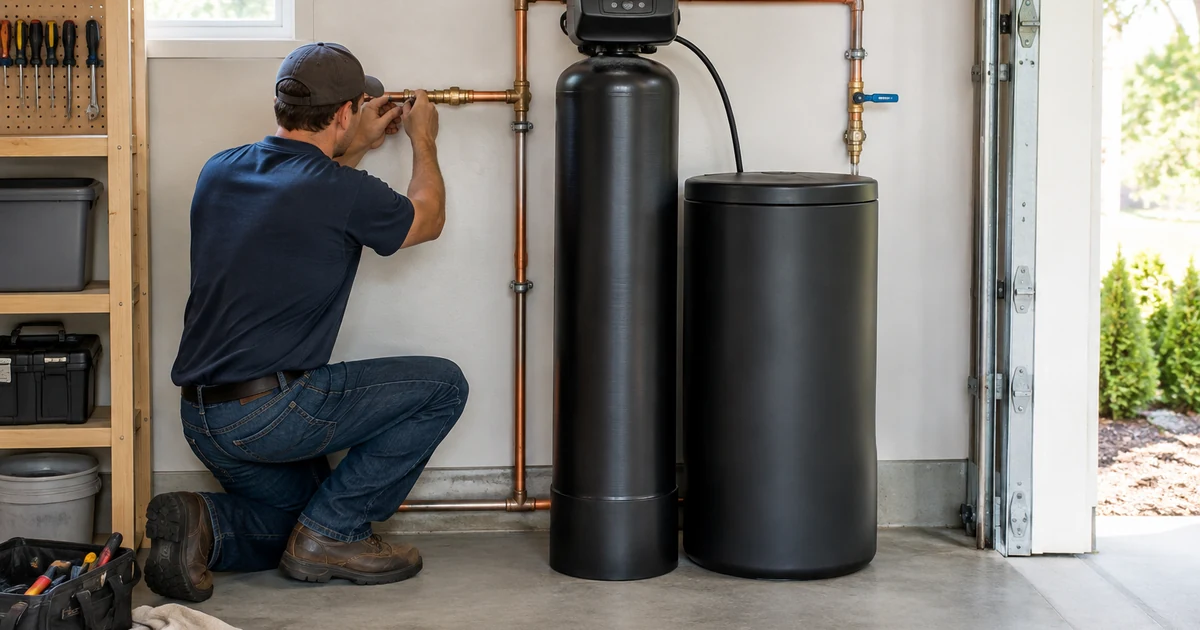
A standard salt-based softener swaps the calcium and magnesium in your water for sodium (or potassium) as water passes through a resin tank. It’s the most common and usually the cheapest effective option. The other types cost more or solve a slightly different problem.
| System type | Equipment cost | Typical installed cost | Best for |
|---|---|---|---|
| Single-tank salt-based | $500–$1,700 | $1,000–$2,500 | Most homes on city or well water |
| Dual-tank salt-based | $1,000–$5,000 | $1,700–$5,000 | Large households, very hard water, soft water around the clock |
| Salt-free conditioner | $800–$4,000 | $1,500–$4,500 | Reducing scale without salt or a drain line |
| Magnetic / electronic | $200–$600 | $200–$600 (often DIY) | Budget scale reduction; does not remove minerals |
| Whole-house reverse osmosis | $4,000–$11,000 | $4,800–$10,000+ | Purification, not just softening |
National averages range from about $1,500 to $2,500 depending on the source, largely because some guides include dealer-installed premium systems. A typical single-tank unit sized for a family of four, installed where plumbing is ready for it, lands near $1,600.
Salt-free conditioners are often marketed as softeners, but they don’t remove hardness minerals. They change how the minerals behave so they’re less likely to form scale. If you want the slippery feel of soft water and better soap lather, you need an ion-exchange unit.
Cost by Grain Capacity
Capacity, measured in grains, is how much hardness the softener can remove before it regenerates. Bigger isn’t always better: an oversized unit costs more up front, while an undersized one regenerates too often and wastes salt and water.
| Water hardness | Suggested capacity | Unit cost |
|---|---|---|
| 6–9 grains per gallon | 24,000 grain | $300–$600 |
| 10–12 gpg | 32,000 grain | $400–$1,000 |
| 13–18 gpg | 48,000 grain | $500–$1,200 |
| 18–20 gpg | 64,000 grain | $1,000–$1,500 |
| 20+ gpg | 80,000+ grain | $1,200–$1,800 |
To size a system, multiply your household’s daily water use by your hardness in grains per gallon, then by the number of days you want between regenerations. A water test gives you the hardness number; many city utilities also publish it in their annual water quality report.
Cost Breakdown: Materials vs. Labor
The softener itself is usually the largest line item. Installation labor runs $150 to $1,000, with most straightforward jobs falling around $500 to $700. A plumber typically needs two to four hours.
- Softener unit: $500–$1,700 for a single-tank system.
- Installation labor: $150–$1,000.
- Bypass valve, fittings and drain line: often included; additional plumbing work adds $200–$800 when there’s no loop.
- Dedicated outlet or circuit: $250–$900 if there’s no power near the install spot.
- Lab water test: $130–$200, or $10–$40 for a home test kit.
- First bags of salt: $5–$10 per 40-pound bag.
Other Factors That Affect the Price
Softener loop
Many newer homes have a softener loop, a pre-plumbed tie-in near where the main water line enters. With a loop, installation is quick. Without one, the plumber has to cut into the main line, add a bypass and route a drain, which can double the labor.
Location and drain access
Salt-based softeners need a drain for backwash and an outlet for the control head. A garage or basement near a floor drain or laundry standpipe keeps costs down. An outdoor install needs a protective enclosure in cold climates.
Replacing an old unit
Swapping a worn-out softener on existing plumbing is the cheapest scenario. Some plumbers charge extra to haul away the old tank and brine tank.
Well water
Wells often carry iron, sediment or manganese along with hardness. You may need a sediment pre-filter or an iron filter to protect the softener’s resin, which adds to the equipment cost. If your well system is due for work, see our guide to well pump replacement cost.
Dealer vs. independent plumber
Brand dealers often bundle premium equipment, in-home testing and service plans, which pushes prices toward the top of the range. An independent plumber installing a retail unit usually costs less but may offer a shorter warranty.
Control valve features
The control head decides when the softener regenerates. Basic timer valves are cheapest, while metered valves regenerate only after a set amount of water has passed through, which saves salt. Self-cleaning systems and Wi-Fi models that alert you when salt runs low cost more; a self-cleaning feature alone can add $300 to $1,000.
Local rules
Some communities, particularly in parts of California, restrict salt-discharging softeners because brine affects wastewater. Check with your city before buying, and ask whether a plumbing permit is required.
Before you hire: get at least three written, itemized quotes from licensed and insured local pros. Prices for the same job often differ by 30% or more, and comparing line items is the fastest way to spot padding or missing work.
What a Water Softener Costs to Run
Budget for ongoing costs along with the install price. Salt typically costs $5 to $10 per 40-pound bag, and one bag lasts roughly six to eight weeks in many homes, depending on hardness and usage. Potassium chloride, a sodium-free alternative, runs $50 to $70 per bag. Annual maintenance or a service visit adds about $100 to $300. Most homeowners spend roughly $100 to $300 a year to keep a salt-based system running.
That spending can pay off elsewhere. Scale shortens the life of water heaters, dishwashers and fixtures, and it coats heating elements, which reduces efficiency. Softened water is especially worth considering before you install a tankless water heater, since hard water is a common cause of scale buildup in the heat exchanger.
Signs You Need a Water Softener
Hard water isn’t a safety problem, but it’s hard on plumbing and appliances. These are the usual clues that your water is hard enough to justify a softener:
- White, chalky crust on faucets, showerheads and the inside of kettles.
- Spots and film on dishes and glassware after the dishwasher runs.
- Soap and shampoo that don’t lather well, leaving a residue in tubs and showers.
- Water heater noise such as popping or rumbling, often from scale settling in the tank, which can hasten the day you face a water heater replacement.
- Reduced flow from showerheads and aerators that clog with mineral deposits.
Confirm with a test before buying. A home test strip gives a quick reading, while a lab test ($130 to $200) also checks iron and other minerals that affect which system you need. If your city publishes a water quality report, look for the hardness figure in grains per gallon or milligrams per liter.
DIY vs. Hiring a Pro
Installing a softener on an existing loop is one of the more manageable plumbing projects for an experienced DIYer. Retail units come with bypass valves, and the job involves connecting the in and out lines, running the drain hose, and programming the control head. Doing it yourself can save the $150 to $1,000 labor charge.
Hire a plumber if you need to cut into the main water line, solder copper, or add a new drain. A leaking connection on the main line can flood a basement quickly, and some manufacturer warranties require professional installation. Check whether your area requires a permit, and never let the drain hose discharge directly into a drain without an air gap, which prevents backflow.
How to Save Money on a Water Softener
- Size it correctly. A 32,000- or 48,000-grain unit covers most households; don’t pay for capacity you won’t use.
- Use the existing loop. If your home has one, installation time drops considerably.
- Compare retail units plus a plumber against dealer packages. Get at least three quotes and ask what’s included: warranty, salt delivery, service visits.
- Choose a demand-initiated (metered) control. It regenerates based on actual water use rather than a timer, saving salt and water over the years.
- Buy salt in bulk. Warehouse stores and home centers often discount multi-bag purchases.
- Ask about utility or water-district rebates. Some districts offer rebates for high-efficiency models; availability varies by area.
- Consider renting only for short stays. Rentals run about $25 to $50 a month, which adds up fast if you stay in the home more than a couple of years.
Frequently Asked Questions
How much does it cost to install a water softener?
Most homeowners pay $1,000 to $3,000 for a water softener installed, with a typical single-tank salt-based system costing about $1,600. Labor alone runs $150 to $1,000 depending on whether the home already has a softener loop.
How much does a plumber charge to install a water softener?
Plumbers typically charge $150 to $1,000 for installation labor, with most straightforward jobs around $500 to $700. Expect the higher end if they need to cut into the main line, add a bypass, or run a new drain.
What size water softener do I need?
Multiply daily water use by your water hardness in grains per gallon, then by the days between regenerations. Many families of four end up with a 32,000- to 48,000-grain unit; very hard water or larger households may need 64,000 grains or more.
How much does it cost to run a water softener per year?
Expect roughly $100 to $300 a year. Salt costs $5 to $10 per 40-pound bag and one bag often lasts six to eight weeks, while potassium chloride runs $50 to $70 per bag. Occasional service visits add to the total.
Are salt-free water softeners worth it?
Salt-free conditioners reduce scale buildup but don’t remove hardness minerals, so you won’t get the feel of truly soft water. They make sense if you want to avoid salt, a drain line or brine discharge, but they usually cost more up front than a comparable salt-based unit.
How long does a water softener last?
Lifespan varies by brand, water hardness and maintenance. Keeping the brine tank clean, using quality salt and adding a pre-filter on well water with iron all help protect the resin and control valve.