Well Pump Replacement Cost by Pump Type
Most modern wells use a submersible pump that sits down in the well casing and pushes water up. Jet pumps sit above ground, in a basement or well house, and pull water up by suction, which limits them to shallower wells. Here’s what each type typically costs installed.
| Pump type | Typical installed cost | Works for |
|---|---|---|
| Shallow well jet pump | $400–$1,500 | Wells with water within about 25 feet of the surface |
| Deep well jet pump | $500–$2,200 | Moderately deep wells; pump stays above ground |
| Submersible pump | $1,000–$2,800 | Most drilled wells, including deep ones |
| Constant-pressure submersible | $2,000–$5,000 | Steady pressure with several fixtures running |
| Solar pump | $1,500–$6,500 | Off-grid homes, livestock, remote wells |
National averages from major cost guides cluster between $1,750 and $1,900, which reflects the typical job: a standard submersible pump replaced in a drilled residential well. Jet pumps cost less to service because nothing has to be pulled out of the ground.
Constant-pressure systems use a variable-speed pump and controller to hold steady pressure instead of cycling on and off. They cost more up front but can use a smaller pressure tank and reduce the pressure swings you notice in the shower.
Cost by Well Depth
Depth affects nearly every line item. A deeper setting needs more drop pipe and wire, a pump with enough horsepower to lift the water, and more time and equipment to pull the old pump.
| Well depth | Typical cost range | What changes |
|---|---|---|
| Under 25 ft | $400–$3,000 | Jet pump or small submersible, quick service |
| 25–150 ft | $1,200–$5,500 | Standard submersible, moderate pipe and wire runs |
| Over 150 ft | $2,000–$10,000 | Higher-horsepower pump, pump-hoist truck, long pipe and wire runs |
The wide ranges reflect how much else gets replaced along with the pump. A straight pump swap at 200 feet may land close to the national average, while the same job with new pipe, wire and a pressure tank can double it.
Cost Breakdown: Materials vs. Labor
Labor for a pump replacement typically runs $250 to $1,000, and most jobs take three to six hours. Well and pump contractors bill roughly $45 to $150 an hour, and electricians $50 to $130 an hour if wiring work is needed.
| Item | Typical cost | Notes |
|---|---|---|
| Submersible pump (unit only) | $200–$1,200 | Varies by horsepower and brand |
| Jet pump (unit only) | $100–$750 | Shallow or convertible models |
| Installation labor | $250–$1,000 | Pulling the old pump and setting the new one |
| Drop pipe | $0.90–$6.25 per foot | PEX or poly at the low end, copper or steel at the high end |
| Deep-well pipework | $250–$2,500 | Full pipe replacement on deep settings |
| Wiring and electrical | $160–$525 | Submersible cable, splices, control box |
| Pressure tank, installed | $600–$1,600 | 40 to 60 gallons, the most common sizes |
| Pressure switch | $50–$150 | Often replaced along with the pump |
Other Factors That Affect the Price
Horsepower and flow rate
Pumps are sized by how many gallons per minute you need and how high they have to lift the water. A small home on a shallow well may run fine on a half-horsepower pump, while larger homes and deep wells often need 1 to 1.5 horsepower. Higher horsepower costs more and may require heavier wire.
Access to the wellhead
Contractors need to reach the well cap with a pump-hoist truck for deep settings. A wellhead buried below grade, in a tight crawl space or behind fences and landscaping adds time.
Pressure tank condition
The pressure tank stores water so the pump doesn’t start every time you open a faucet. Installed prices range from about $450 for a small 20-gallon tank to $2,500 or more for tanks over 100 gallons. A tank that has lost its air charge makes the pump cycle constantly, so contractors often recommend replacing an old tank with the pump.
Emergency service
No water is an urgent problem, and after-hours or weekend calls often carry a premium. If your pump is showing early warning signs, scheduling the work ahead of a failure keeps you at regular rates.
Condition of the well
If the contractor finds sediment, low yield or damaged casing when the pump comes out, you may need well cleaning or other work beyond the pump. Many contractors also shock-chlorinate the well after pump work.
Licensing and permits
Some states require a licensed well or pump installer and may require a permit for pump replacement. Your contractor should know the local rules.
Region
Prices vary by market. Cost guides show average pump replacement prices ranging from about $1,000 in some rural areas to over $5,000 in expensive metro markets.
Before you hire: get at least three written, itemized quotes from licensed and insured local pros. Prices for the same job often differ by 30% or more, and comparing line items is the fastest way to spot padding or missing work.
Repair vs. Replace a Well Pump
Well pumps typically last 8 to 15 years, with many reaching about 15 with good maintenance. Before you replace one, it’s worth checking cheaper culprits. A failed pressure switch ($50 to $150), a waterlogged pressure tank, or a tripped breaker can all mimic a dead pump. General pump repairs run $300 to $1,300.
Replacement usually makes more sense when:
- The pump is more than 10 years old and the motor has failed.
- It runs constantly, short-cycles, or has driven up your electric bill.
- Water pressure has dropped steadily or the pump sputters air.
- Sand or sediment is showing up in the water, suggesting a worn pump.
- A repair quote on an older pump approaches half the cost of a new one.
Here’s what the most common well system repairs cost, so you can compare a repair quote against replacement:
| Repair | Typical cost | Notes |
|---|---|---|
| Pressure switch replacement | $50–$150 | Common cause of a pump that won’t start or shut off |
| Pressure tank bladder | $50–$100 | Parts cost; many tanks are replaced rather than rebuilt |
| Pump motor repair or replacement | $175–$1,400 | Often not worth it on an older pump |
| General pump repair | $300–$1,300 | Wiring, control box, fittings, check valve |
| Pressure tank replacement | $600–$1,600 | Installed, 40 to 60 gallons |
If the pump itself has to be pulled from the well to diagnose or repair it, most of the labor for a replacement is already spent. At that point, putting in a new pump rather than rebuilding an aging one usually gives you better value.
DIY vs. Hiring a Pro
Replacing an above-ground jet pump is a realistic project for a homeowner comfortable with plumbing and 240-volt wiring, since the pump is accessible and the job mostly involves swapping fittings and connections.
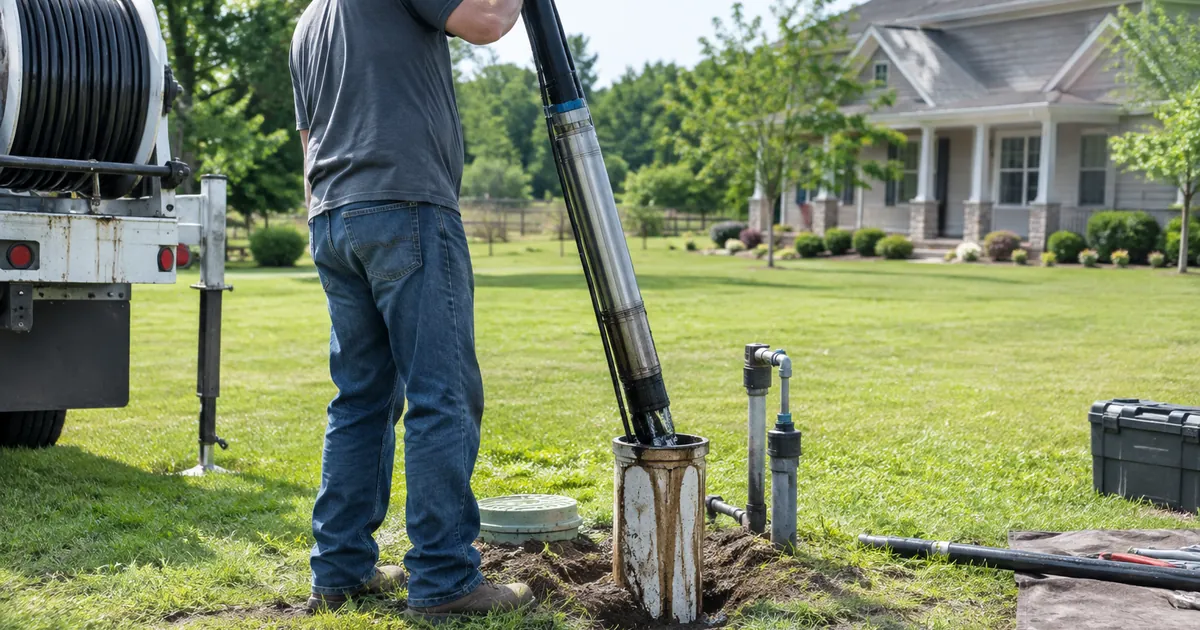
Submersible pumps are another story. Some pumps alone top 100 pounds, and with water-filled pipe and wire hanging below ground the assembly gets much heavier. Pros use a hoist truck to pull them. Drop the assembly and you may face an expensive fishing job or a damaged well. The work also involves high-voltage wiring near water and, in some states, a licensed installer. Hire a well contractor for any submersible replacement.
How to Save Money on Well Pump Replacement
- Rule out cheap fixes first. Check the breaker, pressure switch and tank air charge before approving a new pump.
- Don’t oversize. Ask the contractor to size the pump to your well yield and household demand rather than defaulting to more horsepower.
- Bundle the tank and switch if they’re aging, so you pay for one service call instead of two.
- Replace at the first warning signs. A planned replacement avoids emergency and weekend rates.
- Get two or three quotes from licensed well contractors, and confirm each one includes the same pipe, wire and warranty.
- Protect the new pump. A sediment filter and a properly charged pressure tank reduce wear. If you add treatment like a water softener, ask the installer how it affects flow.
- Review your home warranty or insurance. Some home warranties cover well pumps; standard homeowners policies usually exclude wear and tear.
Planning other water system work? Our guides to water heater replacement and sump pump installation cover the other pumps and tanks most well-water homes rely on.
Frequently Asked Questions
How much does it cost to replace a well pump?
Most homeowners pay $950 to $2,800 to replace a well pump, with a national average around $1,800. Shallow jet pumps can cost under $1,000, while deep submersible or constant-pressure systems can reach $5,000 or more.
How much does a submersible well pump replacement cost?
A submersible well pump typically costs $1,000 to $2,800 installed. Deep settings over 150 feet, new drop pipe and wire, or a constant-pressure system can push the total well past $3,000.
How long does a well pump last?
Most well pumps last 8 to 15 years, and around 15 years is common with good maintenance. Short-cycling from a failing pressure tank, sediment and frequent power surges can shorten that lifespan.
How do I know if my well pump is going bad?
Common signs include low or fluctuating water pressure, sputtering faucets, a pump that runs constantly or cycles on and off rapidly, higher electric bills and sediment in the water. Have a pro check the pressure switch and tank first, since they can cause the same symptoms.
Should I replace the pressure tank with the well pump?
If the tank is original to an older system or is waterlogged, replacing it at the same time often makes sense. A pressure tank typically costs $600 to $1,600 installed, and a failing tank makes the new pump cycle more often, which shortens its life.
Does homeowners insurance cover a well pump?
Standard policies usually exclude pumps that fail from age or wear. Damage from a covered event, such as a lightning strike, may be covered depending on your policy, and some home warranties include well pumps.