Siding Installation Cost by Material
Siding is priced per square foot of wall covered, installed. The material sets the baseline: vinyl and aluminum are the least expensive, fiber cement and engineered wood sit in the middle, and masonry costs the most. Prices below include materials and labor but not removal of the old siding. The last column shows a common project size of about 1,800 sq ft of wall area.
| Siding material | Installed per sq ft | 1,800 sq ft of wall | Best for |
|---|---|---|---|
| Vinyl (standard grade) | $4 – $7 | $7,200 – $12,600 | Lowest upkeep for the money |
| Vinyl (insulated or premium thickness) | $6 – $12 | $10,800 – $21,600 | Straighter walls, better impact resistance |
| Aluminum | $4 – $9 | $7,200 – $16,200 | Matching older aluminum homes, coastal areas |
| Engineered wood (LP SmartSide type) | $5 – $10 | $9,000 – $18,000 | Wood look at a lower price than cedar |
| Steel | $5 – $12 | $9,000 – $21,600 | Hail and fire resistance, modern looks |
| Fiber cement (Hardie board type) | $6 – $13 | $10,800 – $23,400 | Fire resistance, painted finish, long life |
| Wood lap or cedar shingles | $6 – $15 | $10,800 – $27,000 | Historic and high-end homes |
| Stucco | $7 – $14 | $12,600 – $25,200 | Dry climates, Southwest and Mediterranean styles |
| Brick veneer | $8 – $15 | $14,400 – $27,000 | Traditional masonry look |
| Manufactured stone veneer | $10 – $22 | $18,000 – $39,600 | Accent walls, foundations, entries |
Published ranges vary a lot between sources, especially for engineered wood, brick veneer, and stone, because some quotes include sheathing repairs and trim while others don’t. Treat the table as a guide to how materials compare, then confirm with local quotes.
Vinyl remains the most common choice for re-siding because it never needs paint and installs quickly. Our vinyl siding cost guide breaks down grades, thickness, and insulated panels in detail. Fiber cement costs more to install because the boards are heavy, dusty to cut, and need painting (most are sold prefinished), but they resist fire, rot, and woodpeckers far better.
Climate should steer the choice as much as price. In hail country, steel and thicker fiber cement hold up better than thin vinyl. In wildfire zones, many buyers and insurers favor noncombustible fiber cement, stucco, or masonry. In wet, humid regions, engineered wood and real wood need careful flashing and regular repainting, while vinyl and fiber cement shrug off moisture with less maintenance.
Siding Cost by Wall Area
Your siding area is not your home’s living area. Contractors measure the exterior walls: perimeter times wall height, plus the triangles at the gable ends, minus large openings like garage doors. A 2,000 sq ft two-story house commonly has somewhere between 1,800 and 2,500 sq ft of wall to cover. The table below uses standard vinyl and fiber cement with removal of one layer of old siding included.
| Siding area | Standard vinyl (with removal) | Fiber cement (with removal) |
|---|---|---|
| 1,000 sq ft | $4,700 – $9,000 | $6,700 – $15,000 |
| 1,500 sq ft | $7,050 – $13,500 | $10,050 – $22,500 |
| 2,000 sq ft | $9,400 – $18,000 | $13,400 – $30,000 |
| 2,500 sq ft | $11,750 – $22,500 | $16,750 – $37,500 |
| 3,000 sq ft | $14,100 – $27,000 | $20,100 – $45,000 |
Cost Breakdown: Materials vs. Labor
Labor usually accounts for 30% to 50% of a siding job. Installation labor on its own runs about $1.50 to $4.50 per sq ft, or $40 to $90 per hour, with fiber cement, stucco, and masonry at the top of that range. Beyond the panels and labor, a complete quote typically includes several line items:
| Item | Typical cost |
|---|---|
| Siding material (panels or boards, starter strip, corners, J-channel, fasteners) | 50% – 70% of the total |
| Installation labor | $1.50 – $4.50 per sq ft |
| Removal and disposal of old siding | $0.70 – $2.00 per sq ft ($1,000 – $2,500 for most homes) |
| House wrap (weather-resistant barrier) | $0.50 – $2.00 per sq ft |
| Rigid foam or insulation board under siding | $1.00 – $4.50 per sq ft |
| Window and door trim | $0.50 – $30 per linear ft, depending on material |
| Soffit / fascia | $6 – $30 / $7 – $22 per linear ft |
| Permit | $50 – $1,500, depending on the town |
Other Factors That Affect Siding Installation Cost
Home height and shape
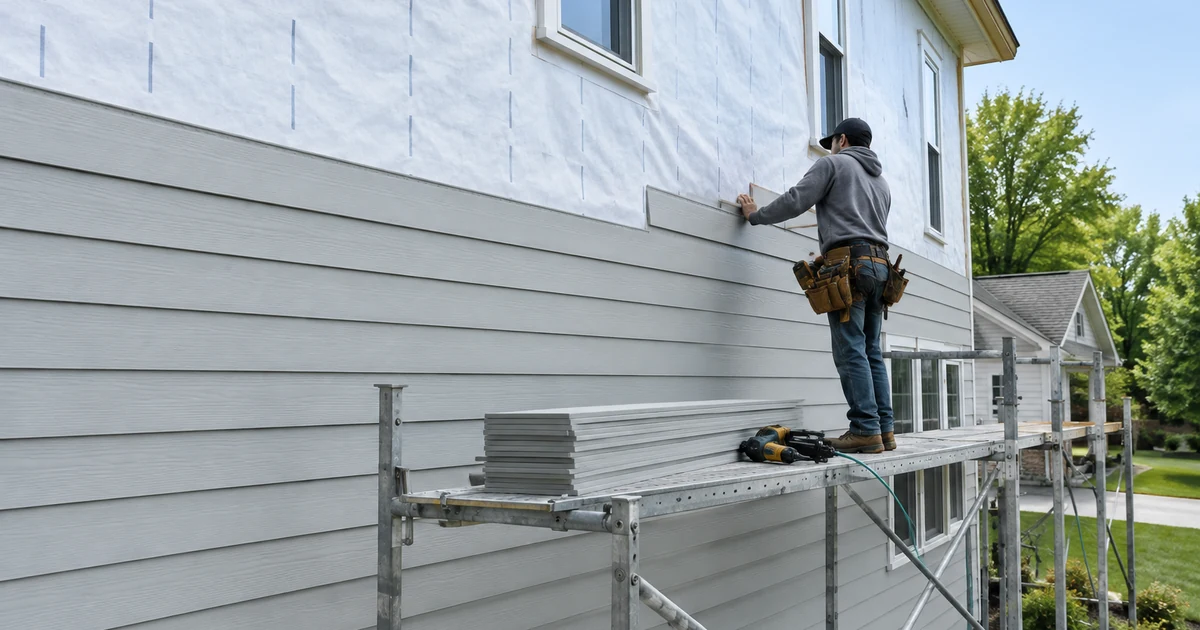
Two- and three-story walls need scaffolding or pump jacks, and every outside corner, bay window, and gable adds cutting and trim. A cut-up house can cost 10% to 25% more per square foot than a simple box of the same size.
Removing the old siding
Tearing off one layer of vinyl or wood is straightforward. Siding installed over another layer, or old cement-asbestos shingles, costs more: homes built before the 1980s sometimes have asbestos-containing siding that must be tested and handled under state and EPA rules, which adds abatement costs.
Sheathing and rot repairs
Once the old siding is off, crews often find soft sheathing around windows, doors, and at the bottom of walls. Budget a contingency for replacing damaged panels, and ask for a per-sheet price in the contract.
Trim, soffit, and fascia
Wrapping window casings, replacing soffit and fascia, and adding decorative trim can add several thousand dollars. They’re optional in some cases, but matching new siding with worn trim rarely looks right.
Painting
Primed wood and unfinished fiber cement need paint, usually $1 to $6 per sq ft. Prefinished boards cost more up front but save that second trade and hold their color longer.
Region and season
Labor rates in high-cost metros push prices well above national averages. Spring and summer are the busiest months for siding crews, so late fall or early spring can bring shorter waits in areas where the weather allows work.
Before you hire: get at least three written, itemized quotes from licensed and insured local pros. Prices for the same job often differ by 30% or more, and comparing line items is the fastest way to spot padding or missing work.
Signs You Need New Siding (and When to Repair Instead)
Siding usually needs replacing when damage is widespread, not isolated. Look for:
- Warped, buckled, or cracked panels across several walls
- Soft, rotted spots when you press on wood or composite siding
- Peeling paint inside the house on exterior walls, or stained drywall, which can point to water getting behind the siding
- Faded vinyl that looks chalky, or loose panels that rattle in the wind
- Rising energy bills on a home with no insulation under the siding
If the damage is limited to a few panels from a storm or a grill, a repair is usually the better value, typically $2 to $14 per sq ft for the affected section. Finding a color match for older vinyl can be difficult, so some homeowners replace one full wall and move the leftover original panels to patch the others.
DIY vs. Hiring a Siding Contractor
Vinyl siding is one of the more approachable exterior projects for an experienced DIYer on a one-story house, and doing it yourself saves the labor share of the bill. Panels must be hung loose enough to expand and contract, or they will buckle in the first hot week. Fiber cement is heavy, and cutting it releases silica dust that requires proper tools and respiratory protection. Stucco and masonry are specialist trades.
For multi-story homes, working on ladders and scaffolding is the biggest risk, and many manufacturer warranties require professional installation to stay valid. Most towns require a permit for full re-siding, and the contractor usually pulls it.
How to Save Money on Siding Installation
- Get three or more itemized quotes that list the product line, thickness, house wrap, trim, and removal separately.
- Compare mid-grade products. Standard-thickness vinyl or engineered wood often looks nearly identical to premium lines from the street at a lower price.
- Use premium materials where they matter. Put stone veneer on a front accent wall or foundation only, and use vinyl or fiber cement on the rest.
- Bundle exterior work. Replacing siding at the same time as windows or gutters avoids removing and reinstalling trim twice.
- Book outside peak season where your climate allows.
- Check local incentives, not the federal credit. The 25C home efficiency credit ended for work completed after December 31, 2025, so 2026 siding projects don’t qualify. Some utilities still offer rebates for adding wall insulation.
- Check your insurance after storms. Hail and wind damage to siding is often a covered peril.
Frequently Asked Questions
How much does it cost to side a 2,000 sq ft house?
A 2,000 sq ft two-story house typically has 1,800 to 2,500 sq ft of exterior wall. With standard vinyl and tear-off, that works out to roughly $8,500 to $22,500, with most jobs near $12,000 to $15,000. Fiber cement on the same house usually runs $12,000 to $37,500.
What is the cheapest siding to install?
Standard vinyl and aluminum are the least expensive, starting around $4 per sq ft installed. Builder-grade vinyl can be cheaper still, but it’s thinner and more prone to waviness and cracking.
Is fiber cement siding worth the extra cost?
Installed, fiber cement typically costs 50% to 80% more than standard vinyl, but it resists fire, rot, insects, and impact, and holds paint well. It’s often worth it in wildfire-prone or hail-prone areas, or when you want a painted wood look without wood maintenance.
Can new siding go over old siding?
Sometimes, but most contractors recommend removing it. Going over old siding hides rot and moisture problems, can leave walls uneven, and may conflict with manufacturer installation rules. Removal typically adds $0.70 to $2.00 per sq ft.
How long does siding installation take?
A crew can usually re-side an average home with vinyl in one to two weeks. Fiber cement, stucco, and masonry take longer, as do homes that need sheathing repairs or new trim.
Does new siding increase home value?
Yes, new siding is one of the exterior projects with the strongest cost recovery at resale, and it improves curb appeal and weather protection. The exact return depends on your market and the material you choose.