Tile Installation Cost by Tile Type
The tile itself sets the tone for the whole budget. Standard ceramic and porcelain are the most affordable to buy and the fastest to set. Natural stone needs sealing and more careful handling, and glass or small mosaics take far more labor per square foot. The prices below are for floor installation, including setting materials and labor, before tear-out.
| Tile type | Material (per sq ft) | Installed floor (per sq ft) | 120 sq ft floor |
|---|---|---|---|
| Ceramic | $2–$15 | $8.10–$18 | $970–$2,160 |
| Porcelain | $2–$15 | $9–$20 | $1,080–$2,400 |
| Natural stone (marble, slate, travertine) | $5–$45 | $13.50–$30 | $1,620–$3,600 |
| Glass or mosaic | $10–$60+ | $18–$40 | $2,160–$4,800 |
National cost guides put the average tile job at about $2,000, with most projects between roughly $800 and $4,500. A 120 sq ft kitchen or bathroom floor in standard porcelain, including removal of old vinyl or carpet, typically lands close to that average. Some guides quote higher installed prices, $12 to $50 per sq ft, because they fold in designer tile and complex layouts, so treat any single figure as a midpoint rather than a quote.
Porcelain costs about the same as ceramic at the entry level but is denser and absorbs less water, which makes it the usual pick for floors, showers, and entryways. Wood-look porcelain planks are a popular alternative to hardwood in kitchens and baths and typically cost $3 to $12 per sq ft for the tile alone.
Cost by location
Where the tile goes changes both the size of the job and the labor rate. Walls and backsplashes take more time per square foot than floors, and showers add waterproofing and plumbing trim.
| Project | Typical installed cost | What drives it |
|---|---|---|
| Bathroom floor | $300–$2,400 | Small area, many cuts around the toilet and vanity |
| Kitchen floor | $800–$3,000+ | Area, cabinets and appliances to work around |
| Kitchen backsplash | $480–$1,500 | Outlets, window returns, tile size |
| Bathroom walls | $780–$2,600 | Height of tile, trim pieces |
| Tub surround or shower walls | $1,800–$5,000 | Waterproofing, niches, glass or stone tile |
Backsplash and countertop tile labor often runs $20 to $35 per sq ft, versus roughly $5 to $14 for a straightforward floor, because every piece is set on a vertical surface and cut around outlets and cabinets.
Cost Breakdown: Materials vs. Labor
Labor is usually the larger share of a tile job. Many tile setters charge $60 to $120 per hour, or $5 to $14 per sq ft for floors. For a 120 sq ft porcelain floor:
| Item | Unit cost | 120 sq ft project |
|---|---|---|
| Porcelain tile (132 sq ft incl. 10% waste) | $2–$6 per sq ft | $260–$790 |
| Thinset, grout, spacers, trim pieces | Varies by tile and joints | $100–$260 |
| Installation labor (prep, set, grout) | $6–$11.25 per sq ft | $720–$1,350 |
| Remove and dispose of vinyl or carpet | $1–$3.50 per sq ft | $120–$420 |
| Total | $1,200–$2,820 |
Not included above: cement backer board or an uncoupling membrane, which many installers require over wood subfloors, and repairs to the subfloor itself. Both are common add-ons in older homes.
Other Factors That Affect the Price
Removing old tile
Tearing out existing tile is loud, dusty, and slow, and it often damages the backer underneath. Expect about $2 to $7 per sq ft for removal and disposal, compared with $1 to $3.50 for most other floor coverings.
Subfloor and backer board
Tile cracks if the floor flexes. Installers may add cement board or a membrane over plywood, reinforce a bouncy floor, or pour self-leveler. Subfloor repair is priced per job, and guides report ranges from a few dollars to well over $10 per sq ft depending on how much structure needs work.
Tile size and layout
Large-format tile (15 inches and larger on one side) needs a very flat surface and often a leveling system, which adds labor. Small mosaics mean more grout lines and slower setting. Diagonal, herringbone, and mixed patterns increase both cutting time and waste.
Showers and waterproofing
Shower walls and floors need a waterproof membrane behind or under the tile. Waterproofing alone commonly adds $450 to $750, and features like niches, benches, and curbless entries add more. If the valve or drain moves, plumbing work comes on top of the tile bill.
Trim, edges, and transitions
Bullnose tile, metal edge profiles, and threshold transitions to other floors are small line items that add up, especially on backsplashes and tub surrounds with many exposed edges.
Heated floors
Electric radiant mats go under the tile in the mortar bed and need a dedicated circuit and thermostat, so an electrician is usually part of the job. They add both material and labor cost, and they are much cheaper to add during a tile install than later.
Region and access
Labor rates follow local costs of living. Upper-floor bathrooms with tight access and older homes with out-of-square walls also take longer. Use the region selector in the calculator for a rough adjustment.
Before you hire: get at least three written, itemized quotes from licensed and insured local pros. Prices for the same job often differ by 30% or more, and comparing line items is the fastest way to spot padding or missing work.
Repair vs. Replace Existing Tile
Not every tired tile floor needs to come out. Tile repairs and maintenance, such as swapping a few cracked pieces or regrouting, commonly run about $250 to $650, far less than a new floor.
Repair or regrout when:
- Only a handful of tiles are cracked or chipped and you have matching spares.
- The grout is stained, crumbling, or missing, but the tiles themselves are solid.
- The floor looks dated but is structurally sound; a deep clean and a new grout color can change the look.
Replace when:
- Many tiles sound hollow when tapped, a sign they have lost their bond to the mortar.
- Cracks run in lines across several tiles, which usually points to movement in the subfloor.
- Shower tile has soft spots, loose tiles, or stains on the ceiling below, which suggest failed waterproofing.
- You are remodeling anyway and the layout, height, or style needs to change.
Cracking that returns after repairs is a subfloor problem, not a tile problem. Fixing the structure first protects the money you spend on new tile.
DIY vs. Hiring a Pro
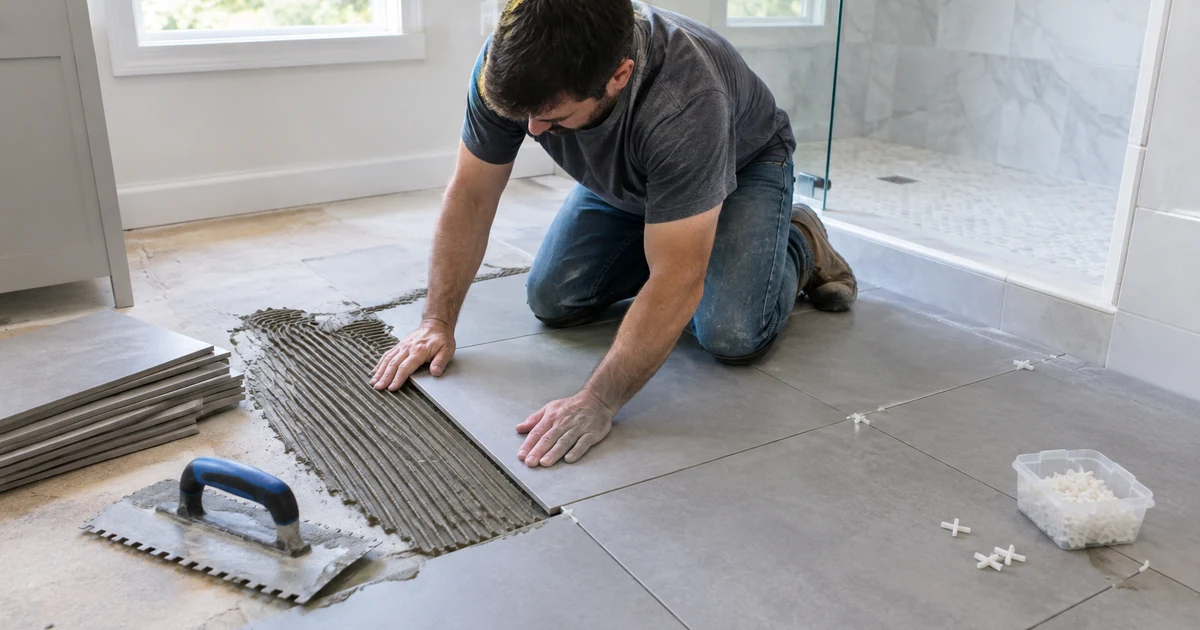
A small floor or a backsplash is a realistic DIY project if you are patient. You’ll need a wet saw or manual cutter, notched trowels, a level, and time: tile work is done in stages, with drying time between setting and grouting. Laying out the room so cut pieces are balanced at the edges is what separates a professional-looking floor from an amateur one.
Leave showers and tub surrounds to a pro unless you have done them before. A waterproofing mistake stays hidden until water has soaked into the framing, and repairs mean tearing the tile out. Large-format tile is also hard to set flat without experience.
Tiling on its own rarely needs a permit. If the job includes moving plumbing, adding a heated floor circuit, or rebuilding a shower, check with your local building department. Tile work is often one piece of a larger project; see bathroom remodel cost and kitchen remodel cost for full-project budgets, or vinyl plank flooring installation cost for a lower-cost waterproof floor.
How to Save Money on Tile Installation
- Choose standard porcelain in common sizes. 12×24 and 12×12 tiles are widely stocked, cheap, and quick to install.
- Keep the pattern simple. A straight or offset lay costs less labor and wastes fewer tiles than diagonal or herringbone.
- Do the demolition yourself if it is safe. Removing carpet or vinyl is easy; old tile is harder and may sit on backer that should be inspected.
- Put expensive tile where it shows. Use a feature tile on a shower wall or backsplash and a budget tile on the floor.
- Bundle projects. Doing a bathroom floor and backsplash in one visit spreads out the setter’s trip and setup time.
- Ask about remnants and overstock. Tile shops often discount discontinued lots that cover a small bathroom.
- Compare three itemized quotes. Make sure each includes removal, backer board or membrane, trim pieces, and grout sealing.
Frequently Asked Questions
How much does it cost to tile a 10×10 floor?
A 10×10 floor is 100 sq ft. With standard porcelain at $9 to $20 per sq ft installed, expect about $900 to $2,000, plus removal of the old floor and any backer board or subfloor repairs.
What is the labor cost to install tile per square foot?
Floor tile labor usually runs about $5 to $14 per sq ft, and backsplash or wall tile often $20 to $35 per sq ft. Many setters also bill hourly, commonly $60 to $120 per hour, with a minimum for small jobs.
Why is tile installation so expensive?
Tile is labor-heavy. The surface has to be flat and rigid, each piece is set in mortar, cuts are made on a wet saw, and grout goes in on a separate day. Showers add waterproofing, which is critical and time-consuming.
Is porcelain more expensive to install than ceramic?
Only slightly. Porcelain is harder and denser, so it takes a bit longer to cut, and larger porcelain formats need extra prep. At the entry level, the tile prices overlap.
How much does it cost to tile a shower?
Tiling shower walls or a tub surround typically costs $1,800 to $5,000. Waterproofing alone often adds $450 to $750, and niches, benches, stone tile, or plumbing changes push the total higher.
How long does tile installation take?
A small bathroom floor is often done in two to three days, since mortar needs time to cure before grouting. Larger floors, showers, and jobs that require removing old tile or repairing the subfloor take longer.