Vinyl Plank Flooring Installation Cost by Grade
Luxury vinyl plank (LVP) ranges from thin, flexible planks meant for rentals to thick rigid-core boards with a heavy wear layer and attached pad. The wear layer, measured in mils (thousandths of an inch), protects the printed design and is the best single indicator of how long the floor will look new. Labor costs about the same for every grade of click-lock plank, so the product you choose drives most of the difference.
| Grade | Typical specs | Installed (per sq ft) | 400 sq ft installed |
|---|---|---|---|
| Budget | Thin flexible or basic rigid core, 6–12 mil wear layer | $2.80–$6.30 | $1,120–$2,520 |
| Mid-grade | Rigid core (SPC or WPC), 12–20 mil wear layer | $4.00–$9.00 | $1,600–$3,600 |
| Premium | Thick rigid core, 20 mil+ wear layer, attached pad, realistic texture | $5.60–$12.60 | $2,240–$5,040 |
These prices include planks, trim, and click-lock installation labor but not removal of the old floor. National cost guides report most vinyl flooring jobs between about $1,000 and $4,500, with averages in the $1,600 to $2,600 range depending on project size. A 400 sq ft mid-grade job including carpet removal typically lands near $2,900. Guides quote installed prices from $3 to $16 per sq ft, and most projects fall in the middle of that span.
Rigid core vs. flexible vinyl
Rigid-core planks come in two main types. SPC (stone polymer composite) has a dense limestone-based core that resists dents and temperature swings, which makes it the default in kitchens and sunrooms. WPC (wood polymer composite) has a foamed core that feels softer and quieter underfoot and usually costs more. Flexible LVP without a rigid core is cheaper and often glued down, but it shows subfloor bumps more easily.
| Core type | Material (per sq ft) | Best for |
|---|---|---|
| Flexible LVP (glue-down or thin click) | $1.50–$4 | Rentals, small baths, very flat subfloors |
| SPC rigid core | $2–$7 | Kitchens, basements, high-traffic areas |
| WPC rigid core | $4–$12 | Bedrooms and living areas where comfort and quiet matter |
Cost by room size
Using mid-grade LVP at $4 to $9 per sq ft installed, before removal:
| Space | Approx. area | Installed cost |
|---|---|---|
| Small bathroom | 50 sq ft | $200–$450 |
| Kitchen | 150 sq ft | $600–$1,350 |
| 12×14 bedroom | 168 sq ft | $670–$1,510 |
| Living room | 300 sq ft | $1,200–$2,700 |
| Finished basement | 800 sq ft | $3,200–$7,200 |
Small rooms such as half baths and laundry rooms often cost more per square foot because of job minimums and the number of cuts around toilets, doors, and cabinets.
Cost Breakdown: Materials vs. Labor
Installation labor for click-lock vinyl plank typically runs about $1.50 to $6 per sq ft, with most straightforward rooms toward the lower half. For a 400 sq ft mid-grade job:
| Item | Unit cost | 400 sq ft project |
|---|---|---|
| Vinyl planks (440 sq ft incl. 10% waste) | $1.75–$4.00 per sq ft | $770–$1,760 |
| Transitions, shoe molding, underlayment if needed | Varies by layout | $90–$240 |
| Installation labor (floating click-lock) | $1.85–$4.00 per sq ft | $740–$1,600 |
| Remove and dispose of old carpet | $0.50–$1.50 per sq ft | $200–$600 |
| Total | $1,800–$4,200 |
Glue-down vinyl costs a similar amount per square foot but takes longer to install and much longer to remove later. Peel-and-stick planks are the cheapest option, but they are rarely used for whole rooms by professional installers.
Other Factors That Affect the Price
Removing the old floor
Carpet removal is cheap, roughly $0.50 to $1.50 per sq ft with disposal. Removing glued vinyl, old laminate, or tile costs more and may leave adhesive or mortar that must be ground off. In some cases LVP can float directly over flat sheet vinyl or tile, which skips demolition entirely.
Subfloor flatness and repairs
Rigid-core vinyl is more forgiving than thin vinyl, but most manufacturers still require a floor that is flat within a tight tolerance, commonly around 3/16 inch over 10 feet. Leveling compound, sanding seams, or replacing damaged subfloor adds cost; subfloor repairs often run $440 to $1,200, and full replacement about $2.20 to $4.75 per sq ft.
Concrete slabs and basements
Vinyl plank is a favorite for basements because the planks do not swell with moisture. Some installers still add a vapor barrier over concrete, which Fixr estimates at $100 to $150 per room, and a sound-reducing pad may be required in condos.
Kitchens and heavy fixed objects
Floating floors need room to expand, so most manufacturers say not to pin them under kitchen cabinets or islands. Installers work around cabinets and appliances, and pulling and resetting a dishwasher or refrigerator line can be an added charge.
Trim, transitions, and stairs
Reducers, T-molding at doorways, and quarter round along baseboards add material and labor. Baseboard pieces cost about $5.50 to $11 each. Stairs require stair nose pieces and are usually priced per step, well above the per-foot price of flat floor.
Furniture moving and region
Moving furniture adds roughly $25 to $75 per room. Labor rates are higher in expensive metro areas; use the region selector in the calculator for a rough adjustment.
Before you hire: get at least three written, itemized quotes from licensed and insured local pros. Prices for the same job often differ by 30% or more, and comparing line items is the fastest way to spot padding or missing work.
Repair vs. Replace Vinyl Plank
One advantage of click-lock vinyl plank is that damaged boards can be swapped out. Vinyl floor repairs typically cost about $2 to $9 per sq ft, far less than replacing a whole room, as long as you have matching planks on hand.
- Repair a few gouged, burned, or stained planks near a wall or in an open area; a pro can unclick rows from the nearest wall, or cut out a single plank and glue in a replacement.
- Repair peaking or separating joints caused by a floor pinned under a cabinet or trim, by freeing the edge and restoring the expansion gap.
- Replace when the wear layer is worn through across traffic paths, when the style is discontinued and patches would stand out, or when a leak has left mold or damage in the subfloor below.
Keep a box of leftover planks after any install. Colors and textures are discontinued often, and a matched spare turns a big repair into a small one.
DIY vs. Hiring a Pro
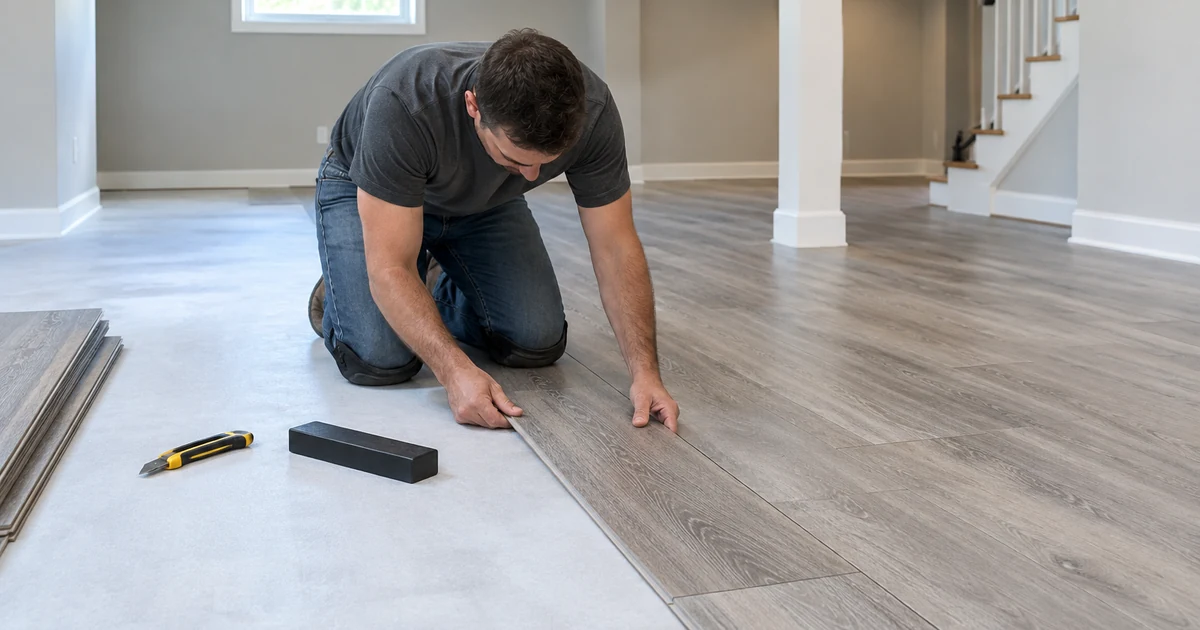
Click-lock vinyl plank is among the easiest floors to install yourself. The planks score and snap with a utility knife, need no glue or nails, and tolerate small mistakes. A capable DIYer can do a bedroom in a day and save $740 to $1,600 in labor on a 400 sq ft project.
The tricky parts are prep and finishing: getting the subfloor flat, undercutting door jambs so planks slide underneath, leaving an expansion gap, and making clean transitions to other floors. Skipping a manufacturer’s flatness or acclimation instructions is the most common way DIY installs lose warranty coverage.
Hire a pro for large open areas where long runs must stay straight, for stairs, and when the subfloor needs leveling. Flooring swaps generally do not require a permit, but condo associations may specify sound-rated underlayment.
If you are comparing options, laminate flooring installation cost is similar and sometimes a little cheaper, but it is less forgiving of water. For bathrooms and entries that will see standing water, tile installation costs more but lasts longer. Hardwood floor installation is the premium option for main living areas.
How to Save Money on Vinyl Plank Flooring Installation
- Match the wear layer to the room. A 12 mil wear layer is enough for most bedrooms; save 20 mil planks for kitchens, entries, and homes with large dogs.
- Buy planks with an attached pad. It removes a separate underlayment purchase and labor step.
- Install over existing flat flooring. Ask whether your sheet vinyl or tile can stay in place to save demolition costs.
- Tear out carpet yourself. Removing carpet, pad, and tack strips before the crew arrives can save $200 to $600 on a 400 sq ft room.
- Supply your own material. Some installers offer labor-only pricing if you buy the planks during a retailer sale.
- Do several rooms at once. One continuous floor needs fewer transitions and avoids repeated job minimums.
- Get at least three itemized bids. Compare removal, trim, furniture moving, and subfloor prep line by line.
Frequently Asked Questions
How much does it cost to install vinyl plank flooring in a 12×12 room?
A 12×12 room is 144 sq ft. At $4 to $9 per sq ft installed for mid-grade LVP, expect roughly $580 to $1,300, plus removal of the old floor and any minimum charge.
What is the labor cost to install luxury vinyl plank?
Labor for click-lock LVP generally runs about $1.50 to $6 per sq ft, with simple rooms near the low end. Stairs, many doorways, glue-down installs, and subfloor leveling raise the labor price.
Is vinyl plank cheaper than laminate?
They are close. Laminate material often starts slightly lower, while vinyl plank costs a bit more but is waterproof. Installation labor for both click-lock floors is similar.
Can vinyl plank be installed over tile?
Often, yes, if the tile is solidly bonded and flat. Deep or wide grout lines may need to be filled with a patching compound first so they do not show through thinner planks.
What wear layer thickness should I choose?
For most homes, 12 mil is fine in bedrooms and 20 mil is a good choice for kitchens, entries, and homes with pets. Thicker wear layers cost more but resist scratches and scuffs longer.
How long does it take to install vinyl plank flooring?
A pro crew can typically install several hundred square feet of click-lock LVP in a day after the old floor is removed. Subfloor leveling, stairs, and kitchens with many cuts add time.