Stump Grinding Cost by Diameter
Most stump grinding companies price by the inch of diameter, measured across the widest part of the stump at ground level. The common rate is $2 to $5 per inch, and some go up to about $6 for hardwood or hard-to-reach stumps. Nearly every company also sets a minimum charge, usually around $100, to cover travel and unloading the grinder.
| Stump diameter | Per-inch cost ($2 – $5/in) | What you will likely pay (incl. minimum) | Typical tree |
|---|---|---|---|
| 6 inches | $12 – $30 | $100 – $190 (minimum fee applies) | Small ornamental or shrub-sized tree |
| 12 inches | $24 – $60 | $100 – $220 | Young maple, fruit tree |
| 18 inches | $36 – $90 | $120 – $250 | Mid-sized pine or cedar |
| 24 inches | $48 – $120 | $130 – $280 | Mature shade tree |
| 36 inches | $72 – $180 | $150 – $350 | Large oak or maple |
| 48 inches and up | $96 – $240+ | $175 – $400+ | Very old hardwoods |
The per-inch figure alone rarely tells the whole story on smaller stumps, because the minimum fee and trip charge dominate. That is why a single 24-inch stump usually costs about $200 all in, even though the per-inch math comes to less. Extra-large stumps with big root flares are often priced individually at $300 to $800.
Cost for multiple stumps
Once the grinder is on site, each additional stump is cheap. Many companies charge full price for the first stump and $30 to $70 for each additional stump of similar size, or simply apply the per-inch rate to the total diameter of all stumps.
| Number of stumps (about 24 in each) | Typical total | Average per stump |
|---|---|---|
| 1 | $130 – $280 | $130 – $280 |
| 2 | $170 – $360 | $85 – $180 |
| 3 | $210 – $440 | $70 – $147 |
| 5 | $290 – $600 | $58 – $120 |
| 10 | $490 – $1,000 | $49 – $100 |
For large lots or land clearing with dozens of stumps, companies may switch to hourly pricing ($100 to $200 per hour) or a day rate ($800 to $1,600).
Cost Breakdown: Labor, Equipment, and Cleanup
Stump grinding is nearly all equipment time. A typical invoice breaks down like this:
- Trip and minimum charge: $80 to $160, covering travel, unloading, and setup.
- Grinding: $2 to $5 per inch of diameter, or $100 to $200 per hour of machine and operator time.
- Debris removal: grinding leaves a mound of wood chips and soil roughly twice the stump’s volume. Hauling it away costs $50 to $200 total, or about $2 to $4 per inch of diameter.
- Surface root grinding: $100 to $200 per hour for chasing large roots that run across the lawn.
- Backfill and topsoil: some companies fill the hole with topsoil for a small fee; others leave it to you.
- Permits: rarely needed for grinding alone, but some areas charge $90 to $500 when stump work is tied to a permitted tree removal.
Other Factors That Affect Stump Grinding Prices
Wood type and age
Dense hardwoods like oak and hickory take longer to grind than pine or palm. A fresh stump is harder than one that has been rotting for several years, which is why some companies charge more for recently cut hardwoods.
Root flare and spread
Stumps are measured at the widest point, which for many species includes buttress roots flaring out at ground level. A tree with a 20-inch trunk can leave a 30-inch stump once the flare is included.
Grinding depth
Standard grinding goes about 4 to 6 inches below grade, enough to lay sod or seed over the spot. If you want to plant a new tree or build a patio or fence in the same place, ask for deeper grinding, typically 12 inches or more, and expect to pay more.
Access and terrain
Walk-behind grinders fit through a standard 36-inch gate, but larger tow-behind machines do not. Stumps on slopes, against foundations, next to fences, or surrounded by rocks slow the job and can raise the price by 20% or more.
Buried utilities
Grinder teeth reach below grade, so utility lines must be located first. Calling 811 before any digging is free and required in most states; reputable grinding companies arrange this themselves.
Stumps from an old removal vs. a same-day job
A stump left from a removal years ago may be partly rotted, overgrown with weeds, or buried under mulch and landscape fabric. Rotted wood grinds faster, but hidden rocks, metal edging, and old fencing wire damage grinder teeth, so crews may charge extra or ask you to clear the area first. When grinding is done the same day the tree comes down, the stump is easy to find and measure and the crew is already set up.
Season
Some companies discount slower months. Winter scheduling can save up to about 20% compared with the spring and summer rush.
Before you hire: get at least three written, itemized quotes from licensed and insured local pros. Prices for the same job often differ by 30% or more, and comparing line items is the fastest way to spot padding or missing work.
Stump Grinding vs. Stump Removal
Grinding and removal are not the same job. Grinding chews the stump down below the surface and leaves the root system to decay in place. Full removal pulls out the stump and main roots, leaving a large hole to backfill.
| Method | Typical cost per stump | Best when |
|---|---|---|
| Stump grinding | $100 – $400 | You want lawn, sod, or mulch over the spot |
| Full removal (digging / extraction) | $80 – $190 for small stumps dug by hand; large stumps need an excavator and cost more | You plan to build, pour concrete, or dig a foundation there |
| Chemical rotting | $100 – $200 if hired out, less DIY | You can wait months to a year or more |
Grinding is the most common and usually the cheapest way to get a stump out of the way quickly. If you are having a tree taken down anyway, ask for grinding in the same quote; our tree removal cost guide covers what the removal itself runs.
DIY vs. Hiring a Pro
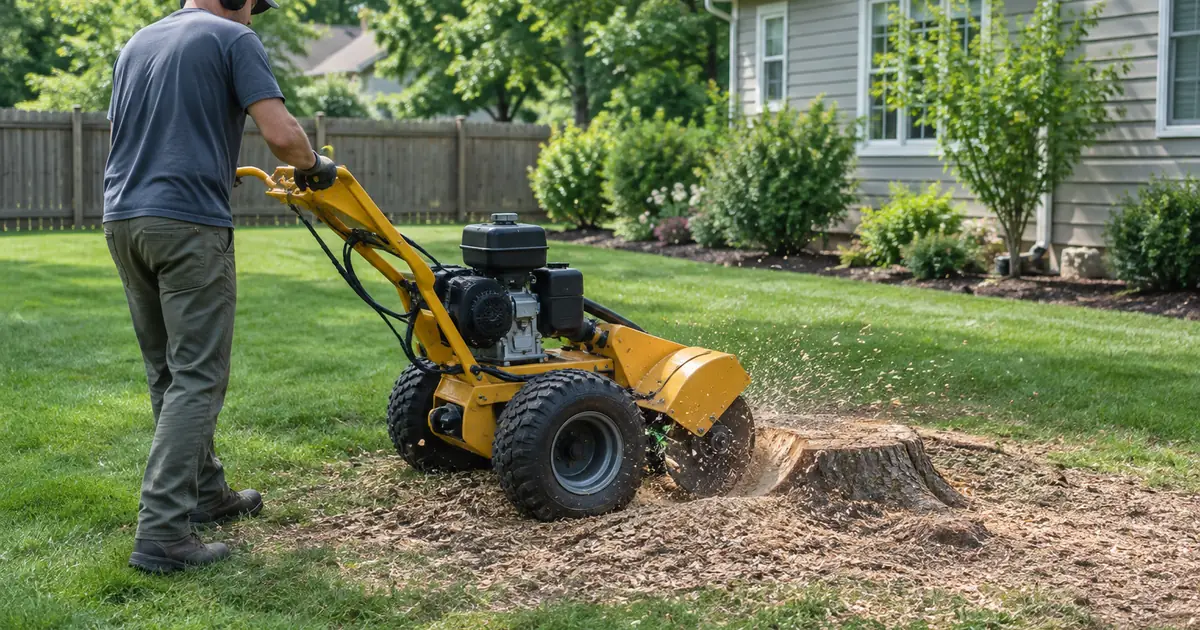
Renting a stump grinder costs about $100 to $400 per day, and some estimates put a full DIY setup, including rental, delivery, safety gear, and supplies, at $445 to $585. For a single small stump, hiring out is usually cheaper once you count the rental, the truck to haul a machine that can weigh several hundred pounds, and your time.
DIY starts to make sense when you have several small to medium stumps and experience with heavy equipment. Rental machines are less powerful than commercial grinders, so large hardwood stumps take much longer. Wear eye and ear protection, keep people and pets well clear because chips and rocks fly, and have utilities marked before you start.
How to Save Money on Stump Grinding
- Group your stumps. Grind every stump on the property in one visit, since additional stumps cost a fraction of the first.
- Coordinate with neighbors. Some companies offer lower rates when they can do several nearby jobs on the same trip.
- Bundle with tree removal. The crew is already on site, so the add-on price is often lower than a separate visit.
- Handle cleanup yourself. Spread the grindings as mulch or haul them off yourself to skip the $50 to $200 debris fee. Grindings used as mulch tie up nitrogen as they break down, so keep them away from vegetable beds.
- Clear access. Remove rocks, decorations, and fence panels around the stump so the grinder can work without delays.
- Ask for per-inch pricing in writing. Measuring each stump yourself makes it easy to compare quotes.
- Schedule in the off-season. Winter work can be noticeably cheaper.
Once the stump is gone, you can top the area with soil and patch it with new sod or use the space for a fence line or garden bed.
Frequently Asked Questions
How much does it cost to grind a 12-inch stump?
At $2 to $5 per inch, the grinding itself is only $24 to $60, so most companies’ minimum charge applies. Expect to pay around $100 to $170 for a single 12-inch stump.
How is stump diameter measured?
Measure straight across the widest part of the stump at ground level, including any flared roots. Some companies measure at a set height above ground instead, so ask how they measure before you compare quotes.
Is stump grinding cheaper than stump removal?
Usually. Grinding typically runs $100 to $400 per stump, while digging out the stump and main roots takes more labor and leaves a hole to fill. Full removal is worth it mainly when you plan to build or pour concrete over the spot.
How deep does stump grinding go?
Standard grinding goes about 4 to 6 inches below ground level, enough to cover with soil and grow grass. Deeper grinding, around 12 inches or more, costs extra and is worth requesting if you plan to replant or build there.
What happens to the roots after grinding?
The root system stays in the ground and decays over several years. Some species can send up sprouts from the remaining roots for a season or two; mowing or cutting them back usually ends it.
Does stump grinding include cleanup?
Not always. Many quotes leave the chip-and-soil mound in the hole. Haul-away typically adds $50 to $200, or you can use the grindings as mulch around trees and shrubs.