Garage Door Opener Installation Cost by Drive Type
The drive type is the main thing that sets the price. It determines how the motor moves the door, how loud the opener is, and how much the unit costs before labor. Here are typical prices for the unit alone and for a professionally installed opener.
| Drive type | Unit only | Installed (typical) | Best for |
|---|---|---|---|
| Chain drive | $150–$250 | $300–$550 | Detached garages, tight budgets |
| Belt drive | $160–$450 | $340–$650 | Garages under or next to bedrooms |
| Screw drive | $150–$500 | $350–$650 | Low-maintenance, moderate noise |
| Direct drive | $280–$500 | $400–$800 | Very quiet, few moving parts |
| Wall-mount (jackshaft) | $500–$750 | $650–$1,100 | High or cathedral garage ceilings |
Most homeowners pay about $500 for a mid-range belt-drive opener with professional installation and removal of the old unit. Chain drives are the cheapest and toughest but also the loudest. Belt drives cost a bit more and run much quieter, which is why they are the most popular choice for attached garages.
Wall-mount jackshaft openers sit beside the door on the torsion bar instead of hanging from the ceiling. They free up overhead space for storage or a car lift, but they cost the most and only work with torsion-spring doors.
Cost Breakdown: Materials vs. Labor
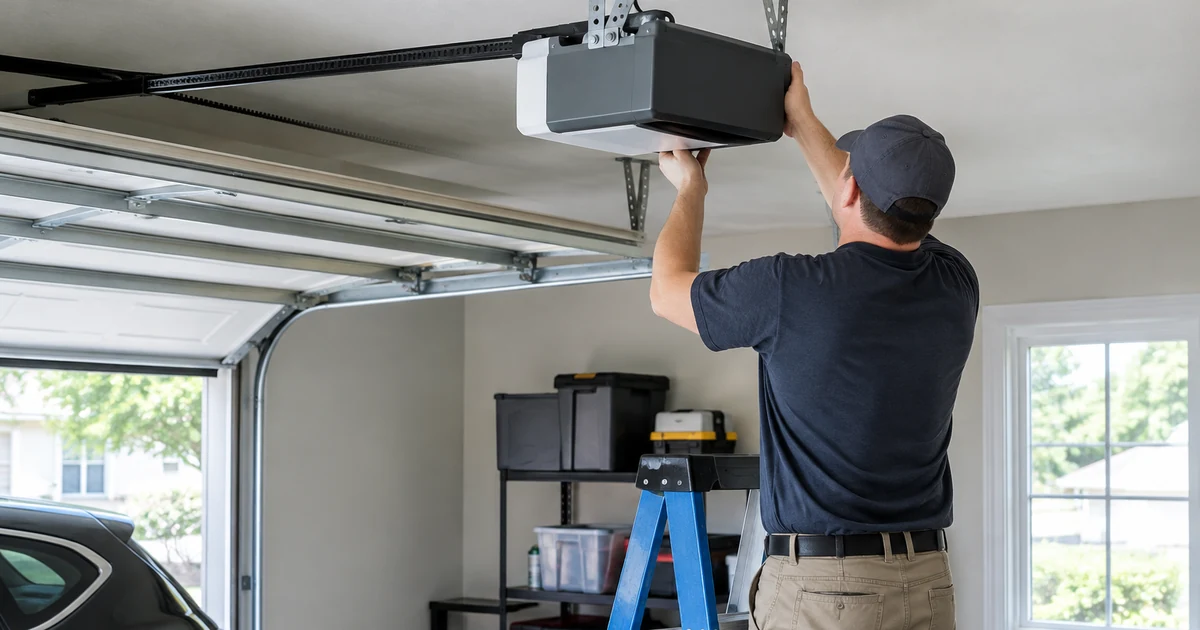
A standard replacement, where an outlet and wiring are already in place, is a half-day job or less for a pro. Labor is usually charged as a flat install fee rather than by the hour.
| Cost item | Typical price |
|---|---|
| Opener unit (with rail, 1–2 remotes, safety sensors) | $150–$500 |
| Professional installation labor | $150–$400 |
| Extra remote | $20–$50 each |
| Wireless keypad | $15–$70 |
| Rail extension kit (8-ft doors) | $45–$100 |
| Battery backup | $50–$150 |
| New ceiling outlet / electrical work | $150–$400 |
Home improvement stores often advertise installation for a flat fee when you buy the opener from them. That can be a good deal for a straight swap, but extras such as a new outlet, rail extension, or haul-away may cost more.
Other Factors That Affect the Price
Horsepower
Most single-car and standard double doors are fine with a 1/2 HP opener. Heavy wood, insulated, or oversized doors do better with 3/4 HP or higher. Moving from a 1/2 HP to a 3/4 HP or 1+ HP model typically adds $100–$250 to the unit price.
Smart and convenience features
Many new openers include Wi-Fi so you can open and monitor the door from a phone app. Built-in cameras, automatic locks, and in-garage delivery features push prices higher. Budget roughly $100–$450 more for a fully featured smart model compared with a basic unit.
Battery backup
A battery backup keeps the door working during a power outage, which matters if the garage is your main entry. California law has required battery backup on new residential openers sold or installed there since 2019. Elsewhere it is optional and adds about $50–$150.
Door height and weight
Standard rails fit a 7-foot-tall door. An 8-foot door needs a rail extension kit, and a very heavy door needs a stronger motor. If the door is hard to lift by hand, the springs need attention before any opener is installed. A new opener will not fix a door that is out of balance.
Electrical work
Openers plug into a ceiling outlet near the motor. If there is no outlet, an electrician will need to add one, which typically costs $150–$400 depending on the distance to the nearest circuit and your local code. Some areas require a permit for new wiring.
Removing the old opener
Most installers remove and haul away the old opener as part of the job, sometimes for a small fee. If you are adding an opener to a manual door for the first time, you will not pay for removal, but the installer may need to add mounting brackets or reinforce the ceiling.
Region
Installation labor costs more in high-cost metro areas than in smaller towns. Getting quotes from a local garage door company and a big-box store is the fastest way to see what is normal where you live.
Garage Door Opener Cost by Horsepower
Horsepower affects both the unit price and how easily the opener lifts your door. Many newer DC-motor openers list lifting force in newtons or as an HP equivalent instead of true horsepower, so compare the rated door size and weight rather than the label alone.
| Motor size | Unit price | Best for |
|---|---|---|
| 1/3 HP | $80–$100 | Light single doors (mostly older or basic models) |
| 1/2 HP | $100–$150 | Most standard single and double steel doors |
| 3/4 HP | $250–$350 | Heavier insulated or wood doors, faster operation |
| 1+ HP | $300–$400 | Heavy, oversized, or custom doors |
Bigger is not automatically better. A properly balanced door is lifted mostly by its springs, so the motor only guides it. A more powerful opener will not make up for weak springs, and it can mask a problem that should be fixed.
Features Worth Paying For
- Belt drive for any garage attached to the house or under a bedroom. The noise difference compared with a chain drive is noticeable.
- DC motor with soft start and stop, which reduces wear on the door and opener and runs more quietly.
- Battery backup if you lose power often or the garage is your main entrance.
- Wi-Fi control so you can check whether the door is closed and shut it from your phone.
- A wireless keypad, which lets family members get in without a remote or key.
Features like built-in cameras and in-garage delivery can be useful, but they often involve subscriptions. Price them over several years before deciding.
Before you hire: get at least three written, itemized quotes from licensed and insured local pros. Prices for the same job often differ by 30% or more, and comparing line items is the fastest way to spot padding or missing work.
Repair vs. Replace Your Garage Door Opener
Openers generally last 10–15 years. Repairing a gear, sensor, or circuit board on a newer unit is usually worth it. Opener repairs typically run $100–$350, so paying that for a unit that is 12 or more years old often makes less sense than replacing it.
Replacement makes sense when:
- The opener is 10–15+ years old and needs a major part such as a motor or logic board.
- It lacks photo-eye safety sensors. Federal safety rules have required reversing sensors on openers made since 1993.
- It uses an old fixed-code remote that is easy to copy. Newer rolling-code remotes are more secure.
- It is too loud for a garage attached to living space.
- You want smart features or a battery backup.
Before blaming the opener, make sure the door itself works. Broken springs, frayed cables, or a door off its track can make any opener struggle. Our guides to garage door spring replacement cost and garage door repair cost cover those problems.
DIY vs. Hiring a Pro
Garage door opener installation is one of the more manageable DIY projects if the door is balanced and an outlet is already in place. Most openers come with detailed instructions, and a handy homeowner can install one in 4–6 hours with basic tools and a helper. DIY saves roughly $150–$400 in labor.
Hire a pro if you need new electrical work, a wall-mount jackshaft opener, a heavy or custom door, or if the springs or cables look worn. Never adjust or remove torsion springs yourself while installing an opener. Also test the safety reversal feature after installation: the door should reverse when it contacts an object on the floor and when the sensor beam is blocked.
How to Save Money on Garage Door Opener Installation
- Pick the right drive type. A chain drive is perfectly fine for a detached garage. Pay for a quiet belt drive only where noise matters.
- Do not overbuy horsepower. A 1/2 HP opener handles most standard doors. Go bigger only for heavy or oversized doors.
- Compare two or three quotes. Include a local garage door company and a big-box store’s installation service.
- Bundle work. If the door needs a tune-up or new springs, doing it in the same visit avoids a second service call.
- Skip features you will not use. Built-in cameras and subscription services add cost. Basic Wi-Fi control is often enough.
- Reuse what works. If your existing rail, outlet, and brackets are in good shape, ask whether the installer can keep them.
- Look for sales. Openers often go on sale around major holiday weekends at home improvement stores.
Frequently Asked Questions
How much does it cost to install a garage door opener if I already have one?
Buying the opener yourself and paying only for installation typically costs $150–$400 in labor. Some big-box stores offer a flat installation fee when you buy the opener from them, though extras like rail extensions or haul-away may cost more.
Which garage door opener type is best?
Belt-drive openers are the most popular for attached garages because they are quiet and reliable. Chain drives are cheapest and very durable but noisy. Wall-mount jackshaft openers are best for high ceilings or when you want overhead storage space.
How long does it take to install a garage door opener?
A professional can usually install a standard opener in 2–4 hours. A first-time DIY installation often takes 4–6 hours.
How long do garage door openers last?
Most garage door openers last about 10–15 years with normal use. Lifespan depends on how often the door is used, whether the door is properly balanced, and the quality of the unit.
What horsepower garage door opener do I need?
A 1/2 HP opener handles most standard single and double steel doors. Choose 3/4 HP or more for heavy wood, insulated, or oversized doors, or if you want smoother, faster operation.
Do I need an electrician to install a garage door opener?
Only if there is no ceiling outlet near where the motor will hang. Adding an outlet typically costs $150–$400 and may require a permit depending on your local code.