Generator Installation Cost by Size and Type
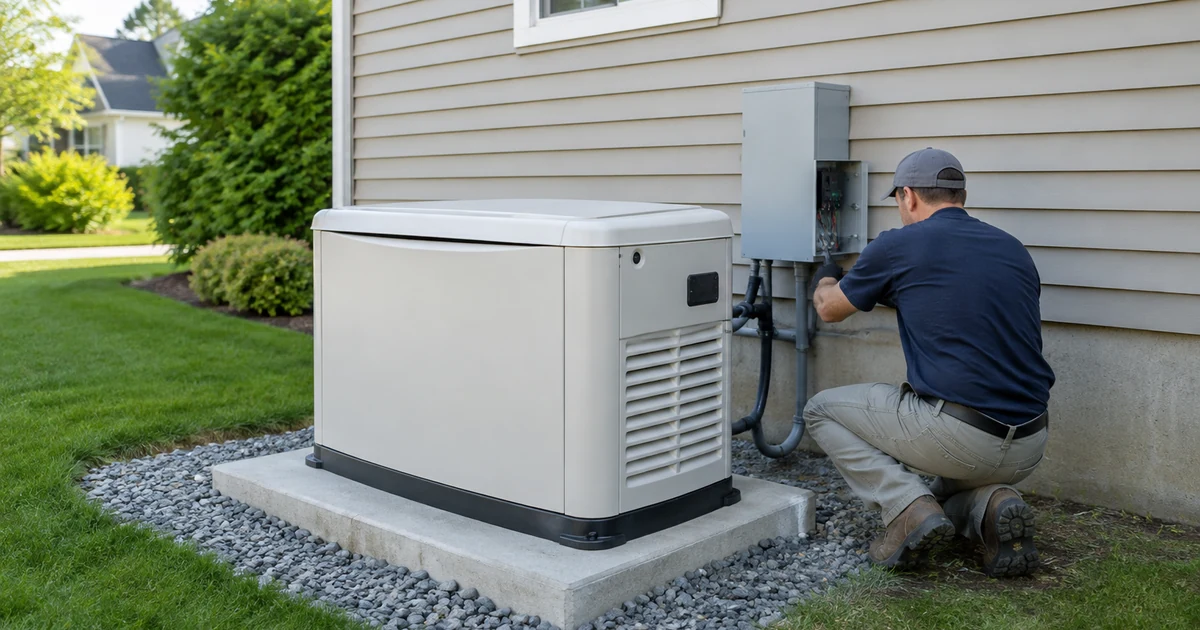
Generator size, measured in kilowatts (kW), is the biggest cost driver. A portable generator hooked up through a transfer switch or interlock is the budget option. A permanently installed home standby generator starts automatically when the power goes out and runs on natural gas or propane, but costs several times more.
| Setup | What it powers | Typical installed cost |
|---|---|---|
| Portable (5–8 kW) + interlock or manual transfer switch | Selected circuits: fridge, furnace blower, lights, sump pump | $1,000 – $3,300 |
| Standby, 10–14 kW | Essential circuits in a small home | $6,000 – $10,000 |
| Standby, 16–18 kW | Most circuits, limited central AC | $7,500 – $12,000 |
| Standby, 20–24 kW | Whole home in most houses, including one AC | $8,500 – $14,500 |
| Standby, 26–38 kW | Large homes, multiple AC units, electric appliances | $12,000 – $22,000 |
| Liquid-cooled, 45 kW and up | Very large homes and estates | $20,000 – $35,000+ |
The 20 to 24 kW air-cooled standby unit is the most popular whole-house choice, and most homeowners pay about $11,500 installed, including the automatic transfer switch. Published averages vary widely, from roughly $5,000 to $25,000, because some guides include small portable setups and others include large, complex installs. For a typical standby job, $8,000 to $16,000 is a realistic range.
With a portable generator, you manually roll it out, start it and flip the transfer switch or interlock. It’s far cheaper, but it only powers the circuits you choose and needs refueling. Never run a portable generator in a garage or near windows; carbon monoxide is a serious risk.
Cost Breakdown: Materials vs. Labor
Here’s how a typical 22 kW home standby installation breaks down:
| Item | Typical cost |
|---|---|
| Standby generator unit (20–24 kW) | $4,500 – $6,500 |
| Automatic transfer switch | $400 – $2,500 (often bundled with the unit) |
| Electrical labor and wiring | $1,500 – $5,000 |
| Gas line connection | $12 – $25 per foot; $500 – $2,000 for longer runs |
| Concrete or composite pad | $150 – $1,000 |
| Permits and inspections | $80 – $500 |
Installation labor usually involves both an electrician and a plumber or gas fitter. Electricians commonly bill $40 to $100+ per hour, but most generator dealers quote a single package price covering the unit, transfer switch, pad, wiring, gas connection and start-up.
Portable generator transfer switch or interlock
If you already own a portable generator, connecting it safely to your panel costs far less than a standby system. A generator interlock kit with an exterior power inlet typically runs $400 to $850 installed, while a manual transfer switch runs about $400 to $1,300. Add $500 to $2,000 for the generator itself if you don’t have one yet.
Other Factors That Affect the Price
Fuel type
Natural gas is the most convenient because the utility supply is continuous. Homes without gas service run standby units on propane, which may require a propane tank ($400 to $2,000). Diesel units are rare for homes and cost considerably more.
Distance to the gas meter and panel
Installers usually include a short run of gas pipe and wire. Every extra foot costs money, and a gas meter that’s too small for the generator plus your other appliances may need a utility upgrade. Our gas line installation cost guide covers those prices in detail.
Electrical panel and service
Older or full panels may need rework to accept a whole-home transfer switch. If your service is 100 amps or the panel is outdated, you may need an electrical panel upgrade first, which commonly adds $1,000 to $2,200 or more.
Load management
Load-shedding modules let a smaller generator handle big appliances by switching them off when demand peaks. Smart load managers typically cost about $150 to $300 each, which is often far less than the price jump to the next generator size. Ask your installer whether one or two modules would let a 20 kW unit do the job of a 26 kW unit in your home.
Site and local codes
Setback rules from windows, doors and property lines vary by town. Sloped yards, long trenches and noise ordinances can add work. Some HOAs also have placement or screening rules.
Permits
Standby generators almost always need electrical and gas permits, and sometimes a zoning review. Fees typically run $80 to $500 depending on your jurisdiction.
Accessories and maintenance
Wi-Fi monitoring ($200 to $400), cold-weather kits and extended warranties add to the price. Plan on $200 to $650 a year for professional maintenance, including oil changes and a load test.
What It Costs to Run a Standby Generator
The installation price is only part of the budget. Fuel use during an outage depends on the generator size, fuel type and how much load you’re running. Estimates for a roughly 20 kW unit under load look like this:
| Fuel | Approx. cost per day of runtime | Notes |
|---|---|---|
| Natural gas | ~$90 | Continuous utility supply, no refueling |
| Diesel | ~$175 | Rare for homes; fuel storage required |
| Propane | ~$220 | Runtime limited by tank size |
Actual costs vary with local fuel prices and load. Generators also run a short weekly or monthly self-test, which uses a small amount of fuel.
Battery backup as an alternative
Home battery systems are a quieter, fuel-free alternative, but they cost more: roughly $10,000 to $25,000 plus installation, and they typically power essentials for a limited time unless paired with solar. For long multi-day outages, a fuel-powered standby generator is still the more common choice.
Before you hire: get at least three written, itemized quotes from licensed and insured local pros. Prices for the same job often differ by 30% or more, and comparing line items is the fastest way to spot padding or missing work.
Standby vs. Portable: Which Is Right for You?
A standby generator makes sense if outages are frequent or long in your area, someone in the home relies on powered medical equipment, you have a sump pump protecting a finished basement, or you simply want power to return automatically within seconds. It also adds resale appeal in storm-prone regions.
A portable generator with a proper transfer switch or interlock is a smart choice if outages are occasional, you’re comfortable running it yourself, and you mainly need the fridge, furnace blower, a few lights and the sump pump. It costs a fraction of a standby system.
DIY vs. Hiring a Pro
Standby generator installation is a job for licensed professionals. It involves gas piping, a transfer switch wired into your main panel and utility-coordinated safety requirements. Most areas require permits and inspections, and manufacturers typically require installation by an authorized dealer to keep the warranty valid.
Even for portable generators, have an electrician install the transfer switch or interlock. Never “backfeed” your home by plugging a generator into a dryer outlet with a double-male cord. It can send power back onto utility lines, endangering line workers and neighbors, and it’s a fire hazard in your home.
How to Save Money on Generator Installation
- Buy in the off-season. Demand and prices spike after major storms. Shopping in late winter or spring usually means better availability and pricing.
- Right-size the unit. Ask the installer for a load calculation. Load management modules can let you buy a smaller generator.
- Get at least three quotes from authorized dealers, and compare what’s included: transfer switch, pad, gas run length, permits and start-up.
- Place it close to the meter and panel. Shorter gas and electrical runs cut labor and material costs, as long as setback codes allow it.
- Look for manufacturer promotions. Brands often run seasonal rebates or extended warranty offers through dealers.
- Consider a portable plus interlock if you only need essentials; it can save $7,000 or more.
- Ask about utility or insurance programs. Some utilities and insurers offer incentives for backup power, particularly for sump pumps and medical needs.
If a key reason for backup power is protecting a basement, pair the generator with a reliable pump; see our sump pump installation cost guide for prices.
Frequently Asked Questions
How much does it cost to install a whole-house generator?
Most homeowners pay $8,000 to $16,000 for a standby generator installed, including the automatic transfer switch. A 20–24 kW unit, the most common whole-home size, typically runs about $11,500.
How much does it cost to install a transfer switch for a portable generator?
A manual transfer switch typically costs about $400 to $1,300 installed, and an interlock kit with a power inlet about $400 to $850. Prices depend on your panel and the distance to the inlet.
What size generator do I need to run my whole house?
Many average-size homes with gas heat and one central AC are covered by a 20–24 kW standby unit. Homes with multiple AC units, electric heat or large electric appliances may need 26 kW or more; an installer should do a load calculation.
How long does generator installation take?
The physical installation often takes one to three days. Permits, inspections and utility gas meter approvals can stretch the full timeline to several weeks.
How much does it cost to maintain a standby generator?
Plan on roughly $200 to $650 a year for professional maintenance, which usually includes an oil and filter change, battery check and load test.
Does a standby generator add home value?
It can make a home more attractive to buyers, especially in areas with frequent storms or outages. How much it adds to resale value varies by market.