Snow Removal Cost by Pricing Method
Snow removal companies price residential work in a few different ways, and the method you choose matters as much as the size of your driveway. Per-visit pricing is the most common for homeowners, while seasonal contracts make sense in places that get frequent, reliable snowfall.
| Pricing method | Typical cost | How it works |
|---|---|---|
| Per visit (per push) | $45–$200 | Flat fee each time the crew clears your driveway and walk |
| Per inch | $10–$30 per inch | Base fee plus a charge per inch above a trigger depth |
| Per hour | $25–$95 per hour | Common for shoveling, snow blowing and plowing larger areas |
| Per event | $75–$200 | One fee per storm, even if the crew returns more than once |
| Seasonal contract | $300–$1,000 per season | Fixed price for all plowing above a set depth, usually unlimited visits |
“Per push” and “per visit” mean the same thing in most contracts: the crew comes out once, clears the agreed area and bills a flat amount. National data puts the average residential visit at roughly $105 to $126, with most homeowners paying around $115 for a two-car driveway plus the front walk. LawnStarter reports an average seasonal contract of about $700, while Angi lists a typical range of $300 to $700 for unlimited visits.
Cost by driveway size
The area to be cleared is the second big factor. Longer and wider driveways take more passes with a plow or blower, and more time to shovel edges and walkways.
| Driveway size | Per visit | Seasonal contract |
|---|---|---|
| Single-car | $40–$80 | $300–$400 |
| Two-car | $65–$130 | $400–$600 |
| Large or long (3–4 cars) | $120–$250 | $600–$1,000 |
| Gravel driveway | Up to about $200 | Varies; often priced higher |
Gravel driveways cost more because the plow blade has to be raised to avoid scraping up stone, which takes more care and time. A steep or winding driveway also costs more, both because of the extra work and the risk to equipment.
Cost by snow depth
Most per-visit prices assume a normal storm of up to about 6 inches. Deeper snow is heavier and takes longer to move, so many companies step up the price at set depths.
| Snow depth | Typical cost per visit |
|---|---|
| Up to 6 inches | $65–$110 |
| 7–12 inches | $105–$165 |
| 13–18 inches | $130–$250 |
Per-inch contracts often charge $10 to $25 per inch for the first 6 inches and a smaller amount for each additional inch. Read the trigger depth carefully: many contracts don’t send a plow until 2 inches have fallen, so light dustings may be left for you.
Seasonal contract vs. paying per visit
The right choice depends on how many plowable storms your area usually gets. A quick way to compare is to multiply a local per-visit quote by the number of times you expect to need service, then set that against the seasonal price. Using a $115 visit as an example:
| Visits per winter | Per-visit total | Typical seasonal contract | Usually cheaper |
|---|---|---|---|
| 3 | $345 | $400–$600 | Per visit |
| 5 | $575 | $400–$600 | About even |
| 8 | $920 | $400–$600 | Seasonal |
| 12 | $1,380 | $400–$600 | Seasonal |
Seasonal contracts also buy predictability. You know the full cost in advance and you’re on the route automatically, which matters during back-to-back storms. The downside is that you pay the same amount in a light winter. Some companies offer hybrid plans with a lower seasonal fee that covers a set number of pushes, then a per-visit rate after that.
What a snow removal contract should spell out
Written terms prevent most disputes. A clear residential contract usually lists the areas to be cleared (driveway, apron, walkways, steps, mailbox access), the trigger depth, whether the crew comes during or after the storm, the expected response time, salting terms, where snow will be piled, and who pays for damage to lawns, edging or pavement. Ask whether the company carries liability insurance and whether it marks driveway edges with stakes before the ground freezes, which helps the plow avoid turf and landscaping.
Cost Breakdown: Labor, Equipment and Materials
Residential snow removal is mostly labor and equipment time. A typical bill for a single visit includes:
- Labor: $25 to $75 per hour for shoveling or snow blowing; $35 to $95 per hour for truck plowing.
- Minimum charge: $25 to $100 per visit, even for small areas.
- Walkways and steps: often $10 to $30 extra per visit, or included in seasonal packages.
- Salt or de-icer application: $20 to $50 per application, depending on the product and area.
- Snow hauling: extra when there is nowhere to pile snow on site, usually quoted by the hour or truckload.
De-icing materials vary in price. Rock salt is the cheapest; calcium chloride works at lower temperatures and costs more; pet-safe and eco-friendly blends cost the most. If your contractor applies treatment, ask which product is used, especially near concrete less than a year old, which some de-icers can damage.
Roof Snow Removal Cost
Roof snow removal is a separate, higher-risk service. Angi puts the average at about $350 per visit, with most jobs between $200 and $600. Light snow on a small roof can cost around $150, while deep snow, steep pitches or multistory homes can reach $1,000 or more.
| Roof size or service | Typical cost per visit |
|---|---|
| 500 sq ft roof | $150–$250 |
| 1,000 sq ft roof | $200–$400 |
| 2,000 sq ft roof | $400–$700 |
| Roof raking from the ground | $100–$250 |
| Ice dam removal (often steam) | $400–$1,000 |
Emergency or after-hours service can add 25% to 50%. Ice dams that keep returning are usually a sign of attic heat loss, so the long-term fix is often better attic insulation and ventilation rather than repeated removal.
Roof snow removal is a fall hazard
Working on a snow-covered roof is dangerous. OSHA warns that snow can hide skylights and other openings that people can fall through, that ice layers make surfaces slippery, and that snow-loaded roofs can collapse. It also flags overhead power lines as an electrocution risk. OSHA’s guidance for workers is to use methods that avoid going onto the roof whenever possible, such as long-handled roof rakes used from the ground.
For homeowners, the safe choice is to rake only what you can reach from the ground and to hire an insured professional for anything that requires climbing. Ask for proof of liability insurance and workers’ compensation coverage before anyone goes on your roof, and confirm the crew uses fall protection. If snow load has already caused sagging, leaks or cracked rafters, schedule a roof repair inspection as soon as conditions allow.
Other Factors That Affect the Price
Region and snowfall frequency
In snow-belt cities where crews plow dozens of times a season, seasonal contracts are competitive and per-visit prices are steady. In places where snow is rare, few companies have equipment, so a single visit after an unusual storm can cost more.
Timing and urgency
Contract customers are usually served first during a storm. One-time calls during a blizzard may face higher rates, long waits or no availability at all, which is why many homeowners sign up in the fall.
Equipment used
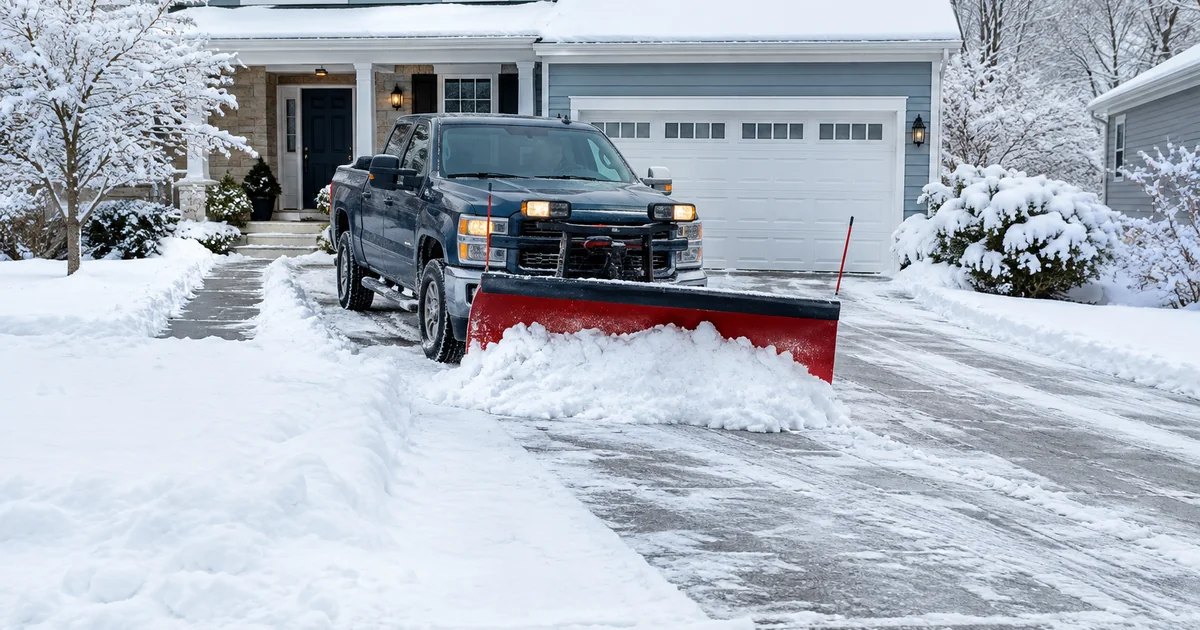
Truck-mounted plows are fastest on long driveways. Tight driveways, walkways and steps need snow blowers or shovels, which are slower and priced by time. Crews that bring both often quote a single combined price.
Obstacles and surfaces
Parked cars, basketball hoops, decorative pavers and heated or stamped surfaces all slow work. Pavers and stamped concrete may require a raised blade or a rubber cutting edge to avoid damage.
Damage protection and liability
Plows can scrape asphalt, chip concrete edges, tear up sod along the driveway and knock over mailboxes or lights. Established companies typically carry liability insurance and spell out how they handle damage, while the cheapest one-truck operators may not. Paying slightly more for an insured, established contractor often costs less than repairing a cracked apron or reseeding a lawn in spring. It also protects you if someone is hurt on your property while the crew is working.
Driveway surface
Smooth asphalt and broom-finished concrete are the easiest surfaces to plow. Brick, pavers, stamped concrete and exposed aggregate need more care, and some contractors will only snow-blow them. If you’re planning a new surface, our concrete driveway cost guide covers the options.
Commercial vs. residential
Commercial snow removal is priced differently. Parking lots are usually cleared with larger plows and loaders, priced by the hour ($45 to $155 is a common range), per push or under a seasonal contract that also covers salting and liability terms. LawnStarter estimates a 50-space lot at about $6,000 per season. Businesses typically need more frequent service, and contracts specify response times.
Before you hire: get at least three written, itemized quotes from licensed and insured local pros. Prices for the same job often differ by 30% or more, and comparing line items is the fastest way to spot padding or missing work.
Snow Blower vs. Hiring a Service
Buying a snow blower is the main DIY alternative. Prices run roughly $300 to $1,800 depending on whether you choose a single-stage electric model or a heavy-duty two-stage gas machine. Add fuel, maintenance and storage space.
| Option | Upfront cost | Yearly cost | Best for |
|---|---|---|---|
| Shovel and salt | $40–$150 | $20–$60 in salt | Short driveways, light snow |
| Snow blower | $300–$1,800 | Fuel and tune-ups | Medium driveways, healthy owners with time |
| Per-visit service | None | $45–$200 per storm | Areas with occasional snow |
| Seasonal contract | None | $300–$1,000 | Snow-belt homes, busy or older owners |
A mid-range snow blower usually pays for itself after about two seasons compared with a typical seasonal contract. The trade-off is your time, physical strain in cold weather and safety. OSHA notes that snow blowers commonly cause hand lacerations and amputations when people try to clear jams with the machine running. Always shut the engine off, wait for parts to stop and use a clearing tool, never your hands, and refuel only with the engine off and cool.
How to Save Money on Snow Removal
- Sign up before the first storm. Fall sign-ups often get better rates and priority service compared with emergency calls.
- Compare per-visit vs. seasonal pricing against your area’s typical number of plowable storms. If you average only a handful, paying per visit is often cheaper.
- Share a contract with neighbors. Some companies discount adjacent driveways because the crew is already on the street.
- Clear walkways yourself and pay only for the driveway, which is the part that takes equipment.
- Raise the trigger depth so you handle light snow and the crew comes only for larger storms.
- Buy de-icer in bulk before winter instead of paying per application.
- Consider a heated driveway only for long, steep driveways in heavy-snow areas; it is a large upfront investment, as our heated driveway cost guide shows.
Snow and ice also hit gutters hard. A fall gutter cleaning helps meltwater drain instead of refreezing at the roof edge.
Frequently Asked Questions
How much does it cost to plow a driveway?
Plowing a residential driveway typically costs $45 to $200 per visit. A two-car driveway with the front walk averages around $115, while long or gravel driveways cost more.
Is a seasonal snow removal contract worth it?
Seasonal contracts usually cost $300 to $1,000. They tend to pay off when you expect roughly five or more plowable storms, and they put you on the route automatically. In areas with only a few storms a year, paying per visit is often cheaper.
How much does roof snow removal cost?
Roof snow removal averages about $350 per visit, with most jobs between $200 and $600. Ice dam removal costs $400 to $1,000. Because roof work is a serious fall hazard, hire an insured professional for anything you can’t reach with a roof rake from the ground.
How much do snow removal companies charge per inch?
Per-inch pricing is often $10 to $30 per inch, or $10 to $25 per inch for the first 6 inches and a smaller rate for each additional inch. Many contracts only trigger service after 2 inches fall.
Is it cheaper to buy a snow blower or hire someone?
Snow blowers cost about $300 to $1,800. A mid-range machine often costs less than two seasons of a typical contract, but you supply the time, fuel and maintenance. Never clear a jammed snow blower by hand; OSHA warns this commonly causes serious hand injuries.
Should I tip my snow plow driver?
Tipping is optional. Common amounts are $10 to $20 for a one-time job and $20 to $50 at the end of the season for a contract crew.