Asphalt Driveway Cost by Project Type
The first question is whether you need a brand-new driveway or just a new surface. A full installation builds the gravel base and lays fresh asphalt; an overlay puts a new 1.5- to 2-inch layer over pavement that is still structurally sound. Sealcoating is maintenance, not paving, but it belongs in the budget.
| Project | Cost per sq ft | 600 sq ft driveway | What it involves |
|---|---|---|---|
| Sealcoating | $0.20 – $0.75 | $150 – $450 (minimums often apply) | Cleaning, crack filling, liquid sealer |
| Resurfacing (overlay) | $2 – $5 | $1,200 – $3,000 | Milling or tack coat, new 1.5–2 in. top layer |
| New driveway (standard hot mix) | $5.50 – $11 | $3,300 – $6,600 | Excavation, gravel base, 2–3 in. asphalt |
| Replacement (tear-out + new) | $7.50 – $17 | $4,500 – $10,200 | Removal and disposal, base repair, new asphalt |
| Stamped or colored asphalt | $10 – $17 | $6,000 – $10,200 | New asphalt with imprinted pattern and coating |
| Porous asphalt | $7 – $15 | $4,200 – $9,000 | Open-graded mix over a deep stone reservoir |
Published resurfacing prices vary widely, from about $1 per square foot for a thin overlay up to $7 when milling and base patching are included. Ask each contractor whether the old surface will be milled and how thick the new layer will be, because those two details explain most of the gap between quotes.
Asphalt Driveway Cost by Size
Most residential driveways fall between 200 and 900 square feet. The new-driveway column uses $5.50 to $11 per square foot; the typical figure matches the calculator’s default of about $8 per square foot.
| Size | Area | New driveway | Typical new | Resurfacing |
|---|---|---|---|---|
| 1-car, 10 x 20 ft | 200 sq ft | $1,100 – $2,200 | $1,600 | $400 – $1,000 |
| 1-car, 12 x 24 ft | 288 sq ft | $1,600 – $3,200 | $2,300 | $580 – $1,440 |
| 2-car, 20 x 20 ft | 400 sq ft | $2,200 – $4,400 | $3,200 | $800 – $2,000 |
| 2-car, 24 x 24 ft | 576 sq ft | $3,200 – $6,300 | $4,600 | $1,150 – $2,880 |
| Average, 600 sq ft | 600 sq ft | $3,300 – $6,600 | $4,800 | $1,200 – $3,000 |
| 3-car, 24 x 36 ft | 864 sq ft | $4,750 – $9,500 | $6,900 | $1,730 – $4,320 |
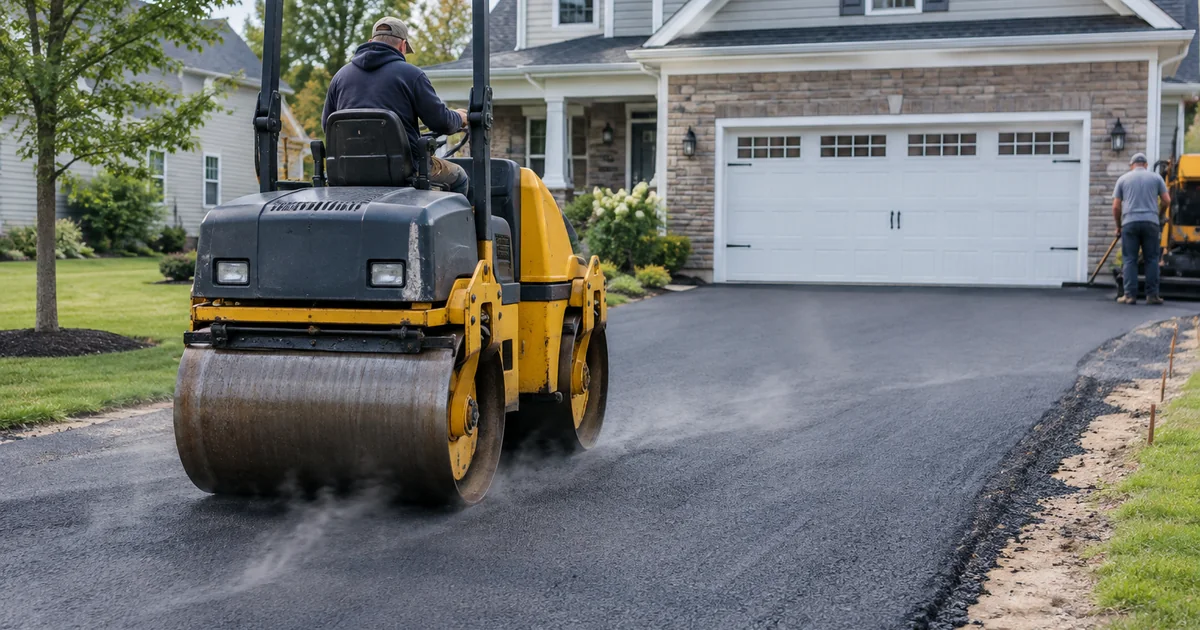
Paving crews bring a paver, a roller, and a dump truck of hot mix to every job, so very small driveways carry minimum charges. Long driveways benefit from economies of scale but usually need more grading and drainage work.
Cost Breakdown: Materials vs. Labor
For a standard new driveway, materials and labor are close to an even split:
| Item | Cost per sq ft | 600 sq ft driveway |
|---|---|---|
| Hot-mix asphalt, 2–3 in. compacted | $2.00 – $4.50 | $1,200 – $2,700 |
| Crushed stone base, 4–8 in. | $0.50 – $1.00 | $300 – $600 |
| Labor and equipment (excavation, grading, paving, rolling) | $3.00 – $6.00 | $1,800 – $3,600 |
| Total | $5.50 – $11.50 | $3,300 – $6,900 |
Asphalt prices move with crude oil, since the binder is a petroleum product. Quotes can change from one season to the next, and some contractors only hold a price for 30 days.
Other Factors That Affect the Price
Removal of the old surface
Removing an existing asphalt driveway typically costs $1.50 to $7 per square foot, with most residential jobs in the $2 to $6 range. Thin, older asphalt comes up easily; thick or concrete-based driveways cost more. Old asphalt is widely recycled, which keeps disposal fees lower than for many materials.
Base condition and grading
The base does the structural work; the asphalt is a wearing surface. If the soil is soft, the old base is contaminated with clay, or water drains toward the house, expect extra excavation and new crushed stone. Clearing trees or major regrading can add $1,500 to $5,100 on wooded or sloped lots.
Thickness
Two to three inches of compacted asphalt over a solid base is typical for cars. Driveways that see delivery trucks, RVs, or heavy equipment should get 3 to 4 inches and a deeper base, which raises both material and labor costs.
Permits and apron work
Many municipalities require a permit for a new driveway or a change to the curb cut, commonly $50 to $200. Work in the public right-of-way may need to meet town specs for thickness and slope.
Season and climate
Hot mix has to be laid warm, so paving season in northern states runs roughly from spring through fall. Freeze-thaw climates are harder on asphalt, and hot southern sun ages it faster; both shorten the time between sealcoats and overlays.
Region
Labor rates, plant locations, and local demand all move the price. Rural driveways far from an asphalt plant pay more for trucking, while big metros carry higher labor costs.
Before you hire: get at least three written, itemized quotes from licensed and insured local pros. Prices for the same job often differ by 30% or more, and comparing line items is the fastest way to spot padding or missing work.
Sealcoating: What It Costs and When to Do It
Sealcoating is the cheapest way to add years to an asphalt driveway. A professional job typically runs $0.20 to $0.75 per square foot, although many companies have a minimum charge, so most residential sealcoating jobs land in the few-hundred-dollar range. DIY sealer and supplies for an average driveway cost roughly $50 to $150.
- First coat: most contractors wait six months to a year after paving so the new asphalt can cure.
- Frequency: every two to four years is common; more often in harsh sun or heavy traffic, less often on lightly used driveways.
- Crack filling first: sealer does not bridge open cracks. Hot-pour or rubberized crack filler should go in before the coating.
- Don’t overdo it: sealing every year builds up a thick layer that can flake and crack.
Resurface or Replace?
An overlay makes sense when the base is still solid and the damage is on the surface. As a rule of thumb, resurfacing is a good fit for driveways less than 15 to 20 years old with surface damage on less than about 30% of the area. When cracks run deep, potholes keep returning, the edges crumble, or more than half of the surface is damaged, the base has usually failed, and a new top layer will crack along the same lines within a few years.
A new asphalt driveway typically lasts 15 to 30 years, with about 20 years being common when it is sealed on schedule.
If you are comparing materials for a full replacement, weigh the maintenance schedule along with the price. Asphalt costs less to install and is quick to repair, and it tolerates road salt and freeze-thaw cycles well. Concrete costs more up front but can go decades with little more than occasional sealing. Over 30 years, an asphalt driveway will typically need several sealcoats and at least one overlay, so budget for those when you compare bids.
DIY vs. Hiring a Pro
Hot-mix paving is not a realistic DIY project. It requires a plant delivery, a paving machine or skilled hand raking, and a heavy roller, all within the short time the mix stays workable. Cold-patch products work for small potholes, and sealcoating is a manageable weekend job if you clean the surface well and follow the temperature guidelines on the product. Leave new installs and overlays to a paving contractor, and check that they carry liability insurance.
How to Save Money on an Asphalt Driveway
- Overlay instead of replace when the base is sound; it often costs less than half as much.
- Sealcoat on schedule and fill cracks every year or two to push back the next overlay.
- Ask about recycled asphalt for a rural or secondary driveway; reclaimed asphalt costs less and packs well.
- Coordinate with neighbors. When a paving crew does several driveways on one street, mobilization costs are shared and some contractors discount accordingly.
- Get three itemized quotes with the same base depth and compacted thickness so the comparison is fair.
- Book early in the season. Contracting in late winter for a spring start gives you time to compare bids before calendars fill.
Still deciding on a material? Compare our concrete driveway cost guide for a longer-lasting surface, or our gravel driveway cost guide for the lowest up-front price.
Frequently Asked Questions
How much does it cost to blacktop a driveway?
Blacktop is another name for asphalt. A new blacktop driveway typically costs $5.50 to $11 per square foot, so a 600 sq ft driveway runs about $3,300 to $6,600, with $4,800 as a common price.
Is it cheaper to resurface or replace an asphalt driveway?
Resurfacing is much cheaper, usually $2 to $5 per square foot versus $7.50 or more for tear-out and replacement. It only works if the base is still solid; overlays placed on a failed base crack again quickly.
How often should an asphalt driveway be sealcoated?
Every two to four years is typical. Wait six months to a year after installation for the first coat, fill cracks before sealing, and avoid sealing every year, which can cause buildup and flaking.
How long does an asphalt driveway last?
Most asphalt driveways last 15 to 30 years, and about 20 years is common. Regular sealcoating, prompt crack repair, and good drainage are what push a driveway toward the upper end.
Is asphalt cheaper than concrete?
Yes, up front. Asphalt typically costs $5.50 to $11 per square foot versus about $8 to $12 for standard broom-finished concrete. Concrete lasts longer and needs less routine upkeep, while asphalt handles freeze-thaw cycles and road salt well and is easier to repair.
Can you put new asphalt over an old concrete driveway?
Yes, contractors can overlay asphalt on concrete if the slab is stable, often for about $3 to $7 per square foot. Cracks and joints in the concrete tend to show through over time as reflective cracking.