Gravel Driveway Cost by Size
A new gravel driveway built the right way, with excavation, a compacted base layer, and a finer top layer, typically costs $1.50 to $4.50 per square foot. Simply spreading stone over dirt costs less, but it tends to rut and sink within a season or two. The table assumes a proper two-layer build about 6 inches deep.
| Driveway | Area | Cost range | Typical |
|---|---|---|---|
| 1-car pad, 10 x 20 ft | 200 sq ft | $300 – $900 | $570 |
| 2-car pad, 20 x 20 ft | 400 sq ft | $600 – $1,800 | $1,140 |
| Short driveway, 12 x 50 ft | 600 sq ft | $900 – $2,700 | $1,710 |
| Medium driveway, 12 x 100 ft | 1,200 sq ft | $1,800 – $5,400 | $3,420 |
| Long rural driveway, 12 x 200 ft | 2,400 sq ft | $3,600 – $10,800 | $6,840 |
For long driveways it helps to think per linear foot. A 12-foot-wide gravel driveway works out to roughly $18 to $54 per linear foot. Very long country driveways often come in below the table figures, because the per-foot cost of trucking and machine time drops as the job grows, but they may need culverts, ditches, or tree clearing that a short suburban driveway does not.
Gravel Prices by Type
Stone is sold by the ton or the cubic yard; one cubic yard of crushed stone weighs roughly 1.4 tons. Prices below are typical ranges per ton, and quarries close to you will almost always beat distant suppliers once trucking is included.
| Gravel type | Price per ton | Best use |
|---|---|---|
| Crusher run (crush and run, dense grade) | $25 – $50 | Base layer or a complete driveway surface; the fines pack hard |
| Crushed stone (#57, #411, and similar) | $30 – $60 | Top layer with good drainage |
| Crushed limestone | $30 – $40 | Base or top layer where it is quarried locally |
| Pea gravel | $25 – $100 | Paths and patios; rolls under tires on driveways |
| Crushed shell | $20 – $90 | Coastal-style top layer |
| River rock | $35 – $150 | Borders and accents; too round for traffic |
| Marble chips | $85 – $400 | Decorative top dressing only |
For a driveway, angular crushed stone is what you want. Its sharp faces lock together under compaction, while rounded stones like pea gravel and river rock act like ball bearings under tires and migrate into the lawn. Many contractors use crusher run for the base and either more crusher run or clean #57 stone on top.
How Much Gravel Do You Need?
Most residential driveways need 5 to 6 inches of stone: about 3 to 4 inches of base and 2 to 3 inches of top layer. Driveways that carry heavy trucks or sit on soft soil need 8 to 12 inches.
- Cubic yards = length (ft) × width (ft) × depth (in) ÷ 12 ÷ 27
- Tons ≈ cubic yards × 1.4 (check your supplier’s figure for the specific stone)
- Rule of thumb: one ton of crushed stone covers about 60 square feet at 4 inches deep
Example: a 12 x 50 ft driveway at 6 inches deep needs 600 × 0.5 ÷ 27 = 11.1 cubic yards, or about 15 to 16 tons of stone. Add 5% to 10% for compaction and uneven subgrade.
Cost Breakdown: Materials vs. Labor
Gravel is cheap; moving and compacting it is where most of the money goes. For a 600 sq ft driveway built 6 inches deep:
| Item | Cost |
|---|---|
| Stone, about 15 tons at $25 – $60 per ton | $375 – $900 |
| Delivery, $100 – $500 per load | $100 – $500 |
| Labor and equipment: excavation, spreading, grading, compaction | $425 – $1,300 |
| Total | $900 – $2,700 |
Landscaping and excavation crews typically bill $30 to $100 per hour per worker, and most jobs this size take a day with a skid steer and a compactor.
Other Factors That Affect the Price
Excavation and grading
Topsoil and organic material must come out before stone goes down, and the driveway needs a crown or slope to shed water. Heavy excavation and grading can add $1,000 to $2,500, more on steep or wooded lots where brush and trees must be cleared first.
Drainage
Water is the enemy of gravel. Ditches along the sides, a culvert under the entrance, or a French drain can add $500 to $2,000, but they are what keeps the surface from washing out after every storm.
Geotextile fabric
A woven stabilization fabric laid under the base keeps stone from sinking into clay or soft soil. It adds a modest material cost and is one of the best-value upgrades on poor ground.
Removing an old surface
Converting an old paved driveway to gravel means breaking up and hauling the existing surface first. Concrete or asphalt removal can cost more than the new gravel itself, so price it separately.
Edging
Steel, timber, or paver edging keeps stone in place and gives a finished look. Expect roughly $5 to $18 per linear foot installed, depending on the material.
Distance to the quarry
Delivery charges grow with distance, and suppliers commonly add a per-mile fee beyond their free delivery radius. Buying from the nearest quarry can change the total more than switching stone types.
Before you hire: get at least three written, itemized quotes from licensed and insured local pros. Prices for the same job often differ by 30% or more, and comparing line items is the fastest way to spot padding or missing work.
DIY vs. Hiring a Pro
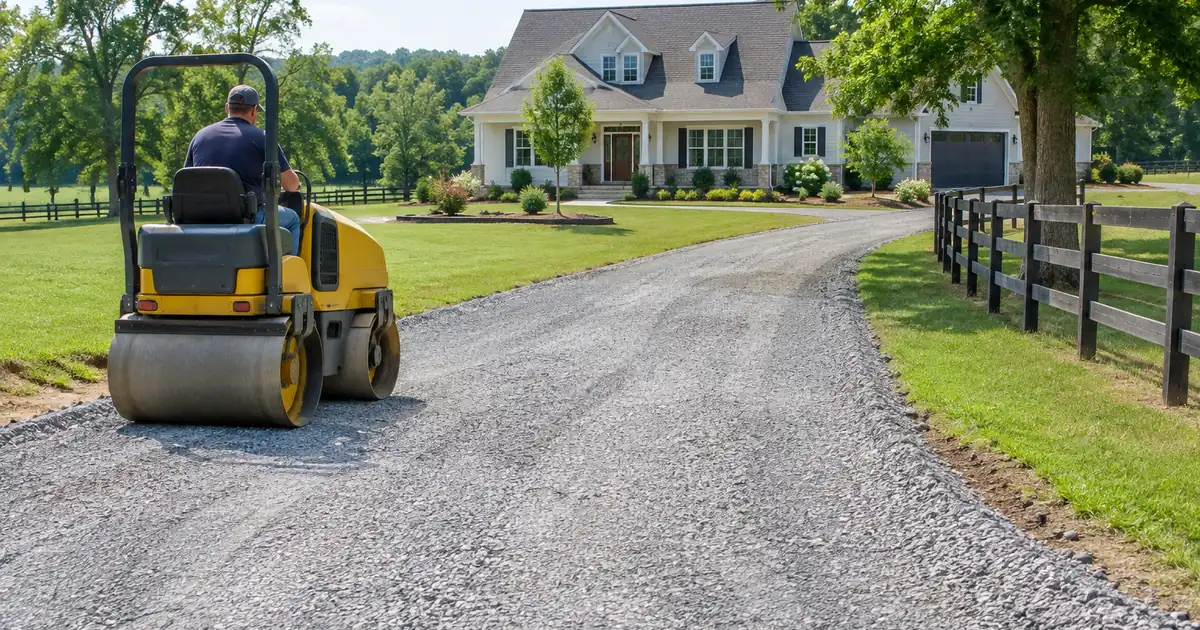
A gravel driveway is one of the few driveway types a homeowner can build. The stone is delivered by dump truck, and equipment rental is affordable: a skid steer runs about $300 per day and a plate compactor about $86 per day in many areas. The hard parts are excavating to a consistent depth, getting the crown and drainage right, and compacting each layer in lifts of a few inches rather than all at once.
Hire a pro when the driveway is long, sloped, crosses a ditch, or sits on clay that stays wet. Call 811 before you dig; utility lines often run under driveways and along property lines. Check with your town as well, since some require a permit for a new driveway or a change to the curb cut.
Maintenance Costs
Gravel needs more upkeep than paving, but each round is cheap. Plan on raking displaced stone back into place, regrading ruts and potholes, and adding a fresh inch or two of top stone every few years. Many homeowners spend $100 to $400 a year on average once touch-ups and occasional deliveries are counted. Snow plowing takes care: set the plow blade or snowblower slightly high so it doesn’t scrape up the stone.
Is Gravel the Right Choice?
Gravel shines on long driveways, rural properties, and lots where water needs to soak into the ground rather than run off. It is also easy to upgrade later: a well-compacted gravel base is exactly what an asphalt or concrete driveway needs underneath, so the money isn’t wasted if you pave in a few years.
It is a weaker fit on steep slopes, where stone washes downhill, and in neighborhoods whose HOA rules require paved surfaces. Snow removal, stroller wheels, and dust on dry summer days are the everyday trade-offs.
How to Save Money on a Gravel Driveway
- Use crusher run for both layers on a basic driveway; it is often the cheapest stone and compacts to a hard surface.
- Buy from the closest quarry and order full truckloads to avoid paying delivery twice.
- Keep it narrow. A 10- to 12-foot lane is enough for one vehicle; widen only at the parking area.
- Do the prep yourself and hire an operator only for grading and compaction.
- Invest in drainage and fabric. They cost a little more now but prevent the washouts that make gravel expensive over time.
- Refresh instead of rebuilding. If the base is still firm, a new 2-inch top layer costs a fraction of a full install.
Gravel is the cheapest driveway to build, but it isn’t the only option. Compare the price and upkeep of an asphalt driveway or a concrete driveway before you decide, and see our French drain cost guide if water is already a problem on your lot.
Frequently Asked Questions
Is a gravel driveway cheaper than asphalt or concrete?
Yes. At $1.50 to $4.50 per square foot, gravel typically costs a fraction of asphalt ($5.50 to $11) or broom-finished concrete ($8 to $12). The trade-off is ongoing maintenance: raking, regrading, and adding stone every few years.
How many tons of gravel do I need for a driveway?
Multiply length by width by depth in inches, divide by 12 and then by 27 to get cubic yards, and multiply by about 1.4 for tons. A 12 x 50 ft driveway at 6 inches needs about 11 cubic yards, or 15 to 16 tons.
What is the best gravel for a driveway?
Angular crushed stone packs and stays put. Crusher run (dense grade) is a popular all-in-one choice, and clean #57 stone works well as a top layer over a crusher run base. Avoid pea gravel and river rock for driving surfaces because the rounded stones shift under tires.
How deep should a gravel driveway be?
Plan on 5 to 6 inches for cars: 3 to 4 inches of base and 2 to 3 inches of top stone. Driveways used by heavy trucks or built on soft soil need 8 to 12 inches, often over geotextile fabric.
How long does a gravel driveway last?
With regular raking, regrading, and a fresh top layer every few years, a well-built gravel driveway can last for decades. Poor drainage is the main reason gravel driveways fail early.
Can I install a gravel driveway myself?
Many homeowners do, especially on flat lots. You’ll need to rent a skid steer or small excavator and a plate compactor, call 811 before digging, and compact the stone in thin lifts. Hire a pro for long, sloped, or poorly drained sites.