Metal Roof Cost per Square Foot by Panel Style
The style of metal roofing you choose sets the baseline price. Roofers quote either per square foot of roof surface or per roofing square (100 sq ft). Keep in mind that roof area is larger than your home’s floor area: a 2,000 sq ft house often has 2,200 to 2,600 sq ft of roof once overhangs and pitch are included.
| Metal roof style | Installed per sq ft | Installed per square | Best for |
|---|---|---|---|
| Exposed-fastener panels (corrugated, R-panel, ribbed) | $5 – $12 | $500 – $1,200 | Barns, cabins, budget re-roofs, low-cost rural homes |
| Metal shingles / stone-coated steel | $6 – $14 | $600 – $1,400 | Homes where you want the look of shingles, shake, or tile |
| Standing seam (concealed fastener) | $9 – $16 | $900 – $1,600 | Most residential metal roofs; longest-lasting steel option |
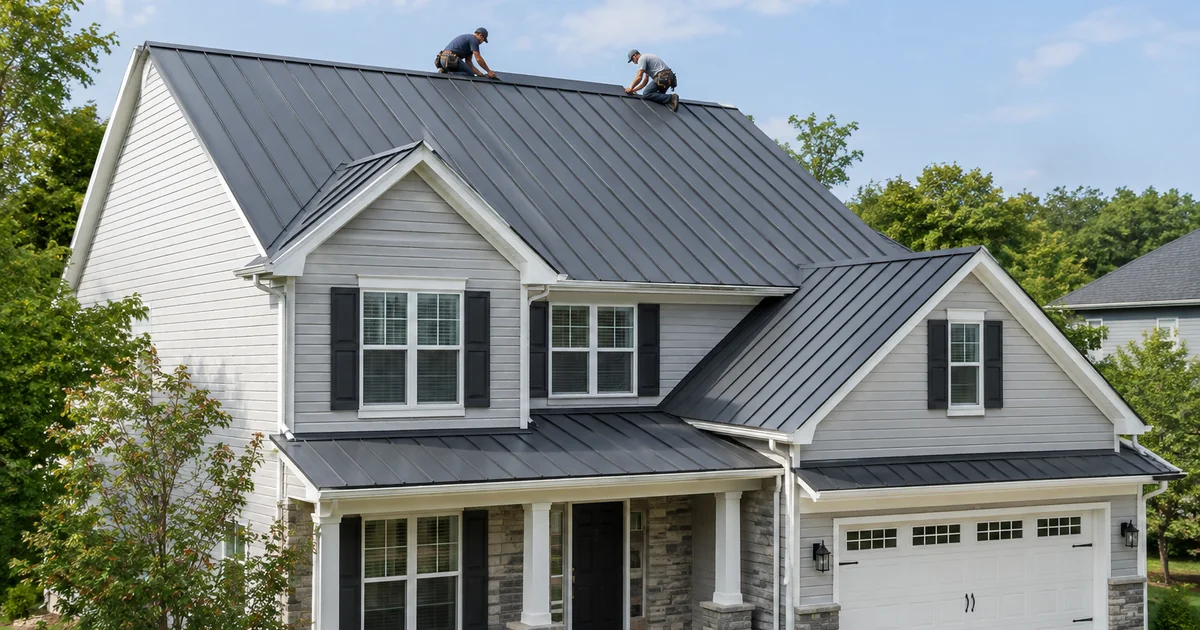
Exposed-fastener panels are the cheapest because they go on fast and the panels themselves are inexpensive, but the screws and rubber washers need to be checked and eventually replaced. Standing seam hides the fasteners under raised seams, allows the panels to expand and contract, and is the style most homeowners picture when they think of a modern metal roof.
Metal Roof Cost by Type of Metal
The metal itself changes the price dramatically. Coated steel (Galvalume or galvanized) is by far the most common for homes. Aluminum is favored near the coast because it does not rust. Copper and zinc are premium, architectural choices.
| Metal | Material cost per square | Approx. installed per sq ft (standing seam) | Notes |
|---|---|---|---|
| Galvalume / galvanized steel | $100 – $500 | $9 – $16 | Best value; painted finishes widely available |
| Aluminum | $300 – $900 | $11 – $20 | Corrosion-resistant; good for coastal salt air |
| Stone-coated steel | $350 – $600 | $6 – $14 (shingle/tile profiles) | Quiet, textured look of shake or tile |
| Zinc | $500 – $1,000 | $14 – $26 | Self-healing patina; very long life |
| Copper | $900 – $2,000 | $20 – $35 | Premium look; often used on accents, bays, and porches |
Installed prices for premium metals vary widely because few crews specialize in them. Get quotes from contractors with a portfolio of copper or zinc work if you are considering those metals.
Metal roof cost by home size
Using a typical installed range of $5 to $16 per sq ft of roof area, here is what total projects usually cost:
| Roof area | Roofing squares | Installed cost range |
|---|---|---|
| 1,000 sq ft | 10 | $5,000 – $16,000 |
| 1,500 sq ft | 15 | $7,500 – $24,000 |
| 2,000 sq ft | 20 | $10,000 – $32,000 |
| 2,500 sq ft | 25 | $12,500 – $40,000 |
| 3,000 sq ft | 30 | $15,000 – $48,000 |
The national average lands around $23,000, which corresponds to a steel standing seam roof on a typical 1,700 sq ft roof, including removal of the old shingles.
Cost Breakdown: Materials vs. Labor
Metal roofing is a skilled trade, and labor makes up a large share of the price. Here is how a typical project breaks down per roofing square:
- Metal panels or shingles: $100 to $800 per square for most steel and aluminum products; copper and zinc cost more.
- Installation labor: about $400 to $800 per square ($4 to $8 per sq ft), higher for standing seam and complex roofs.
- Tear-off and disposal of the old roof: $100 to $300 per square.
- Trim and flashing: eave, gable, ridge, and valley trim add roughly 20% to 40% to material costs. Standing seam trim runs about $5.50 to $10 per linear foot versus $2.50 to $5 for exposed-fastener trim.
- Underlayment: synthetic or high-temperature underlayment adds roughly $0.15 to $1.75 per sq ft installed.
- Permits: typically a few hundred dollars and occasionally up to $1,000, depending on your city and project value.
Other Factors That Affect Metal Roof Prices
Roof complexity
A simple gable roof with two large planes is the cheapest to cover. Hips, valleys, dormers, skylights, and chimneys all require custom-cut panels and extra flashing, adding labor and waste.
Roof pitch and height
Steep roofs slow crews down and require more safety equipment. Very low-slope roofs may need a specific standing seam profile rated for low pitches.
Tear-off vs. installing over shingles
Some local codes allow metal to be installed over one layer of existing shingles, which saves the $100 to $300 per square tear-off cost. Removing the old roof lets the crew inspect and replace damaged decking, though, and many manufacturers and roofers prefer it.
Decking repairs
Soft or rotted sheathing discovered during tear-off must be replaced. Contracts usually include a per-sheet price for this, so ask for it up front.
Gauge and finish
Thicker 24-gauge steel costs more than 26 or 29 gauge but resists dents better. PVDF (Kynar) paint systems cost more than SMP but hold color longer, which matters in sunny climates.
Gutters and accessories
Snow guards, new ridge vents, and gutter work are often priced separately. Snow guards are strongly recommended in snowy regions because snow slides off metal quickly. If your gutters are worn, it is efficient to replace them at the same time; see our gutter installation cost guide.
Location
Labor rates and the number of experienced metal roofing crews vary by region. Expect higher prices in major metro areas and places with strict wind or fire codes.
Before you hire: get at least three written, itemized quotes from licensed and insured local pros. Prices for the same job often differ by 30% or more, and comparing line items is the fastest way to spot padding or missing work.
Is a Metal Roof Worth the Cost?
Metal roofing costs considerably more upfront than asphalt shingles, but a quality metal roof lasts much longer. Heavier 22- to 24-gauge metal roofs can last 50 years or more, while thin 26- to 29-gauge panels may last only 20 to 25 years. Asphalt shingles typically last 15 to 30 years.
Cost over the life of the roof
A simple way to compare is cost per year of service. A $23,000 standing seam roof that lasts 50 years works out to about $460 per year. A shingle roof that costs half as much but needs replacing after 20 to 25 years can end up costing about the same per year, and you pay for tear-off and disruption twice. If you plan to stay in the home for decades, metal often pays for itself; if you are selling in five years, a cheaper roof may make more financial sense.
What to check in a metal roof quote
- Panel profile, gauge, and paint system (SMP vs. PVDF)
- Underlayment type and whether ice-and-water shield is included at eaves and valleys
- Tear-off, disposal, and the per-sheet price for replacing damaged decking
- Trim, flashing, ridge vent, and snow guards
- Manufacturer finish warranty and the installer’s workmanship warranty (in years)
- Permit and inspection fees
Pros
- Long lifespan: quality metal roofs can last 50+ years
- High wind ratings and good fire resistance
- Sheds snow easily and resists ice-dam leaks
- Reflective coatings can reduce summer cooling loads
- Low maintenance, especially with concealed-fastener systems
Cons
- Higher upfront cost
- Repairs require a metal roofing specialist; see our roof repair cost guide for typical prices
- Rain noise can be noticeable without solid decking and underlayment
- Some panels can dent from large hail
DIY vs. hiring a pro
Exposed-fastener panels on a shed or simple outbuilding are a reasonable DIY project for experienced homeowners. For a house, hire a licensed contractor who installs metal regularly. Panel layout, flashing details, and fastener placement determine whether the roof leaks, and many manufacturer warranties require certified installers.
How to Save Money on a Metal Roof
- Choose coated steel over premium metals. Galvalume or painted steel delivers most of the durability at a fraction of the cost of copper or zinc.
- Consider exposed-fastener panels for simple roofs. They can cost half as much as standing seam, as long as you accept periodic fastener maintenance.
- Get at least three itemized quotes. Compare gauge, paint system, underlayment, trim, and tear-off line by line.
- Ask about installing over shingles. If your local code and manufacturer allow it, skipping tear-off can save thousands.
- Check your insurance. Some insurers offer discounts for impact-resistant or wind-rated roofs; ask your agent before you choose a product.
- Schedule in the off-season. Late fall and winter can be slower for roofers in many regions, which may mean better pricing and scheduling.
- Improve the attic at the same time. Proper ventilation and insulation help any roof last longer; see our attic insulation cost guide.
Frequently Asked Questions
How much does a metal roof cost for a 2,000 sq ft house?
A 2,000 sq ft house typically has 2,200 to 2,600 sq ft of roof surface. At $5 to $16 per sq ft installed, expect roughly $11,000 to $40,000, with steel standing seam usually landing in the $25,000 to $35,000 range for a home that size.
Is a metal roof more expensive than shingles?
Yes. Metal costs considerably more upfront than asphalt shingles. However, a quality 22- to 24-gauge metal roof can last 50 years or more versus 15 to 30 for shingles, so the lifetime cost can be similar or lower if you stay in the home.
How much does a standing seam metal roof cost?
Standing seam steel roofing generally costs $9 to $16 per sq ft installed, or $900 to $1,600 per roofing square. Aluminum, zinc, and copper standing seam cost significantly more.
Can a metal roof be installed over shingles?
Many local codes allow metal over a single layer of asphalt shingles, which saves $100 to $300 per square in tear-off costs. Check your building department and the panel manufacturer’s requirements, and be aware that you lose the chance to inspect the decking.
What is the cheapest type of metal roof?
Exposed-fastener steel panels (corrugated or R-panel) are the cheapest, at about $5 to $12 per sq ft installed. They require periodic inspection and replacement of fasteners over the life of the roof.
Are metal roofs noisy in the rain?
When installed over solid decking and underlayment, as on most homes, a metal roof is usually not much louder than shingles. Noise is more noticeable on open-frame structures like barns and carports.