Septic System Installation Cost by Type
The kind of system your soil and lot will accept is the biggest driver of the price. A conventional gravity system with a tank and gravel or chamber drain field is the cheapest option. When the soil drains too fast or too slowly, the water table is high, or bedrock sits close to the surface, the health department will require an alternative or engineered design that costs two to four times as much.
| System type | Installed cost | Typically used when |
|---|---|---|
| Conventional gravity (tank + gravel drain field) | $4,000–$13,500 | Deep, well-draining soil and enough yard space |
| Chamber system | $5,000–$12,000 | High groundwater, gravel is scarce, variable use such as vacation homes |
| Drip distribution | $8,000–$18,000 | Shallow soil where a mound would otherwise be needed |
| Aerobic treatment unit (ATU) | $10,000–$25,000 | Small lots, poor soil, high water table, sites near lakes or streams |
| Recirculating sand filter | $10,000–$25,000 | High water table or nutrient-sensitive areas |
| Mound system | $12,000–$30,000+ | Shallow soil, high groundwater or shallow bedrock |
Published averages vary widely because systems differ so much. Angi reports a national average of about $8,000 for a new septic system based on verified projects, while HomeGuide puts a basic conventional system at $3,500 to $8,500 and complex engineered mound or ATU systems at $20,000 to $50,000 or more. The conventional range above reflects the full job, including the perc test, design and permits that most guides list separately.
Conventional and chamber systems
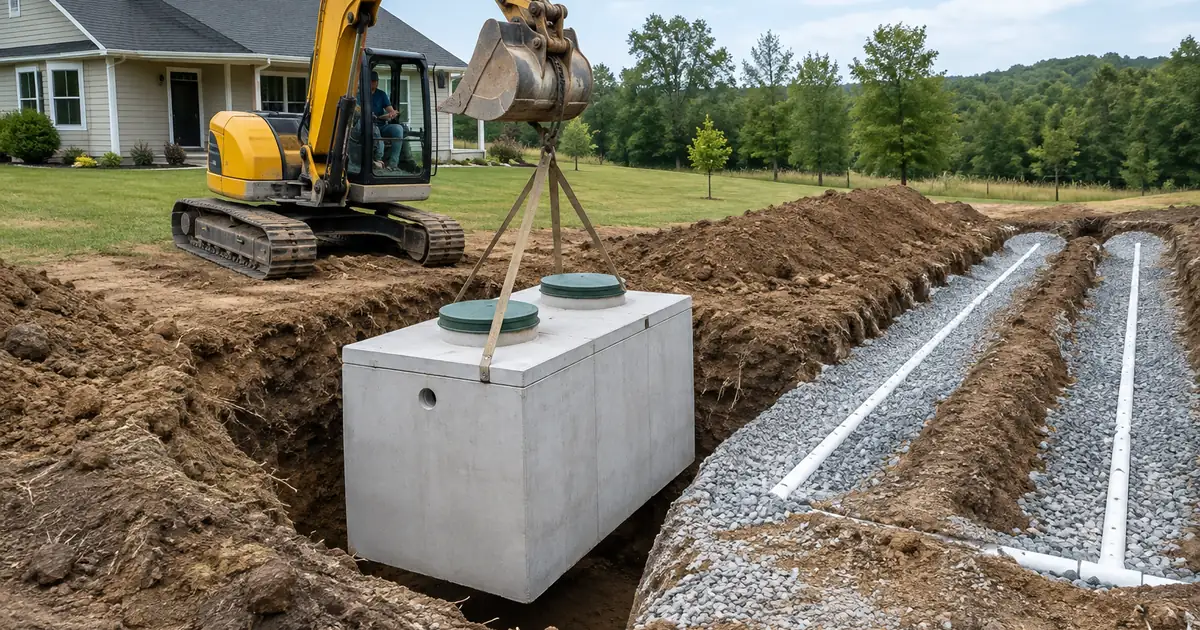
A conventional system sends wastewater from the house to a buried tank, where solids settle, and then lets the liquid flow by gravity into perforated pipes laid in gravel trenches. The EPA notes that this design has a large footprint, so it won’t fit every lot. Chamber systems replace the gravel with connected plastic chambers, which are easier to deliver and install, and they often cost about the same or a little more.
Alternative and engineered systems
Mound, drip, sand filter and aerobic systems add pumps, dosing tanks, control panels and alarms. That means an electrical connection, more design work and higher ongoing maintenance. An ATU works like a small treatment plant, injecting air so bacteria break down waste faster, and many states require an annual service contract for it. A mound is built from imported sand above the natural grade, and the volume of fill and the pump chamber are why it sits at the top of the price range.
Cost by home size and tank capacity
Tank size is set by local code, usually by the number of bedrooms rather than the number of people. The tank itself is a modest share of the bill; the drain field, excavation and labor cost more.
| Bedrooms | Typical tank size | Tank only | Conventional system installed |
|---|---|---|---|
| 1–2 | 750 gallons | $700–$1,200 | $3,600–$12,000 |
| 3–4 | 1,000 gallons | $900–$1,500 | $4,000–$13,500 |
| 5–6 | 1,200–1,250 gallons | $1,200–$1,800 | $4,800–$16,000 |
| 6+ | 1,500 gallons | $1,500–$2,500 | $5,200–$17,500 |
Tank material matters less than most people expect. Concrete tanks typically run $700 to $3,000, polyethylene (plastic) tanks $500 to $2,500, and fiberglass $1,200 to $2,000. Concrete is heavy and durable but needs a crane or boom truck; plastic and fiberglass are lighter and easier to set on hard-to-reach lots, though some areas restrict them where groundwater is high.
Cost Breakdown: Materials vs. Labor
Labor and excavation make up roughly half or more of a new septic system’s price. Here is how a typical conventional installation for a three- or four-bedroom home breaks down:
| Item | Typical cost |
|---|---|
| Soil evaluation and perc test | $250–$2,000 |
| System design (designer or engineer) | $450–$2,000 |
| Permits and inspections | $400–$2,300 |
| Septic tank (1,000 gal) | $900–$1,500 |
| Distribution box, pipe and fittings | $500–$1,000 |
| Drain field (gravel or chamber) | $2,000–$12,000 |
| Excavation and installation labor | $1,500–$6,000 |
Not every job includes every line at the top of its range. A simple conventional system on flat, sandy ground often has a short drain field and a single day of excavation, which is how some installs come in around $4,000 to $6,000. Septic installers and excavators commonly bill $100 to $300 per hour for an excavator and operator when work is priced by time.
Perc test and soil evaluation
Before anything is designed, a licensed soil evaluator or engineer digs test holes and measures how fast water drains through the soil. A basic soil test runs about $250 to $700, while a deep-hole percolation test performed by an engineer can cost up to $2,000. The result decides whether a conventional system is allowed and how large the drain field must be, so it’s the first number to get when you buy rural land.
Design, engineering and permits
Most counties require a stamped design for a new system. A basic layout from a designer may cost $450 to $900, while an engineered mound or ATU plan with a civil engineer’s sign-off runs $700 to $2,000 or more. Permit fees for the tank and drain field typically total a few hundred dollars to about $2,300, and the health department inspects the open trenches and tank before backfill.
Other Factors That Affect the Price
Soil and site conditions
Clay soil, a high water table, shallow bedrock or steep slopes can rule out a conventional drain field. That single finding can move a project from around $8,000 into the $15,000 to $30,000 range. Rocky ground also slows excavation and may require hammering or blasting.
Drain field size
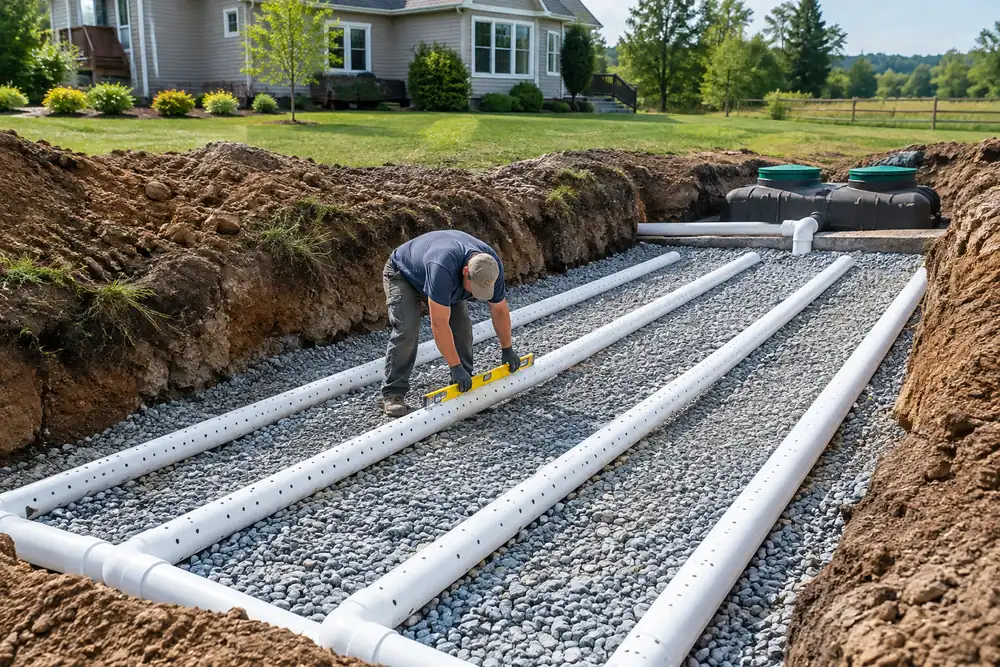
The drain field is usually the most expensive component. Its size depends on the perc rate and the number of bedrooms, and installation alone typically costs $5,000 to $12,000 when priced separately. Slow-draining soil means more trench length and more gravel or chambers.
Land clearing and access
Wooded lots need clearing before trenching, which can add $1,200 to $4,800. Tight access for a concrete tank delivery truck, long runs from the house to the tank, or work behind a finished home with landscaping to protect all add time.
Pumps, alarms and electrical
Any system that can’t flow by gravity needs a pump chamber, pump, float switches and a high-water alarm, plus a dedicated circuit. A pump typically costs $800 to $1,400 to replace later, and an alarm runs around $500 installed. ATUs also use an air compressor that runs continuously.
Location and regulations
Coastal and lake-front areas, and states with nitrogen-reduction rules, often mandate advanced treatment. Labor rates and permit fees also vary sharply by county, so the same system can cost noticeably more in the Northeast or on the West Coast than in the rural South or Midwest.
New construction vs. retrofit
Installing a septic system on a vacant lot before the house is built is usually simplest. Adding one to an existing home, for example when leaving a failing cesspool, may involve abandoning old tanks, rerouting the building drain and restoring lawn and driveways. If you already have a system and only the tank has failed, see our guide to septic tank replacement cost instead.
Timeline and seasonal conditions
The physical installation of a conventional system often takes only a few days, but the full process is longer. Scheduling the soil test, waiting for the design to be approved and getting the permit issued can take several weeks or more, depending on the county’s backlog. Frozen ground in northern states and saturated soil after heavy rain can also stop work, because many health departments won’t allow a drain field to be built in wet conditions that would smear and seal the trench walls.
What a complete installation quote should include
Comparing bids is easier when you know the usual sequence of work. A full quote should cover the soil evaluation or a note that you’re supplying it, the design, permit fees, tank delivery and setting, the distribution box or pump chamber, the drain field, inspection scheduling, backfill, final grading and seeding. Bids that leave out design, permits or final grading can look cheap and grow later.
Before you hire: get at least three written, itemized quotes from licensed and insured local pros. Prices for the same job often differ by 30% or more, and comparing line items is the fastest way to spot padding or missing work.
Septic System vs. Sewer Connection
If a municipal sewer main runs along your street, many jurisdictions require you to connect instead of installing a new septic system. Connection costs depend on the distance to the main and local tap fees, and can be lower or higher than a septic system. When sewer is not available, a properly sized and maintained septic system is the standard solution for rural homes.
A new system often goes hand in hand with a private well on rural land. Your health department will set minimum distances between the well, the tank and the drain field, which can limit where each one goes. If you’re also planning water supply work, our well pump replacement cost guide covers that side of the budget.
DIY vs. Hiring a Pro
Septic installation is regulated work. Nearly every state requires a permit, an approved design and an inspection before backfill, and many require the installer to hold a state or county septic license. Some jurisdictions allow homeowners to install their own conventional system under permit, but the soil test and design still have to come from a qualified professional, and the work must pass inspection.
Trench collapse is a serious hazard in deep excavations, and a tank that is set out of level or a drain field that is compacted by heavy equipment can fail within a few years. A failed system is expensive to fix and can contaminate groundwater, which is why hiring a licensed installer is the right call for almost every homeowner.
Ongoing maintenance costs
Budget for upkeep from the start. The EPA recommends having a typical household system inspected at least every three years and pumped every three to five years. Systems with pumps, floats or other mechanical parts should generally be inspected once a year. Pumping usually costs $300 to $700 per visit.
- Don’t drive or park on the drain field, and don’t build structures or pave over it.
- Plant only grass or shallow-rooted ground cover above the field; tree roots can clog pipes.
- Keep roof drains and sump pump discharge away from the drain field.
- Spread laundry and dishwasher loads through the week to avoid flooding the system.
How to Save Money on a New Septic System
- Get the perc test before you buy land. A failed or marginal perc test can add $10,000 or more to the project, so make purchase offers on rural lots contingent on it.
- Collect at least three bids from licensed installers and confirm each one covers design, permits, the tank, the drain field, backfill and final grading.
- Ask whether a chamber system is allowed. In some areas it can shorten the required field length compared with gravel trenches.
- Size the system to code, not beyond. Oversizing for bedrooms you may never add raises tank and field costs.
- Clear the lot and handle seeding yourself if your installer agrees, to cut site prep and landscaping labor.
- Schedule outside peak season. Installers in cold climates are often busiest in late spring and summer; dry fall weather can bring better availability.
- Check local assistance programs. Some states and counties offer low-interest loans or grants for septic installation.
If you’re building from scratch, fold the septic budget into your overall plan with our cost to build a house guide, since site work and utilities are easy to underestimate.
Frequently Asked Questions
How much does a septic system cost for a 3-bedroom house?
A 3-bedroom home typically needs a 1,000-gallon tank. A conventional system usually costs $4,000 to $13,500 installed, with most around $8,000. If the soil requires a mound or aerobic system, expect $10,000 to $30,000 or more.
How much does a perc test cost?
A basic soil or percolation test costs about $250 to $700, while a deep-hole test by an engineer can reach $2,000. The results decide whether a conventional system is allowed and how large the drain field must be.
Why are mound septic systems so expensive?
A mound is built above ground from imported sand and gravel and uses a pump chamber to dose effluent into it. The fill, pump, controls and engineering push costs to roughly $12,000 to $30,000 or more, compared with about $8,000 for a typical conventional system.
How long does it take to install a septic system?
The physical installation of a conventional system often takes a few days. Soil testing, design approval and permitting can add several weeks, and wet or frozen ground can delay work.
Can I install my own septic system?
Some jurisdictions let homeowners install a system under permit, but a qualified professional must still do the soil test and design, and the work must pass inspection. Many states require a licensed installer, so check with your local health department first.
How long does a septic system last?
A well-maintained system can serve a home for decades. The EPA recommends inspecting a typical system at least every three years and pumping the tank every three to five years to protect the drain field.