Wood Stove Cost to Install by Setup
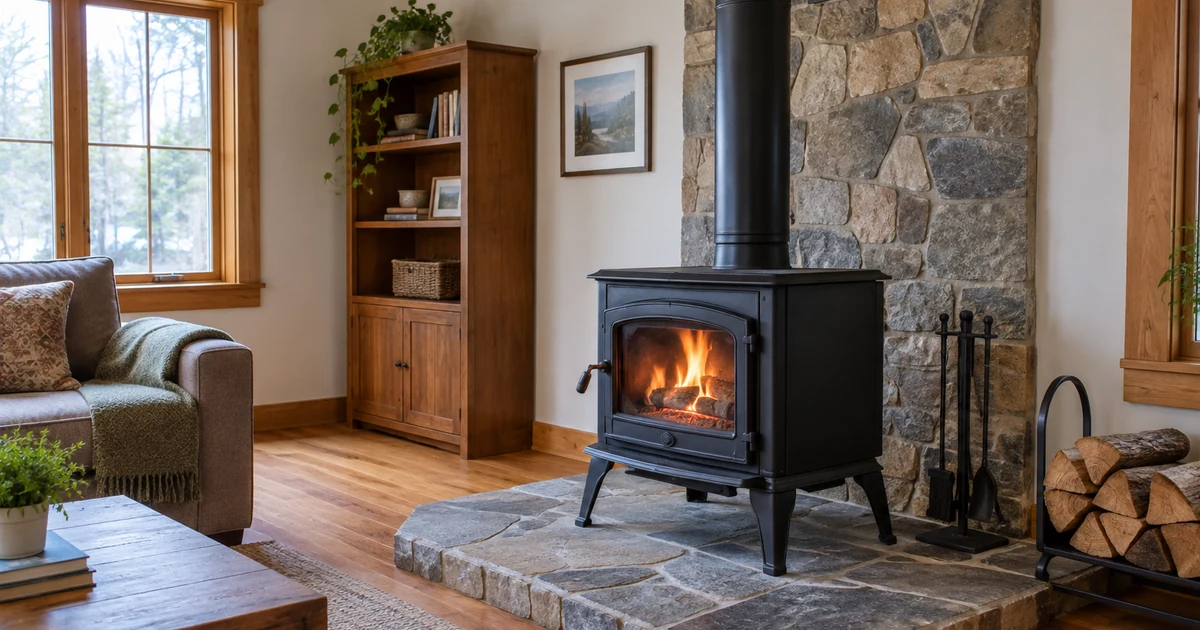
What you already have in place decides most of the bill. A stove that drops onto a working, code-compliant chimney is a quick job; a stove in a room with no chimney needs a full insulated pipe system through the ceiling and roof.
| Installation setup | Installed cost | What’s involved |
|---|---|---|
| Replace an existing stove | $2,500–$5,000 | New stove, new connector pipe, reuse sound chimney |
| New freestanding stove, new chimney pipe | $3,000–$6,500 | Class A insulated chimney through ceiling and roof, hearth pad |
| Insert in an existing masonry fireplace | $3,500–$7,500 | Insert plus full-length stainless steel liner |
| Basement or tall run with new chimney | $6,000–$10,000+ | Long chimney run, extra framing and roof work |
HomeGuide puts the national average around $5,500 with most projects between $3,000 and $8,000, while Angi puts installation alone (not counting the stove) at about $1,500 to $4,000. The gap mostly reflects how much chimney work is included. A typical new freestanding stove with a new insulated chimney and hearth pad lands near $5,500.
Stove price by type
Every new wood stove sold in the US must meet the EPA’s 2020 New Source Performance Standards (NSPS), which limit particulate emissions to 2.0 grams per hour (or 2.5 g/hr when tested with cordwood). That means even budget models today burn far cleaner than stoves from the 1980s and 1990s. Prices still vary with size, materials and combustion technology.
| Stove type | Unit price | Notes |
|---|---|---|
| Non-catalytic (steel or cast iron) | $400–$3,000 | Simple to run, most common |
| Catalytic | $2,000–$5,000 | Longer, steadier burns; catalyst needs periodic replacement |
| Hybrid | $2,000–$4,500 | Combines secondary burn and a catalyst |
| Wood stove insert | $1,200–$4,000 | Fits an existing fireplace opening |
Size matters too. Angi lists small stoves (for roughly 400 to 950 sq ft) around $900 on average, medium stoves around $1,600, large stoves around $2,400 and extra-large models at $2,800 or more. Buy for the space you actually heat; an oversized stove gets run smoldering, which wastes wood and builds creosote.
Cost Breakdown: Materials vs. Labor
Labor usually makes up about 45% to 55% of the total because most of the work is in the chimney, not the stove.
- Wood stove: $1,000–$4,000 for most EPA-certified models; budget units under $1,000 and premium stoves $5,000 or more
- Installation labor: $1,000–$4,000 depending on the chimney run and roof access
- Insulated Class A chimney and stovepipe: about $500–$1,800 or more for pipe, roof penetration, flashing and cap
- Stainless steel chimney liner (inserts or old masonry chimneys): $1,500–$5,000 installed
- Hearth pad or floor protection: $300–$1,200
- Wall heat shields: $200–$1,000+
- Permit: $100–$500
- Removal of an old stove: $200–$600
What a complete installation quote should include
- A site visit to check floor structure, clearances, the chimney route and roof access.
- Inspection and cleaning of any existing chimney before it is reused.
- Floor protection (hearth pad) sized to the stove’s listing.
- The connector pipe, chimney or liner, roof flashing, storm collar and cap.
- Setting the stove at its listed clearances, then a test burn and draft check.
- Pulling the permit and booking the final inspection.
If one bid is much lower, check whether it skips the liner, the permit or the hearth pad.
Other Factors That Affect the Price
Chimney and liner condition
Old masonry chimneys are often too large or too damaged for a modern stove. Most installers will reline them with a full-length stainless steel liner, which improves draft and contains creosote. Chimney repairs can run $500 to $7,000, and building a new masonry chimney from scratch can cost $3,000 to $20,000 or more. Our chimney repair cost guide covers crowns, flues and rebuilds.
Clearances and wall protection
Wood stoves must sit a set distance from walls, ceilings and furniture. Listed stoves follow the clearances in their installation manual; for unlisted stoves, NFPA 211 calls for 36 inches from unprotected combustible walls and ceilings, reduced only with approved heat shields. The single-wall connector pipe also needs clearance, generally at least three times its diameter from combustibles under NFPA 211, as summarized by the Maine Forest Service’s wood stove installation guide. In a small room, adding shields to bring the stove closer to the wall costs $200 to $1,000 or more.
Hearth pad and floor
The stove needs a noncombustible floor protector that extends beyond its footprint on all sides, as its listing specifies. A simple prefab pad is cheap; a custom tile or stone hearth costs more. A very heavy stove on a wood-framed floor may also need added support.
Location in the house
A single-story room with a straight chimney run is the cheapest setup. Basements, two-story runs and steep or high roofs need more pipe, more labor and sometimes extra safety equipment, which is why basement installs often start around $6,500.
Permits and air-quality rules
Most cities and counties require a building permit, typically $100 to $500. Some areas with wintertime air-quality problems restrict wood burning on certain days or allow only certified stoves, so check with your local building and air-quality offices before you buy.
Insurance
Tell your homeowners insurance company before you install a wood stove. Many insurers ask for proof of professional installation and a passed inspection, and some adjust premiums or set conditions for wood-burning appliances. An unreported stove can complicate a claim after a fire.
Wood stove inserts
An insert turns an open masonry fireplace, which sends most of its heat up the chimney, into an efficient closed stove. Inserts cost $1,200 to $4,000 for the unit and $3,000 to $8,000 or more installed, because nearly every insert needs a full-length stainless liner connected to the insert’s flue collar. The fireplace and chimney must be cleaned and inspected first, and damaged firebrick or a cracked crown should be fixed before the insert goes in.
Electrical add-ons
Blowers, fans or controls that need an outlet add roughly $150 to $500 for electrical work.
Before you hire: get at least three written, itemized quotes from licensed and insured local pros. Prices for the same job often differ by 30% or more, and comparing line items is the fastest way to spot padding or missing work.
Should You Replace an Older Wood Stove?
Many homes still have stoves built before EPA certification, or certified only to the older 1988 limits. The current standards apply to new stoves rather than ones already in use, so an old stove is not illegal to keep in most places, but replacing it often makes sense when you see these signs:
- Cracked firebox, warped baffles or failed door seals that let the fire run out of control.
- Heavy smoke at startup or visible smoke from the chimney during normal burning.
- Fast creosote buildup that requires sweeping more than once a season.
- High wood use compared with the area you heat.
- No certification label on the back of the stove, which can also be an issue with insurers or when you sell the house.
Swapping an old stove onto a sound existing chimney is the cheapest scenario, often $2,500 to $5,000, though the installer may still recommend a new liner if the old flue is oversized for the new stove.
Pellet Stove vs. Wood Stove Cost
Pellet stoves burn compressed wood pellets fed automatically from a hopper. They usually cost less to install because many can vent through an exterior wall without a full chimney, but they need electricity to run the auger and fans.
| Item | Wood stove | Pellet stove |
|---|---|---|
| Freestanding, installed | $3,000–$6,500 (new chimney) | $1,600–$4,100 |
| Insert, installed | $3,500–$7,500 | $2,500–$7,000 |
| Venting | Full chimney or liner | Often a short wall vent; liner for inserts ($1,500–$4,000) |
| Fuel cost | $275–$500+ per cord, 2–7 cords per winter | $300–$400 per ton, 2–3 tons per year |
| Electricity | None needed | About $10–$20 per month |
| Works in a power outage | Yes | No, unless on backup power |
A wood stove makes sense if you have access to cheap or free firewood and want heat during outages. A pellet stove suits homeowners who want thermostat control, less hauling and a cleaner burn, and who can live with buying bagged fuel. Both must meet the same EPA emission limits under the 2020 standards.
Operating and Maintenance Costs
The installed price is only part of the budget. Plan for these yearly costs once the stove is running:
- Firewood: roughly $275 to $500 or more per cord delivered, depending on region and species. A stove used as a main heat source can burn 2 to 7 cords per winter.
- Chimney inspection and sweeping: about $100 to $250 for a routine annual inspection, more if heavy creosote must be removed.
- Gaskets and small parts: door gaskets run about $20 to $50; catalytic stoves need a new catalyst every several seasons.
- Repairs: clearing a chimney obstruction typically costs $120 to $360, and fixing loose stovepipe sections about $75 to $130.
Burning seasoned wood with a moisture content around 20% or less gives more heat per cord and builds less creosote, which keeps sweeping and repair bills down.
DIY vs. Hiring a Pro
Wood stove installation involves fire-safety clearances, roof penetrations and chimney work that building codes regulate, and most areas require a permit and inspection. Insurers often want proof of professional installation, and stove warranties commonly require it too. Hire a certified installer or chimney professional rather than doing the venting yourself.
Reasonable DIY tasks include buying and seasoning firewood, assembling a prefab hearth pad under the installer’s guidance and keeping ash in a lidded metal container away from the house.
How to Save Money on Wood Stove Installation
- Use a sound existing chimney. Reusing a chimney that passes inspection (with a liner if needed) usually beats building a new one.
- Install off-season. Fall and winter are peak months; spring and summer jobs are easier to book and sometimes cheaper.
- Size the stove correctly. A smaller, efficient stove costs less to buy and burns less wood.
- Keep the run simple. A straight chimney through a single-story roof is the least expensive route.
- Get three detailed quotes that list the stove model, chimney components, hearth pad and permit.
- Check state and local programs. Some states and air districts run wood stove change-out rebates for replacing older stoves. The federal 25C tax credit for biomass stoves ended for property placed in service after December 31, 2025, so it does not apply to a 2026 installation.
- Burn dry wood. Seasoned wood heats better and reduces creosote, which cuts sweeping and repair costs.
If you would rather not haul wood, compare a gas fireplace installation, which costs about the same, or a heat pump installation for whole-house heating and cooling. A wood stove works best as zone heat alongside a central system; if that system is near the end of its life, see our furnace replacement cost guide.
Frequently Asked Questions
How much does it cost to install a wood stove with a chimney?
Installing a freestanding wood stove with a new insulated chimney pipe usually costs $3,000 to $6,500, and about $5,500 with a hearth pad and permit. Basement or two-story runs with a new chimney can cost $6,000 to $10,000 or more.
How much does a chimney liner for a wood stove cost?
A stainless steel chimney liner typically costs $1,500 to $5,000 installed, depending on the height of the chimney and the liner’s diameter and grade. Most wood stove inserts placed in masonry fireplaces need a full-length liner.
How far does a wood stove need to be from the wall?
Listed stoves follow the clearances in their installation manual, often 12 to 36 inches depending on the model. For unlisted stoves, NFPA 211 calls for 36 inches from unprotected combustible walls, which approved heat shields can reduce.
Do I need a permit to install a wood stove?
Most jurisdictions require a building permit, typically $100 to $500, plus an inspection. Your insurer may also ask for proof of the permit and professional installation.
Is a pellet stove cheaper to install than a wood stove?
Usually. A freestanding pellet stove costs about $1,600 to $4,100 installed because it can often vent through an exterior wall. Pellet stoves need electricity, though, and pellets cost $300 to $400 per ton.
Is there a tax credit for wood stoves in 2026?
No federal credit applies in 2026. The 25C credit for qualifying biomass stoves ended for property placed in service after December 31, 2025. Some states and local air districts still offer change-out rebates.