Central Air Installation Cost by Ductwork Situation
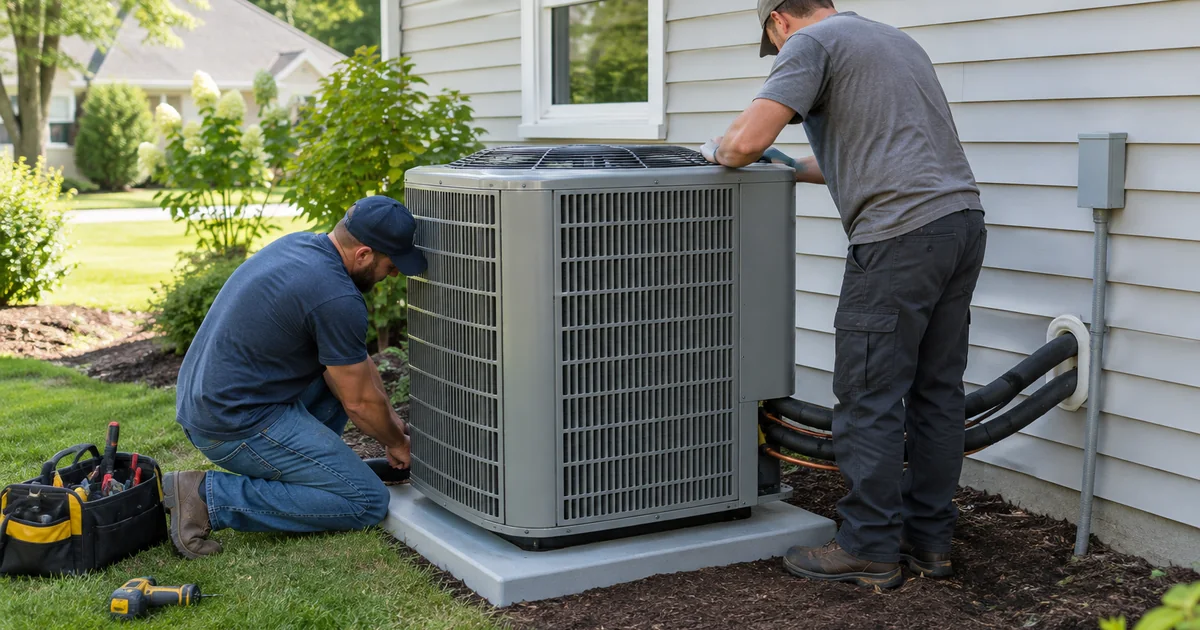
Whether your home already has ducts is the single biggest factor in the cost to install central air. If you heat with a forced-air furnace, the ducts, blower and return are already in place, and the installer mainly adds an outdoor condenser, an evaporator coil on top of the furnace, refrigerant lines and a new circuit. Homes heated by boilers, baseboard or wall heaters need a full duct system first.
| Your home | Typical installed cost | What’s included |
|---|---|---|
| Existing forced-air ducts in good shape | $5,500 – $11,000 | Condenser, coil, line set, pad, drain, electrical, startup |
| Existing ducts that need repairs or resizing | $6,500 – $13,000 | Same, plus sealing, added returns or upsized trunk lines |
| No ductwork (new ducts and air handler) | $10,000 – $20,000+ | Complete system plus a new duct network and indoor air handler |
Most homeowners adding central air to a house with a furnace pay around $8,500 for a standard-efficiency 3-ton system. A first installation costs a bit more than a straight replacement because nothing is there to reuse: the line set, condensate drain, concrete or composite pad, disconnect box and 240-volt circuit are all new.
Without ducts, the math changes. New ductwork alone commonly runs $3,000 to $9,500 depending on the home’s size and layout, and finished walls and ceilings make routing harder. In older homes, a ductless system or a high-velocity small-duct system is often worth pricing alongside a conventional retrofit. Our mini split installation cost guide compares those numbers.
Cost by Home Size and System Tonnage
Central air is sized in tons, where one ton equals 12,000 BTUs of cooling per hour. Climate, insulation, windows and ceiling height all affect the right size, so a contractor should run a Manual J load calculation rather than rely on square footage alone.
| Home size | Typical system size | Installed cost (existing ducts) |
|---|---|---|
| Under 1,200 sq ft | 1.5 – 2 tons | $4,700 – $9,400 |
| 1,200 – 2,000 sq ft | 2.5 – 3 tons | $5,500 – $11,000 |
| 2,000 – 2,800 sq ft | 3.5 – 4 tons | $6,600 – $13,200 |
| Over 2,800 sq ft | 5 tons or two systems | $7,700 – $15,400+ |
Large or multi-story homes sometimes do better with two smaller systems or a zoned system, one for each floor. That raises the upfront price but fixes the classic problem of a hot upstairs and a cold basement.
Cost Breakdown: Equipment vs. Labor
- Outdoor condenser and matching coil: about $2,500 to $5,500 for standard to mid-efficiency equipment, more for variable-speed systems.
- Installation labor: roughly $1,500 to $3,500 for a system going onto existing ducts. HVAC labor rates typically run $75 to $150 or more per hour, and most installs take one to two days.
- Electrical work: a dedicated 240-volt circuit and outdoor disconnect usually add a few hundred dollars. If your panel lacks capacity, an electrical panel upgrade can add $1,300 to $4,000.
- Condensate drain or pump: about $180 to $500 when a plumber or extra drain work is needed.
- Permits: about $100 to $250 for a standard install, and $250 to $1,500 when new ductwork is part of the job.
- New ductwork (if needed): $3,000 to $9,500 for materials and labor in a typical home.
Other Factors That Affect the Price
Efficiency rating (SEER2)
Federal minimums are 13.4 SEER2 in Northern states and 14.3 SEER2 for most split systems in the South. Moving from a single-stage system at the minimum to a two-stage unit in the 16 to 18 SEER2 range typically adds about 20 percent to the price, and variable-speed systems above 19 SEER2 can add 40 to 50 percent. The payback is best in hot climates with long cooling seasons.
Refrigerant transition
New central air systems installed in 2026 generally use A2L refrigerants such as R-454B or R-32 instead of R-410A. Manufacturers announced price increases of roughly 10 percent or more for the new equipment, which is part of why 2026 quotes run higher than those from a few years ago.
Brand and contractor
Brand affects the price less than the installer does. Many brands share components, and installation quality has a large effect on efficiency and lifespan. Premium brands and dealer-exclusive lines cost more, while value brands can save $1,000 or more on equipment.
Condenser location and access
A long refrigerant line run, a roof-mounted condenser or an air handler in a tight attic adds labor. Attic installs also need an auxiliary drain pan and often a float switch to protect the ceiling below.
Zoning and add-ons
A two-zone damper system, which lets you cool upstairs and downstairs separately on one unit, typically adds $1,700 to $2,000, and each additional zone about $350 to $500. Smart thermostats, whole-home dehumidifiers, surge protectors and extended labor warranties are common upsells. Some are worth it in the right house, but ask for each one priced as a separate line so you can decide.
Condition of the furnace
The new evaporator coil sits on the furnace and depends on its blower. An older furnace with a weak single-speed blower may not move enough air for the new system, and some contractors will recommend replacing it at the same time.
Region
Labor rates and permit fees vary widely. Installs in high-cost metros like New York or San Francisco can run well above the national average, while prices in much of the Midwest and South fall below it.
Before you hire: get at least three written, itemized quotes from licensed and insured local pros. Prices for the same job often differ by 30% or more, and comparing line items is the fastest way to spot padding or missing work.
Central Air, Heat Pump or Mini-Split?
If you’re adding cooling for the first time, it’s worth comparing three options before committing:
- Central air conditioner: the lowest-cost choice when you already have a furnace and ducts, and the right fit if your furnace is fairly new.
- Ducted heat pump: costs more upfront but heats and cools, so it can reduce how much the furnace runs or replace an aging one. See our heat pump installation cost guide.
- Ductless mini-split: often the most practical option for homes without ducts, additions, and older houses where running ductwork would mean opening walls.
If your furnace is more than 15 years old, ask for a quote that replaces both at once. Installing the coil on a furnace you’ll replace in two years means paying for some of the work twice. Our furnace replacement cost guide covers that side of the budget.
DIY vs. Hiring a Pro
Central air installation is not a realistic DIY project. Connecting and charging the refrigerant system requires EPA Section 608 certification, the outdoor unit needs a 240-volt circuit that most areas require a licensed electrician or HVAC contractor to install, and most jurisdictions require a mechanical permit and inspection. Many manufacturers also require installation by a licensed contractor for the warranty to apply. Homeowners can save by clearing the install area, making attic access easy and handling drywall patching after new ductwork goes in.
How to Save Money on Central Air Installation
- Get at least three written quotes with the same equipment size, efficiency and scope listed on each.
- Install in the off-season. Contractors are less busy in fall and early spring, and some offer discounts of 10 to 15 percent.
- Size it correctly. An oversized system costs more to buy and cools poorly. Insist on a load calculation.
- Check utility rebates. Many utilities and some states offer rebates for high-efficiency cooling equipment. Note that the federal 25C tax credit ended for equipment placed in service after December 31, 2025, so it doesn’t apply to 2026 installs.
- Seal and insulate first. Better attic insulation and air sealing can reduce the tonnage you need.
- Stick with standard efficiency in mild climates. Where summers are short, a high-SEER2 premium may take many years to pay back.
- Ask about financing promotions, but compare the total cost to paying cash; some “0% interest” offers are built into a higher system price.
Frequently Asked Questions
Can you add central air to a house with a furnace?
Yes. If you have a forced-air furnace, the installer adds an outdoor condenser, an evaporator coil on the furnace, refrigerant lines and a new circuit, then uses your existing ducts and blower. This is the least expensive way to add central air.
How much does it cost to add central air to a house without ducts?
Expect roughly $10,000 to $20,000 or more, since the job includes a new duct system and an indoor air handler along with the cooling equipment. Ductless mini-splits are often cheaper for homes without ducts, especially if only part of the house needs cooling.
What size central air unit do I need?
Many homes between 1,200 and 2,000 square feet need a 2.5- to 3-ton system, but climate, insulation, windows and ceiling height change the answer. Ask the contractor for a Manual J load calculation rather than sizing by square footage alone.
How long does it take to install central air?
Adding central air to a home with existing ducts usually takes one to two days. A full install with new ductwork can take three to five days or more, depending on the home’s layout.
Is there a tax credit for central air in 2026?
Not at the federal level. The 25C energy efficient home improvement credit ended for equipment placed in service after December 31, 2025. Check with your utility and state energy office for rebates that may still be available.
Does central air increase home value?
In most US markets, central air is expected by buyers, and homes without it can be harder to sell, especially in warm climates. It rarely returns its full cost at sale, but it improves marketability and comfort.