AC Replacement Cost by System Type
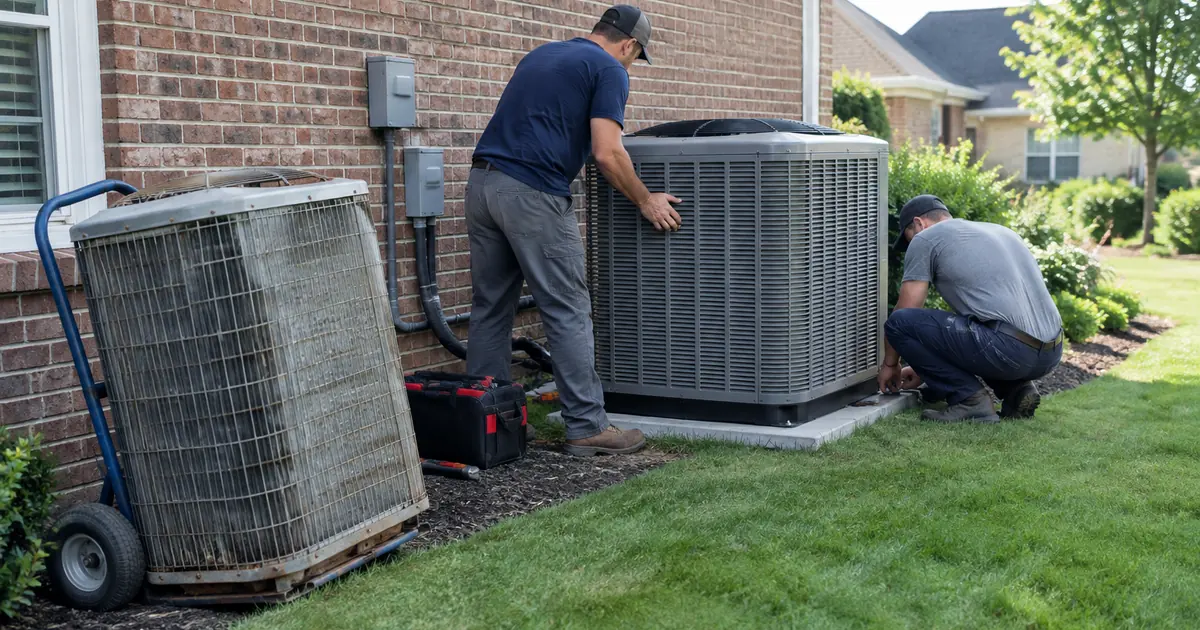
What you’re replacing sets the baseline. A standard central AC replacement swaps the outdoor condenser and the indoor evaporator coil as a matched pair. A full HVAC replacement adds the furnace or air handler, which is why “HVAC replacement cost” quotes can run nearly twice as high.
| What’s being replaced | Typical installed cost | Common in |
|---|---|---|
| Outdoor condenser only (compatible coil) | $3,500 – $6,500 | Rare in 2026; only when the coil matches the new refrigerant |
| Central AC: condenser + evaporator coil | $5,000 – $10,500 | Homes with a furnace that still has years left |
| AC + air handler | $7,000 – $13,000 | Homes with electric heat strips, common in the South |
| AC + gas furnace (full HVAC system) | $8,500 – $17,500 | Homes where both units are 15+ years old |
For a typical 3-ton, standard-efficiency central air system on existing ducts, most homeowners pay about $7,500. National cost guides report averages from roughly $6,000 to $8,500 for this job, and quotes vary widely by region and installer.
A full HVAC replacement with a new gas furnace usually lands around $12,500, though budget brands in low-cost markets can come in under $9,000 and premium variable-speed systems can pass $20,000. Replacing both at once typically costs less than doing them in separate years because the crew, permit and startup happen once. If only the heating side is failing, see our furnace replacement cost guide.
HVAC Replacement Cost: AC Plus Furnace or Air Handler
When people search for HVAC replacement cost, they usually mean the whole split system: the outdoor AC and the indoor heating unit it’s paired with. The indoor half depends on how your home is heated.
| Full system | Typical installed cost | Notes |
|---|---|---|
| AC + air handler (electric heat) | $7,000 – $13,000 | Air handler holds the coil, blower and backup heat strips |
| AC + standard gas furnace (80% AFUE) | $8,500 – $15,000 | Common like-for-like swap in moderate climates |
| AC + high-efficiency gas furnace (90%+ AFUE) | $10,000 – $17,500 | May need new PVC venting and a condensate drain |
| Heat pump + air handler or furnace (dual fuel) | $9,000 – $20,000+ | Replaces the AC with a unit that also heats |
Two-stage and variable-speed systems push each of these toward the top of the range or beyond. If you’re adding cooling to a home that has never had it, installation involves more new parts; our central air installation cost guide covers first-time installs and new ductwork.
AC Replacement Cost by Size
Most replacements match the old unit’s tonnage, but a good contractor will check it with a Manual J load calculation. Many older systems were oversized, and new windows or insulation may have lowered your home’s cooling load.
| Home size | Typical AC size | AC replacement (condenser + coil) |
|---|---|---|
| Under 1,200 sq ft | 1.5 – 2 tons | $4,300 – $8,900 |
| 1,200 – 2,000 sq ft | 2.5 – 3 tons | $5,000 – $10,500 |
| 2,000 – 2,800 sq ft | 3.5 – 4 tons | $6,000 – $12,600 |
| Over 2,800 sq ft | 5 tons or two systems | $7,000 – $14,700+ |
Bigger homes don’t always need one bigger unit. Two-story houses over about 2,500 square feet often cool more evenly with two smaller systems or a zoned setup, which costs more upfront but avoids a hot upper floor. An oversized single unit short-cycles, removes less humidity and wears out sooner.
Cost Breakdown: Equipment vs. Labor
- Condenser and coil: about $2,500 to $5,500 for standard and mid-efficiency equipment. Variable-speed systems cost more.
- Furnace (for full systems): roughly $2,000 to $5,400 for the unit, before installation.
- Installation labor: typically $1,500 to $3,500 for an AC swap, more for a full system. Most replacements take one day; a furnace and AC together often take one to two days.
- Removal and disposal: usually included, or about $25 to $250 if billed separately. Refrigerant in the old unit must be recovered by a certified technician.
- Permit: about $100 to $250 in most areas.
- Line set: many installers reuse existing refrigerant lines after flushing and pressure testing them. A new line set adds several hundred dollars and more if lines run through finished walls.
Other Factors That Affect the Price
Efficiency (SEER2)
Standard single-stage systems at the federal minimum (13.4 SEER2 in the North, 14.3 SEER2 for most split systems in the South) are the least expensive. Two-stage units in the 16 to 18 SEER2 range usually cost about 20 percent more, and variable-speed systems above 19 SEER2 about 40 to 50 percent more. The upgrade pays back fastest in hot, humid climates with long cooling seasons.
The refrigerant change
Since January 1, 2025, new residential split systems have been manufactured for A2L refrigerants such as R-454B and R-32 rather than R-410A. Manufacturers announced price increases of roughly 10 percent or more for this equipment. Because the new refrigerants can’t be mixed with R-410A, a replacement generally means a new outdoor unit and a matching indoor coil together, which is one reason 2026 quotes are higher than those from a few years ago.
Ductwork condition
Leaky or undersized ducts can undercut a new system. Duct repairs and sealing often cost $300 to $1,500, while a full duct replacement can run $1,400 to $5,600 or more.
Brand and installer
Value brands can save $1,000 or more on equipment compared with premium lines, but the quality of the installation matters more than the badge. Look for contractors who measure airflow and refrigerant charge at startup, not just “turn it on and leave.”
Location and timing
Labor costs vary widely from one metro area to another. Replacing in the spring or fall, before the unit fully fails, avoids emergency pricing and gives you time to compare bids.
Before you hire: get at least three written, itemized quotes from licensed and insured local pros. Prices for the same job often differ by 30% or more, and comparing line items is the fastest way to spot padding or missing work.
Signs It’s Time to Replace Your AC
- Age: central AC units typically last 12 to 17 years. Past 12, major repairs are often money poorly spent.
- R-22 refrigerant: units installed before about 2010 may use R-22, which is no longer produced. Any refrigerant repair on these is expensive.
- A big repair quote: if a repair costs half or more of a new system, replacing usually wins. A compressor or coil failure on an older unit is the classic tipping point; see our AC compressor replacement cost guide.
- Frequent breakdowns or refrigerant top-offs every summer.
- Rising cooling bills and rooms that no longer stay comfortable.
For smaller problems like capacitors, contactors or drain clogs, a repair is almost always the better value. Our AC repair cost guide lists typical prices. If you heat with electric resistance or an aging furnace, a heat pump can replace your AC and handle most of your heating too.
DIY vs. Hiring a Pro
AC replacement requires EPA Section 608 certification to recover and charge refrigerant, a 240-volt electrical connection and, in most places, a permit and inspection. The newer A2L refrigerants are mildly flammable, which adds handling and installation requirements. Manufacturers also commonly require professional installation and product registration for the full warranty. This is a job for a licensed HVAC contractor.
How to Save Money on AC Replacement
- Replace before it fails. Planning a replacement in spring or fall avoids emergency rates and lets you compare three or more quotes.
- Bundle with the furnace if both are old. One crew, one permit and one startup usually cost less than two separate projects.
- Match efficiency to your climate. A variable-speed system can make sense in Texas or Arizona; in Minnesota, standard efficiency is often the smarter buy.
- Look for utility rebates. Many utilities offer rebates on high-efficiency cooling equipment. The federal 25C tax credit ended for equipment placed in service after December 31, 2025, so it doesn’t apply to 2026 installations.
- Reuse what’s sound. If the line set and ducts test fine, reusing them saves hundreds of dollars.
- Compare labor warranties, not just price. A slightly higher bid with a 10-year labor warranty can be the cheaper option over the life of the system.
Frequently Asked Questions
How much does it cost to replace an AC and furnace together?
A full HVAC replacement with a central AC and gas furnace typically costs $8,500 to $17,500, with many homeowners paying around $12,500. Replacing both at once usually costs less than two separate projects because labor, permits and startup are shared.
Should I replace my AC and furnace at the same time?
If both are more than 15 years old, usually yes. You save on labor, get properly matched components and avoid a second disruption. If the furnace is under 10 years old and working well, replacing only the AC is reasonable.
Can I replace just the outdoor AC unit?
Sometimes, but it’s less common now. New systems use A2L refrigerants such as R-454B that can’t be mixed with R-410A, so the indoor coil usually needs to be replaced too. Mismatched components can also reduce efficiency and void the warranty.
How long does AC replacement take?
A straightforward central AC replacement on existing ducts usually takes one day. Replacing the furnace too, or adding duct work, can stretch the job to two or three days.
Is there a federal tax credit for a new AC in 2026?
No. The 25C energy efficient home improvement credit ended for equipment placed in service after December 31, 2025. Some utilities and states still offer rebates for high-efficiency systems, so check locally before you buy.
How long does a central air conditioner last?
Most central AC systems last about 12 to 17 years. Coastal salt air, heavy use in hot climates and skipped maintenance shorten that lifespan, while annual tune-ups and clean filters help extend it.